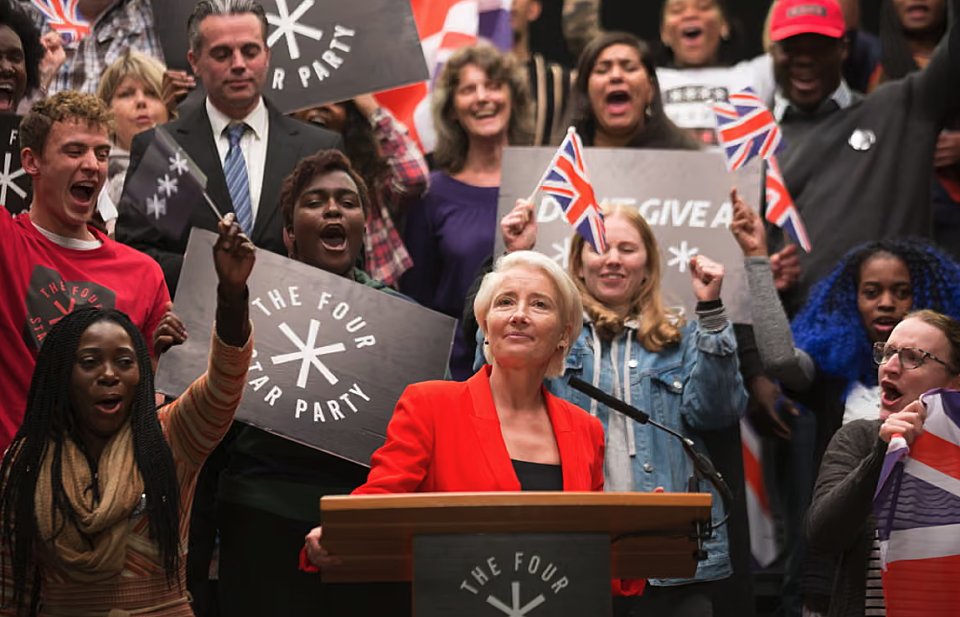
Pauline Hanson and the frightening lesson of ‘Years and Years’
Posted on 07 Oct 2026
Our Community's founder and leader, Denis Moriarty, writes that when he watched an over-the-top…
Posted on 25 Feb 2026
By Denis Moriarty, founder and group managing director, Our Community
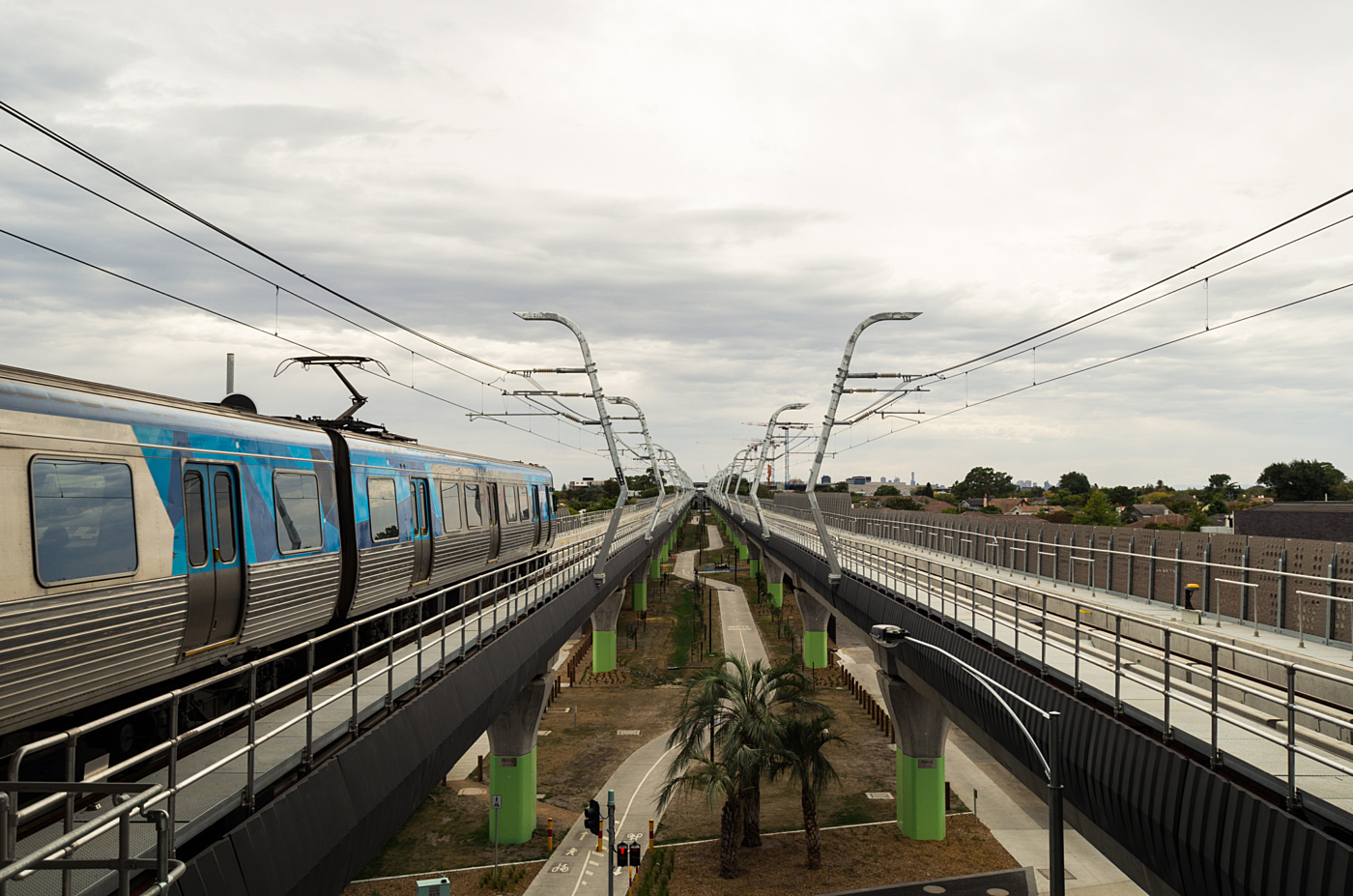
A Victorian suburb's hot debate about whether trains should live underground or in the sky ended badly and raises questions for us all about who should have a say in major decisions, writes Our Community's founder and leader, Denis Moriarty.
As Oscar Wilde wrote, “There are only two tragedies in life: one is not getting what one wants, and the other is getting it.”
Back in 2016, the Labor government in Victoria was drawing up plans to remove level crossings along several suburban rail lines, one of them the Frankston line. There were three ways to erase a crossing – putting the rail or the road in a ditch, or putting the rail over the road on skyrail. The citizens of Cheltenham, along the way, organised against skyrail (with the raucous support of the opposition Liberals) and were sufficiently electorally persuasive to get their way.
And now some of them, at least, are sorry.
When the line was put underground, Cheltenham station ended up with a giant vacant concrete platform at each end that contributes nothing to the local ambience. Where the government went for skyrail, on other lines, it had to buy off local opposition, which meant that the under-rail corridors this created were adorned with such attractions as parks, parking spaces, bicycle paths, and basketball courts, which Cheltenham’s former activists now view enviously.
Those vacant spaces are now being rezoned for higher-density apartment housing, and if past experience is any guide there’ll be fierce opposition to that too – that’s where the term Not In My Backyard, or NIMBY, comes from, after all.
Almost nobody likes change. Almost everybody likes tree-lined streets of old houses with big backyards of the kind that they remember from their childhoods. Just about every homeowner is terrified that somebody – the state, big business (empowered by the state) or just their tasteless next-door neighbour – is going to erect an eyesore that will increase traffic, attract the wrong sort of people, and lower their property values.
It’s here that questions of governance enter in. On the one hand, we would like to see real consultation that takes account of the interests of the people most affected. On the other, the locals are generally fewer in number than the people whose interests are affected less deeply but more often – commuters, hauliers, cyclists, passers-through, for example –and are biased by their own material interests; if they didn’t have different priorities from the general population, there’d be no point consulting with them.
“In some ways, this division of decision-making authority is exactly what the Westminster system has evolved to deal with, and the brouhaha at Cheltenham is simply the system acting as it should.”
The general theory of democratic government is that the central institutions of the state are expected to make the right decisions based on the greatest good for the greatest number, and however much you may giggle at that – and however much you may point to corruption, regulatory capture, rank stupidity, or inexplicable stabs in the dark, it’s still hard to think of a political theory where this wouldn’t be true.
No government that hopes to deal with the vast upheavals that this century forces upon us can allow an automatic veto to residents’ associations. There will be more people in our cities soon, and they must have houses, and roads, and offices, somewhere.
Furthermore, the people who are most closely involved are not always the best guides to their own interests, as the Cheltenham example shows. The future is obscure, and judgements and bargains and demands made at one point can look odd in the light of later events.
The question, then, is where to draw the line. Which matters are best reserved for local control, at the level of the municipality, or suburb, or street, and which can be handed down from on high? Our natural sympathies lie with the 80-year-old long-time resident out in the street with hand-lettered posters, but that’s a strong brake on any statewide or national initiative.
In some ways, this division of decision-making authority is exactly what the Westminster system has evolved to deal with, and the brouhaha at Cheltenham is simply the system acting as it should. There’s no guarantee that any of this is going to work out for the best in any particular instance. The American journalist H.L.Mencken said, ‘Democracy is the theory that the common people know what they want, and deserve to get it good and hard’ – but in the end, decisions get made, and they have their effect on who’s in and who’s out, and people learn for themselves how power is collected and conveyed and exercised.
We need more community groups, not fewer – enough for there to be words and placards and media expressing different tendencies, complicating simple calculations but netting in more opinions.
We wouldn’t want the government to be the voice of a single interest; we shouldn’t allow any one group to speak for a whole geography, either.
Denis Moriarty is group managing director of OurCommunity.com.au, a social enterprise that helps the country's 600,000 not-for-profits.
We're proud to take a stand on progressive issues. Here are more recent opinion pieces.
Posted on 07 Oct 2026
Our Community's founder and leader, Denis Moriarty, writes that when he watched an over-the-top…

Posted on 30 Sep 2026
After the biggest AFL game of the year, one player proudly wore the flag of his birth country and…

Posted on 23 Sep 2026
There are solutions to counter the rise of One Nation but they might not be residing in the mess…
Posted on 03 Sep 2026
Denis Moriarty has an issue with insurance companies varying premiums because of what they perceive…
Posted on 26 Aug 2026
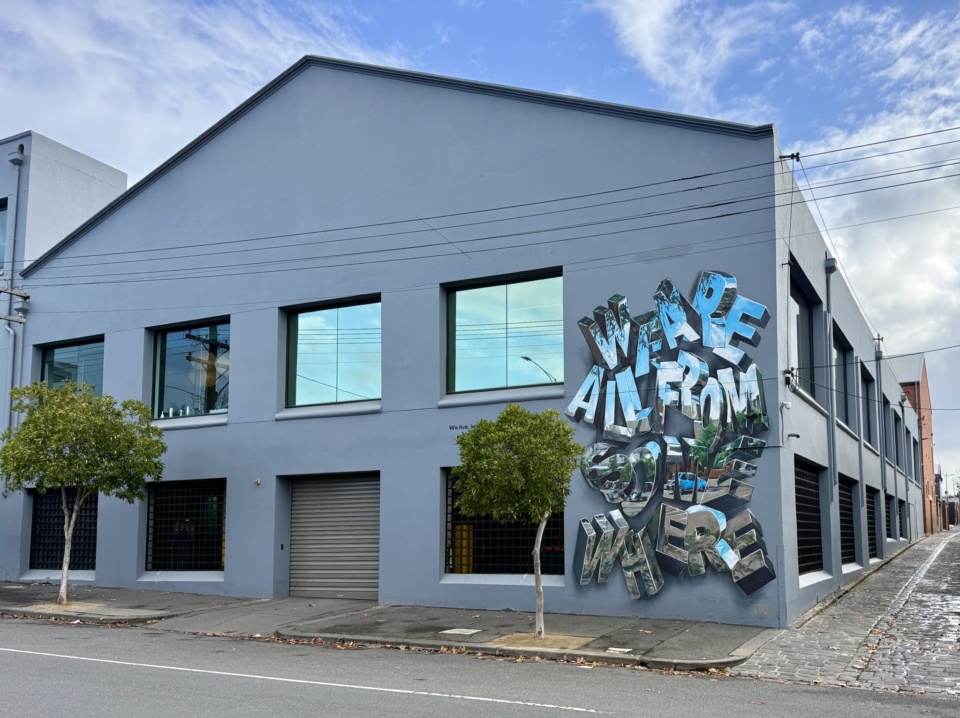
Our Community's founder and leader, Denis Moriarty, says he commissioned a new piece of street art…

Posted on 12 Aug 2026
Our Community's founder and leader, Denis Moriarty, says fostering a child was his worst nightmare,…
Posted on 15 Jul 2026
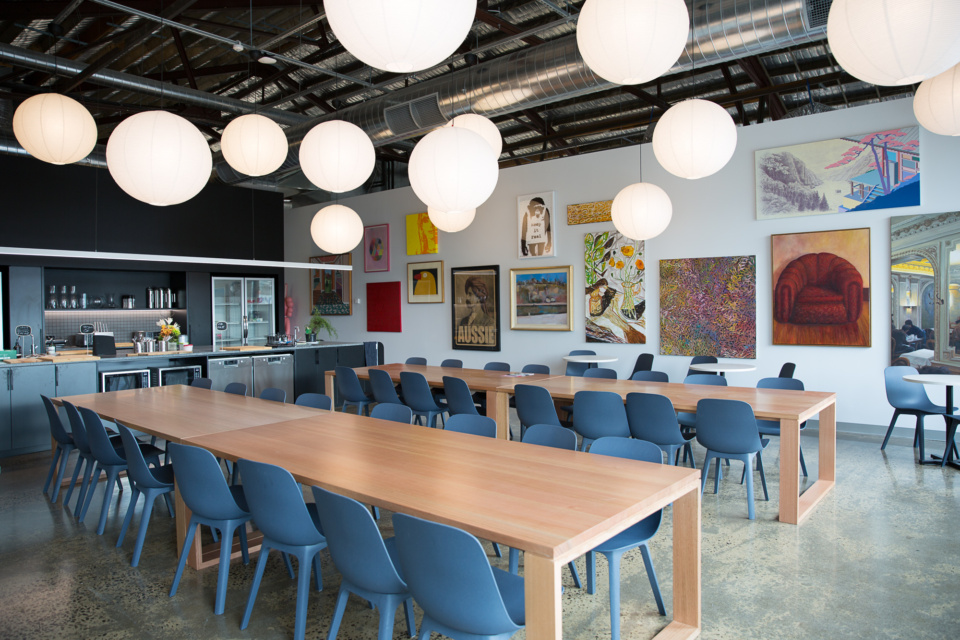
Our Community's founder and leader, Denis Moriarty, on what's special about the shared workplace…

Posted on 08 Jul 2026
The Royal Australasian College of Physicians has found itself facing serious scrutiny from the…

Posted on 30 Jun 2026
Australian house prices rose roughly 8,300 per cent between 1970 and 2025, so it would seem…
Posted on 17 Jun 2026
If charges are proven that members of the Brethren movement took part in partisan political…

Posted on 03 Jun 2026
Why exactly are we still getting a day off to celebrate a day that is not the actual birthday of…

Posted on 20 May 2026
It is not really a surprise that we have trouble getting our heads around what the rise of…