
Pauline Hanson and the frightening lesson of ‘Years and Years’
Posted on 07 Oct 2026
Our Community's founder and leader, Denis Moriarty, writes that when he watched an over-the-top…
Posted on 03 Dec 2025
By Denis Moriarty, founder and group managing director, Our Community
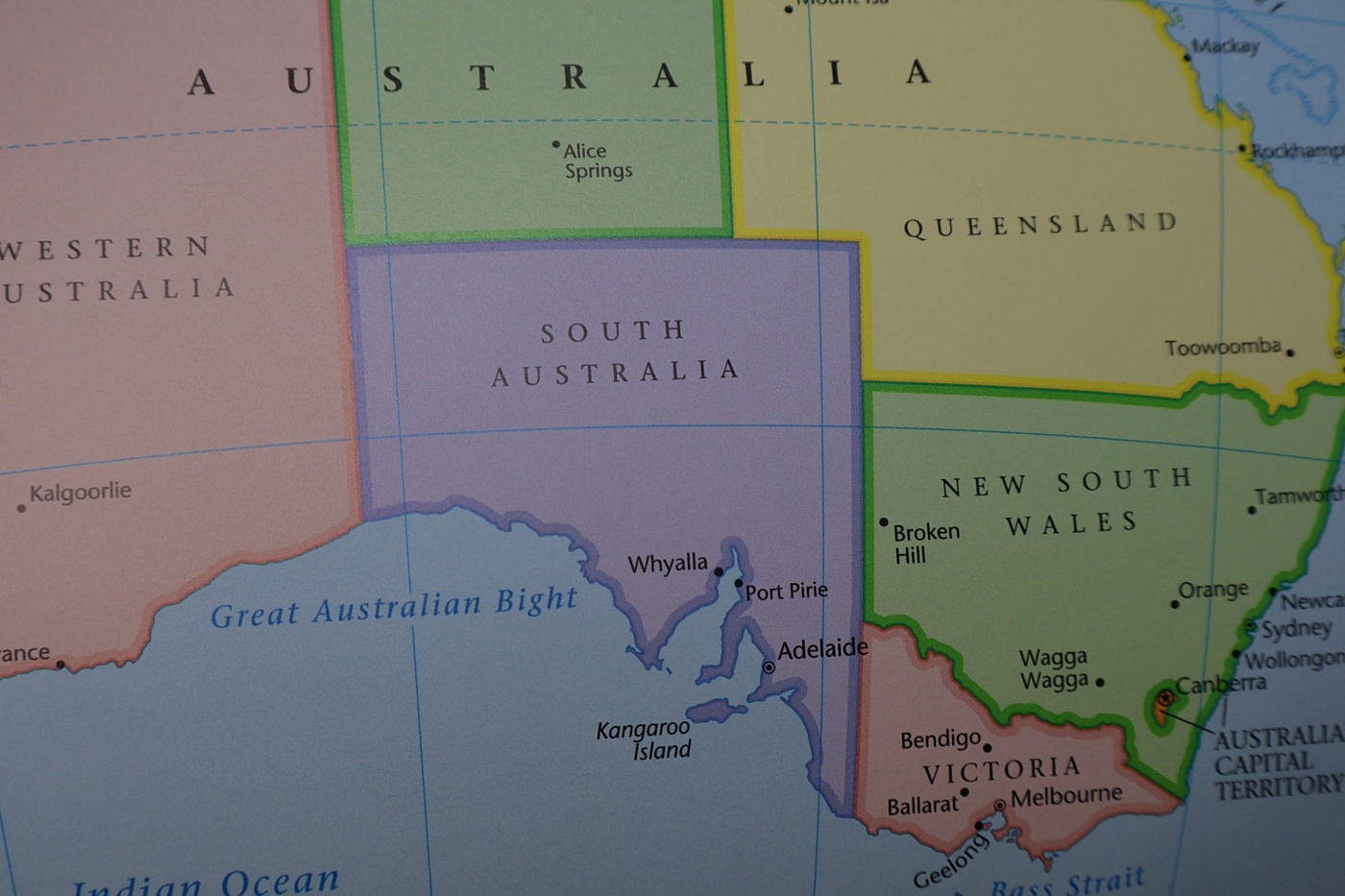
If you wanted an example of the problems inherent in federal systems, you couldn’t do better than Australia’s not-for-profit sector, writes Our Community's founder and leader, Denis Moriarty.
Australian community groups take many forms. Some are companies of a particular kind, and they’re regulated by the Commonwealth in the same way as other companies. Some are associations, regulated by the states. And most are unincorporated associations, which are mostly (but not exclusively) small ad hoc groups not regulated by anybody at all.
If you’re an association, you come under the Associations Act in your state – and the Acts are pretty varied, imposing different responsibilities on the board depending on your postcode. If you conduct business in other states, you have to comply with their Acts as well. ‘Conducting business’ may mean no more than ‘having a website’, which would mean that every vintage car club would have to report to eight sets of regulators. Governments, to give them their due, have noticed that this would be crazy and have put in a patch. If your community group registers with the feds as a Registered Australian Body (RAB), you can operate in all states and sign up in only one.

That’s fine, except that most small groups don’t know about RABs. Also, if the system works as intended, a group can be operating in Queensland while being responsible to the regulators in WA, who aren’t there to supervise. And while the RAB system fixes problems with states having different Associations Acts, there’s no equivalent for the differences in states’ Fundraising Acts, and any group whose website has a donations button triggers all of those Acts and is up for another round of forms.
The not-for-profit sector has been complaining about all of this for decades, and the Commonwealth government eventually set up the Australian Charities and Not-for-profits Commission (ACNC), whose title epitomises our national SNAFU. Charities are not-for-profits that get special tax privileges, and that brings them under the ambit of Commonwealth power, so they can simply report to the ACNC and ignore the state offices. Other not-for profits – Associations and Unincorporated bodies – don’t, aren’t, and can’t. The ACNC is in reality the ACC, because the states are hanging on to the Ns. And there are a lot more Ns than Cs.
When Australian governments have stepped into this kind of dog’s breakfast before, they have done one of two things: they’ve had the states hand over their responsibilities to the Commonwealth, as they did with income tax, or they’ve got all the states to agree to have identical state Acts, as they did with industrial relations. Both of those operations, though, involved central and unavoidable governmental functions. Unless change is absolutely unavoidable, nobody’s going to put in the enormous amount of resources, negotiation and political clout that would be required to make it all work.
In the not-for-profit sector the problems, and the solutions, are obvious and uncontroversial. Everybody agrees that these complications are hard on community groups and charities, and that having to conform to different jurisdictions is expensive and pointless. All the states have agreed to fix it. Yet they haven’t, because it’s not on the top of anybody’s list of priorities.
There’s no agency that exists to help the states and the centre work together. It would be possible to draw up an Associations Act that worked for all states, and then just have it on hand whenever a state got around to updating its offerings – but there’s nobody whose job it is to do that, and the federal system makes it difficult to set up anything that crosses boundaries. As a result, individual states’ attempts to remedy the flaws in the system tend to just make the confusion worse.
“[Australia] inherited a tangled and incoherent system of laws from England and then added another couple of dimensions of complications by introducing states.”
This kaleidoscope of overlapping legislation also makes it hard to see the big picture. Because the different parts of the sector belong to different jurisdictions, it’s very hard to contemplate rationalisations that would be a better fit to the needs of the 21st century.
We inherited a tangled and incoherent system of laws from England, and then added another couple of dimensions of complications by introducing states, which England didn’t have. Our constitutional problems make it immensely hard to address our practical problems, and that leads to an increasing fraction of the polity just giving up on communal action and retreating into sovereign citizenship.
We need a reboot. We need brave ministers and public servants to say stop the madness – and so I bet it’ll be business as usual. The days of disruptors are dead, and the lazy blockers rule the roost.
Denis Moriarty is group managing director of OurCommunity.com.au, a social enterprise that helps the country's 600,000 not-for-profits.
We're proud to take a stand on progressive issues. Here are more recent opinion pieces.
Posted on 07 Oct 2026
Our Community's founder and leader, Denis Moriarty, writes that when he watched an over-the-top…

Posted on 30 Sep 2026
After the biggest AFL game of the year, one player proudly wore the flag of his birth country and…

Posted on 23 Sep 2026
There are solutions to counter the rise of One Nation but they might not be residing in the mess…

Posted on 03 Sep 2026
Denis Moriarty has an issue with insurance companies varying premiums because of what they perceive…

Posted on 26 Aug 2026
Our Community's founder and leader, Denis Moriarty, says he commissioned a new piece of street art…

Posted on 12 Aug 2026
Our Community's founder and leader, Denis Moriarty, says fostering a child was his worst nightmare,…

Posted on 15 Jul 2026
Our Community's founder and leader, Denis Moriarty, on what's special about the shared workplace…

Posted on 08 Jul 2026
The Royal Australasian College of Physicians has found itself facing serious scrutiny from the…

Posted on 30 Jun 2026
Australian house prices rose roughly 8,300 per cent between 1970 and 2025, so it would seem…
Posted on 17 Jun 2026
If charges are proven that members of the Brethren movement took part in partisan political…

Posted on 03 Jun 2026
Why exactly are we still getting a day off to celebrate a day that is not the actual birthday of…

Posted on 20 May 2026
It is not really a surprise that we have trouble getting our heads around what the rise of…