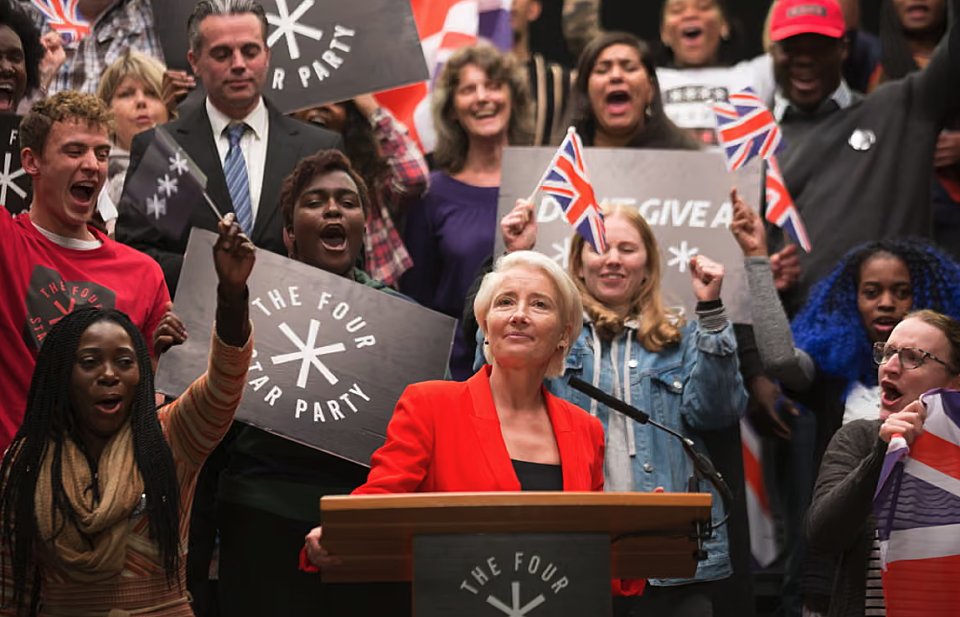
Pauline Hanson and the frightening lesson of ‘Years and Years’
Posted on 07 Oct 2026
Our Community's founder and leader, Denis Moriarty, writes that when he watched an over-the-top…
Posted on 26 Aug 2025
By Denis Moriarty, group managing director, Our Community

The cost of the National Disability Insurance Scheme (NDIS) is climbing relentlessly – $44 billion in 2025. This rate of growth is unsustainable. As someone who applauded the establishment of the scheme, and who has no problem with supporting people with disabilities, what’s the glitch that has got us here?
There are, first of all, a number of straightforward economic reasons. The simplest, of course, is that we hadn’t properly accounted for the insufficiency of what was on offer before. We had a lot more ground to make up than we’d bargained for.
Another issue was that the NDIS poured a lot of money into disability services without increasing the number of professionals – therapists, etc – in the system, which meant that all those professionals could and did charge a lot more. Theoretically, this should result in more people going into training courses in these areas, which should very theoretically push prices down again, but this is obviously going to take quite a bit of time.
Part of the rising cost of the NDIS, too, represents expenditure that the states have successfully tossed over the fence. The costs show up in the NDIS budget, but the states don’t list their savings because they don’t want to admit that’s what they’re doing.
Apart from these obvious problems, though, there are more philosophical issues, involving the ways we split up the world. Disability involves many different boundaries, all of which are remarkably fuzzy – not simply hard to define, but hard to discuss respectfully and equitably.
The first hurdle in our debate is the beard problem. How much difference makes a disability? How many hairs make a beard? Five, no; 50, hardly; 5000, probably; you’d know it if you saw it. What you’d do about your facial hair would depend on age and sex and fashion, but what would happen if the word occurred in legislation? You’d have to draw a line. It’s the same with disability.
However you drew that line, the inevitable consequence would be that at the margin the last person who qualified for support would be almost identical to the first person who didn’t, and that person could make a pretty good case in logic (and in the media) to say they should have been included. And any given child probably will benefit from having more one-on-one assistance: why wouldn’t they?
That kind of line also comes up when you try to split state government responsibilities from federal responsibilities, or Education Department responsibilities from Health Department responsibilities.
The social model of disability, importantly, flips the beard “problem” around, viewing disability as stemming from places, communities and service that are not accessible or inclusive. In the social model of disability, it is society that places limits on a person, not their disability. It’s hard to argue with that.
“We need to rebuild our systems to fit with the concepts of the social origins of disability, where we set aside questions of diagnosis and focus instead on the particular needs of people with disability.”
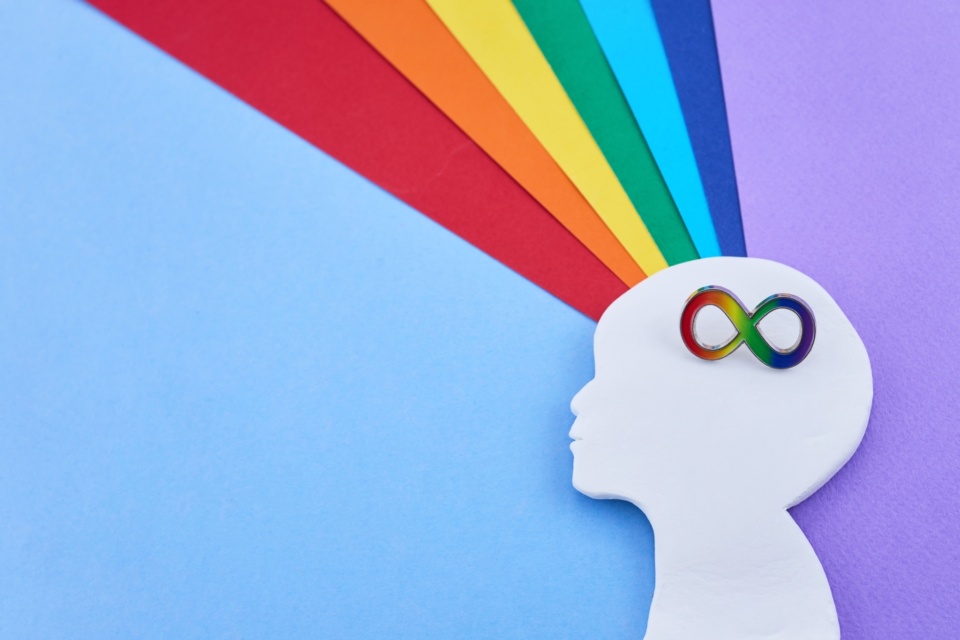
Another issue that we’re running up against, though, is that there’s an increasingly fuzzy line between disabilities and personality traits. Some people with autism have crushing communication and socialisation difficulties, while at the other end of the spectrum you might just have relatively minor problems – not enough to require extensive support, but enough to hold you back in the competition. Where nearly 14 per cent of boys are on the NDIS, we are fundamentally redefining ‘disability’ to cover all the people who could do with some assistance rather than those people who can’t do without it.
The general tendency is for more things in life to be regarded as, well, unfair – something you can’t help – and thus an expansion of the realm of disability. That’s not in itself a bad thing, but it may be leading to a shift in funding from severe disability to less severe disability. I’d see this as a problem because I believe we’ve not really come to terms with the fundamental inadequacy of the systems that the NDIS inherited and hasn’t yet discarded. For example, we need to put a lot more resources into education support, including a transition from special schools, and that’ll cost.
We need to rebuild our systems to fit with the concepts of the social origins of disability, where we set aside questions of diagnosis and focus instead on the particular needs of people with disability. The problems of people with less all-encompassing problems are best addressed not by giving special treatment to increasing numbers of exceptions but by making all our systems more individualised and more understanding.
If the government’s new Thriving Kids program can manage that, it’ll be an absolute winner and pay credit to the Labor Government and Bill Shorten, Bruce Bonyhady, Kirsten Deane et al for their relentless pursuit of establishing the NDIS.
Denis Moriarty is group managing director of OurCommunity.com.au, a social enterprise that helps the country's 600,000 not-for-profits.
We're proud to take a stand on progressive issues. Here are more recent opinion pieces.
Posted on 07 Oct 2026
Our Community's founder and leader, Denis Moriarty, writes that when he watched an over-the-top…
Posted on 30 Sep 2026
After the biggest AFL game of the year, one player proudly wore the flag of his birth country and…

Posted on 23 Sep 2026
There are solutions to counter the rise of One Nation but they might not be residing in the mess…

Posted on 03 Sep 2026
Denis Moriarty has an issue with insurance companies varying premiums because of what they perceive…
Posted on 26 Aug 2026
Our Community's founder and leader, Denis Moriarty, says he commissioned a new piece of street art…

Posted on 12 Aug 2026
Our Community's founder and leader, Denis Moriarty, says fostering a child was his worst nightmare,…
Posted on 15 Jul 2026
Our Community's founder and leader, Denis Moriarty, on what's special about the shared workplace…

Posted on 08 Jul 2026
The Royal Australasian College of Physicians has found itself facing serious scrutiny from the…

Posted on 30 Jun 2026
Australian house prices rose roughly 8,300 per cent between 1970 and 2025, so it would seem…
Posted on 17 Jun 2026
If charges are proven that members of the Brethren movement took part in partisan political…

Posted on 03 Jun 2026
Why exactly are we still getting a day off to celebrate a day that is not the actual birthday of…
Posted on 20 May 2026
It is not really a surprise that we have trouble getting our heads around what the rise of…