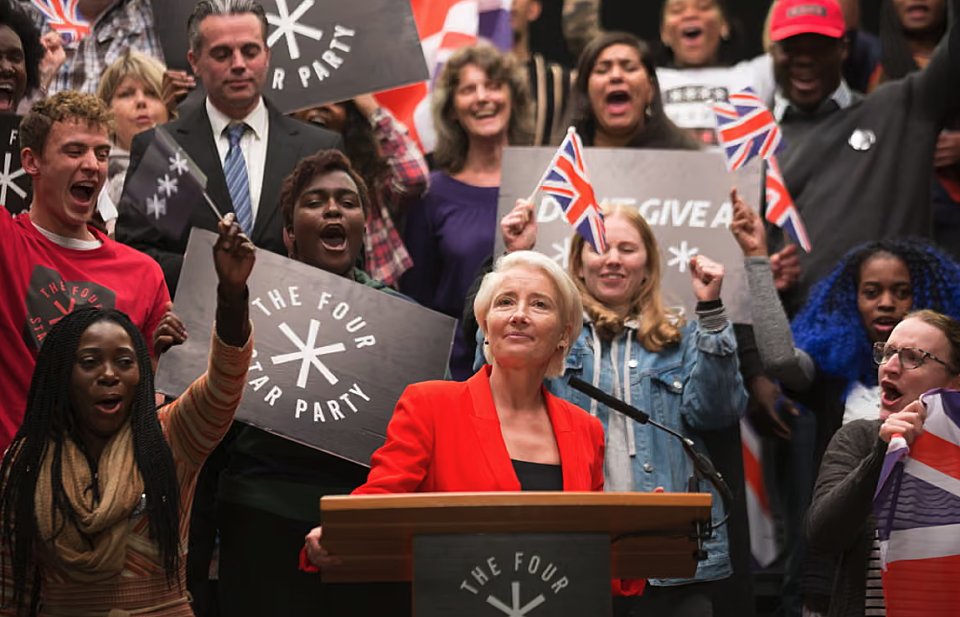
Pauline Hanson and the frightening lesson of ‘Years and Years’
Posted on 07 Oct 2026
Our Community's founder and leader, Denis Moriarty, writes that when he watched an over-the-top…
Posted on 28 Jan 2026
By Denis Moriarty, founder and group managing director, Our Community

This year’s Adelaide Writers’ Week began with the cancellation of a talk by Palestinian-Australian author Randa Abdel-Fattah and rapidly developed into a combination of the best bits of the wreck of the Hindenberg and the Batley Townswomen's Guild's re-enactment of the battle of Pearl Harbor, writes Our Community's founder and leader, Denis Moriarty.
I can’t say I was particularly affected by the erasure of this talkfest. Listening to writers talk is about as enlightening as watching architects dance or seeing composers make paper planes. It’s really not what we pay them for. As someone who works in the not-for-profit sector, though, I do have an interest in how organisational governance works, and this was, as ex-director Louise Adler said, a “masterclass in poor governance”.
The Adelaide Festival Corporation isn’t a not-for-profit. It used to be, but then it got into a financial hole and had to be bailed out by the government, which wasn’t going to let go completely. The corporation is a QUANGO – a quasi-autonomous non-governmental organisation.
So, if the government is guaranteeing the finances of the festival, why wouldn’t it just run the thing with its own people? Why hand it over to a half-and-half, something that’s neither fish, nor flesh, nor good red herring?
Because the government wants to have some insulation from the always potentially explosive decisions that funding for the arts so often involves. Plays, films, and books aren’t designed to seek consensus, and no minister wants the most provocative statement of the most transgressive artist in a divisive era hanging around their neck at election time.
That’s obviously sensible, but it’s also obviously true that (a) no politician likes relinquishing power, any power, entirely, and (b) it’s not that easy to distance the government from an intellectual and societal punch-up; whatever the legal structure, people are going to want to know where you stand.
That’s why the Corporation’s 1998 Act combines the incompatible provisions that, on the one hand, “14.1. …the board is subject to the general control and direction of the Minister”, and on the other hand, “14.2. No Ministerial direction can be given … as to the artistic nature or content of… performances or other events or activities conducted or promoted by the Corporation”. It’s saying, more or less, “14.1. The Minister can eat his cake… and 14.2 The Minister can have it too”. Good luck with that.
Writers’ Week is run by the director, who answers to the Adelaide Festival Corporation, which is appointed by the SA government. Specifically, if you look for the minister responsible it’s both the Premier (Peter Malinauskas) and the Minister for the Arts (Andrea Michaels), whichever is the more trigger-happy.
“Sawing off the branch while you’re standing on it is very seldom the optimum solution.”
The general rule with governance is that the upper levels provide general direction and the administrative levels take the day-by-day decisions. If the director is taking too many decisions that the corporation’s not happy with, or the corporation’s taking decisions that the minister’s not happy with, the theoretical remedy is that the minister appoints a new corporation or the corporation appoints a new director.
Both of these actions, though, involve the minister or the corporation taking direct responsibility for a decision, switching them from the role of referee to that of punching bag. The SA premier preferred to play the Wizard of Oz – “Pay no attention to the man behind the curtain!” He wrote to the corporation, in private, that while the decision on whether to program Dr Abdel-Fattah remained one for the Board, he wanted to put it on the record that the South Australian Government fundamentally opposed the inclusion of Dr Randa Abdel-Fattah on the 2026 Adelaide Writers' Week program and reserved the right to make public statements to this effect.
He said he also wanted to make it clear that he believed that the Board's failure to remove Dr Abdel-Fattah from the program following the Bondi terror attack, would be contrary to the Board's broader responsibility to the Adelaide Festival and Adelaide Writers' Week.
The line between that and a direction under “the general control and direction of the Minister” is virtually invisible.
The corporation tried to shift the responsibility for cancelling Abdel-Fattah off their shoulders to the vibe generally, saying “it would not be culturally sensitive to continue to program her at this unprecedented time so soon after Bondi”. This worked about as well as could be expected. Most of the other participants withdrew, the Week went down, and Adler resigned. The Adelaide Festival Corporation has now been entirely reconstituted, though still without any actual artists of any kind, and has apologised to Abdel-Fattah.
In the event, then, the brouhaha demonstrated another reason why governments should take a hands-off approach to artistic decisions: they’re spectacularly bad at them. Whatever else may be said about Louise Adler’s work, and I could say a lot, it’s clear that she was chosen as director because she had a wide range of contacts in the Australian arts community – writers and their audiences – and a pretty good idea of what people would and wouldn’t accept. Malinauskas didn’t. It may be that SA voters approved of his opinions on Abdel-Fattah to the extent that they didn’t mind losing all those tourists, but I frankly doubt it.
If there is a moral to this story, it’s that you should stand by your delegations. If you’ve passed the responsibility for a decision down the chain and it goes, as you think, catastrophically wrong, it’s on you. Fix it for next time. Sawing off the branch while you’re standing on it is very seldom the optimum solution.
Denis Moriarty is group managing director of OurCommunity.com.au, a social enterprise that helps the country's 600,000 not-for-profits.
We're proud to take a stand on progressive issues. Here are more recent opinion pieces.
Posted on 07 Oct 2026
Our Community's founder and leader, Denis Moriarty, writes that when he watched an over-the-top…

Posted on 30 Sep 2026
After the biggest AFL game of the year, one player proudly wore the flag of his birth country and…

Posted on 23 Sep 2026
There are solutions to counter the rise of One Nation but they might not be residing in the mess…

Posted on 03 Sep 2026
Denis Moriarty has an issue with insurance companies varying premiums because of what they perceive…
Posted on 26 Aug 2026
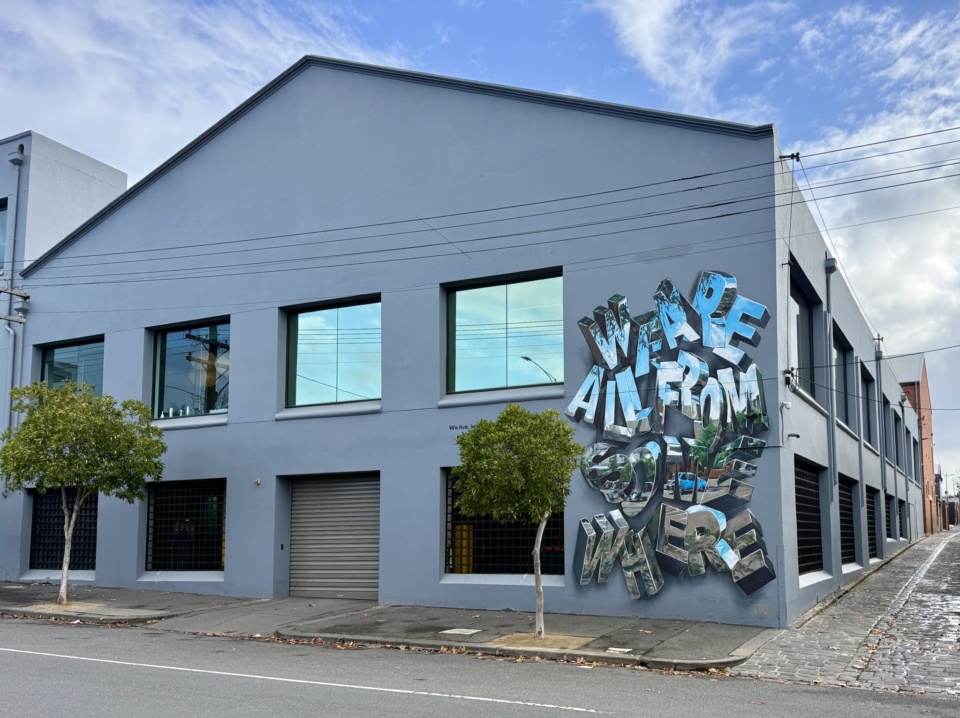
Our Community's founder and leader, Denis Moriarty, says he commissioned a new piece of street art…

Posted on 12 Aug 2026
Our Community's founder and leader, Denis Moriarty, says fostering a child was his worst nightmare,…
Posted on 15 Jul 2026
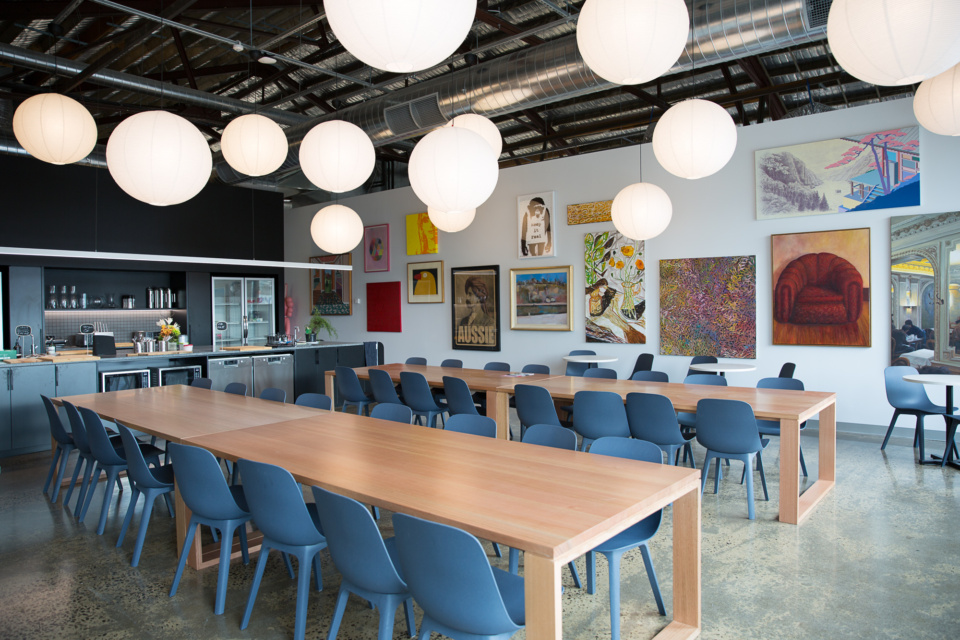
Our Community's founder and leader, Denis Moriarty, on what's special about the shared workplace…

Posted on 08 Jul 2026
The Royal Australasian College of Physicians has found itself facing serious scrutiny from the…

Posted on 30 Jun 2026
Australian house prices rose roughly 8,300 per cent between 1970 and 2025, so it would seem…
Posted on 17 Jun 2026
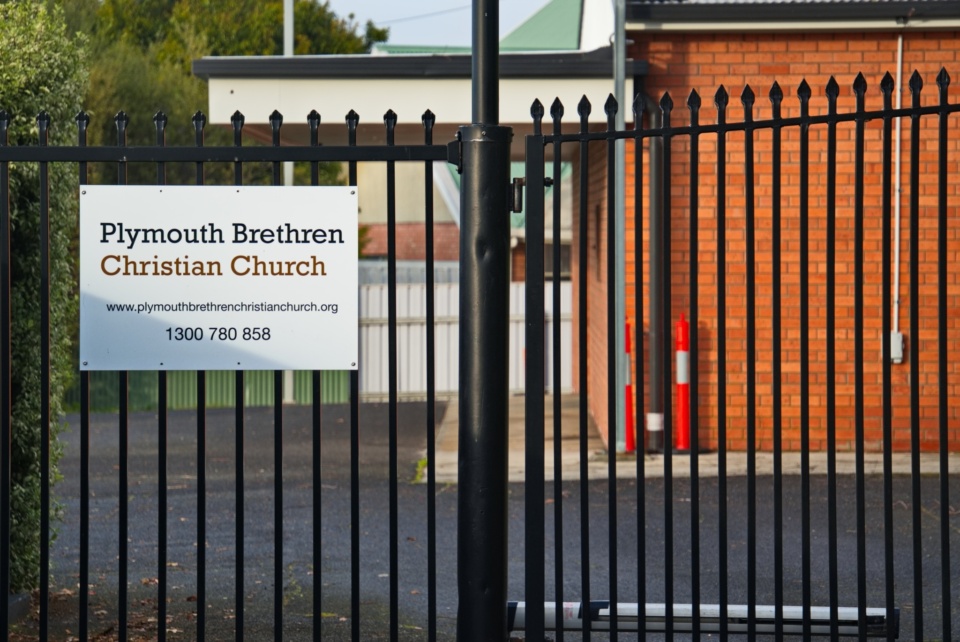
If charges are proven that members of the Brethren movement took part in partisan political…

Posted on 03 Jun 2026
Why exactly are we still getting a day off to celebrate a day that is not the actual birthday of…

Posted on 20 May 2026
It is not really a surprise that we have trouble getting our heads around what the rise of…