
Pauline Hanson and the frightening lesson of ‘Years and Years’
Posted on 07 Oct 2026
Our Community's founder and leader, Denis Moriarty, writes that when he watched an over-the-top…
Posted on 14 Oct 2025
By Denis Moriarty, founder and group managing director, Our Community

The idea of "long term" is not something that sits well in the social media era, yet governments should be more prepared than most to devote the time and effort required to fix structural community issues, no matter how long it takes, writes Our Community's founder and leader, Denis Moriarty.
I once had an apricot tree that produced magnificent fruit, year after year. After some decades, though, it was looking a little rickety, and I called in a tree surgeon. She looked over it, made some notes, and gave me some advice that not only dealt with the immediate problem but, I have since found, is applicable to a number of other situations.
“Call me in 10 years ago,” she said.
The Victorian government is turning its mind to what to do about gang-related violence affecting the Sudanese community. Solutions, as the premier says, “can’t just be imposed upon the community. They must come from the community.” She’s convening the government’s South Sudanese Australian Youth Justice Expert Working Group, which is good, but also not nearly enough. And I know something about this, because the government did call me, among others, in on it. Twenty years ago.
Back in 2006 I was a member of the Ministerial Advisory Committee for Victorian Communities, headed by the much-missed Joan Kirner. John Thwaites, then Deputy Premier and Minister for Communities, asked us to advise him on strengthening communities – what worked, what were the barriers to success, and what were the lessons from previous projects.
Our report, Strong Communities: Ways Forward, set out what we’d learned from our consultations with ethnic communities, municipalities, police, and people working in the field. We recommended (I’m simplifying considerably, but still) whole-of-government co-operation to support increased participation by disadvantaged groups.
The report was accepted, praised, endorsed, and to a certain extent implemented. A couple of years later the Department for Communities was abolished, its projects redistributed, and its initiatives eventually deprioritised.
The report itself has gone down the memory hole. It’s available now because I put it up on my company’s own website, but the government offers no such link. The parliamentary library may have a copy, I suppose, but the South Sudanese working group wouldn’t know to look for it.

Every organisation is faced with preserving a working memory of what’s been done and said, what’s been learned and what’s been burned, through the inevitable changes in personnel and structure. The public service (which doesn’t often have widespread purges) should be better at it than most, but it’s not. It’s not one of the things that gets incentivised.
The state can’t go bankrupt, or be taken over by a competitor, or reach retirement age, and it should be better than private industry at keeping projects running for as long as they’re needed. It doesn’t seem to be.
John Thwaites’ development of community development funding within specific location plans was a clear advance. I remember Joan Kirner saying, “If we can get these recommendations implemented, this could be one of our great legacies.” So much for that, then.
Governments favour new projects, new announcements, new publicity. Carrying on with what their predecessors saw as important is tedious, if not actually irritating. Multi-agency co-ordination offers a multitude of possible break points where necessary contacts can be lost. Money needs to be recovered for other priorities, or for general budgetary discipline, and yesterday’s achievements can find themselves orphans.
Community problems aren’t the flowers of last week’s rain. They have deep roots, and they can’t be addressed without long-term funding for specific neighbourhood problems. “Long-term” is not a word that sits well in the social media era.
“Community problems aren’t the flowers of last week’s rain. They have deep roots, and they can’t be addressed without long-term funding for specific neighbourhood problems.”
The public service has spent the past few decades getting to be flexible, responsive and up-to-the-minute. In doing that, it’s lost the ability to maintain a consistent position over time. We need the bureaucratic equivalent of elders – people who can remember farther back than the last election, and who can find things that aren’t on their phones.
The English writer GK Chesterton once said that nobody should be allowed to remove a fence who didn’t remember why people had thought it was needed in the first place. People who defund a program should operate under the same rules.
The South Sudanese Australian Youth Justice Expert Working Group is a good beginning, and it’s a great improvement on complaining that people are too afraid to go out to dinner, as former Coalition leader Peter Dutton infamously suggested about street gang violence, but it’ll have to be supported by real resources, and we’ll have to keep it running for decades, and the reporting systems will need to include those annoying smoke-alarm sirens telling you when something’s been turned off by mistake. Communities take work, and commitment, and patience. And memory.
Denis Moriarty is group managing director of OurCommunity.com.au, a social enterprise that helps the country's 600,000 not-for-profits.
This article was first published in The Mandarin.
We're proud to take a stand on progressive issues. Here are more recent opinion pieces.
Posted on 07 Oct 2026
Our Community's founder and leader, Denis Moriarty, writes that when he watched an over-the-top…

Posted on 30 Sep 2026
After the biggest AFL game of the year, one player proudly wore the flag of his birth country and…

Posted on 23 Sep 2026
There are solutions to counter the rise of One Nation but they might not be residing in the mess…

Posted on 03 Sep 2026
Denis Moriarty has an issue with insurance companies varying premiums because of what they perceive…

Posted on 26 Aug 2026
Our Community's founder and leader, Denis Moriarty, says he commissioned a new piece of street art…

Posted on 12 Aug 2026
Our Community's founder and leader, Denis Moriarty, says fostering a child was his worst nightmare,…

Posted on 15 Jul 2026
Our Community's founder and leader, Denis Moriarty, on what's special about the shared workplace…

Posted on 08 Jul 2026
The Royal Australasian College of Physicians has found itself facing serious scrutiny from the…

Posted on 30 Jun 2026
Australian house prices rose roughly 8,300 per cent between 1970 and 2025, so it would seem…
Posted on 17 Jun 2026
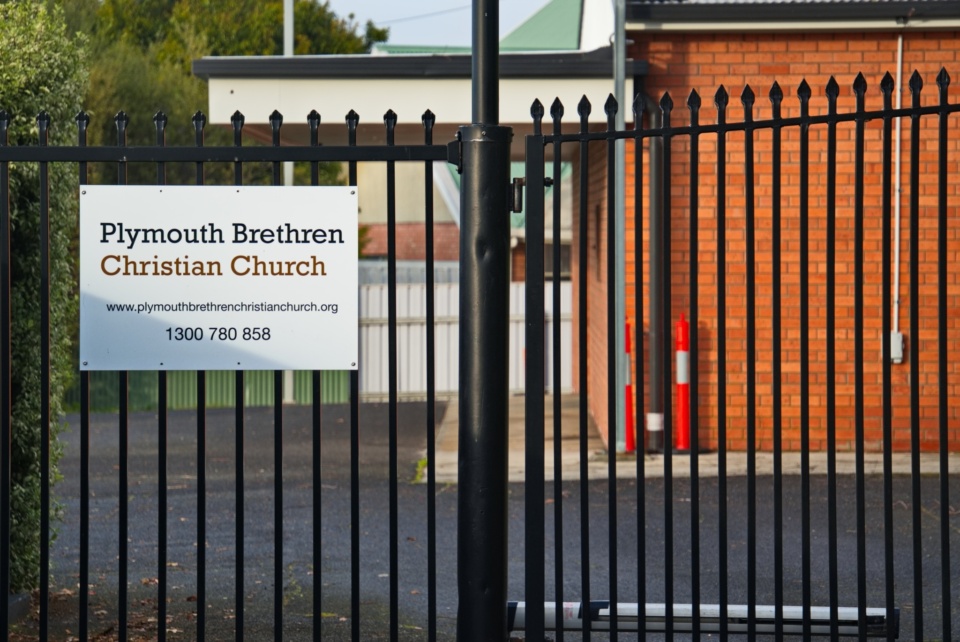
If charges are proven that members of the Brethren movement took part in partisan political…

Posted on 03 Jun 2026
Why exactly are we still getting a day off to celebrate a day that is not the actual birthday of…

Posted on 20 May 2026
It is not really a surprise that we have trouble getting our heads around what the rise of…