
Pauline Hanson and the frightening lesson of ‘Years and Years’
Posted on 07 Oct 2026
Our Community's founder and leader, Denis Moriarty, writes that when he watched an over-the-top…
Posted on 02 Sep 2025
By Denis Moriarty, group managing director, Our Community

Words live, evolve, and sometimes die. Some words are invented from scratch, some are old words that have changed their meanings, and some words just drift out of fashion and come to our notice only when we trip over their fossils.
One such word is “benevolent” - well-meaning, charitable - which has almost entirely disappeared from conversational use except in the phrase “benevolent dictator”.
The only other context where the word “benevolent” is still meaningful is in Australia’s tax laws, which provide special tax breaks for Public Benevolent Institutions (PBIs) - in particular, it lets them receive tax-deductible donations.
A PBI is, according to the tax office, a particular kind of charity - a charity whose main purpose is to relieve poverty, sickness, suffering or disability, more or less directly.

That’s basically the philanthropic tradition we inherited from the British ascendancy (think Lady Bountiful delivering nourishing soup to the cottages of the deserving poor).
The word “benevolence” is the problem. It sits in the legislation like a turd in a punchbowl.
The trouble is that “benevolence” isn’t simply old-fashioned or unclear, it’s actively opposed to modern notions of self-help, autonomy and dignity.
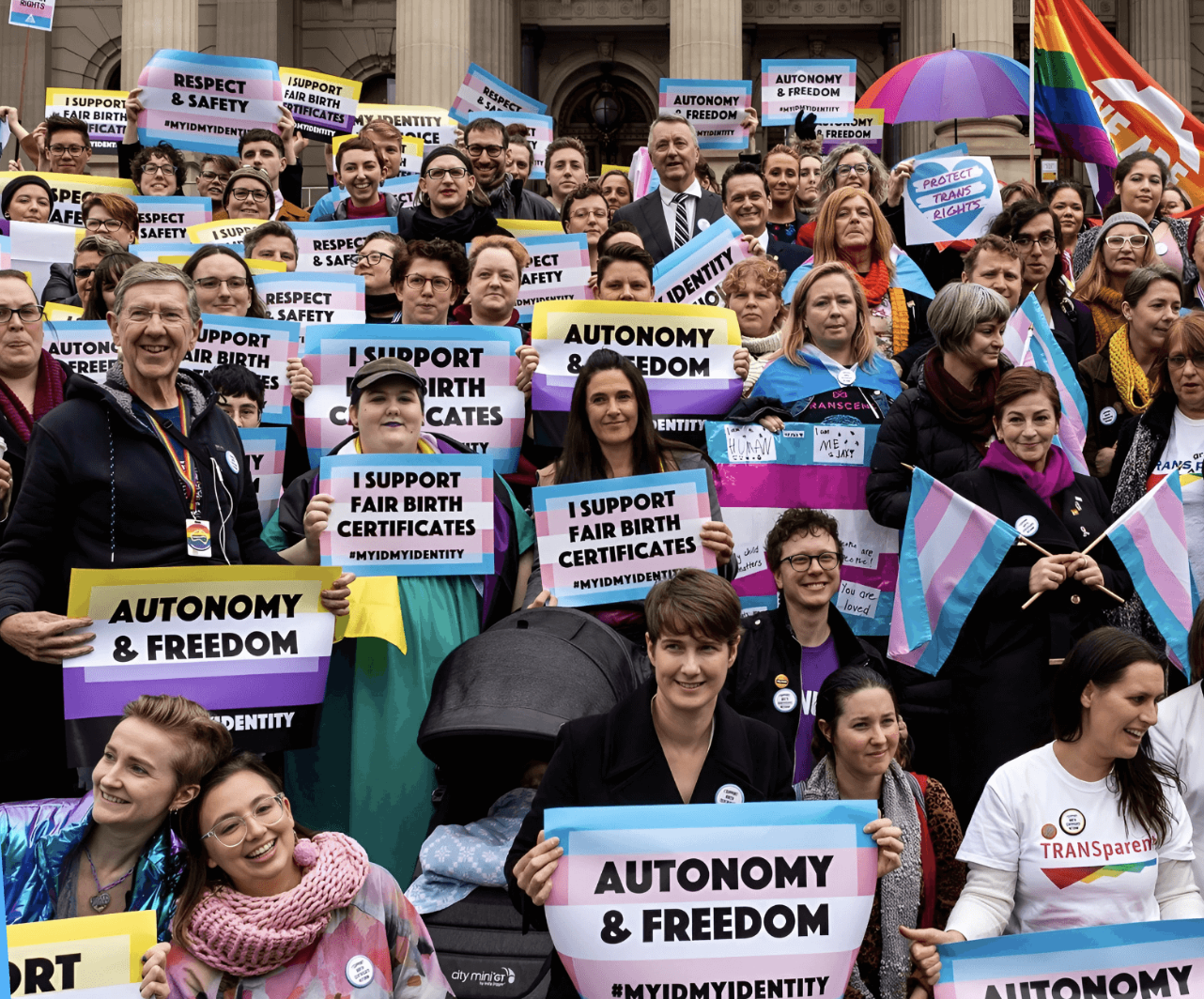
Anything that affects tax rates is going to be contested, and the latest legal argument emerged when a charity called Equality Australia Ltd (EAL), with a goal of “changing laws and social practices that were injurious to LGBTQI+ persons”, applied to the Australian Charities and Not-for-profits Commission (ACNC) to be registered as a PBI.
The ACNC knocked it back on four grounds:
Equality Australia Ltd took the decision upstairs to the Administrative Appeals Tribunal (AAT), which knocked the ACNC back on most of its points.
No, under current usages of the term, a PBI didn’t have to play a direct and immediate role in providing relief: “...activities that are inherently prophylactic [preventative] in nature can still be regarded as the stuff of a public benevolent institution.”
No, political lobbying isn’t a disqualification: “positive engagement with government was often a necessary feature of charitable work, and charities are often required to work with the government, and must compete for its attention.”
Even if not all LGBTQI+ people experience distress, they do experience stress: “the stress of members of minorities who are treated differently” [because of] “structural discrimination that manifests in a range of discriminatory practices and experiences in the lives of many people who identify as LGBTIQ+”.
“Let’s throw ‘benevolence’ into the rubbish bin of history and encourage actual reform at every bloody level.”
Having rejected most of the ACNC’s arguments, however, the Tribunal then rejected Equality Australia Ltd, finding that “an entity that is organised to advocate for reform and change is (at least in this instance) too far removed from the traditional concepts of benevolence, even allowing for the evolution that has occurred in our understanding of that term”.
As not-for-profit law doyen and guru Myles McGregor-Lowndes commented in his Legal Case Reports Series, “’benevolence’ is a concept from a long past age, evoking notions of soup kitchens.
“The requirement that those needing its aid should arouse ‘pity and compassion’ is paternalistic and reflects an outdated view of disadvantage and disability.
“Such 1930s notions are no longer a definitional touchstone, and, given the trajectory of community thought, will increasingly become irrelevant.”
McGregor-Lowndes suggested a few options for updating the notion of benevolence:
None of those things happened.
Equality Australia Ltd appealed the Tribunal’s decision to the Federal Court, which upheld the Tribunal, basically because there’s no way around the fact that the word “benevolence” still carries that poisonous undertone of “nourishing soup”.
The federal Minister for Charities, Andrew Leigh, has now cut through the crap (thanks - this is what leadership looks like) and simply got the government to add Equality Australia Ltd to the tax office’s list of deductible gift recipients (DGRs), or organisations whose donors get a tax break.
This has, naturally, attracted opposition from religious conservatives and the Murdoch press, but it’s the right thing to do - up to a point.
If the rule is stupid and misguided, and it is, the best way to fix it is by changing the rule, not by approving case-by-case exceptions.
(Hey, not-for-profits. Get on the blower to the minister today. Can’t hurt.)
Why do we Australians and bureaucracies so often let ourselves be tied down by the misconceptions of our semi-colonial great-great-grandparents? Why is it so hard to fight through the cobwebs?
Let’s throw “benevolence” into the rubbish bin of history and encourage actual reform at every bloody level.
We’re not talking revolution – we’re talking improving our communities.
Bravo, Andrew Leigh - this is what a Minister for Charities should do.
And thank you, Equality Australia Ltd staff and board members, for not giving up.
Denis Moriarty is group managing director of OurCommunity.com.au, a social enterprise that helps the country's 600,000 not-for-profits.
We're proud to take a stand on progressive issues. Here are more recent opinion pieces.
Posted on 07 Oct 2026
Our Community's founder and leader, Denis Moriarty, writes that when he watched an over-the-top…

Posted on 30 Sep 2026
After the biggest AFL game of the year, one player proudly wore the flag of his birth country and…

Posted on 23 Sep 2026
There are solutions to counter the rise of One Nation but they might not be residing in the mess…

Posted on 03 Sep 2026
Denis Moriarty has an issue with insurance companies varying premiums because of what they perceive…

Posted on 26 Aug 2026
Our Community's founder and leader, Denis Moriarty, says he commissioned a new piece of street art…

Posted on 12 Aug 2026
Our Community's founder and leader, Denis Moriarty, says fostering a child was his worst nightmare,…

Posted on 15 Jul 2026
Our Community's founder and leader, Denis Moriarty, on what's special about the shared workplace…

Posted on 08 Jul 2026
The Royal Australasian College of Physicians has found itself facing serious scrutiny from the…

Posted on 30 Jun 2026
Australian house prices rose roughly 8,300 per cent between 1970 and 2025, so it would seem…
Posted on 17 Jun 2026
If charges are proven that members of the Brethren movement took part in partisan political…

Posted on 03 Jun 2026
Why exactly are we still getting a day off to celebrate a day that is not the actual birthday of…

Posted on 20 May 2026
It is not really a surprise that we have trouble getting our heads around what the rise of…