Pauline Hanson and the frightening lesson of ‘Years and Years’
Posted on 07 Oct 2026
Our Community's founder and leader, Denis Moriarty, writes that when he watched an over-the-top…
Posted on 18 Feb 2026
By Clare Feenan, program manager, Pathways to Politics for Women WA
You wouldn’t try to fix a complex system with one tool. You’d widen the toolkit, improve the skillset and reduce the risk of failure. Politics is no different. Yet at a time of global uncertainty, many political systems still draw leaders from a narrow and familiar pool.
A lack of choice isn’t strength. It’s vulnerability. The diversity of our society offers ample choice.
Around the world, geopolitical pressure is exposing a problem deeper than ideology or alliances: poor decision making. When leadership groups are small and insular, governments are more prone to groupthink, overconfidence and blind spots. This weakens economic management, undermines public trust and raises the risk of costly mistakes.
Expanding pathways to increase diversity in politics isn’t about symbolism. It’s about performance, and it’s about giving voters real choice. Democracies work best when citizens can choose between candidates with different experiences and ideas.
When leadership pools are narrow, systems underperform. When they widen, outcomes improve. We know this not because it sounds fair, but because the evidence is clear.
A world-first Australian study published in 2020 by the Bankwest Curtin Economics Centre and the Workplace Gender Equality Agency tracked leadership changes across thousands of companies and found a direct causal link between leadership diversity and better corporate performance.
Companies that appointed a female CEO increased their market value by around five per cent, roughly $80 million for an average ASX200 firm. Increasing the share of women in senior leadership by just 10 percentage points lifted market value by more than six per cent. When companies reduced the number of women in leadership roles, performance declined.
The researchers were clear about why. The gains didn’t come from gender alone. They came from broadening the talent pool and breaking the habit of appointing leaders who looked like the last leader. Better governance followed, including more scrutiny, better risk management and stronger long-term decisions.
Politics operates under the same pressures, but with higher stakes. Governments make decisions about budgets, infrastructure, climate risk, national security and social cohesion. Yet political recruitment often remains closed, network-driven and risk-averse.
“The value isn’t just in adding more women, it’s in widening the pool of people who are able to lead.”
Safe seats and narrow pipelines reward familiarity over capability and loyalty over performance, which weakens democracy. When voters are repeatedly offered the same types of candidates, elections become less competitive, and parties focus more on holding power than earning it.
We should want political parties competing hard for our votes. Active and engaged candidates prioritise responsiveness to local issues. Electoral competition creates healthy contests of ideas and greater attention to voter needs. Ultimately, competition promotes better political candidates.
The value isn’t just in adding more women, it’s in widening the pool of people who are able to lead. First Nations people, culturally and linguistically diverse people, economically disadvantaged people, and people with disabilities bring lived experience of systems often designed without them. Excluding these perspectives doesn’t make for responsive policy; but it does make it incomplete.
Over the last decade there has been a growing business case globally for diversity, equity and inclusion. Organisations with diverse leadership teams consistently outperform their peers, financially, strategically and socially. Diversity improves outcomes not because it replaces expertise, but because it strengthens decision-making, reduces blind spots, and better reflects the complexity of the world organisations operate in.
Leadership works the same way. When the people affected by decisions are missing from the room, critical perspectives are missed, but when they are present as decision makers, not just consultees, policy improves. Voters don’t need leaders who fit a stereotype. They need leaders who can make sound decisions under pressure. Systems that widen who gets to lead are more likely to produce that outcome.
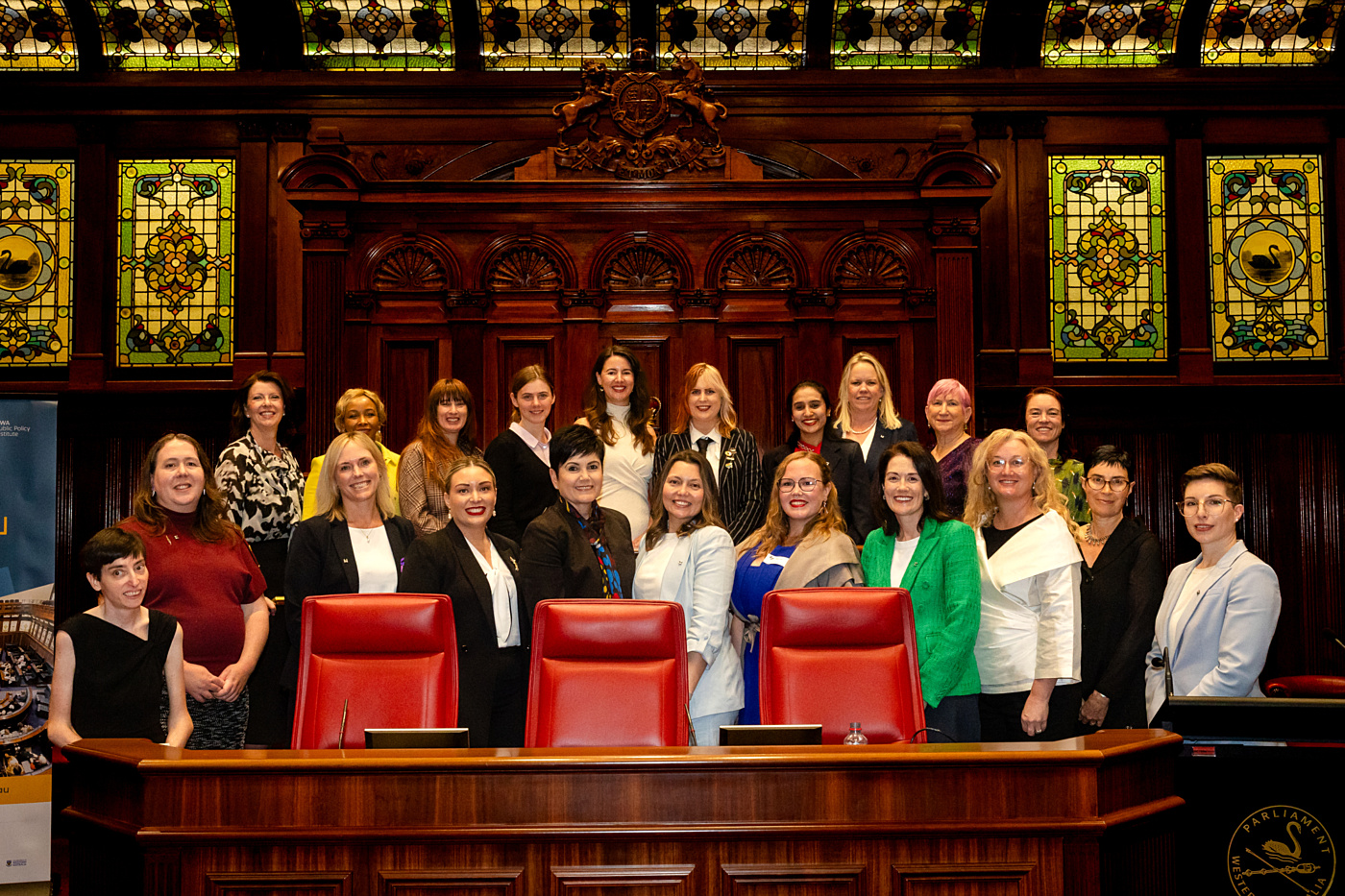
That’s why practical pathways into politics matter. Programs such as Pathways to Politics for Women don’t bypass voters or guarantee outcomes. They remove structural barriers that stop capable women from standing in the first place.
These programs focus on practical skills: policy development, campaign strategy, media engagement, ethical leadership and navigating selection processes. And just as importantly, they build networks – the informal infrastructure that often determines who gets encouraged and endorsed.
During the past decade, this approach has strengthened the pipeline by improving the quality and diversity of candidates available to voters, including women from culturally diverse backgrounds, regional communities and First Nations communities, and women with disabilities.
In business, ignoring evidence about leadership performance would be irresponsible to shareholders. In politics, ignoring it is irresponsible to citizens. At a time of economic and geopolitical pressures, leadership quality is not a side issue – it is the core issue.
Better politics starts with better politicians – and better politicians come from better political candidates. At a time of global uncertainty, the question is simple: do we have the right tools in the kit to get the job done?
Applications for the Pathways to Politics for Women program open nationally on Thursday March 5, 2026. Expressions of interest can be made at pathwaystopolitics.org.au.
Clare Feenan is senior program coordinator at the University of Western Australia’s Public Policy Institute and program panager for Pathways to Politics for Women WA.
(A version of this article also ran in the West Australian newspaper.)
Posted on 07 Oct 2026
Our Community's founder and leader, Denis Moriarty, writes that when he watched an over-the-top…
Posted on 30 Sep 2026
There's been a lot of talk about AI this week, and some of it has been frightening. So, is AI good…

Posted on 30 Sep 2026
After the biggest AFL game of the year, one player proudly wore the flag of his birth country and…

Posted on 23 Sep 2026
In his new book Our Place, policy expert Matt Lloyd-Cope argues that housing must be at the heart…

Posted on 23 Sep 2026
There are solutions to counter the rise of One Nation but they might not be residing in the mess…

Posted on 03 Sep 2026
Denis Moriarty has an issue with insurance companies varying premiums because of what they perceive…
Posted on 02 Sep 2026
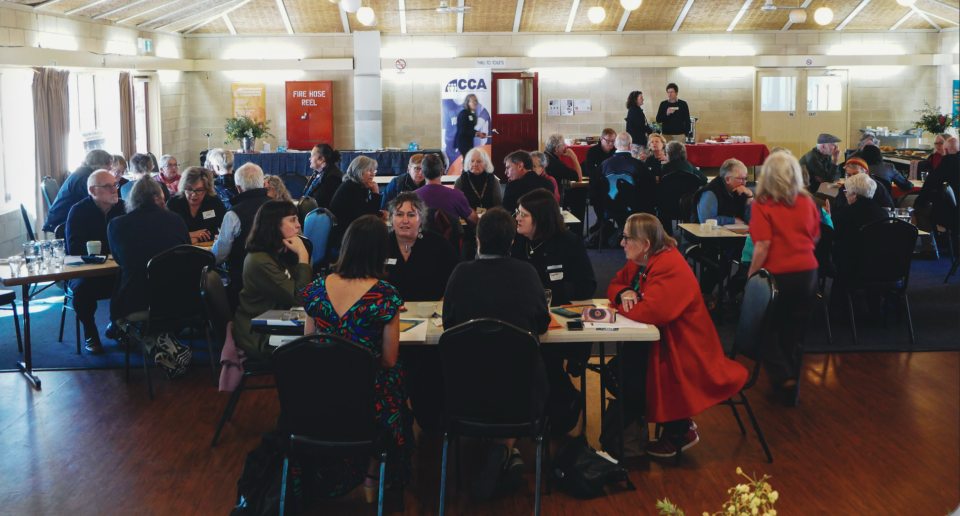
Yesterday, at a meeting just outside Castlemaine in Victoria, 70 people came together to hear…

Posted on 26 Aug 2026
Our Community's founder and leader, Denis Moriarty, says he commissioned a new piece of street art…

Posted on 19 Aug 2026
Government funding is at the centre of Australia's charity and not-for-profit sector – our number…

Posted on 12 Aug 2026
Our Community's founder and leader, Denis Moriarty, says fostering a child was his worst nightmare,…

Posted on 05 Aug 2026
The charity and not-for-profit sector is vital to our economy and the wellbeing of communities…
Posted on 05 Aug 2026
As the Global Impact Summit kicks off in Sydney today, Equitable Philanthropy’s Catherine Brooks…