
Pauline Hanson and the frightening lesson of ‘Years and Years’
Posted on 07 Oct 2026
Our Community's founder and leader, Denis Moriarty, writes that when he watched an over-the-top…
Posted on 01 May 2026
By David Crosbie, CEO, Community Council for Australia

In all charities and NFPs – big and small – annual budgeting brings with it a degree of trepidation. The reality is that many charities and NFPs don’t know for certain what income they might achieve in the coming 12 months.
In managing this uncertainty, charity and NFP leaders and their boards tend to adopt one of three main approaches to forward budgeting.
The first approach involves preparing a forward budget based on the income the organisation has already locked in to be paid over the coming 12 months. This is the conservative low-risk approach. For some, this is the only prudent approach. The limitation of this approach is that it reduces organisational capacity and minimises opportunities for the organisation to maintain or increase service provision to communities in need. The benefit is that the organisation is financially secure, and it requires less reserve capital.
The second approach involves preparing a budget based on a “best guess” or medium risk. In any 12-month period some funding contracts may end, but there is also a good chance that some will be renewed or new contracts will be obtained. Similarly, although income from fundraising, bequests and sponsorships may be uncertain, it’s not unrealistic to budget for an income stream based on past performance. The limitation of this approach is that if there is a surprise loss of a funding contract, or the predicted income doesn’t eventuate, the organisation is exposed and would need to be able to quickly draw down on reserve capital or reduce expenditure. The advantage is that more staff can be retained and more services provided to communities than in the low-risk approach. It also creates opportunities to push for more funding by leveraging the increased organisational capacity.
The third scenario is the optimistic budget, a more high-risk approach. It assumes most of the funding the organisation is seeking will be realised and the funding for programs due to end over the coming 12 months will mostly be renewed. This scenario enables the organisation to retain and reward skilled staff while adopting a “can do” expanded approach to building organisational capacity and better meeting community needs. This optimistic approach exposes the organisation to a higher level of risk if projected income streams don’t eventuate. It may also require higher levels of readily available reserve capital. But higher risk creates higher levels of opportunity.
Managing financial risk is not a challenge that is unique to charities and NFPs. Businesses also need to manage risk in their budgets and forward planning. But there are four important factors that make budgeting in charities and NFPs more uncertain and exacerbate the risks.
The first compounding factor is that charities and NFPs are seeking to fulfill a purpose and better serve their communities, not just generate profit or return on investment to shareholders or owners. This is a fundamental difference that makes the budgeting process more complex and demanding, but I will not explore it in detail here.
A second factor is the terms under which many charities and NFPs are contracted. CCA and others have for many years advocated for longer funding contract terms for charities and NFPs. Stop, start, short-term contracts reduce effectiveness and increase risk, and yet we’re still seeing many short-term funding contracts across the charity and NFP sector.
“Stop, start, short-term contracts reduce effectiveness and increase risk, and yet we’re still seeing many short-term funding contracts across the charity and NFP sector.”
Another difficulty with current contracting in the sector is the lack of timely notice about future funding. Time and again, charities and NFPs are left hanging until the last possible minute, or even beyond, before (government) funders renew contracts or make funding decisions. CCA has members who have had to carry staff and other program costs beyond the end of their funding contract period (at considerable risk) because governments or other funders couldn’t provide clear advice about whether funding would be continued.
A further compounding factor in charity and NFP budgeting is the lack of comparable financial data and industry analysis. In most businesses it’s possible to benchmark costs and income against those of comparable businesses in the same industry. Financial performance data is typically backed by industry-wide analysis and extensive predictive modelling about future markets, income and costs. This information is considered invaluable to those considering investing in an industry or a business. Risk is more accurately calculated through modelling of financial data across many scenarios over many years. Of course, businesses will always face a level of uncertainty about future income, but the level of uncertainty is significantly mediated when you have access to well-researched comparable predictive data and analysis to refer to. Charities and NFPs do not typically have access to this kind of modelling and analysis of risk.
A fourth factor is the capacity to leverage assets and manage income flows through access to debt financing including lines of credit.
A business faced with inconsistent income streams is able to draw on debt financing and lines of credit (loaned against their assets) to better manage risk, spread cash flow fluctuations and enable more consistent investment in their capacity. Farmers, for instance, often rely on lines of credit to enable ongoing operation despite inconsistent cash flows. Charities and NFPs rarely have access to the same financial tools and safety nets.
As noted above, banks and financial institutions draw on decades of industry data and analysis of comparable businesses to accurately predict and cost risk.
If a charity or NFP seeks to establish a loan or line of credit, banks are unlikely to have enough comparable data established over time across many organisations to inform their calculation and pricing of risk.
Charities and NFPs typically end up seeking bespoke deals that banks and others struggle to manage because these deals sit outside well-established commercial risk indicators.
According to the ACNC, Australian charities hold $489 billion in assets, and yet debt financing against these assets is the exception across our sector.
If we want to unlock financial potential, create new opportunities, build capacity and leverage the $489 billion in assets held across the charities sector, we need to change how we calculate risk in our sector, how we budget, how we invest in ourselves, how we invest in our future.
Targeted investment in more appropriate financial products could enable charities and NFPs to budget a little more easily, take more risks, and do more for their communities.
For CCA, that’s a goal worth pursuing.
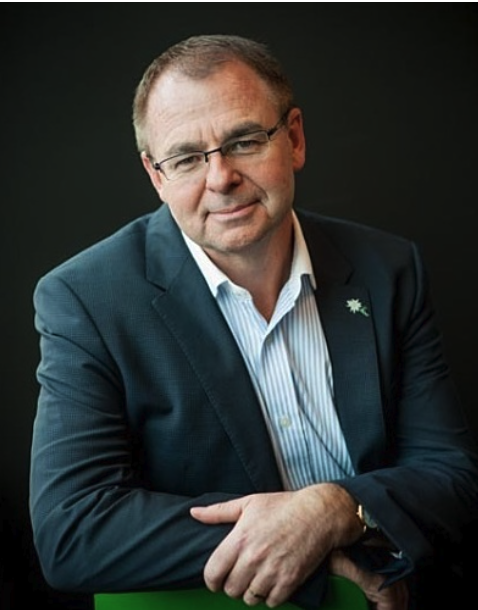
David Crosbie has been CEO of the Community Council for Australia for the past decade and has spent more than a quarter of a century leading significant not-for-profit organisations, including the Mental Health Council of Australia, the Alcohol and Other Drugs Council of Australia, and Odyssey House Victoria.
Posted on 07 Oct 2026
Our Community's founder and leader, Denis Moriarty, writes that when he watched an over-the-top…

Posted on 30 Sep 2026
There's been a lot of talk about AI this week, and some of it has been frightening. So, is AI good…

Posted on 30 Sep 2026
After the biggest AFL game of the year, one player proudly wore the flag of his birth country and…

Posted on 23 Sep 2026
In his new book Our Place, policy expert Matt Lloyd-Cope argues that housing must be at the heart…

Posted on 23 Sep 2026
There are solutions to counter the rise of One Nation but they might not be residing in the mess…

Posted on 17 Sep 2026
My father often googles my name, and as a result, years ago, I received a surprising gift in the…

Posted on 03 Sep 2026
Denis Moriarty has an issue with insurance companies varying premiums because of what they perceive…
Posted on 02 Sep 2026
Yesterday, at a meeting just outside Castlemaine in Victoria, 70 people came together to hear…

Posted on 26 Aug 2026
Our Community's founder and leader, Denis Moriarty, says he commissioned a new piece of street art…

Posted on 19 Aug 2026
Government funding is at the centre of Australia's charity and not-for-profit sector – our number…

Posted on 13 Aug 2026
As a teenager, I attended summer camp for seven years, first spending two weeks at a time camping…

Posted on 12 Aug 2026
Our Community's founder and leader, Denis Moriarty, says fostering a child was his worst nightmare,…