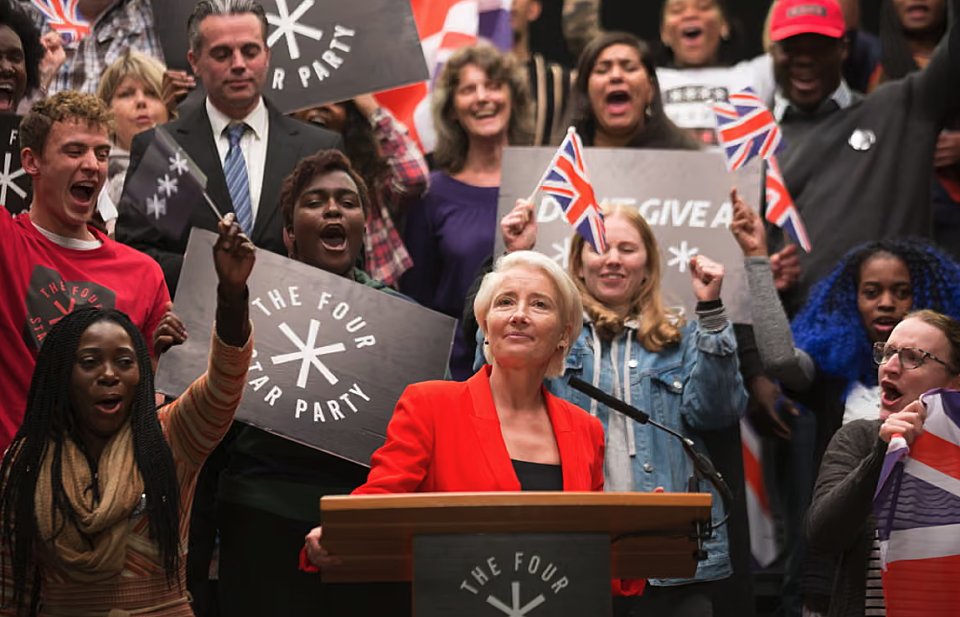
Pauline Hanson and the frightening lesson of ‘Years and Years’
Posted on 07 Oct 2026
Our Community's founder and leader, Denis Moriarty, writes that when he watched an over-the-top…
Posted on 27 May 2026
By Paul Ronalds, CEO, Save the Children Global Ventures

The CEO of Save the Children Global Ventures, Paul Ronalds, says new ACNC guidance on how charities can invest their assets wisely is an encouraging start but doesn’t go far enough. He believes it’s time our charities were nudged to consider how their entire balance sheet can be brought to their mission without sacrificing financial objectives.
Last week I had coffee with the CEO of a large Australian foundation. A few years ago, its board took what felt like a bold step: allocating five per cent of the foundation’s corpus to impact investing while ensuring the rest was negatively screened — to exclude tobacco, weapons, the usual suspects. Progress, certainly. But as we talked about the scale of the problems the foundation exists to solve, a quiet frustration surfaced. The remaining 95 per cent of the corpus is essentially sitting on the sidelines.
“The challenge,” the CEO said, “is convincing trustees.”
I’ve heard this before. And I suspect many readers of this publication have too.
The Australian Charities and Not-for-profits Commission recently released new guidance to help charities invest their assets “wisely, safely and within the guidelines”. It’s a useful document: a clear articulation of trustees’ legal duties, a reminder that investment decisions must serve charitable purposes, and practical guidance on governance processes.
What the guidance does not do – and what the sector urgently needs – is challenge a quiet assumption embedded in most charity investment policies: that maximising financial returns on the corpus is, in itself, a form of mission delivery. It isn’t mission delivery; rather,it is a means to an end, and a relatively modest one at that.
In the private sector, a board that ignored strategic opportunities while sitting on a passive portfolio would be accused of running a lazy balance sheet. Why should charity trustees be held to a lower standard of ambition?
The ACNC guidance tells trustees how not to lose money. It says almost nothing about the ultimately more important obligation to deploy capital purposefully – to treat the balance sheet as an instrument of mission, not just a reservoir of future grants. That’s the next conversation Australian charities need to have.
When trustees hear “impact investing”, many assume it means accepting lower financial returns. The reality is more nuanced. Impact investing encompasses a wide spectrum of risk, return and impact trade-offs. Investments targeting the most underserved communities – where markets have genuinely failed – often do require some compromise on return or risk. That is the honest truth, and trustees should not be misled about it.
But it is not the whole truth. With careful structuring, a single vehicle can offer different investors different risk, return and impact profiles, attracting those who need market-rate returns alongside those willing to accept concessionary ones in exchange for deeper impact.
The Generation Empowerment Fund is a case in point. The fund, developed by Save the Children Global Ventures, is a $100 million-plus blended finance vehicle investing in low-fee community schools across sub-Saharan Africa. The region faces a US$70 billion annual education funding gap. No realistic expansion of government budgets or donor generosity will close that gap. We need private capital – and we need to structure it in ways that make it viable for risk-averse investors.
That’s precisely what the GenEm Fund does. Using a blended finance capital stack, with a development guarantee provided by GuarantCo (backed by the UK, Dutch and other governments) and a first-loss layer provided by Save the Children and philanthropic partners, the fund has attracted a private institutional investor managing capital on behalf of UK pension funds. This is the first time an institutional investor has entered this asset class – and it has done so because the structure protects their capital adequately and delivers a market-rate return.
A UK pension fund cannot accept concessionary returns. Ours won’t need to.
The lesson for Australian charity trustees: impact investing does not require you to sacrifice financial prudence. It requires you to think more creatively about how you use your capital in service of your mission.
The most instructive recent example from the Australian philanthropic sector is the Paul Ramsay Foundation’s decision to adopt a total impact approach, treating its entire balance sheet as a tool for change, not just the grants it distributes. With a multi-billion-dollar balance sheet – including a major shareholding in Ramsay Health Care and an investable endowment now supporting over $150 million in impact commitments – the PRF’s total impact approach signals what is possible when a foundation treats its entire corpus as a tool for change.
The PRF’s Endowment Impact Fund has already committed $139 million across 12 impact funds. For every dollar the PRF has invested, $10.90 has been leveraged from other investors. That is not charity in the traditional sense – it is capital architecture.
This is what the CEO I met last week is trying to build the case for with their own board. Not abandoning financial returns or abandoning prudence, but asking a harder question: If our mission is to address this problem at scale, how do we use our entire balance sheet to do that?
“Impact investing does not require you to sacrifice financial prudence. It requires you to think more creatively about how you use your capital in service of your mission.”
The ACNC’s new guidance is a foundation. But it stops short of what is needed from the charity regulator: an explicit signal that considering mission-aligned investment is not just permissible but an element of good governance.
The international evidence is instructive here. In Japan, the Financial Services Agency published guidelines on impact investing and the Cabinet formally committed to promoting it as part of national economic strategy. The result? Impact investing assets under management in Japan grew 150 per cent in a single year, and not because of a mandate but because of a nudge.
Australia’s charities hold more than $300 billion in net assets, a figure that includes foundations, private ancillary funds (PAFs) and public ancillary funds (PuAFs). Even a modest shift in how that capital is deployed could mobilise resources at a scale that dwarfs current grantmaking. But that shift is unlikely to happen at pace without clearer regulatory encouragement.
The ACNC should consider supplementing its new guidance with a clear statement that charity trustees are expected to consider – and document their reasoning about – the social and environmental impact of their investment decisions, alongside financial returns. Not a mandate. A nudge.
For trustees reading this, the practical question is: where do you start?
The ACNC has told us how to be safe. Now it’s time to be bold.
Paul Ronalds is the CEO of Save the Children Global Ventures, Save the Children's impact investing and innovative finance platform. He writes regularly on innovative finance and the future of the development sector.
Posted on 07 Oct 2026
Our Community's founder and leader, Denis Moriarty, writes that when he watched an over-the-top…

Posted on 30 Sep 2026
There's been a lot of talk about AI this week, and some of it has been frightening. So, is AI good…

Posted on 30 Sep 2026
After the biggest AFL game of the year, one player proudly wore the flag of his birth country and…

Posted on 23 Sep 2026
In his new book Our Place, policy expert Matt Lloyd-Cope argues that housing must be at the heart…

Posted on 23 Sep 2026
There are solutions to counter the rise of One Nation but they might not be residing in the mess…
Posted on 03 Sep 2026
Denis Moriarty has an issue with insurance companies varying premiums because of what they perceive…
Posted on 02 Sep 2026
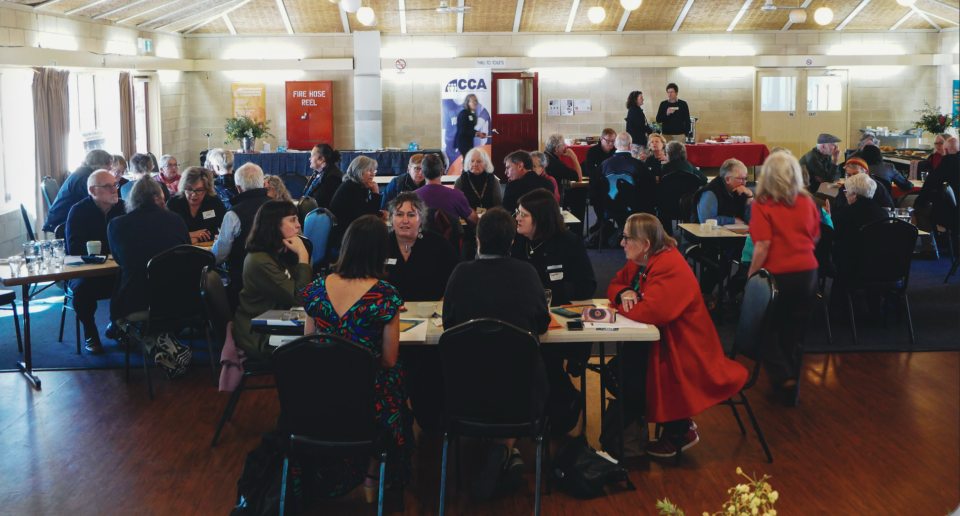
Yesterday, at a meeting just outside Castlemaine in Victoria, 70 people came together to hear…
Posted on 26 Aug 2026
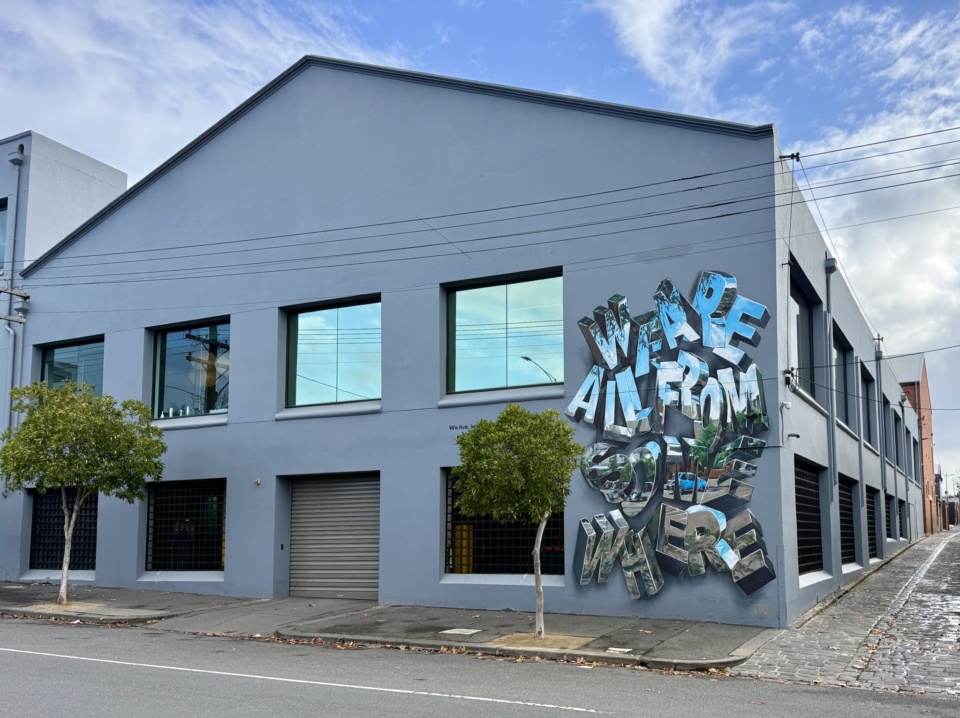
Our Community's founder and leader, Denis Moriarty, says he commissioned a new piece of street art…

Posted on 19 Aug 2026
Government funding is at the centre of Australia's charity and not-for-profit sector – our number…

Posted on 12 Aug 2026
Our Community's founder and leader, Denis Moriarty, says fostering a child was his worst nightmare,…

Posted on 05 Aug 2026
The charity and not-for-profit sector is vital to our economy and the wellbeing of communities…
Posted on 05 Aug 2026
As the Global Impact Summit kicks off in Sydney today, Equitable Philanthropy’s Catherine Brooks…