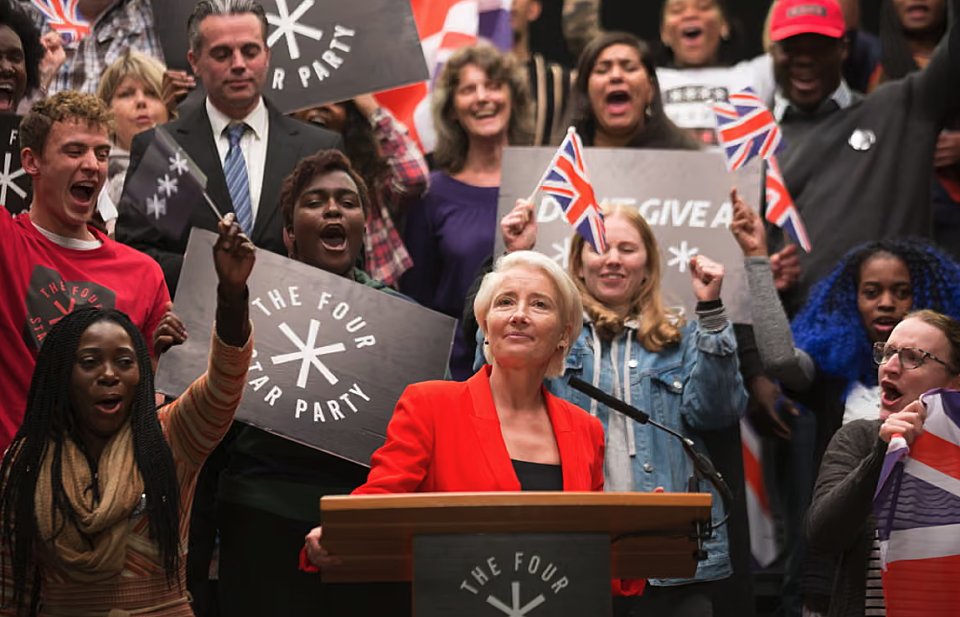
Pauline Hanson and the frightening lesson of ‘Years and Years’
Posted on 07 Oct 2026
Our Community's founder and leader, Denis Moriarty, writes that when he watched an over-the-top…
Posted on 05 Aug 2026
By David Crosbie, CEO, Community Council for Australia

The charity and not-for-profit sector is vital to our economy and the wellbeing of communities across Australia. Improving productivity and effectiveness in this sector is critical to Australia’s future and should be a national priority for governments and communities. It isn’t.
The numbers alone make our case. The sector turns over more than $239 billion a year and holds more than $517 billion in assets. One in nine Australian workers is employed by a charity – over 1.6 million people. The total number of employees is up by around 40 per cent since 2017. Charities spend over $128 billion a year on staff and draw on another 3.9 million volunteers to keep the doors open. These are the numbers of a massive industry group.
We know what needs to change. DGR reform. Pay what it takes. Fairer, longer contracts. Less red tape and duplication. Better impact measurement. A workforce plan. A clear, defined place within government. None of this is new. None of it is contentious, inside the sector or out. Most of it has already been recommended by a parliamentary inquiry or the Productivity Commission. And yet, still, reform seems to be crawling forward slower than a melting glacier.
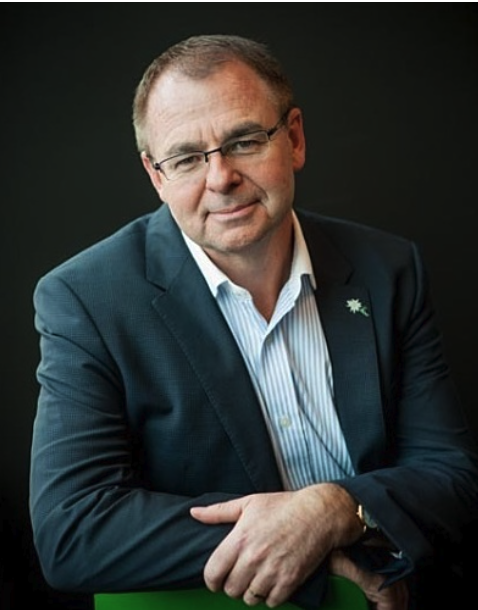
This week I was asked by Minderoo Foundation to talk about what needed to change if we are to become a stronger and more resilient sector. It’s a challenging question, because there is a tendency to recite what has already been agreed and recommended. But for me, the fundamental question here is why haven’t the agreed reforms been implemented?
The first answer is wilful ignorance. This is compounded by a genuine lack of data about how this sector operates and what it's worth. Most Australians respect charities and believe we do good work – and that's about where their knowledge ends, including for the people in government, business and elsewhere who actually make decisions about us.
Over half of charitable expenditure goes on our people. Yet we can't say who we employ, or on what terms, because there’s been no workforce analysis and there’s no plan. What are the conditions our staff work under? What qualifications do they hold? How diverse is our workforce, and our leadership? What's the age profile, the cultural mix, the experience level, and how does any of it compare to the for-profit sector? What do we know about the 3.9 million volunteers propping up our services?
Our workforce is just one area of many where there is no clear sector-wide data on which we can base strong policy planning and advocacy.
Almost half of all charity income comes from government. We know through experience and anecdote across our sector that most of this funding is provided in the form of short-term contracts, which perpetuates reporting burdens and uncertainty, yet we have little hard data on contract length, reporting requirements, autonomy, or whether funding covers the real cost of delivery. Funding shapes everything we do, and we still can't say clearly what it actually costs us to meet the terms in our funding agreements.
Most significant industry groups can model scenarios about the impact of various policies. We can’t. Our data gaps put us at a huge advocacy disadvantage. Without data and modelling, our advocacy is largely based on storytelling and generalisations.
“Add it up – limited data, limited capital, limited voice – and it’s clear that our sector starts every race a lap behind small business and other industry groups. But it doesn't have to be this way.”
This data gap could be addressed if it was a priority. Reinstating the non-profit institutions satellite account – a statistical framework that used to be maintained by the Australian Bureau of Statistics – would be a good start: the last time the ABS published such an account was in 2015. But there is so much more that can and should be done to ensure we have good data on our sector. The data gap holding back our sector is an outcome of decisions made for, by and about our sector.
Follow the money, and you find the second problem. Charities have nowhere near the access to capital and debt financing that small businesses take for granted. Combine our lack of access with short-term funding cycles, and investing in organisational capacity becomes almost impossible.
Few charities hold a line of credit that lets them smooth variable income from governments and other sources over time and invest with any confidence. In contrast, a successful small business will be able to borrow to cut its energy bill, adopt new technology or AI, or hire extra staff to meet or drive demand.
The finance system that supports these types of typical business investments is not well set up to offer investment loans or lines of credit to charities and NFPs. There's no clear pathway to capital or debt financing for most charities.
A third issue that disadvantages our sector compared to others is the lack of advocacy for our sector itself. Our people can be strong and effective advocates, but the focus of this advocacy is to ensure our communities are better served, and our causes are better addressed. We focus on our mission, not ourselves, or building our organisational capacity. It’s almost seen as “selfish” to push for increased investment in our own organisations, let alone to invest our limited money and time in sector-wide collective advocacy.
When charities meet with federal ministers, the conversations will be about what is required to address a need in the community. When a business meets a federal minister, it will be making a case to improve its profitability. The economic sustainability of a charity is rarely on the table for serious discussion, let alone enabling a charity to achieve an increase in surplus or reserve capital.
Add it up – limited data, limited capital, limited voice – and it’s clear that our sector starts every race a lap behind small business and other industry groups.
But it doesn’t have to be this way. Every item on this list can be fixed, if enough of us are willing to invest in fixing it. That's the work CCA, Our Community, Philanthropy Australia and others are now taking on. If more of us work together collectively, we can and will achieve sustainable change across the sector. It’s a choice.
David Crosbie will be our special guest on the Not-for-profit Agenda, our free live news webinar, on Thursday, August 20. Register here.
David Crosbie has been CEO of the Community Council for Australia for the past decade and has spent more than a quarter of a century leading significant not-for-profit organisations, including the Mental Health Council of Australia, the Alcohol and Other Drugs Council of Australia, and Odyssey House Victoria.
Posted on 07 Oct 2026
Our Community's founder and leader, Denis Moriarty, writes that when he watched an over-the-top…

Posted on 30 Sep 2026
There's been a lot of talk about AI this week, and some of it has been frightening. So, is AI good…

Posted on 30 Sep 2026
After the biggest AFL game of the year, one player proudly wore the flag of his birth country and…

Posted on 23 Sep 2026
In his new book Our Place, policy expert Matt Lloyd-Cope argues that housing must be at the heart…

Posted on 23 Sep 2026
There are solutions to counter the rise of One Nation but they might not be residing in the mess…

Posted on 03 Sep 2026
Denis Moriarty has an issue with insurance companies varying premiums because of what they perceive…
Posted on 02 Sep 2026
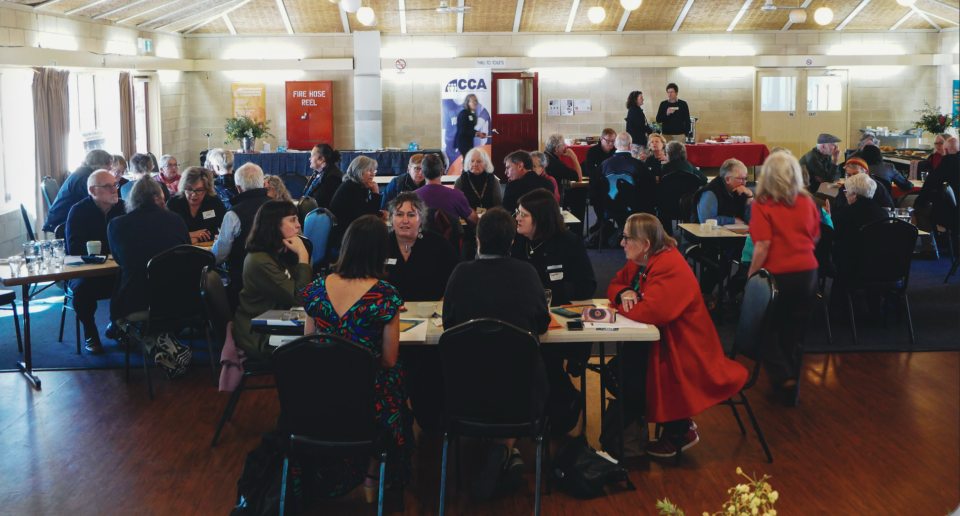
Yesterday, at a meeting just outside Castlemaine in Victoria, 70 people came together to hear…

Posted on 26 Aug 2026
Our Community's founder and leader, Denis Moriarty, says he commissioned a new piece of street art…

Posted on 19 Aug 2026
Government funding is at the centre of Australia's charity and not-for-profit sector – our number…

Posted on 12 Aug 2026
Our Community's founder and leader, Denis Moriarty, says fostering a child was his worst nightmare,…
Posted on 05 Aug 2026
As the Global Impact Summit kicks off in Sydney today, Equitable Philanthropy’s Catherine Brooks…

Posted on 15 Jul 2026
The government is now consulting on changes to the way trusts are taxed. Charities and NFPs need to…