Fence-sitting isn’t going to work if we want better owners corporations
Posted on 21 Oct 2026
The wider not-for-profit sector doesn't pay much attention to owners corporations, but maybe it…
Posted on 07 Oct 2026
By Denis Moriarty, founder and group managing director, Our Community
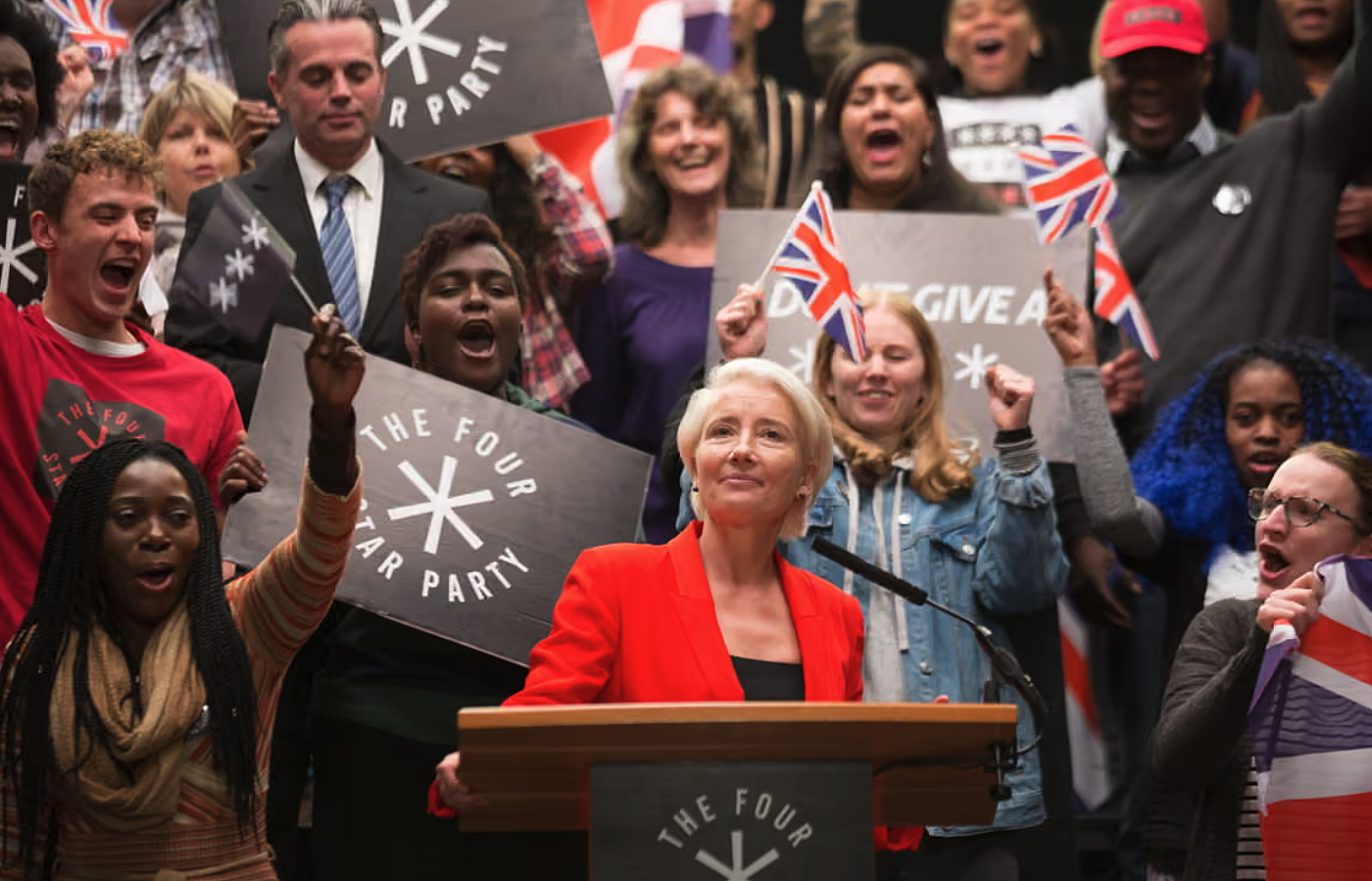
Our Community's founder and leader, Denis Moriarty, writes that when he watched an over-the-top British series about populist politics a few years ago, he hadn’t realised he was previewing a potential Australian future.
There is a television series I think Australians should watch, or perhaps watch again, before we decide that Pauline Hanson and the politics of One Nation are just another colourful part of Australian democracy.
It is called Years and Years. The extraordinary six-part British drama, written by Russell T Davies and first broadcast in 2019, follows an ordinary family through a Britain that gradually becomes less ordinary, less stable and ultimately much darker.
At the centre of the political story is Vivienne Rook, brilliantly played by Emma Thompson. When I first watched Rook, I thought she was terrifying but exaggerated: a fictional populist created to show us what might happen if anger, prejudice, celebrity and simplistic politics were allowed to overwhelm serious government.
Watching Australian politics today, I am not so sure it was an exaggeration. In fact, every time I watch Pauline Hanson, I think of Vivienne Rook.
The similarity isn’t that they have identical policies. It is the political method that troubles me: find an angry or frightened audience, identify someone they can blame, say something outrageous, dominate the news, dismiss the outrage as political correctness, and then do it again. Migrants. Muslims. Indigenous Australians. Bureaucrats. Elites. Somebody, somewhere, is supposedly taking something from you.
In Years and Years, people initially laugh at Rook. Others dismiss her as ridiculous. Some like her precisely because she says things respectable politicians won’ t say. She’s entertaining. She’s outrageous. She’s “authentic”. And gradually the joke stops being funny.
That is why I have been thinking about Pauline Hanson’s nearly 30 years in Australian political life and asking a simple question: what has actually been built? What great reform bears her fingerprints? What institution has she improved? What enduring national problem has been solved because Hanson brought people together, developed serious policy and did the difficult work of getting it implemented?
Hanson first entered federal parliament in 1996 and returned to the Senate in 2016. Longevity is impressive. But longevity is not achievement.
Australia faces enormous challenges: housing, productivity, healthcare, aged care, disability, education, climate change, defence and technological disruption. Above all, we face the difficult task of maintaining social cohesion in one of the world’s most successful multicultural nations. These problems require serious people doing serious work.
I find Hanson’s rhetoric about Muslims particularly disturbing. Earlier this year she questioned whether there were any “good Muslims”. The Australian Federal Police considered complaints about the comments but determined they did not meet the threshold for prosecution.
Something does not have to be criminal to be offensive, divisive or worthy of vigorous disagreement. I have Muslim friends. They are beautiful people. They work, pay taxes, raise families, employ people, help their neighbours and contribute to their communities. They are no less Australian because they pray differently from me, although I don’ t pray much myself, other than occasionally for Pauline to go away.
“I have been thinking about Pauline Hanson’s nearly 30 years in Australian political life and asking a simple question: what has actually been built? What great reform bears her fingerprints? What institution has she improved?”
And haven’t we heard all this before? My father was Irish and my mother English. They came to Australia and worked bloody hard to build a life. I grew up in North Melbourne among Italians, Greeks and Chinese families, many working around the Queen Victoria Market. They worked, raised families, opened businesses and helped build Melbourne.
Irish migrants experienced discrimination. Italians and Greeks were abused. Chinese Australians confronted something even worse: an immigration system deliberately constructed for decades to restrict non-European migration.
That is why I am bewildered when I see Australians from earlier migrant communities embracing political rhetoric directed against today’s migrants. How quickly we forget.
And there is another question worth asking after three decades of Hanson as a national political figure: what have taxpayers received in return? Let’s be fair. Hanson hasn’t been receiving a parliamentary salary continuously for 30 years. Democracy costs money, and politicians need salaries, staff, offices and resources whether I agree with them or not. But taxpayers are entitled to ask what was achieved with those millions that have been paid to Hanson.
What substantial national reform can Hanson point to? What enduring institution has she created? What major public policy bears her imprint and has materially improved Australians' lives? Those are questions voters can answer for themselves.
I have worked with politicians and public servants across the political spectrum. There are egos and opportunists and, yes, the occasional complete arsehole. But most politicians I have known work extraordinarily hard. Labor, Liberal, National, independent, all I have met are decent people across the spectrum who genuinely believe they can make Australia better. I have disagreed profoundly with some of them. That's democracy. But disagreement is not hatred, and anger is not a policy.
That is the lesson I took from Years and Years. Vivienne Rook’s great political talent wasn’t solving problems. It was recognising that she didn’t necessarily need to solve them. If she could keep people angry enough, frightened enough and divided enough, the anger itself could sustain her political movement.
That is the part of the series Australians should think about.
Because democracies rarely wake up one morning and decide to become uglier places. The change can happen incrementally. Something outrageous is said. We laugh. Something more outrageous follows. We shrug. Language that once shocked us becomes normal. Groups of people become convenient explanations for problems they didn’t create. And eventually we forget that politics was supposed to be about making people’s lives better.
If immigration is too high, tell us what the appropriate number is and explain the economic consequences. If housing is broken, tell us how you will build more homes. If government wastes money, identify the waste and show us how you would fix it.
Politics should ultimately be about building things. Better hospitals. Better schools. Better services. Stronger communities. Better opportunities for the next generation.
Australia is substantially a nation of people who came from somewhere else. My parents were among them. Millions of other families were too. We can argue vigorously about immigration. We can disagree about Indigenous policy. We can debate religion, government spending and almost anything else. But we should be very wary when politics becomes primarily about identifying the people we are supposed to fear, resent or blame.
When Years and Years appeared in 2019, I thought Vivienne Rook was dystopian fiction. Seven years later, I think Australians should watch it again. Not because Pauline Hanson is Vivienne Rook. But because the frightening question posed by the series was never really about Rook.
It was about the rest of us, and how much we would tolerate before we realised the joke had stopped being funny and our communities were totally stuffed.
Denis Moriarty is group managing director of OurCommunity.com.au, a social enterprise that helps the country's 600,000 not-for-profits.
We're proud to take a stand on progressive issues. Here are more recent opinion pieces.
Posted on 21 Oct 2026
The wider not-for-profit sector doesn't pay much attention to owners corporations, but maybe it…

Posted on 30 Sep 2026
After the biggest AFL game of the year, one player proudly wore the flag of his birth country and…

Posted on 23 Sep 2026
There are solutions to counter the rise of One Nation but they might not be residing in the mess…

Posted on 03 Sep 2026
Denis Moriarty has an issue with insurance companies varying premiums because of what they perceive…
Posted on 26 Aug 2026
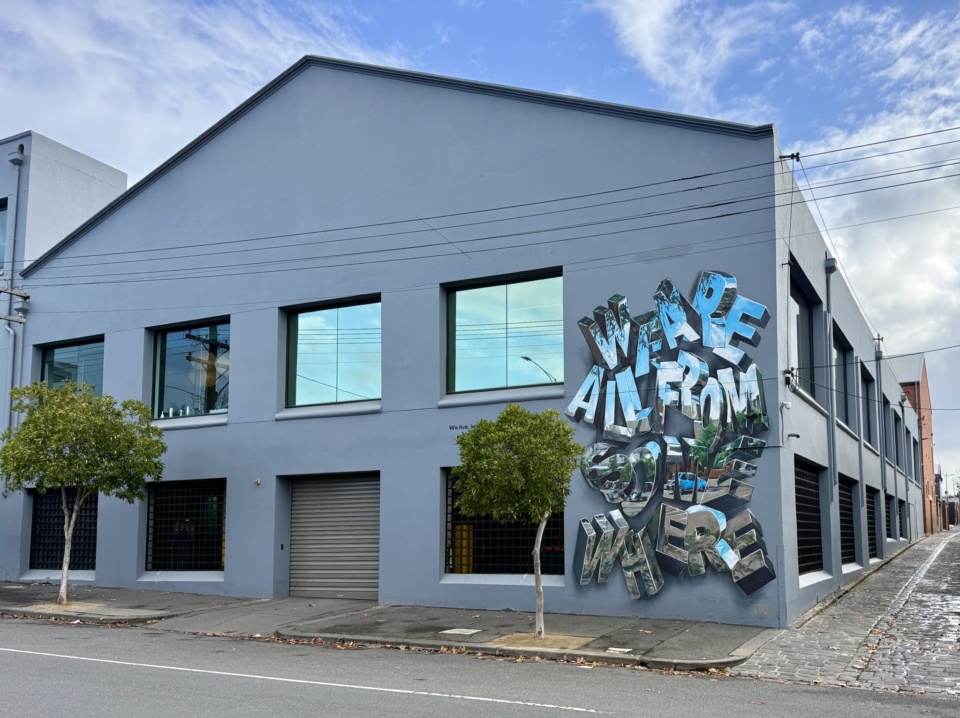
Our Community's founder and leader, Denis Moriarty, says he commissioned a new piece of street art…

Posted on 12 Aug 2026
Our Community's founder and leader, Denis Moriarty, says fostering a child was his worst nightmare,…
Posted on 15 Jul 2026
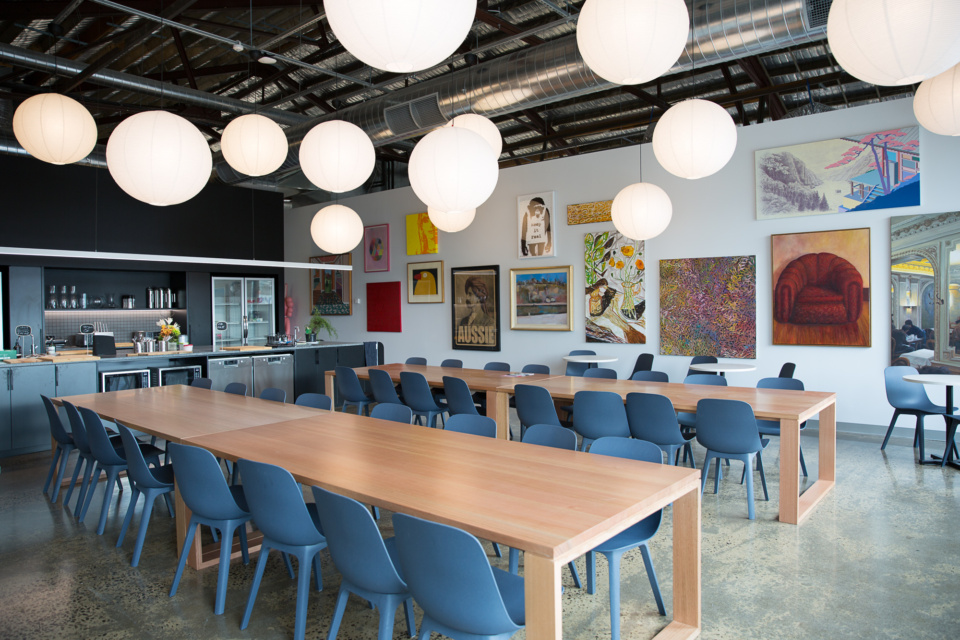
Our Community's founder and leader, Denis Moriarty, on what's special about the shared workplace…

Posted on 08 Jul 2026
The Royal Australasian College of Physicians has found itself facing serious scrutiny from the…

Posted on 30 Jun 2026
Australian house prices rose roughly 8,300 per cent between 1970 and 2025, so it would seem…
Posted on 17 Jun 2026
If charges are proven that members of the Brethren movement took part in partisan political…

Posted on 03 Jun 2026
Why exactly are we still getting a day off to celebrate a day that is not the actual birthday of…

Posted on 20 May 2026
It is not really a surprise that we have trouble getting our heads around what the rise of…