
Pauline Hanson and the frightening lesson of ‘Years and Years’
Posted on 07 Oct 2026
Our Community's founder and leader, Denis Moriarty, writes that when he watched an over-the-top…
Posted on 17 Jun 2026
By Denis Moriarty, founder and group managing director, Our Community
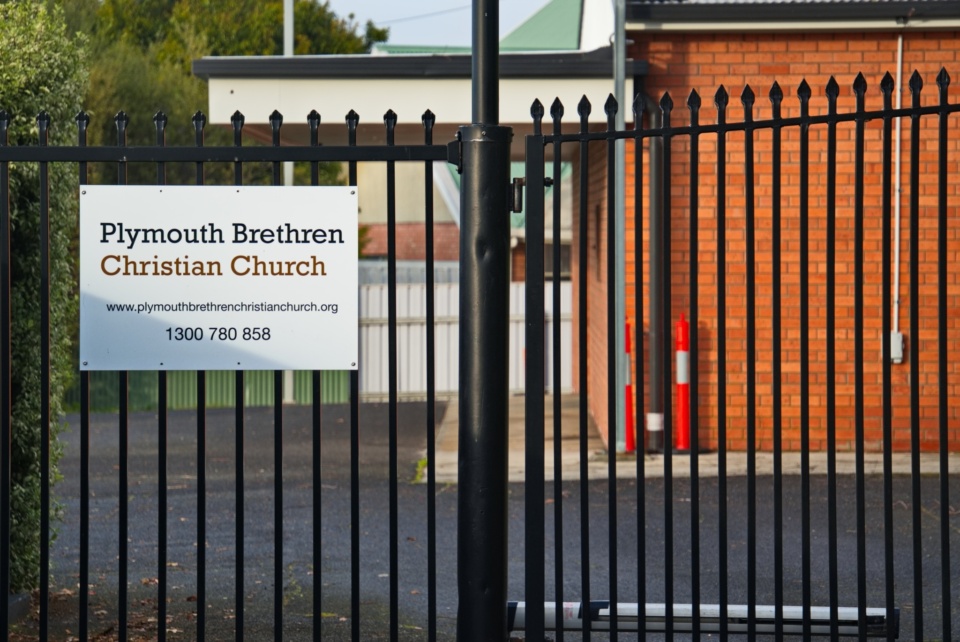
If charges are proven that members of the Brethren movement took part in partisan political campaigning to support Coalition candidates and oppose the Albanese government during the last federal election campaign, the ACNC needs to be prepared to act to the extent of its powers, writes Our Community's founder and leader, Denis Moriarty.
Australia's charity laws are built on a simple bargain. In return for generous tax concessions and public trust, charities agree to pursue charitable purposes rather than partisan political objectives.
That bargain is now being tested as never before.
Recent revelations concerning the Plymouth Brethren Christian Church and its extensive involvement in federal election campaigning raise serious questions that cannot simply be brushed aside. If the allegations are substantiated, the Australian Charities and Not-for-profits Commission (ACNC) should undertake a full investigation and be prepared to revoke charitable status.
This is not an attack on religion. Religious freedom is fundamental. Churches have every right to express moral views, advocate on public issues and participate in public debate. But charity status is a privilege, not a right.

The issue is whether a registered charity has crossed the line from advocacy into organised partisan political campaigning.
For years I have watched unrelenting conservative politicians and media commentators attacking charities that have advocated on behalf of refugees, asylum seekers, women facing violence, Indigenous Australians and climate action. We have been repeatedly told that charities should not be political. Environmental groups, social justice organisations and community welfare bodies have been accused of straying beyond their charitable purposes whenever they have criticised government policy.
Most of those attacks were unfair – particularly from former prime minister Tony Abbott and his former chief of staff, Peta Credlin, an unrelenting attacker. Advocacy is often central to charitable work, and organisations serving vulnerable people have every right to speak about the policies affecting those people. But if those same standards are to mean anything, they must apply equally to everyone.
The allegations now emerging are of a completely different order. Reports suggest a highly organised and coordinated campaign involving members of the Brethren movement working to support Coalition candidates and oppose the Albanese government during the federal election campaign. If a charity's resources, structures, leadership and influence are being mobilised to achieve partisan electoral outcomes, that goes far beyond issue advocacy.
The ACNC's own guidance is clear. Charities may campaign on issues connected to their charitable purposes, but they cannot have the purpose of promoting or opposing a political party or candidate. That is a disqualifying purpose under Australian charity law. Whammo – Brethren, you are cooked.
“There cannot be one rule for progressive charities and another for politically connected religious organisations.”
What makes this matter especially significant is the scale and discipline reportedly involved. Recent evidence published by media organisations and provided to parliamentary inquiries suggests a deeply organised operation rather than isolated individual political activity. If proven, it would represent one of the most serious tests of Australia's charity framework in decades.
As a child, I remember hearing my parents arguing about supporting the Democratic Labor Party (DLP) and following the request of the priest at St Mary’s where we dutifully attended Mass. Bitter political struggles surrounded the DLP and the influence of BA Santamaria within sections of the Catholic community. Australians debated whether religious institutions were exercising undue political influence , and by God they were, and whether faith and party politics had become dangerously entangled. That controversy was enormous in its day.
What we are seeing now appears larger, more sophisticated and potentially more systematic. It takes a lot to beat the old DLP, but the Brethren have done this one very well.
The Brethren church has long been criticised by former members and observers for its highly centralised leadership structure. Critics have described a culture of obedience and control that extends deep into members' personal lives. The church disputes many of these claims and says it is simply practising its faith according to its beliefs.
Yet if an organisation exercises significant authority over members while simultaneously directing or coordinating political activity, regulators have an obligation to examine whether charitable privileges are being misused.
Australians do not subsidise charities through tax concessions so they can become political campaign machines.
The principle involved extends far beyond one church. If refugee advocates risk scrutiny, so should conservative religious organisations. If environmental charities are investigated for political activity, groups campaigning for conservative candidates should be too. If women's organisations are questioned about advocacy, religious bodies that become involved in electioneering should also be.
There cannot be one rule for progressive charities and another for politically connected religious organisations.
The ACNC should now undertake a comprehensive investigation into the activities of the Plymouth Brethren Christian Church and any associated charitable entities. That investigation should examine whether charitable resources were used to coordinate electoral campaigning, whether any partisan political purpose existed, and whether the organisation remains compliant with the requirements of Australian charity law.
If the evidence demonstrates systematic partisan political campaigning, the consequence should be clear. Charitable status should be revoked instantly.
The integrity of Australia's charity system depends on public confidence that tax concessions are granted for genuine public benefit, not political advantage. Regulators cannot demand neutrality from some charities while ignoring allegations against others. The law must apply equally. Anything less would undermine both the charity sector and public faith in the institutions responsible for regulating it.
Denis Moriarty is group managing director of OurCommunity.com.au, a social enterprise that helps the country's 600,000 not-for-profits.
We're proud to take a stand on progressive issues. Here are more recent opinion pieces.
Posted on 07 Oct 2026
Our Community's founder and leader, Denis Moriarty, writes that when he watched an over-the-top…

Posted on 30 Sep 2026
After the biggest AFL game of the year, one player proudly wore the flag of his birth country and…

Posted on 23 Sep 2026
There are solutions to counter the rise of One Nation but they might not be residing in the mess…

Posted on 03 Sep 2026
Denis Moriarty has an issue with insurance companies varying premiums because of what they perceive…

Posted on 26 Aug 2026
Our Community's founder and leader, Denis Moriarty, says he commissioned a new piece of street art…

Posted on 12 Aug 2026
Our Community's founder and leader, Denis Moriarty, says fostering a child was his worst nightmare,…

Posted on 15 Jul 2026
Our Community's founder and leader, Denis Moriarty, on what's special about the shared workplace…

Posted on 08 Jul 2026
The Royal Australasian College of Physicians has found itself facing serious scrutiny from the…

Posted on 30 Jun 2026
Australian house prices rose roughly 8,300 per cent between 1970 and 2025, so it would seem…

Posted on 03 Jun 2026
Why exactly are we still getting a day off to celebrate a day that is not the actual birthday of…

Posted on 20 May 2026
It is not really a surprise that we have trouble getting our heads around what the rise of…

Posted on 14 May 2026
Is it possible that Australians are revelling in demented hysteria at the moment, imagining all…