Pauline Hanson and the frightening lesson of ‘Years and Years’
Posted on 07 Oct 2026
Our Community's founder and leader, Denis Moriarty, writes that when he watched an over-the-top…
Posted on 20 May 2026
By Denis Moriarty, founder and group managing director, Our Community
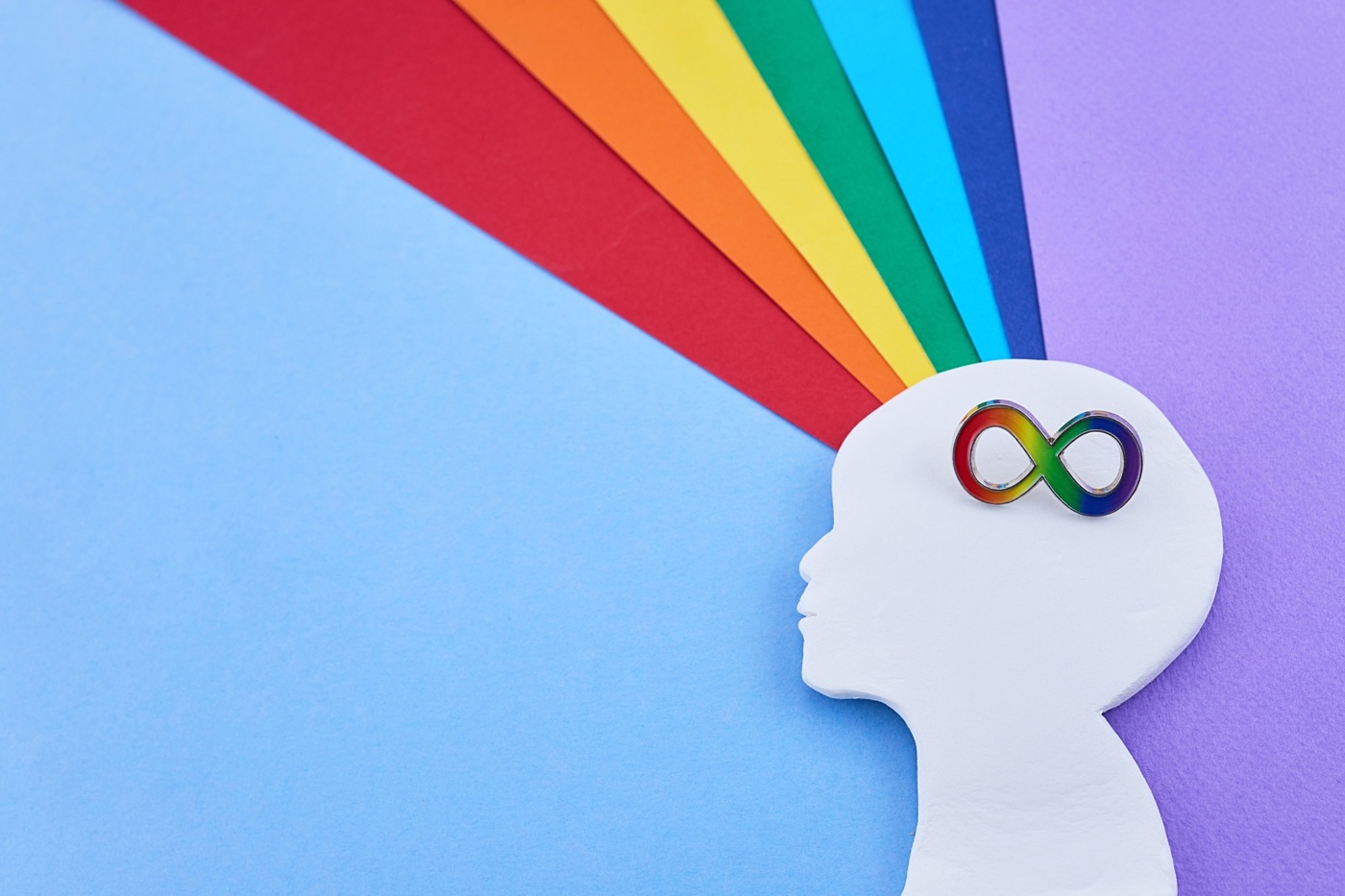
It is not really a surprise that we have trouble getting our heads around what the rise of artificial intelligence might mean for us, given we don’t even understand our own brains and variations, writes Our Community's founder and leader, Denis Moriarty.
Our thinking on artificial intelligence (AI) is all over the shop, swinging from apocalyptic takeover scenarios to glorious utopias. This isn’t really surprising: we’ve never really come to terms with organic intelligence, either.
For most of human history, the important thing in life was heredity, in the sense that people whose parents were hereditary aristocrats tended to do very well. I failed on that score, with all due respect to my parents. If you got to the top without this advantage, your success would generally be ascribed to “genius”, which meant “inexplicable”.
When in the 19th and early 20th centuries kings and dukes and earls began to give way to bankers and businessmen, we needed new explanatory principles, and that led to the invention of the intelligence test. Psychologists – a new profession called into being by academics and bureaucrats and managers – explained that academics and bureaucrats and managers were in charge not because they had richer parents but because this was a meritocracy that rewarded mental power in academics and bureaucrats and managers.
The educated classes wanted to see their children succeed, so bigger brains were declared to be hereditary, too. To underline this, people who were seen as of low intelligence were herded into institutions to make sure they wouldn’t be tempted to reproduce and water down the national average IQ. That took us as far as WWII, which upended quite a few habits of thought.
In postwar politics the broad principle of “Don’t do what Hitler did” both discouraged racism and discredited eugenics. The civil rights movement involved, at one level, the admission that IQ testing – the major achievement of the psychological profession over the last half-century – had been largely misguided, and that the lower scores of women and minorities were due not to smaller brains but rather to repressive social conditions.
A minor effect of that change in the conventional wisdom was that people decided that locking up those classified as feeble-minded wasn’t worth the trouble and expense, and we got deinstitutionalisation. At the same time, we began the shift to a different explanation of difference. In 1943 psychologist Leo Kanner conceptualised autism, the first real attempt to divide up what had previously been seen as the great lump of institutionalisable idiocy. And that led us to the current pressures on the Australian budget.
Kannerian autism was thought to have a prevalence of about four in 10,000, or 0.04 per cent, at a time when “mental retardation” was diagnosed in about 2 per cent of children. Parental pressure to find a less stigmatising label for their children drove the diagnosis of autism up to about 0.6 per cent by the 1990s, and a general acceptance of the idea of behavioural disability took it to at least 4.3 per cent by 2025 – an increase since 1943 of 10,000 times.
“Autism, and the concepts of intelligence and ability that frame it, is not a simple fact or a straightforward medical diagnosis or anything that lies wholly within the person.”
This wasn’t because things like vaccinations or microplastics or screen time produced more Kannerlike children; it was because of diagnostic substitution. The diagnostic criteria had gradually changed. In the 1940s, 80 per cent of children with that diagnosis had no functional speech; by the 1980s, about half had; the most recent count suggests about 8 per cent have no functional speech. To be clear, I’m not suggesting that the “real” level is 0.04 or 0.6 or 0.2 per cent. It’s that we now think differently about thinking, and difference.
And also to be clear, I’m not suggesting that it was a bad idea back in the ’40s to look in the stigmatised population for other explanations than cognitive deficit. I’m suggesting that it was a bad idea to try to pull subgroups out of that population rather than reconsider the whole underlying prejudice.
Autism is a confused blur of social, educational, physical and social factors. Its increasing pressure on the NDIS comes about because it provides individualised support for children with special needs, and what child doesn’t have special individual needs? Every child should have appropriate supports (and the children with multiple issues who are currently warehoused in the special school system need much more and better targeted support) but that’s an educational, not a diagnostic, imperative.
Autism, and the concepts of intelligence and ability that frame it, is not a simple fact or a straightforward medical diagnosis or anything that lies wholly within the person. For the individual, and for the society, it’s a compound of the systems that assess it and enforce it and administer and explain it, and as such it shifts from year to year as different industries and different professions and different technologies struggle for mastery within the flow of economic and cultural understandings. Medical diagnoses just confuse the issues.
The changes being made to NDIS provision are said to be based on the principle that “NDIS eligibility is based first and foremost on functional impairment rather than medical diagnosis… We must ensure the NDIS experience is centred around the whole person and their disability-related support needs.” This absolutely is a good idea, but it only increases the importance of understanding how our society shapes our concepts of disability. What universities are being funded to run courses in History and Philosophy of Autism?
When we understand that, we can begin to talk about artificial intelligence.
Denis Moriarty is group managing director of OurCommunity.com.au, a social enterprise that helps the country's 600,000 not-for-profits.
We're proud to take a stand on progressive issues. Here are more recent opinion pieces.
Posted on 07 Oct 2026
Our Community's founder and leader, Denis Moriarty, writes that when he watched an over-the-top…

Posted on 30 Sep 2026
After the biggest AFL game of the year, one player proudly wore the flag of his birth country and…

Posted on 23 Sep 2026
There are solutions to counter the rise of One Nation but they might not be residing in the mess…

Posted on 03 Sep 2026
Denis Moriarty has an issue with insurance companies varying premiums because of what they perceive…

Posted on 26 Aug 2026
Our Community's founder and leader, Denis Moriarty, says he commissioned a new piece of street art…

Posted on 12 Aug 2026
Our Community's founder and leader, Denis Moriarty, says fostering a child was his worst nightmare,…

Posted on 15 Jul 2026
Our Community's founder and leader, Denis Moriarty, on what's special about the shared workplace…

Posted on 08 Jul 2026
The Royal Australasian College of Physicians has found itself facing serious scrutiny from the…

Posted on 30 Jun 2026
Australian house prices rose roughly 8,300 per cent between 1970 and 2025, so it would seem…
Posted on 17 Jun 2026
If charges are proven that members of the Brethren movement took part in partisan political…

Posted on 03 Jun 2026
Why exactly are we still getting a day off to celebrate a day that is not the actual birthday of…

Posted on 14 May 2026
Is it possible that Australians are revelling in demented hysteria at the moment, imagining all…