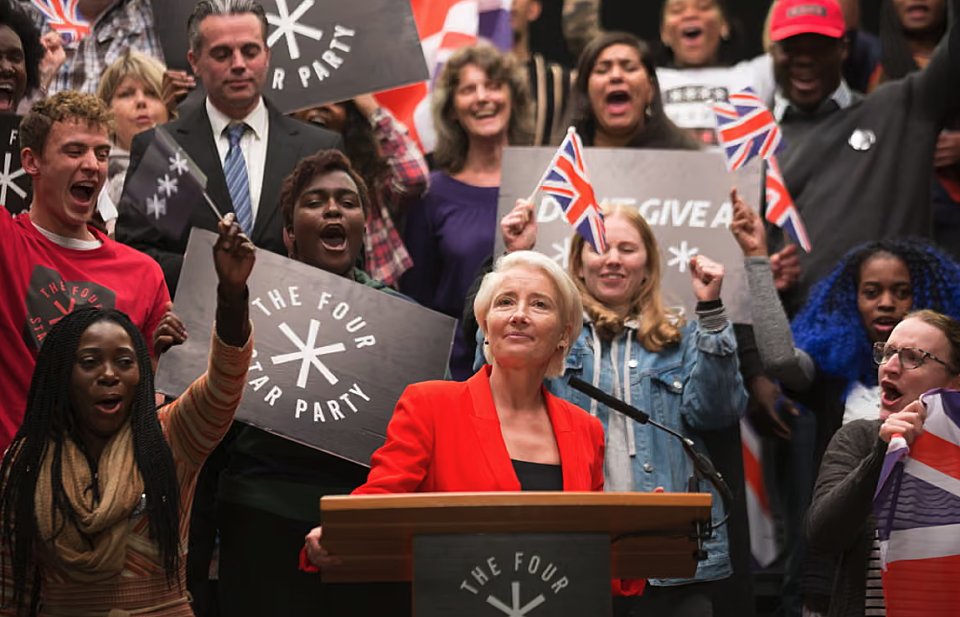
Pauline Hanson and the frightening lesson of ‘Years and Years’
Posted on 07 Oct 2026
Our Community's founder and leader, Denis Moriarty, writes that when he watched an over-the-top…
Posted on 22 Apr 2026
By Denis Moriarty, founder and group managing director, Our Community

Don't be afraid to explore the ways that AI can help your not-for-profit. It would be remiss of a NFP board not to be across what can be better done by artificial intelligence, as well as knowing where your invaluable volunteers and other humans can be of most benefit, writes Our Community's founder and leader, Denis Moriarty.
Artificial intelligence has a number of uses, and it can provide not-for-profits with useful assistance in a number of areas. Let’s face it, though: the reason the world is currently pouring a trillion dollars into building and running AI models isn’t that they improve business performance, except as a waystation. The promise is that they will enable companies to slash costs by slashing staff numbers.
For we soft-hearted not-for-profits (NFPs), that sounds bad. The spectre of mass unemployment, or even local unemployment, or even individuals packing up their desks after years at the company, raises concerns. Still, companies have goals – making money for the shareholders, primarily – that can balance or override their commitment to their workers, and not-for-profits have goals that can override those responsibilities not only financially but also morally. If you’re working to promote the interests of people with disability, their best interests have precedence over those of the helpers, however dedicated those may be.

We’ve been through similar technological upheavals before, after all, and society has adjusted. The very oldest among us can remember the era of the typing pool, a period of approximately 80 years when managers dictated letters to be typed up by secretaries, corrected, retyped, corrected again with white-out and scribble, and eventually snail-mailed out. Computerisation eliminated all that work, and after some perturbation the sector of women who used to be corralled into secretarial work erupted into the management positions they’d been excluded from and there were more women in employment, not fewer.
There are certainly going to be upheavals now, and economic consequences, and a need for governments to intervene to maximise benefits and minimise harms, but what does that mean, specifically, for your own NFP? How are you going to deal with the HR issues that will arise?
There are several layers of prediction involved here. Will there be large job losses across the economy, or is AI (this year, at least, or this decade) a speculative bubble? If there are job losses, will your NFP be caught up? If your community group can cut staff numbers, should you?
Looking at smaller NFPs in particular – those without their own HR divisions, say – there are a few extra factors to consider. One is how much of your work involves the hands-on human interaction that AI can only feint at (ignore those cartwheeling robots: false advertising). Drafting letters, AI can do; changing incontinence pads, no, not now, not for the foreseeable future. It’s a spectrum: where does your organisation fall?
One factor that’s peculiar to the NFP sector is that a lot of the work is done by volunteers. Laying off a volunteer gains you very little – the amount of staff time it takes to organise and regulate them – and can lose you quite a lot. Volunteers are not simply meat-based robots. For the group you’re helping, they provide human contact, friendship, and problem-solving skills. For the organisation, they provide the first circle of the people you can call on to promote your image, defend your importance, and even finance your budget.
“Volunteers are not simply meat-based robots.”
People are volunteers because they enjoy it, and that gives you some small claim on them. If you’re one of those rare groups that really don’t need any volunteers on the ground, we recommend that you start beating your brains for something they can do that won’t be an actual handicap. Volunteerdom is, among other things, an incentive you can offer members of the public to help you build support in the community – a benefit, not a cost.
If you have paid staff, of course, the balance is different. The issues you’ll be looking at then are things like risk management. How many of your operations have horrible consequences if there’s a massive AI stuff-up? The models are improving, and the chance of disaster is probably small – but how small do you need it to be? How much staff time would you have to invest to ensure that the message “I am so sorry, that was careless of me: I hallucinated” doesn’t pop up, and what is the worst that could happen if it did?
There are clearly areas where small NFPs can be helped by AI. There’s a lot of bureaucratic busywork that could be delegated to an AI model. You fill out forms, you put in reports, you draft submissions, and in all of these there’s enough repetition, enough formulaic jargon, and enough follow-the-leader to make it handy to have someone or something that knows the ropes and can untie them.
Many, many small groups believe they can’t write properly formal text, or can’t understand legal jargon, or can’t get themselves heard, and an app that can do enough hand-holding to build confidence could do a lot to equalise the chances of large and small organisations.
Many, many boards don’t have a firm enough grip on how their organisations work to be sure whether they’re understaffed or overstaffed, and going through the exercise of working out what place AI might have will probably be a useful discipline. If you’ve thought it all through, go with it.
Don’t underestimate the difficulties your board faces in these matters, though. Don’t take my word for it – and damn certainly don’t look to ChatGPT or Claude for the answer. Or maybe you should.
Denis Moriarty is group managing director of OurCommunity.com.au, a social enterprise that helps the country's 600,000 not-for-profits.
We're proud to take a stand on progressive issues. Here are more recent opinion pieces.
Posted on 07 Oct 2026
Our Community's founder and leader, Denis Moriarty, writes that when he watched an over-the-top…

Posted on 30 Sep 2026
After the biggest AFL game of the year, one player proudly wore the flag of his birth country and…

Posted on 23 Sep 2026
There are solutions to counter the rise of One Nation but they might not be residing in the mess…
Posted on 03 Sep 2026
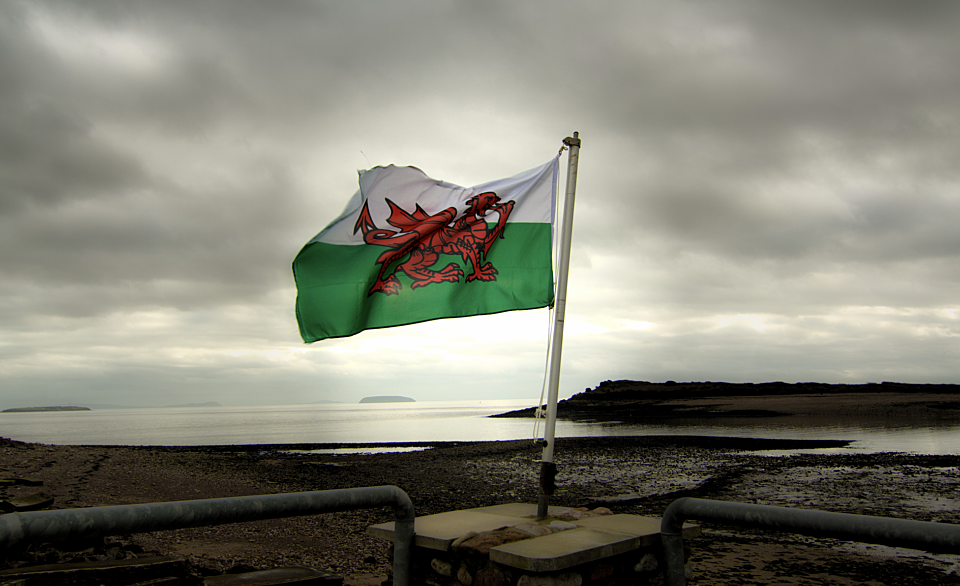
Denis Moriarty has an issue with insurance companies varying premiums because of what they perceive…
Posted on 26 Aug 2026
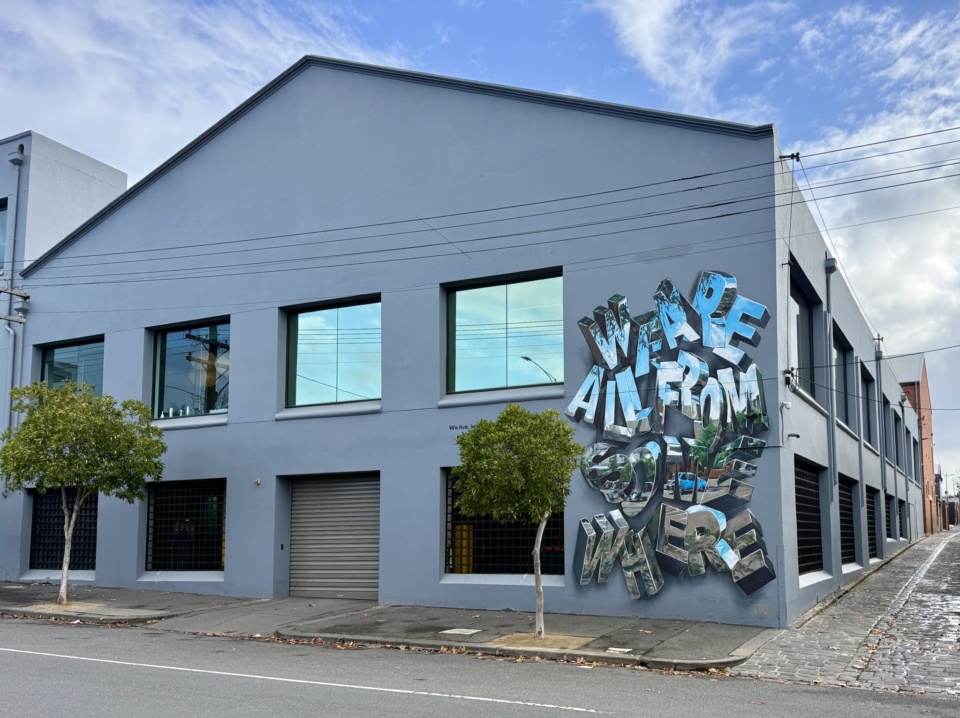
Our Community's founder and leader, Denis Moriarty, says he commissioned a new piece of street art…

Posted on 12 Aug 2026
Our Community's founder and leader, Denis Moriarty, says fostering a child was his worst nightmare,…

Posted on 15 Jul 2026
Our Community's founder and leader, Denis Moriarty, on what's special about the shared workplace…

Posted on 08 Jul 2026
The Royal Australasian College of Physicians has found itself facing serious scrutiny from the…

Posted on 30 Jun 2026
Australian house prices rose roughly 8,300 per cent between 1970 and 2025, so it would seem…
Posted on 17 Jun 2026
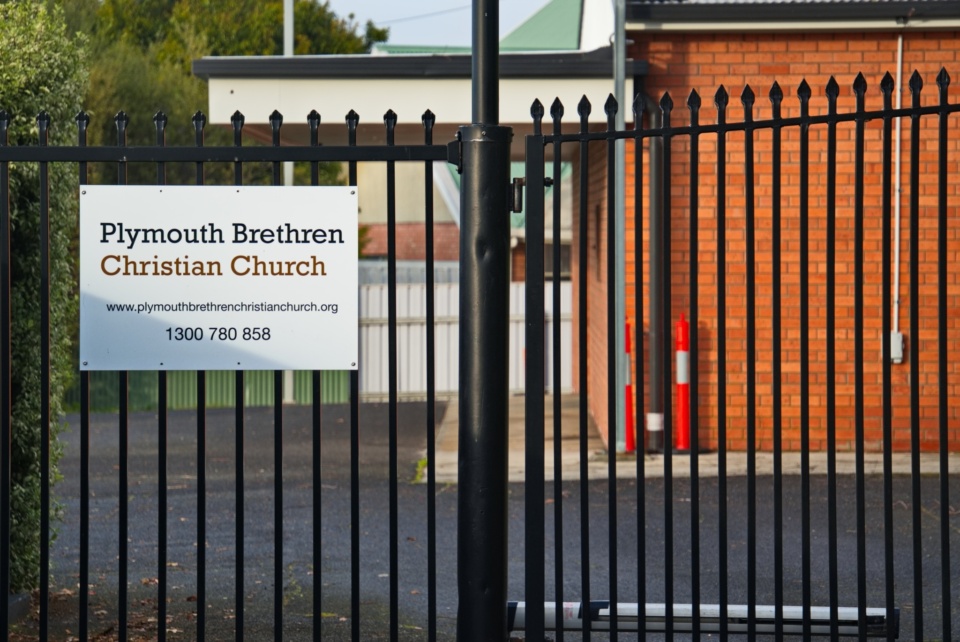
If charges are proven that members of the Brethren movement took part in partisan political…

Posted on 03 Jun 2026
Why exactly are we still getting a day off to celebrate a day that is not the actual birthday of…

Posted on 20 May 2026
It is not really a surprise that we have trouble getting our heads around what the rise of…