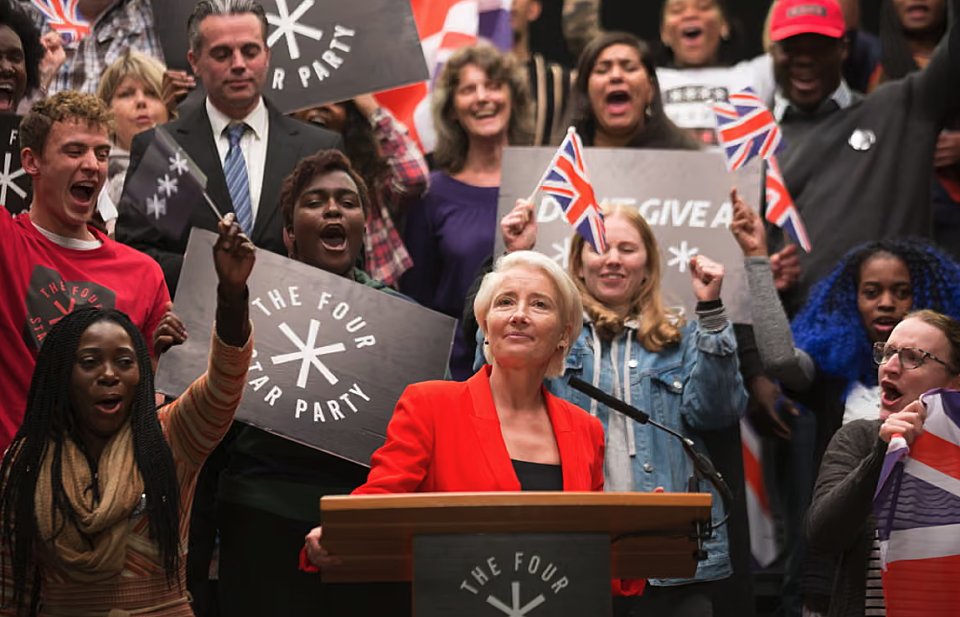
Pauline Hanson and the frightening lesson of ‘Years and Years’
Posted on 07 Oct 2026
Our Community's founder and leader, Denis Moriarty, writes that when he watched an over-the-top…
Posted on 29 Apr 2026
By Denis Moriarty, founder and group managing director, Our Community
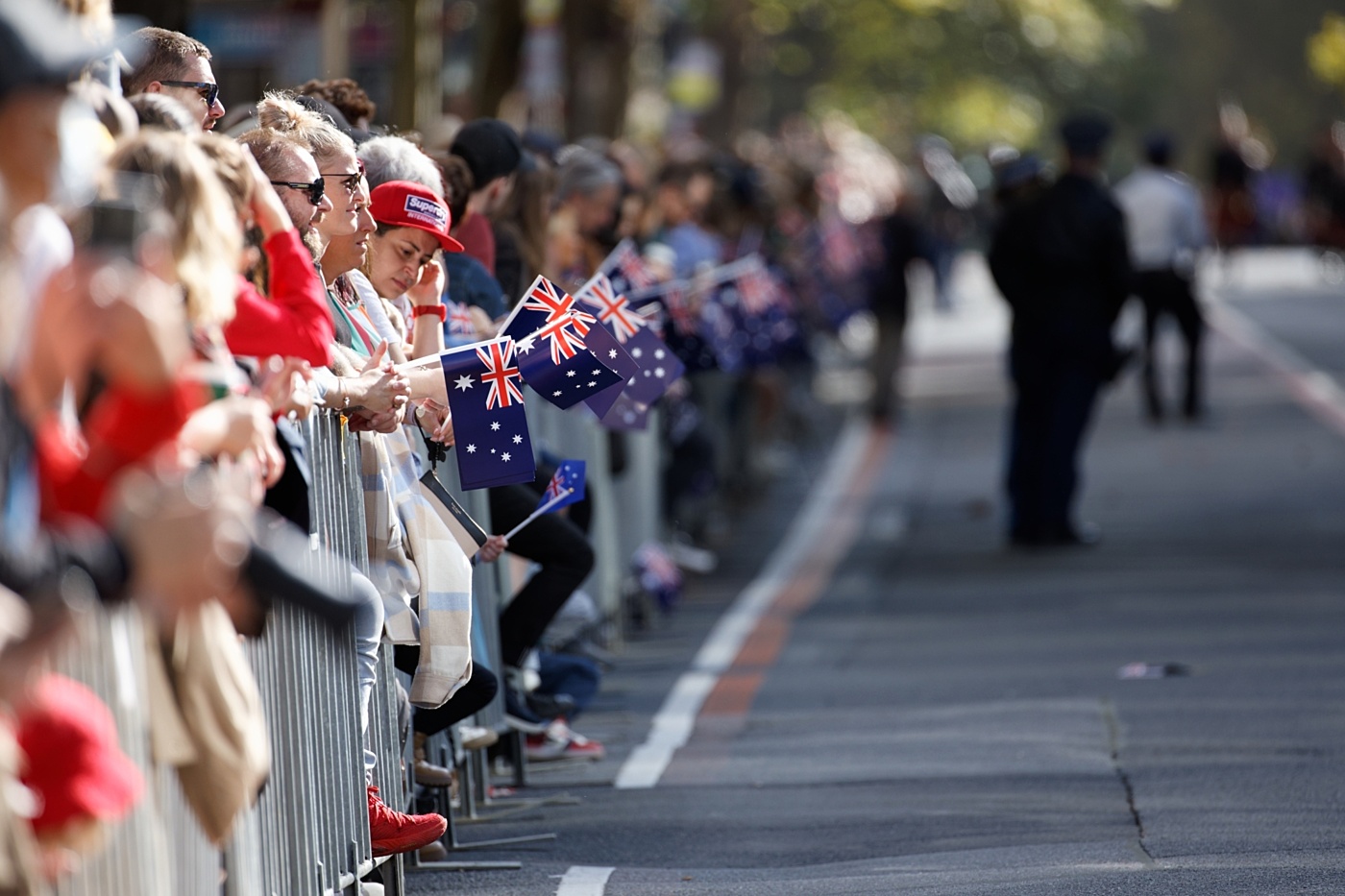
The creeping division, hostility and racism in our society were on horrible show last weekend when booing marred Welcome to Country ceremonies at Anzac events. We need to decide when and how we're going to stand up for decency and Australian values, writes Our Community's founder and leader, Denis Moriarty.
The headline stopped me. ‘Welcome to Country booed as Ben Roberts-Smith attends Anzac Day event’.
Like many readers, I assumed I knew what had happened. That the reaction had been directed at a man who has faced the most serious allegations imaginable, even if not convicted in a criminal court. That would have made sense. But that’s not what happened.
Instead, it was the Welcome to Country that was booed. Not the presence of a deeply controversial figure. Not the weight of those unresolved questions. No, the target was an Indigenous elder, standing at dawn, offering a moment of recognition before a ceremony of remembrance. That disconnection tells you something.

There are moments and occasions that reveal more about a nation than any speech or policy ever could. Anzac Day is one of them. It is meant to transcend politics and is a day grounded in remembrance, sacrifice, and a shared sense of national identity. That is precisely why the scenes that played out in Melbourne, Sydney and Perth are so confronting.
At dawn services across the country, small but vocal groups chose to jeer and interrupt Welcome to Country ceremonies. In Perth, Whadjuk Noongar Elder Di Ryder, herself a veteran, was met with boos during her address at Kings Park, in front of tens of thousands. Similar scenes played out elsewhere, prompting condemnation from leaders, veterans’ groups, and the broader community.
Western Australian premier Roger Cook called the behaviour ‘disgusting and disrespectful’. The head of RSL WA described it as one of the most disgraceful things he had ever heard. He was right. This was not protest. It was not principled dissent. It was the collapse of basic decency in a setting where respect should be non-negotiable.
Anzac Day is not the place for political theatre of any kind. That principle cuts both ways. But a Welcome to Country at such ceremonies is not a partisan insertion. It is a recognition of history and continuity and an acknowledgment that the land on which we gather has a deeper story than that of the nation-state that now occupies it.
You do not have to agree with every aspect of that practice to understand that there is a time and place for disagreement. A dawn service, in the cold quiet of early morning, as names of the fallen are remembered, is not it.
What makes this more troubling is that it does not stand alone. It reflects a broader coarsening of public behaviour. We now live in a country where shops feel the need to plaster large signs warning customers not to abuse staff. Where frontline workers brace themselves for confrontation. Where civility, once assumed (and taught), has to be explicitly demanded. That is not normal.
“There are moments and occasions that reveal more about a nation than any speech or policy ever could. Anzac Day is one of them.”
What we are seeing is not confined to one issue or one group. In recent months, Australia has also experienced a disturbing rise in antisemitic incidents. The abuse, intimidation and hostility directed at Jewish Australians have been serious enough to prompt a national reckoning, including a Royal Commission into antisemitism. These are not isolated developments. They point to something deeper: a growing tolerance for hostility, for dehumanising language, and for the idea that public spaces are places to vent anger rather than show respect.
A society does not unravel all at once. It frays at the edges in small acts of disrespect, in the erosion of shared norms, in the idea that personal grievance justifies public hostility. I seriously question the rise of One Nation and the rise of all this meanness. John Howard didn’t call it out strongly enough years ago, and in my lifetime I have seen it get worse by quite a degree.
And yet there are also moments that remind you that standards still matter, if people are willing to defend them.
Recently, my niece Leah Moriarty (a Collingwood supporter, believe it or not) was at a football match when the Welcome to Country began. In front of her, a large man deliberately turned his back to the field in a gesture of protest. It was a small act, but a telling one. Where many might have stayed silent, Leah did not.
She held his gaze until he challenged her stare: ‘What are you looking at?’ he said.
She told him he should be ashamed of himself, to ‘turn around and don’t be a moron’, which he dutifully did.
Now, you can debate whether confrontation is the right approach. But what stands out is this: Leah, a brave young woman, far smaller than the man she confronted, decided that silence was not acceptable. She chose to stand up, in the moment, for something as simple and as important as respect. That instinct matters.
The irony, as RSL WA president Duncan Anderson pointed out, is that those who disrupted Anzac Day ceremonies are exercising freedoms defended by the very people being honoured. Freedom of speech is fundamental. But it has always carried an obligation of judgment and of knowing when and how to exercise it.
You are free to disagree. You are free to argue your case. But choosing to boo during a solemn moment of remembrance is not a contribution to debate. It is a failure to recognise context, and a failure of respect.
There is also something particularly jarring about the target. Di Ryder is not a symbol of abstract policy. She is an elder, a veteran, and a representative of a culture that has endured on this land for tens of thousands of years. To treat her with open hostility in that moment was not just a rejection of a ceremony, it was a rejection of basic decency.
Encouragingly, the overwhelming response from those present was not to join the disruption, but to reject it; signalling this with their applause.
Standards do not enforce themselves. Respect does not maintain itself. It is upheld, or eroded, by what ordinary people are prepared to tolerate.
Perhaps that is the deeper challenge now. This is not just about one ceremony, or one moment at dawn or one attack on a Jewish person. It may be time to take a harder look at how we are treating each other and talking to each other in this country.
We do not all need to confront strangers as my niece did. But we do need to be clear about where the line is. When behaviour crosses it, someone has to be willing to say so. Because if we leave it unchallenged, we should not be surprised when it becomes the norm.
Anzac Day endures because it asks something simple of us: to remember, to reflect, and to show respect. That is not a high bar. But it is a necessary one.
And if we cannot meet it, even for a few quiet minutes at dawn, then we have to ask ourselves a harder question: What kind of country are we becoming?
Denis Moriarty is group managing director of OurCommunity.com.au, a social enterprise that helps the country's 600,000 not-for-profits.
We're proud to take a stand on progressive issues. Here are more recent opinion pieces.
Posted on 07 Oct 2026
Our Community's founder and leader, Denis Moriarty, writes that when he watched an over-the-top…

Posted on 30 Sep 2026
After the biggest AFL game of the year, one player proudly wore the flag of his birth country and…

Posted on 23 Sep 2026
There are solutions to counter the rise of One Nation but they might not be residing in the mess…
Posted on 03 Sep 2026
Denis Moriarty has an issue with insurance companies varying premiums because of what they perceive…

Posted on 26 Aug 2026
Our Community's founder and leader, Denis Moriarty, says he commissioned a new piece of street art…

Posted on 12 Aug 2026
Our Community's founder and leader, Denis Moriarty, says fostering a child was his worst nightmare,…

Posted on 15 Jul 2026
Our Community's founder and leader, Denis Moriarty, on what's special about the shared workplace…

Posted on 08 Jul 2026
The Royal Australasian College of Physicians has found itself facing serious scrutiny from the…

Posted on 30 Jun 2026
Australian house prices rose roughly 8,300 per cent between 1970 and 2025, so it would seem…
Posted on 17 Jun 2026
If charges are proven that members of the Brethren movement took part in partisan political…

Posted on 03 Jun 2026
Why exactly are we still getting a day off to celebrate a day that is not the actual birthday of…

Posted on 20 May 2026
It is not really a surprise that we have trouble getting our heads around what the rise of…