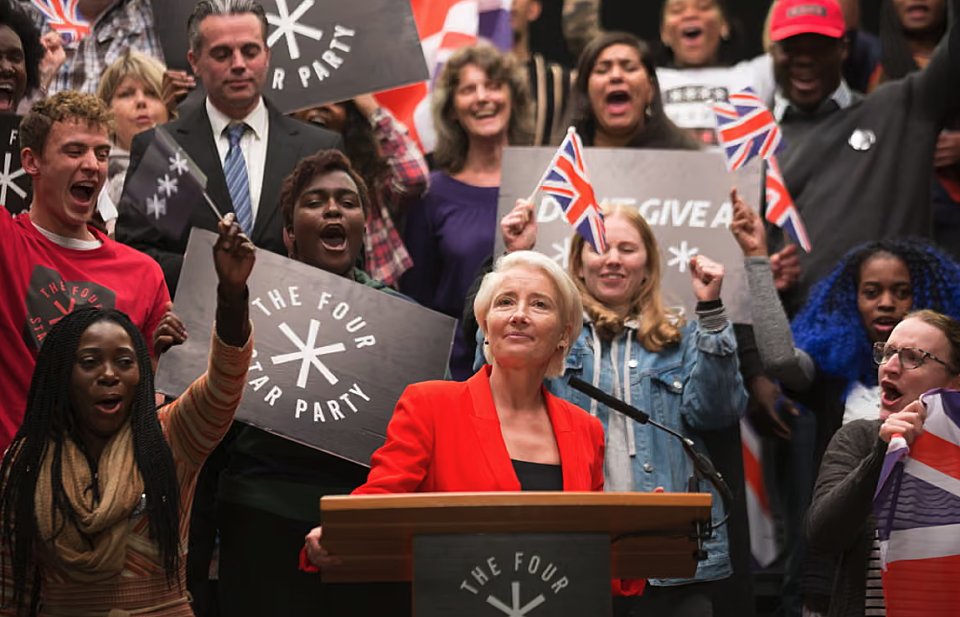
Pauline Hanson and the frightening lesson of ‘Years and Years’
Posted on 07 Oct 2026
Our Community's founder and leader, Denis Moriarty, writes that when he watched an over-the-top…
Posted on 30 Jun 2026
By Denis Moriarty, founder and group managing director, Our Community

Australian house prices rose roughly 8,300 per cent between 1970 and 2025, so it would seem churlish for the one generation that reaped the rewards to complain now the market seems to be slowing, even slightly, writes Our Community's founder and leader, Denis Moriarty.
We are now seeing the first hints that Australian property values may not continue to rise exponentially – that they may, perhaps, even fall fractionally. The media, correspondingly, have swerved abruptly from sympathising with young people we can’t make it on to the property ladder to sympathising with old people whose financial security is evidently threatened. Speaking as one of the latter, can I just say “Boo” (and I cannot stress this too strongly) “hoo!”.

Human beings have a tendency to think of the nice things that happen to them as due to their sterling good qualities and the bad things as due to ill-will on the part of nefarious villains, the government, or Divine Providence. This trend is particularly evidenced by the belief of Australia’s middling classes that their wealth (which, let us remember, is the second highest in the world, after Luxembourg, which is barely a postal district) is due solely to their own hard work and cunning investment strategies. Horsefeathers.
What I and my age group had that young people today are being denied was something unique in human history. For our ancestors – for our grandparents – that line from the movie The Castle where Darryl boasts that "Dad still can't work out how he got it so cheap – it's worth almost as much today as when we bought it" wasn’t a joke, it was fact. Property might hold its value, if you were lucky, but it wasn’t going to make you rich.
And then we had five decades or more of very specifically targeted inflation. Australian house prices rose roughly 8,300 per cent between 1970 and 2025 – about six times the general inflation rate. Anybody who did the boring and ordinary and straightforward thing that their parents and grandparents had done and just bought themselves an average home in a capital city found themselves a millionaire.
That wasn’t as wonderful as it might have been, because we couldn’t just go out and splash that million on hookers and drugs. We couldn’t draw on that magic money. Most of us had only one house and we had to live in it; if we sold it, we had to buy another one, at the same price. Still, it gave us a psychological boost. We could stand tall and not have to be particularly nice to our children.
“I can understand the younger generation being a little cranky about this – not in front of us, of course, because we might strike them out of our will.”
What history gave to the Boomers can never be repeated. A home valued at Sydney’s median price in 2080 will not go for $23 million (in today’s money, inflation adjusted) unless the median annual salary is by then $2.5 million (inflation adjusted, again), which would be nice but seems improbable. The problem our children face isn’t that they can’t afford housing. Sooner or later, more or less, nearly all of them get under cover in one way or another. What they won’t have is a helicopter going over scattering winning lottery tickets on suburban gardens.
I can understand the younger generation being a little cranky about this – not in front of us, of course, because we might strike them out of our will, but between themselves – but it’s a bit much for any of my peers to complain that the Budget is trimming a few percent off the top of their house values. We’ve done bugger all to deserve our unspendable wealth, and the world is entitled to mutter “Easy come, easy go.”
It’s not as if Australia’s property balloon was something that we’d intended, or wanted, or planned for. It just happened – here, and in a lot of other places, but not everywhere. In the United States, for example, home prices went up by only 16 times over the same period (a good deal less than the rate of inflation), about a fifth of our boost. It wasn’t inevitable. We don’t know why it occurred. We don’t really like it now we’ve got it (and our children like it even less). I can’t see, given all that, why we’re trying to preserve it.
We’re fiddling at the margins here, anyway. Nothing the government does, short of propagating the black death widely, is going to bring house prices back to where they were a decade ago, let alone to 1970 levels. Getting into a collective snit over the depth of the froth on a bubble is not helping us solve any of our real problems – at the front of which, I may say, are the problems of people who genuinely find themselves homeless, who must look with some scepticism on the traumas of those whose losses from these changes in taxation very nearly approach this year’s increase in Tessa’s private school fees.
The government is timid. I can understand its caution. There’s absolutely nothing that’s as toxic, politically speaking, as a sense of proportion.
Denis Moriarty is group managing director of OurCommunity.com.au, a social enterprise that helps the country's 600,000 not-for-profits.
We're proud to take a stand on progressive issues. Here are more recent opinion pieces.
Posted on 07 Oct 2026
Our Community's founder and leader, Denis Moriarty, writes that when he watched an over-the-top…

Posted on 30 Sep 2026
After the biggest AFL game of the year, one player proudly wore the flag of his birth country and…

Posted on 23 Sep 2026
There are solutions to counter the rise of One Nation but they might not be residing in the mess…

Posted on 03 Sep 2026
Denis Moriarty has an issue with insurance companies varying premiums because of what they perceive…
Posted on 26 Aug 2026
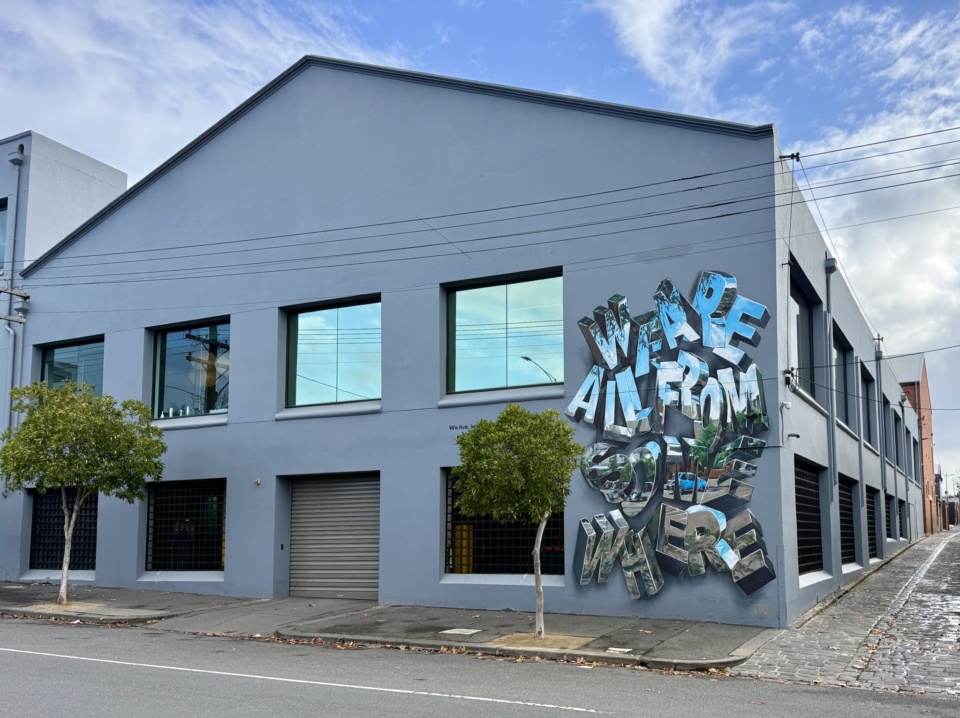
Our Community's founder and leader, Denis Moriarty, says he commissioned a new piece of street art…

Posted on 12 Aug 2026
Our Community's founder and leader, Denis Moriarty, says fostering a child was his worst nightmare,…

Posted on 15 Jul 2026
Our Community's founder and leader, Denis Moriarty, on what's special about the shared workplace…

Posted on 08 Jul 2026
The Royal Australasian College of Physicians has found itself facing serious scrutiny from the…
Posted on 17 Jun 2026
If charges are proven that members of the Brethren movement took part in partisan political…

Posted on 03 Jun 2026
Why exactly are we still getting a day off to celebrate a day that is not the actual birthday of…

Posted on 20 May 2026
It is not really a surprise that we have trouble getting our heads around what the rise of…

Posted on 14 May 2026
Is it possible that Australians are revelling in demented hysteria at the moment, imagining all…