Fence-sitting isn’t going to work if we want better owners corporations
Posted on 21 Oct 2026
The wider not-for-profit sector doesn't pay much attention to owners corporations, but maybe it…
Posted on 15 Jul 2026
By Denis Moriarty, founder and group managing director, Our Community
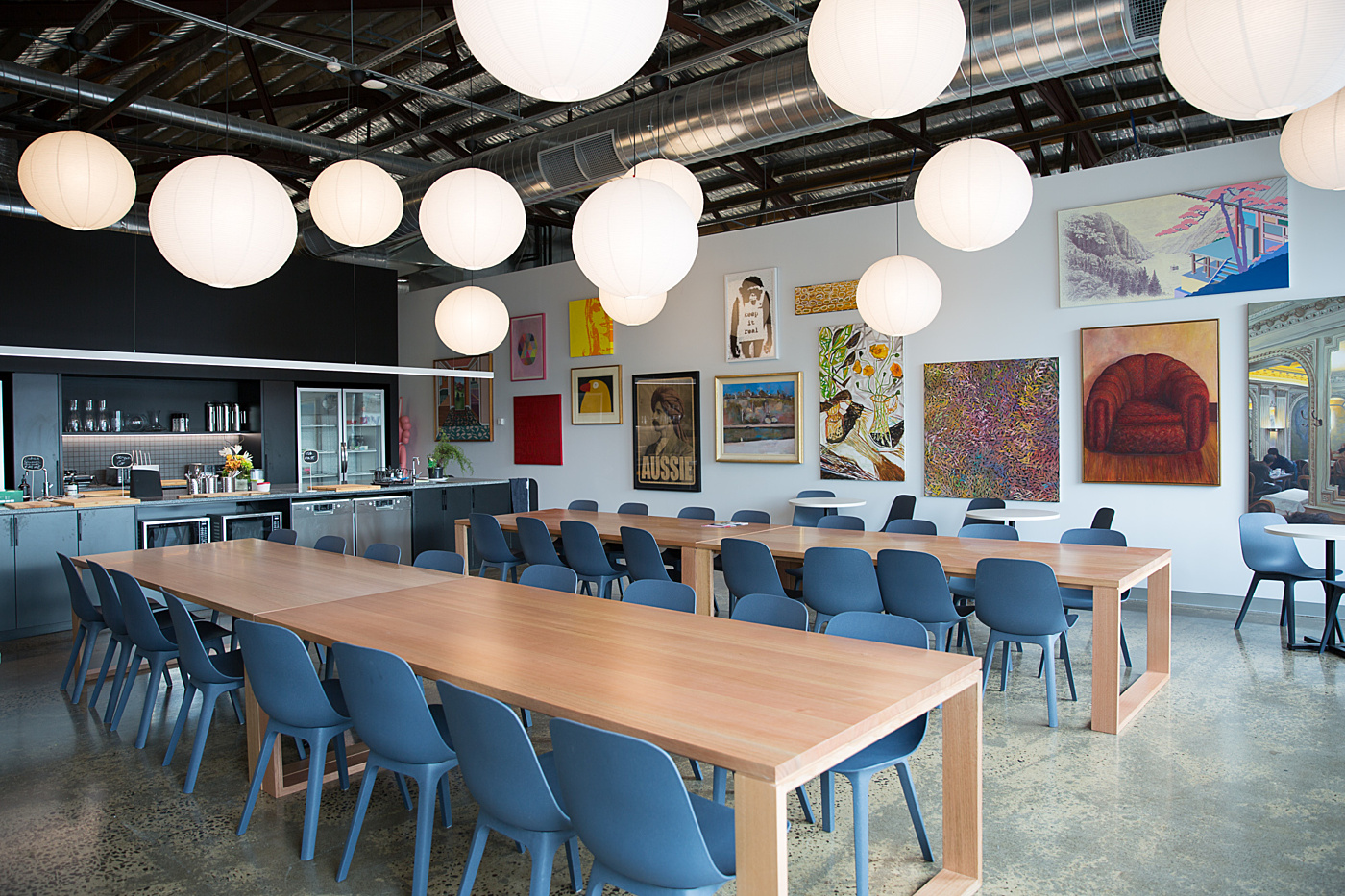
Our Community's founder and leader, Denis Moriarty, on what's special about the shared workplace he's helped create.
There are some traditions in the not-for-profit sector that deserve to be preserved. Our volunteers deserve celebrating, our annual general meetings still matter, and the extraordinary commitment that people bring to improving their communities is something we should never lose.
There are, however, other traditions that have continued simply because nobody has stopped to ask whether they still make sense.
One of those is the belief that every charity needs its own office.
For decades, renting a space was the obvious thing to do. You found a building, signed a lease, bought some desks, organised the phones and internet, employed a cleaner, insured everything and got on with the job. It was simply the way organisations operated, and few people questioned whether there might be a better way.
The world has changed, however, and so have the expectations placed on not-for-profits. Every dollar matters more than ever, boards are asking tougher questions about value for money, funders increasingly expect organisations to demonstrate efficiency, and donors quite reasonably want to know that their contribution is bringing value for money.
The problem is that many organisations still think of the cost of an office as being the rent. It isn't.
The rent is only the beginning, because by the time you have added electricity, internet, insurance, cleaning, security, furniture, meeting rooms, printers, office equipment, kitchen facilities, repairs, maintenance and all the other costs that quietly accumulate over the years, the true cost of maintaining your own premises is often dramatically higher than the amount written on the lease.
Another cost that rarely appears in the annual accounts is the time your people spend looking after the office itself. Someone has to negotiate with the landlord, organise the cleaners, arrange maintenance, deal with internet outages, replace broken furniture, coordinate tradespeople and make sure the building continues to function properly. None of those tasks are part of your mission, yet they quietly consume hours every week that could be spent helping your community.
If charities examined office costs with the same discipline they apply to grant applications, many boards might arrive at a very different conclusion. Instead of asking, "How much will the rent be?", they might ask, "Is there a smarter way of providing our staff with a great place to work while freeing up more money for our mission?"
Increasingly, the answer is yes.

"Our Community House is now home to more than 80 purpose-driven organisations, creating one of Australia's largest communities of not-for-profits and social enterprises working under the one roof."
Across Australia, organisations are discovering that shared workplaces offer something the traditional office never could. They remove much of the financial risk and almost all of the administrative burden, and perhaps most importantly, they create opportunities that simply don't exist when every organisation sits behind its own front door.
One of the great ironies of the community sector is that organisations whose purpose is to build stronger communities often work in complete isolation from one another. The homelessness service rents one office, the environmental group occupies another building, the disability organisation is somewhere else, and the arts organisation and neighbourhood house may be working from opposite sides of the city. Each is trying to make Australia a better place, yet they rarely have the opportunity to learn from one another or build relationships that could strengthen their work.
Imagine arriving at work every morning to be surrounded by organisations that share your values and your commitment to social change. Instead of chance encounters being limited to your own colleagues, you meet people working in philanthropy, disability, education, community development, health, sport, the arts, volunteering and countless other fields. Conversations begin over coffee, ideas are exchanged in the lift, partnerships emerge naturally, and expertise that would once have required weeks of searching is suddenly only a few doors away.
That is the real value of a community workplace.
The office becomes more than somewhere to sit at a desk. It becomes a place where staff feel connected to a broader movement and organisations become stronger because they are part of an ecosystem rather than operating in isolation.
There is another aspect that deserves far more attention than it usually receives, and that is the quality of the workplace itself.
Too many charities have found themselves working in ageing offices with poor lighting, tired interiors and little connection to the outside world simply because that was the lease they signed years ago. Yet we know that people do their best work in environments that are welcoming, comfortable and filled with natural light. Good workplaces improve wellbeing, help attract and retain talented staff, encourage creativity and make people genuinely enjoy coming to work. Those things are not luxuries. They are investments in the people who deliver your mission every day.
Walk through Our Community House in North Melbourne and one of the first things you notice is the natural light, complemented by original artwork throughout the shared spaces, creating an environment that feels vibrant, creative and welcoming. It is a workplace designed to inspire rather than simply accommodate, because the people working to improve our communities deserve somewhere that reflects the importance of what they do.
The location also makes a difference. Situated on the edge of Melbourne's CBD, Our Community House is easy to reach by train, tram, bus, bicycle or car, making it convenient for staff, volunteers, board members and visitors alike. Instead of being hidden away in an industrial estate or ageing office block, organisations are connected to the heart of the city and to one another.
Then there are the everyday things that quietly improve working life. Having a café on the ground floor means there is always somewhere to meet a prospective funder, welcome a volunteer, have an informal conversation with a neighbouring organisation or simply enjoy a good coffee away from your desk. Those small interactions often become the beginning of partnerships, friendships and ideas that would never have appeared in a more isolated workplace.
Our Community House is now home to more than 80 purpose-driven organisations, creating one of Australia's largest communities of not-for-profits and social enterprises working under the one roof. Some organisations occupy private four-person offices, others have six-person suites, while larger organisations have expanded into spaces accommodating up to 90 staff. As organisations grow, the space grows with them, removing the disruption and cost of repeatedly relocating to larger premises.
The question facing not-for-profit boards today is no longer whether they need an office. Most do. The more important question is whether they still need to carry all the cost, complexity and distraction of managing one themselves.
Every dollar redirected from buildings to programs is another dollar invested in your mission. Every hour not spent dealing with facilities is another hour spent supporting your community. Every conversation with another purpose-driven organisation has the potential to become a new partnership, a better idea or a more effective way of solving the challenges we all face.
The future of the community sector will not simply be built on better organisations. It will be built on better connected organisations, sharing knowledge, sharing infrastructure and learning from one another.
Perhaps it is time to stop thinking about offices as real estate and start thinking about them as communities.
If your lease is due for renewal, now might be the perfect opportunity to ask a simple question: if we were starting our organisation today, would we really choose to do it the old way?
This is a rare plug for our services. To organise a tour of Our Community House and find out more, don't hesitate to contact Gabriele Sorge at OC House. Telephone (03) 9320 6803 or email her at gabriele@ochouse.com.au.
Denis Moriarty is group managing director of OurCommunity.com.au, a social enterprise that helps the country's 600,000 not-for-profits.
We're proud to take a stand on progressive issues. Here are more recent opinion pieces.
Posted on 21 Oct 2026
The wider not-for-profit sector doesn't pay much attention to owners corporations, but maybe it…

Posted on 07 Oct 2026
Our Community's founder and leader, Denis Moriarty, writes that when he watched an over-the-top…

Posted on 30 Sep 2026
After the biggest AFL game of the year, one player proudly wore the flag of his birth country and…

Posted on 23 Sep 2026
There are solutions to counter the rise of One Nation but they might not be residing in the mess…

Posted on 03 Sep 2026
Denis Moriarty has an issue with insurance companies varying premiums because of what they perceive…
Posted on 26 Aug 2026
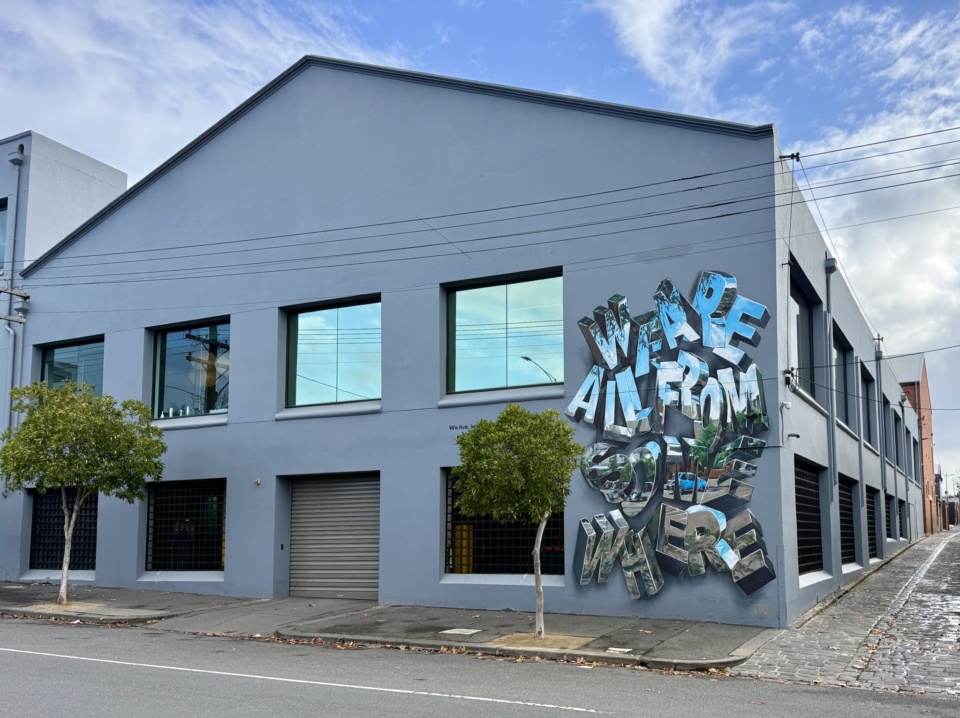
Our Community's founder and leader, Denis Moriarty, says he commissioned a new piece of street art…

Posted on 12 Aug 2026
Our Community's founder and leader, Denis Moriarty, says fostering a child was his worst nightmare,…

Posted on 08 Jul 2026
The Royal Australasian College of Physicians has found itself facing serious scrutiny from the…

Posted on 30 Jun 2026
Australian house prices rose roughly 8,300 per cent between 1970 and 2025, so it would seem…
Posted on 17 Jun 2026
If charges are proven that members of the Brethren movement took part in partisan political…

Posted on 03 Jun 2026
Why exactly are we still getting a day off to celebrate a day that is not the actual birthday of…

Posted on 20 May 2026
It is not really a surprise that we have trouble getting our heads around what the rise of…