
Pauline Hanson and the frightening lesson of ‘Years and Years’
Posted on 07 Oct 2026
Our Community's founder and leader, Denis Moriarty, writes that when he watched an over-the-top…
Posted on 21 Oct 2026
By Denis Moriarty, founder and group managing director, Our Community

The wider not-for-profit sector doesn't pay much attention to owners corporations, but maybe it should, writes Our Community's founder and leader, Denis Moriarty.
The Victorian government has recently organised an expert review of the state’s Owners Corporations Act, and we can all learn from it. For one thing, we can try to come to terms with the scale of the situation. There are about 125,000 Victorian OCs – enough for their chairs to fill the MCG with significant overflow, if that’s your idea of a good time.
According to the review, “one in five Victorians own or live in a home governed by an owners corporation (OC). This number is expected to significantly increase as Victoria’s urban population grows and new multi-unit properties are developed to meet demand”.

One in five is a lot, by anybody’s count. Looking at it from the other side, last time somebody tried to count Australia’s not-for-profits (NFPs), back in 2000, about 17 per cent of them were owners corporations. That figure, too, has probably gone up in the years since. OCs are virtually omnipresent and inescapable. Almost everybody is going to have had some contact with their issues. It’s important that we get their governance right.
And that’s not going to be easy. With most Australian NFPs, people join up because they share a belief in working together as a common enterprise for the public good. They may have disagreements about how to reach those goals, and they will at times have personality clashes that complicate their governance, but they shouldn’t have competing interests – that’s what “not-for-profit” means, after all.
OCs are not exactly like that. Their governance is under stresses that other NFPs don’t have. Their disputes are intense, because they’re often zero-sum – one person’s gain is another’s loss. Negotiation is going to be really tough.
Their conflict resolution procedures, however, are pretty standard NFP rules. You’re first supposed to progress through the corporation’s internal dispute resolution procedures. If that doesn’t work, you can go to mediation with an outsider who will try to bring the parties together. Failing that, you might end up in (semi-)court at VCAT, the tribunal.
So how well does this work? How easy is it for two reasonable human beings to work things out face to face?
At the first stage, internal dispute resolution, we don’t know any actual numbers (because, well, it’s internal), but on the basis of hearings and submissions, the Victorian expert review report concludes that “internal dispute resolution rarely resolves a dispute”. The reasons include committee members who don’t know how to work the procedures and, more pointedly, “conflicts of interest, predetermined outcomes and a lack of procedural integrity”.
The next stage is mediation. You’ll then end up at, for instance, the free Dispute Settlement Centre of Victoria (DSCV), as about 1151 cases did in 20240–25. Mind you, not every dispute is suited to mediation. Indeed, of those 1151 cases, a whopping 78 per cent were discarded straight away. Only 267 cases progressed to active dispute resolution. Of those 267, only 20 cases advanced to formal mediation. And of those 20, only 11 were even partially resolved. That’s slightly under 1 per cent of the original 1,151 inquiries. You’d do better tossing a coin and paying out if it landed on its edge.
“If you’re compelled to be together with your adversary in a room, but not compelled to listen to anything they have to say, let alone to concede the point, what’s really changed?”
So why is mediation for OCs so extraordinarily ineffective? Well, mediation is voluntary: if any of the parties don’t want to do it, they don’t have to. Court-ordered mediation, where there’s some element of compulsion, has much higher success rates – between 50 and 60 per cent. Anecdotally, mediation practitioners report success rates up to 85 per cent – but they would say that, wouldn’t they?
Governments really want disputes to be settled before they go to the tribunal, because the tribunal is difficult and expensive. However, all that the Statutory Review of the Owners Corporation Act 2006 report can come up with to achieve this is more mediation:
“Recommendation 7.R.1: The Victorian Government should create a well-resourced, statutory mediation service for OC-related issues to be a mandatory precursor to a VCAT application. Outcomes of mediation can be taken into consideration in VCAT issuing orders.”
A move to mandatory mediation may improve success rates, but it’s hard to see why. If you’re compelled to be together with your adversary in a room, but not compelled to listen to anything they have to say, let alone to concede the point, what’s really changed?
Any call on more resources, too, would of course cost money, and the government hasn’t yet agreed to this. “Further consideration will be given to the best design for the provision of a mediation service for OC-related issues.” Well, yes; but this isn’t going to be easy. We’re going to have to go back to basics.
The wider not-for-profit sector needs to get involved in this debate. The enormous differences in success rates between existing arrangements imply that there are some general principles that can make or break dispute resolution systems. Can I get any sociological research programs interested in finding out what these principles are?
Denis Moriarty is group managing director of OurCommunity.com.au, a social enterprise that helps the country's 600,000 not-for-profits.
We're proud to take a stand on progressive issues. Here are more recent opinion pieces.
Posted on 07 Oct 2026
Our Community's founder and leader, Denis Moriarty, writes that when he watched an over-the-top…

Posted on 30 Sep 2026
After the biggest AFL game of the year, one player proudly wore the flag of his birth country and…

Posted on 23 Sep 2026
There are solutions to counter the rise of One Nation but they might not be residing in the mess…

Posted on 03 Sep 2026
Denis Moriarty has an issue with insurance companies varying premiums because of what they perceive…

Posted on 26 Aug 2026
Our Community's founder and leader, Denis Moriarty, says he commissioned a new piece of street art…

Posted on 12 Aug 2026
Our Community's founder and leader, Denis Moriarty, says fostering a child was his worst nightmare,…

Posted on 15 Jul 2026
Our Community's founder and leader, Denis Moriarty, on what's special about the shared workplace…

Posted on 08 Jul 2026
The Royal Australasian College of Physicians has found itself facing serious scrutiny from the…

Posted on 30 Jun 2026
Australian house prices rose roughly 8,300 per cent between 1970 and 2025, so it would seem…
Posted on 17 Jun 2026
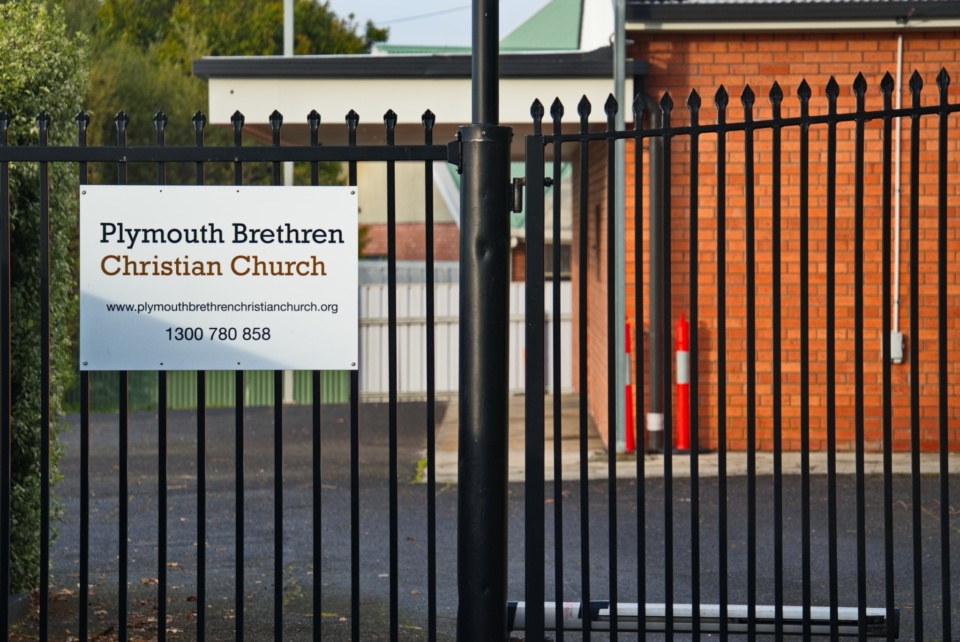
If charges are proven that members of the Brethren movement took part in partisan political…

Posted on 03 Jun 2026
Why exactly are we still getting a day off to celebrate a day that is not the actual birthday of…

Posted on 20 May 2026
It is not really a surprise that we have trouble getting our heads around what the rise of…