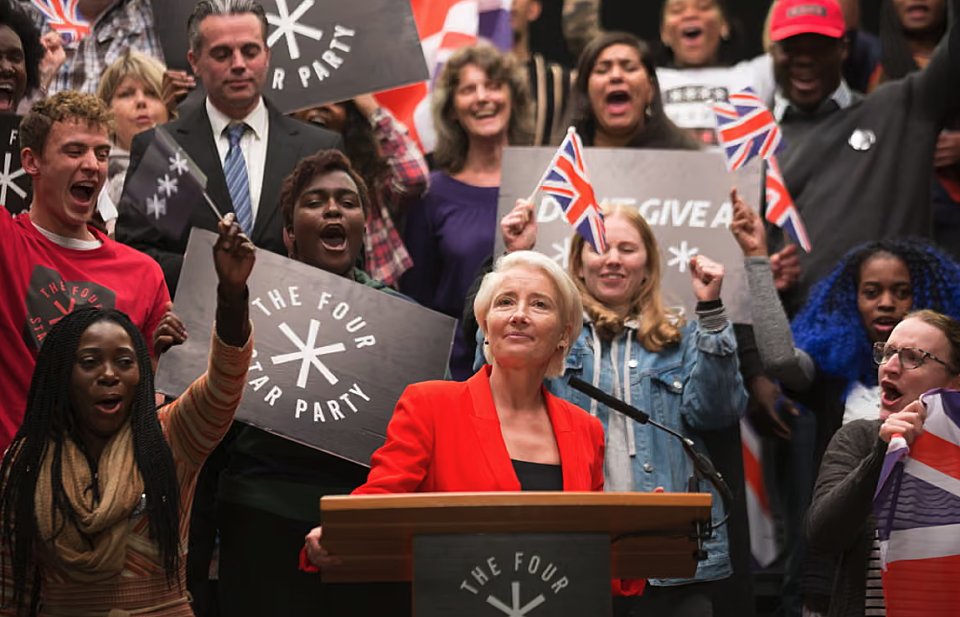
Pauline Hanson and the frightening lesson of ‘Years and Years’
Posted on 07 Oct 2026
Our Community's founder and leader, Denis Moriarty, writes that when he watched an over-the-top…
Posted on 30 Sep 2026
By Denis Moriarty, founder and group managing director, Our Community
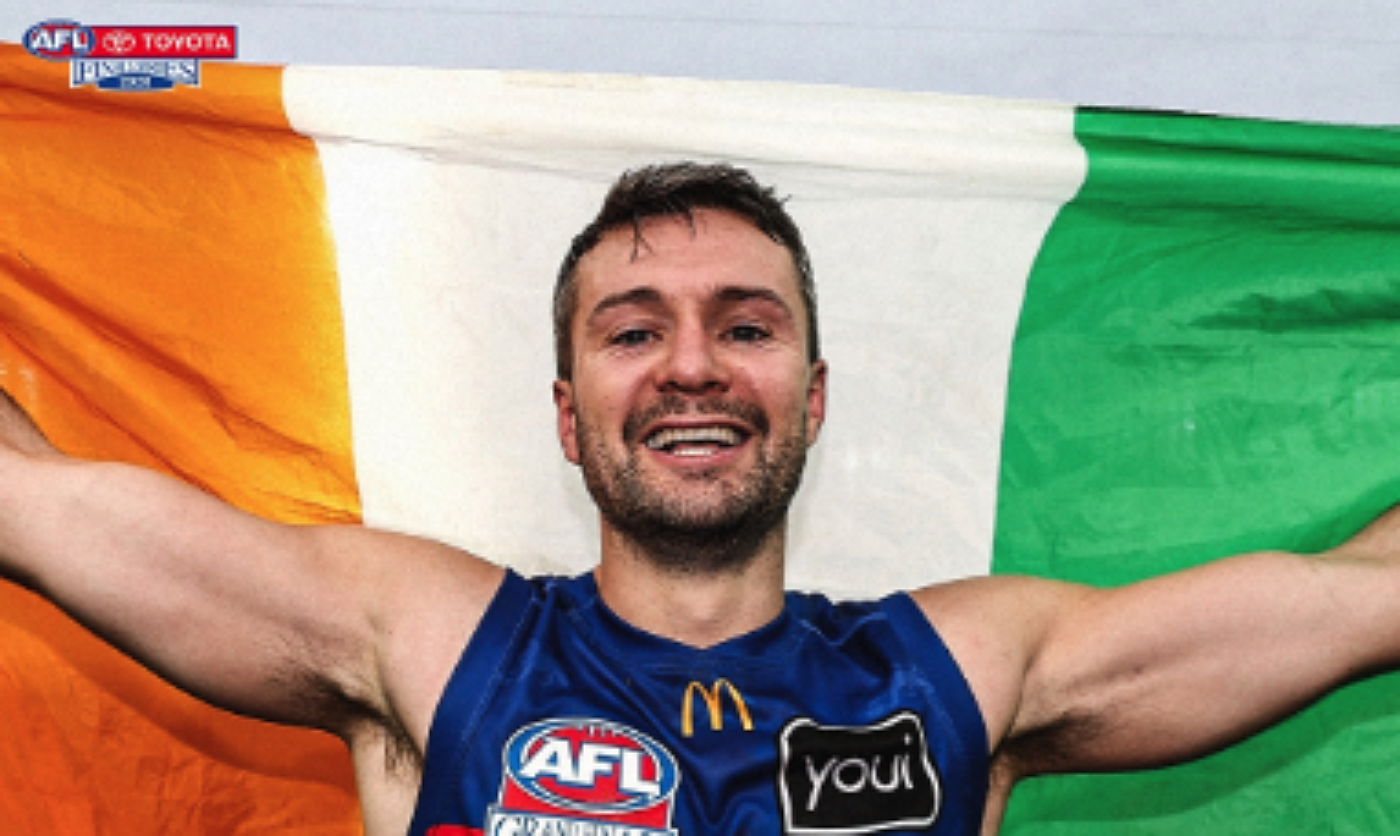
After the biggest AFL game of the year, one player proudly wore the flag of his birth country and nobody batted an eyelid, which is exactly as it should be, writes Our Community's founder and leader, Denis Moriarty.
Watching the AFL Grand Final on Saturday, I found myself thinking about Ireland – and about Pauline Hanson.
Brisbane’s Conor McKenna, a bloke from County Tyrone in Northern Ireland who grew up kicking a round ball rather than a Sherrin, had just become the first Irishman to win two AFL premierships. And when he walked onto the premiership dais, there it was draped proudly around him: the green, white and orange of Ireland.
Nobody booed. Nobody demanded he put it away and demonstrate his allegiance to Australia. Australians celebrated with him.
And why wouldn’t we?
He was a Brisbane Lion. He had just helped produce one of those extraordinary sporting moments Australians will talk about for decades. At that moment he was Irish and Australian, and there was absolutely no contradiction between the two.
That is worth remembering as Pauline Hanson and One Nation continue to campaign for dramatically lower migration and the One Nation version of the White Australia Policy.
We should absolutely debate migration numbers. We should debate housing, infrastructure, congestion and whether governments are properly planning for population growth.
But there is something else we should remember: Australia has a remarkable history of being suspicious of newcomers when they arrive and extraordinarily proud of them once they succeed.
I know something about that. My dad arrived in Melbourne from Ireland back in the 1950s.
Earlier generations of Irish migrants were not always welcomed with open arms. Historical employment advertisements really did exclude Irish applicants. “No Irish need apply”, “English only”, “English preferred” and “Protestants preferred” were all part of the language of discrimination. The Irish were outsiders. Until eventually we weren't.
We became teachers, nurses, police officers, builders, business owners, politicians, public servants and footballers. We married everyone else, lost some of our accents, kept some of our traditions and became Australians. And we are hardly alone.
Think about how many overseas-born people we regard today as quintessentially Australian.
The much-loved John Farnham, Farnsey, for heaven's sake, was born in England and migrated here as a 10-year-old. Could anyone seriously argue that the man who gave us “You're the Voice” isn't Australian enough?
Marnus Labuschagne was born in South Africa and migrated to Brisbane with his family as a child. When he walks out wearing the baggy green, Australians don't scream, “South African migrant!” We scream for Australia.
“Australia has a remarkable history of being suspicious of newcomers when they arrive and extraordinarily proud of them once they succeed.”
Peter Bol was born in Khartoum to a Sudanese mother and South Sudanese father. His family left Sudan, lived in Egypt and came to Australia through the humanitarian system. When Bol charged down the home straight in the 800 metres final at the Tokyo Olympics, millions of Australians were running every bloody metre with him.
Majak Daw came here as a refugee from war-torn Sudan and became the first Sudanese-Australian drafted by the North Melbourne Football Club. His story became part of the story of Australian Rules football.
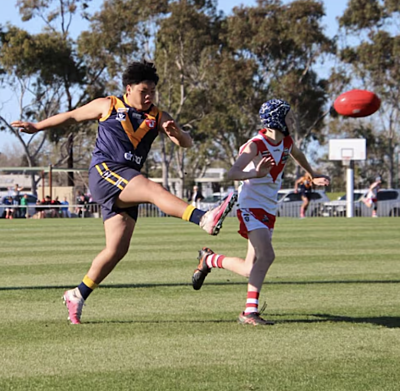
And you don’t have to look to the AFL or the Olympics to see this happening. Four and a bit hours up the Western Highway from Melbourne, in the little Wimmera town of Nhill, another chapter of the Australian story is unfolding. The local under-14s football team has just won its first premiership in 28 years, the ABC reported. Nine of the boys in that side have Karen heritage. At least three were born in refugee camps. Best on ground was Ah Nee Nwe, whose mother arrived in Nhill 16 years ago. Seven years ago he barely knew Australian Rules football. Now he dreams of becoming the first Karen player to make the AFL.
But the really beautiful part of the story is what has happened to Nhill itself. Karen refugees first began arriving there after local employer Luv-a-Duck struggled to find workers. Five workers became six, then 10, and a community began to grow. Today Karen people make up about 10 per cent of Nhill’s population and are employed across dozens of Wimmera businesses. Their children are filling classrooms, joining local clubs and, quite literally, keeping some junior football teams on the field.
After that under-14s premiership, one of the locals who helped bring the first Karen families to Nhill described them as a “gift” to the community.
Think about that word: gift. These were refugees from Myanmar; some of the children had been born in refugee camps. In the language of the migration debate they could so easily have been statistics, another number in an intake, another argument about how many people Australia should accept.
In Nhill, they became workmates, neighbours, classmates, teammates and friends. And then they helped win the bloody premiership.
Such contributions are hardly confined to sport. Anh Do arrived in Australia as a Vietnamese refugee. He became one of our best-known comedians, authors, artists and television personalities. His memoir was appropriately called The Happiest Refugee. Australians didn't merely tolerate Anh Do. We fell in love with him.
Tan Le arrived from Vietnam as a four-year-old refugee and went on to become Young Australian of the Year and a successful technology entrepreneur.
Deng Adut was forced to become a child soldier in Sudan, arrived in Australia unable to speak English, became a lawyer and was named NSW Australian of the Year.
These people didn't become less connected to where they came from in order to become Australian.
That is the bit I loved about McKenna and his Irish flag.
Sam Kerr has spoken proudly about her Indian heritage. Australians don't regard that pride as diminishing her Australianness. It adds another layer to her story.
Australia works best when belonging isn't a zero-sum game. You can love Australia and still love Ireland. You can be Vietnamese-Australian, Sudanese-Australian, Indian-Australian or Chinese-Australian. You can cheer for Australia at the Olympics and still become emotional when you hear the music, language or stories of the country your parents left.
Migration policy inevitably becomes a discussion about numbers: 100,000, 200,000, 300,000.
But human beings aren't numbers. Every number is somebody arriving at Tullamarine or Sydney Airport with an accent, a suitcase and a story. Some will become nurses. Some will start businesses. Some will teach our children. Some will look after our parents. Some will become scientists, artists or lawyers or NBN techies or farm helpers.
And occasionally, one will come from County Tyrone, learn our peculiar game, kick a ridiculous goal in an AFL Grand Final and walk onto the premiership dais wearing an Irish flag and an Australian premiership medal.
Once upon a time, the Irish were told they need not apply. On Saturday, Australia cheered one of them onto the premiership dais.
Perhaps we need to remember the simple message Australians once embraced so enthusiastically: “I am, you are, we are Australian.” It worked because there was no asterisk after “Australian”. It didn't matter whether you were born in County Tyrone, Khartoum, Saigon, Johannesburg or Sydney; whether your parents came on a £10 ticket, as migrants looking for work, or as refugees fleeing for their lives. You could carry an Irish flag, treasure the country you came from and still belong completely to this one. That wasn't a weakness in the Australian story. It was the Australian story.
That's progress worth remembering. Let’s celebrate, not denigrate, our Australians to be.
Denis Moriarty is group managing director of OurCommunity.com.au, a social enterprise that helps the country's 600,000 not-for-profits.
We're proud to take a stand on progressive issues. Here are more recent opinion pieces.
Posted on 07 Oct 2026
Our Community's founder and leader, Denis Moriarty, writes that when he watched an over-the-top…

Posted on 23 Sep 2026
There are solutions to counter the rise of One Nation but they might not be residing in the mess…
Posted on 03 Sep 2026
Denis Moriarty has an issue with insurance companies varying premiums because of what they perceive…
Posted on 26 Aug 2026
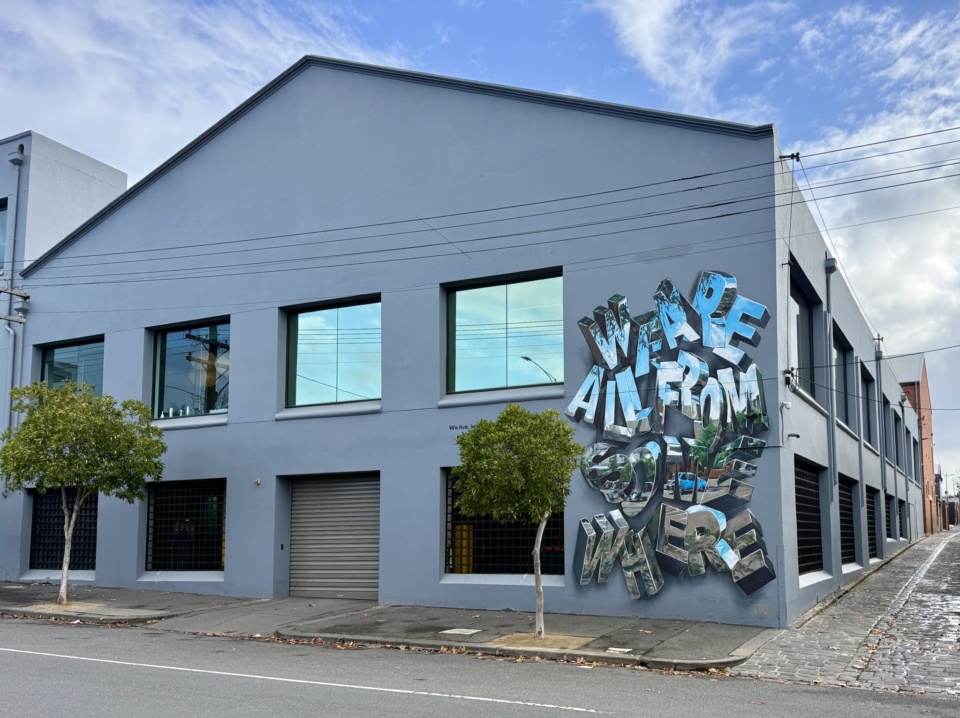
Our Community's founder and leader, Denis Moriarty, says he commissioned a new piece of street art…

Posted on 12 Aug 2026
Our Community's founder and leader, Denis Moriarty, says fostering a child was his worst nightmare,…
Posted on 15 Jul 2026
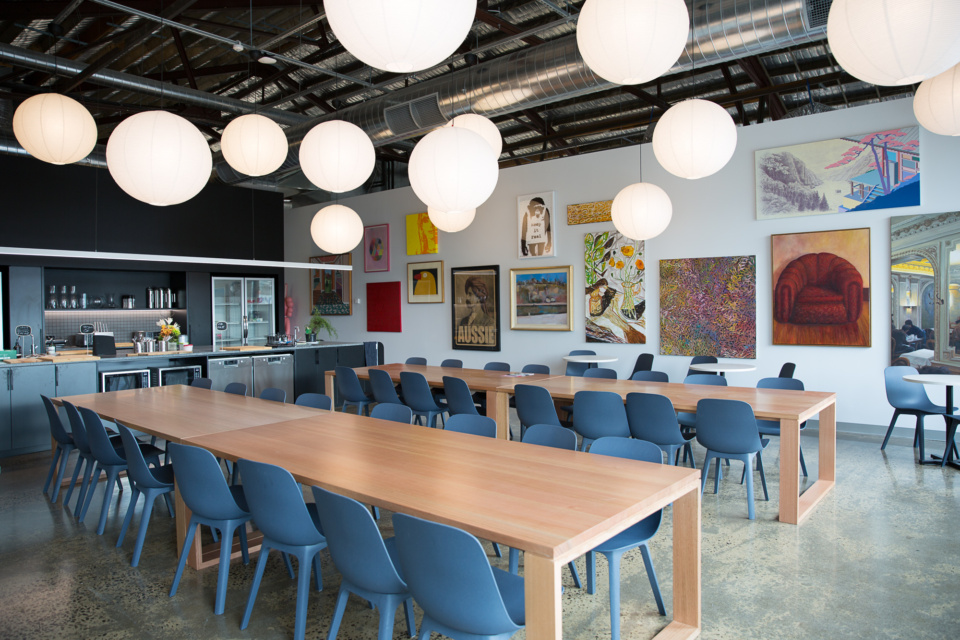
Our Community's founder and leader, Denis Moriarty, on what's special about the shared workplace…

Posted on 08 Jul 2026
The Royal Australasian College of Physicians has found itself facing serious scrutiny from the…

Posted on 30 Jun 2026
Australian house prices rose roughly 8,300 per cent between 1970 and 2025, so it would seem…
Posted on 17 Jun 2026
If charges are proven that members of the Brethren movement took part in partisan political…

Posted on 03 Jun 2026
Why exactly are we still getting a day off to celebrate a day that is not the actual birthday of…

Posted on 20 May 2026
It is not really a surprise that we have trouble getting our heads around what the rise of…
Posted on 14 May 2026
Is it possible that Australians are revelling in demented hysteria at the moment, imagining all…