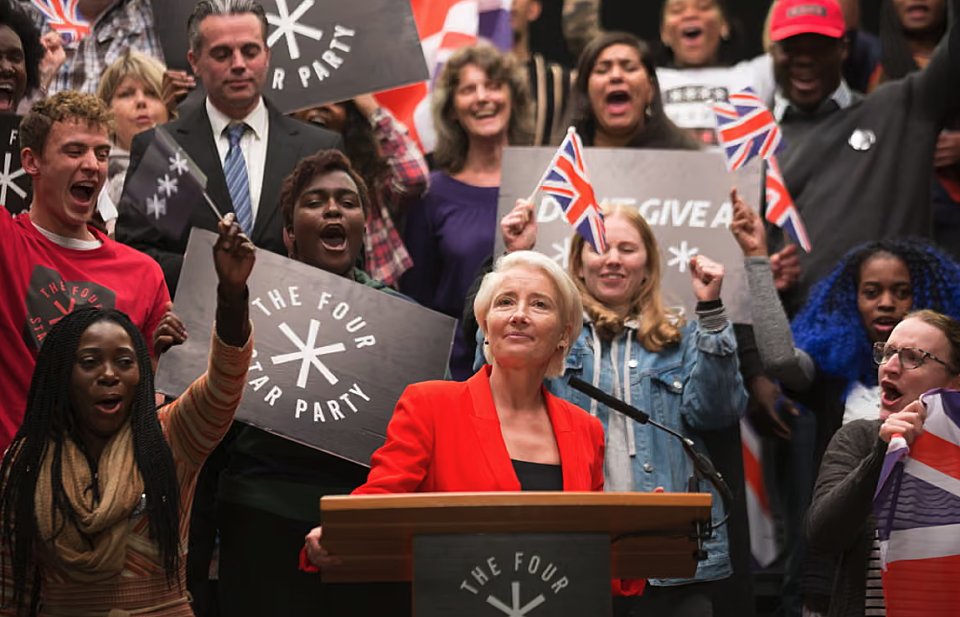
Pauline Hanson and the frightening lesson of ‘Years and Years’
Posted on 07 Oct 2026
Our Community's founder and leader, Denis Moriarty, writes that when he watched an over-the-top…
Posted on 23 Sep 2026
By Matt Lloyd-Cope, housing policy expert

In his new book Our Place, policy expert Matt Lloyd-Cope argues that housing must be at the heart of any plan for a fairer and more prosperous Australia. Here’s an extract.
We love a rags-to-riches story in Australia. Whether your idol is Kerry Stokes going from borderline homelessness to one of Australia’s richest people, Cathy Freeman sprinting her way from Mackay commission housing to that Sydney Olympic gold, or Anthony Albanese showing that the child of a single mum on a disability pension can aspire to the highest job in the land, our collective belief in the fair go runs deep. We see it as a foundational principle that whoever you are, and however much of an underdog you are, you should have the opportunity to find success.
But for every Stokes, Freeman and Albanese, there are hundreds of thousands of children from humble backgrounds who are not outliers. And unfortunately, the conditions that allow for underdog heroes to emerge are being whittled away as the housing system comes under increasing strain.
Perhaps the most obvious ways in which housing affects our passage through childhood are the environmental factors: black mould, poor insulation, damp, a lack of safe heating and cooling, or an absence of decent sanitation. These all cause significant increases in avoidable sickness and deaths. The World Health Organization (WHO) lists housing as one of the main social causes of ill health. While Australia has, on average, a decent stock of houses, a huge proportion of them are in a terrible state. In 2016, there were an estimated 1.1 million Australians living in housing that was classified as somewhere between “very poor” and “derelict”. Australian homes are damp and cold. In winter, our homes are colder than those in Finland. The UK Medical Research Council found that 7.7 per cent of all deaths in Australia are due to suboptimal heating and cooling in the home. By contrast, the figure for Sweden was 3.9 per cent, despite the long, cold winters there. Eight per cent of childhood asthma cases are caused by damp housing, meaning that around an extra 37,000 children are being made unnecessarily sick. An even larger percentage of asthma is caused by exposure to natural gas, with old appliances constantly leaking poisons into the air. And these ailments don’t end if that person finds somewhere better to live. The illnesses caused by childhood housing often persist throughout a person’s life, and many of the effects are irreversible.

While the physical effects of poor housing are obvious, there is an even more insidious health effect. Living in poor-quality housing, falling behind on the rent, the threat of eviction and living under the stress of high housing costs lead to an extraordinary number of mental health issues, particularly for children. If you isolate housing insecurity from other markers of poverty, this specific type of stress leaves deep and enduring mental scars. Children who experience housing insecurity are much more likely to be diagnosed with anxiety and depression, and this effect continues beyond childhood. Children raised in insecure and stressful housing have higher levels of behavioural and emotional problems across the board, increased teenage pregnancy rates and faster initiation into drug use. Other studies have shown that recovering from a mental health episode is much harder in the absence of decent housing.
Research conducted by an international group of housing experts, including Emma Baker, Professor of Housing Research at the University of Adelaide, found that the stress associated with being an insecure renter can age you faster than almost anything else. People living in private rentals experience an additional 2.4 weeks of biological ageing every year compared to homeowners. This is a far greater effect than obesity, which added an additional week of biological ageing, unemployment (1.4 additional weeks) or even being a former smoker (1.1 weeks). “Faster ageing is associated with poorer health,” the study authors reported. “Outcomes include poorer physical and cognitive function and a higher risk of chronic illness and even early death.”
The researchers asked what was causing this extraordinary effect – was it living in rundown buildings, or was it to do with your likelihood of being evicted? Their methods allowed them to identify the stress associated with insecure private renting as the cause. Social housing tenants, who have far greater certainty over housing costs and security of tenure, did not experience these effects.
All these studies provide us with evidence for something that I believe most people know intuitively at a fundamental level: that children and adolescents require stable, safe and secure housing to develop into healthy, happy and productive adults.
Do you know someone trapped in a relationship because they can’t afford to set up house on their own? Or maybe you know of a couple who aren’t going to have a wedding because they are saving for a house deposit. For many people, high housing costs make it more difficult to both enter and exit a marriage.
In the Australian Housing Monitor Survey that I worked on in 2022, we asked respondents for a yes or no response to the following statement: “I have put off leaving a partner because it was too expensive to move out.” For respondents aged 41 and under, a very large proportion agreed – around 20 per cent of women and 15 per cent of men, far higher than in older cohorts. This result matches fascinating trends in divorce and separation. Divorce rates are now at historically low rates – for those under 45. But for those aged 45 and older, for whom housing costs are far lower, the divorce rate has roughly doubled over the same period. This trend clearly points to many cultural and social changes.
But researchers are increasingly focused on how high housing costs are trapping people in relationships that they do not want to be in. Of course, this is particularly disastrous for people in abusive relationships. Domestic and family violence is the single biggest cause of homelessness in Australia. At the same time as housing costs have sky-rocketed, a lack of funding for the specialist homelessness service sector means that one in five people seeking crisis accommodation cannot access it. The provision of housing for people at the most vulnerable point in their lives is in major crisis.
Let’s look at some housing data behind these various trends. To start with, let’s examine the proportion of rental listings in Victoria that are considered “affordable”, using data from the Victorian government, which defines a property as affordable if the rent costs no more than 30 per cent of the average income of a household that qualifies for Centrelink payments.
In the first decade of the century, over 50 per cent of three-bedroom homes were available to lower-income people in metropolitan Victoria, and over 80 per cent were available in regional areas. But an enormous drop-off in available affordable homes took place from about 2008. By the end of 2024, a mere 11 per cent of three-bedroom metro rentals were classed as affordable, and only 50 per cent in the regions.
While these rates of decline in affordable family homes are shocking, it is nothing compared to the housing market facing couples wanting to split into two households. From 2007 onwards, less than 2 per cent of one-bedroom rentals were affordable for low-income people in metro areas. In the regions, it is a story of constant decline over the past 25 years, with just 20 per cent of one-bedroom rentals being affordable by the end of 2024. It’s worth remembering that these figures are averages across the whole state, so in areas where few rental properties are ever listed, there may be no affordable rentals at all for years at a time.
If someone were to ask you to associate words with “the good life”, a hundred to one you would not say the word “renting”. Since white settlement began, happiness and satisfaction have gone hand in hand with owning a home. This idea goes back a long way. As in New Zealand, the United States and Canada, our post-settlement culture has been built on the idea of accessible home ownership. Having a piece of land to call your own defines whether you have “made it”.
In the first decades of the 20th century, Australia already had a high proportion of home ownership. Around 50 per cent of people owned their own homes, compared to about 15 per cent in the United Kingdom. But it was the explosion of home ownership in the 1940s–1960s, reaching a high of 73 per cent, that cemented it as a key part of the Australian Dream.
The link between housing, wellbeing and happiness goes beyond the wealth attached to owning a home. A beautiful home, in a convenient area, close to family, will bring far more happiness and satisfaction than the equivalent amount of wealth in stocks, shares or bonds. Research consistently shows that home ownership increases happiness. Outright ownership makes people happier than owning equivalent wealth in other forms. Interestingly, owning an investment property does not increase happiness, regardless of whether it is owned outright or mortgaged.
Looking beyond tenure, housing can make us happy in many other ways. People who report spending their spare income on renovations are happier than those who spend it on new cars. People who spend it on paying down the mortgage quicker are happier than those who spend it on eating out. Houses are generally built for us, but we build houses into homes. We populate our homes with meaning, load them up with memories, create space for our eccentricities and foibles. Nesting is one of our core sources of happiness.
This link between tenure and happiness is not universal, though. In places where rental protections are high, the difference in life satisfaction between renters and homeowners is significantly smaller. A recent German study published in the Journal of Happiness Studies found that the boost to life satisfaction brought about by homeownership is relatively short-lived, and less than homebuyers imagined beforehand. The authors suggest that part of the reason for this is that what we believe will make us happy and what actually makes us happy are often not the same thing.
“Given that housing stress can age you faster than other types of physical and mental stress, it should come as no surprise that this translates into non-¬homeowners dying younger.”
As an obsessive late-night online bargain hunter, I can relate.
The greater closeness in life satisfaction between renters and home-owners in places like Germany is easily explained. What Australian housing researchers and policy wonks call a “homeowner-like experience” is simply called “renting” in Germany. Rental tenancies in Germany last, on average, for 11 years, and there are strict rules governing in-tenancy rent increases. This provides forms of physical and financial security that are simply absent for Australian renters.
Given that housing stress can age you faster than other types of physical and mental stress, it should come as no surprise that this translates into non-homeowners dying younger. The scale of difference between renters and owners is more shocking than you might think. Dr Kim Kiely, author of a recent study on housing and life expectancy, said: “What we discovered was that from the age of 65 the life expectancy of renters was 2.3 years shorter than owner occupiers.” The health gap is particularly severe for women, who lose 3.1 years of healthy living, compared to 1.8 years for men.
If you have paid off your mortgage, you tend to spend around 5 per cent of your income on housing – energy bills, council rates and so on. But for retired renters and mortgage holders, housing eats up an unpredictable and potentially enormous share of your income – around 30 per cent, on average. At the turn of the century, 88 per cent of pensioners were homeowners, with 75 per cent owning their home outright, and just 6 per cent in the private rental market. But there is a shift occurring in which a larger share of retirees are either renting or have a mortgage to pay off. By 2023, the proportion of retirees protected by outright home ownership had fallen from three-quarters to two-thirds, and the proportion renting had doubled.
This should make us even more concerned about “delayed adulthood”: if you are able to buy a home and pay off your mortgage at a relatively young age, then you can live in relative ease in retirement, even on a low income. As people buy later, with much larger mortgage debts, or are encouraged to use their homes as cash machines by extending their mortgages, their chances of enjoying life without a mortgage or rent in retirement decrease. While retirees on low incomes are more likely to access social housing than other groups, this protective system is shrinking as the number of pensioners needing it increases. Australia is not alone in this: the situation in the United Kingdom is so bad that Boris Johnson, when he was prime minister, even floated the idea of 50-year intergenerational mortgages, to be passed down from parents to children!
For the growing share of Australians who rent in retirement, the outcomes are increasingly bleak. In 2025, Anglicare analysed 51,238 rental listings across the country. It found that just 165 (0.3 per cent of) rentals on the market were affordable for people living on the age pension.
Retired renters are much more likely to be trapped in inaccessible or inappropriate homes, leading to worse physical health, lower independence and greater difficulty performing daily activities.
Older women are bearing the brunt of this crisis. Women over 55 became the fastest-growing homeless group in recent years, with as many as 240,000 women aged 55 and over at risk of homelessness.
Different factors that interact with high housing costs – the “motherhood penalty”, the gender pay gap, the “gift gap” and the gendered superannuation system – mean that women retire with about 40 per cent less in their super accounts than men.
Our social security system, meanwhile, presumes that the vast majority of people will own their home by the time they retire. But this policy assumption is heading for a very serious and expensive crisis. As Australia’s population ages and home ownership becomes less affordable, the number of people who find themselves either paying the mortgage or renting in retirement will skyrocket. Forecasts suggest that the number of private-sector renters aged over 65 will have doubled between 2016 and 2031, while the number of people in that age category will have increased by 140 per cent.
Our Place: How to Solve the Housing Crisis and Rebuild the Australian Dream is published by La Trobe University Press in partnership with Black Inc, $36.99.
Tap here to claim your 15 per cent discount on Lloyd-Cape’s new book with the code “COMMUNITYDIRECTORS26” (pre-order)
Matt Lloyd-Cape joined the progressive think tank Per Capita in 2019, and in 2022 he became the founding director of the Centre for Equitable Housing, where he is now the principal fellow. He is a prominent commentator and adviser on housing issues.
Posted on 07 Oct 2026
Our Community's founder and leader, Denis Moriarty, writes that when he watched an over-the-top…

Posted on 30 Sep 2026
There's been a lot of talk about AI this week, and some of it has been frightening. So, is AI good…

Posted on 30 Sep 2026
After the biggest AFL game of the year, one player proudly wore the flag of his birth country and…

Posted on 23 Sep 2026
There are solutions to counter the rise of One Nation but they might not be residing in the mess…

Posted on 03 Sep 2026
Denis Moriarty has an issue with insurance companies varying premiums because of what they perceive…
Posted on 02 Sep 2026
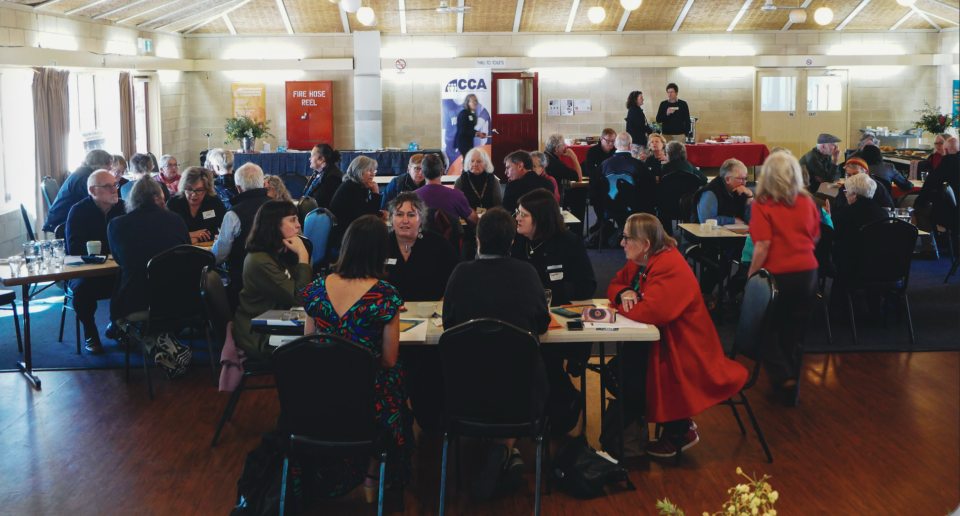
Yesterday, at a meeting just outside Castlemaine in Victoria, 70 people came together to hear…
Posted on 26 Aug 2026
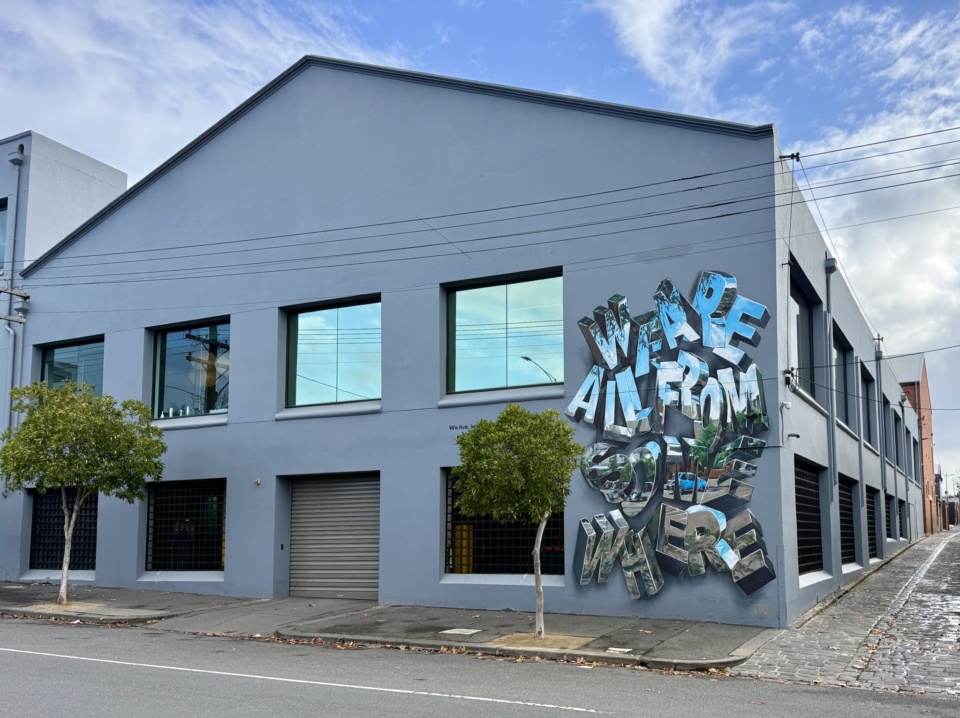
Our Community's founder and leader, Denis Moriarty, says he commissioned a new piece of street art…

Posted on 19 Aug 2026
Government funding is at the centre of Australia's charity and not-for-profit sector – our number…

Posted on 12 Aug 2026
Our Community's founder and leader, Denis Moriarty, says fostering a child was his worst nightmare,…

Posted on 05 Aug 2026
The charity and not-for-profit sector is vital to our economy and the wellbeing of communities…
Posted on 05 Aug 2026
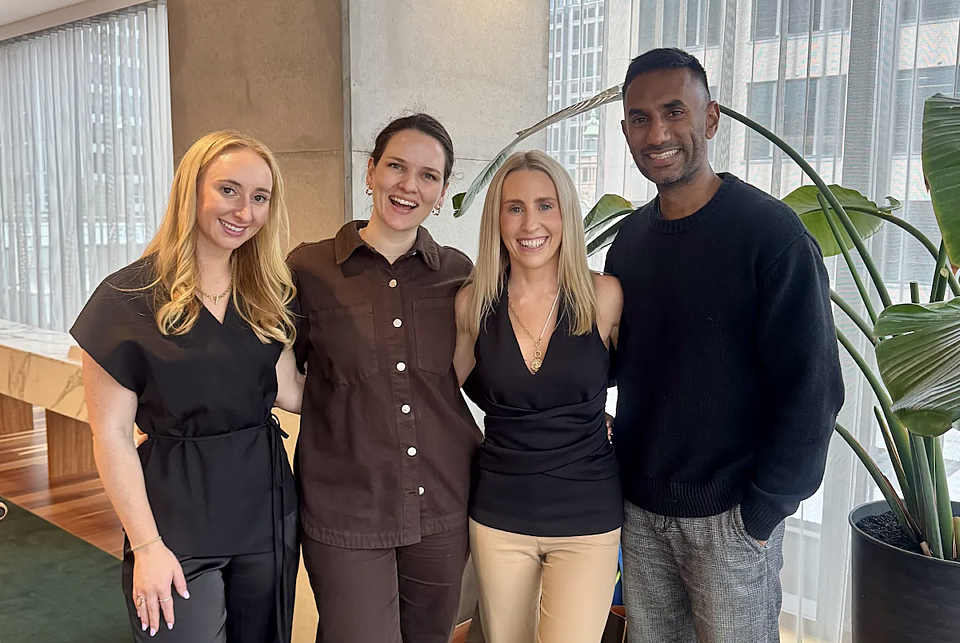
As the Global Impact Summit kicks off in Sydney today, Equitable Philanthropy’s Catherine Brooks…

Posted on 15 Jul 2026
The government is now consulting on changes to the way trusts are taxed. Charities and NFPs need to…