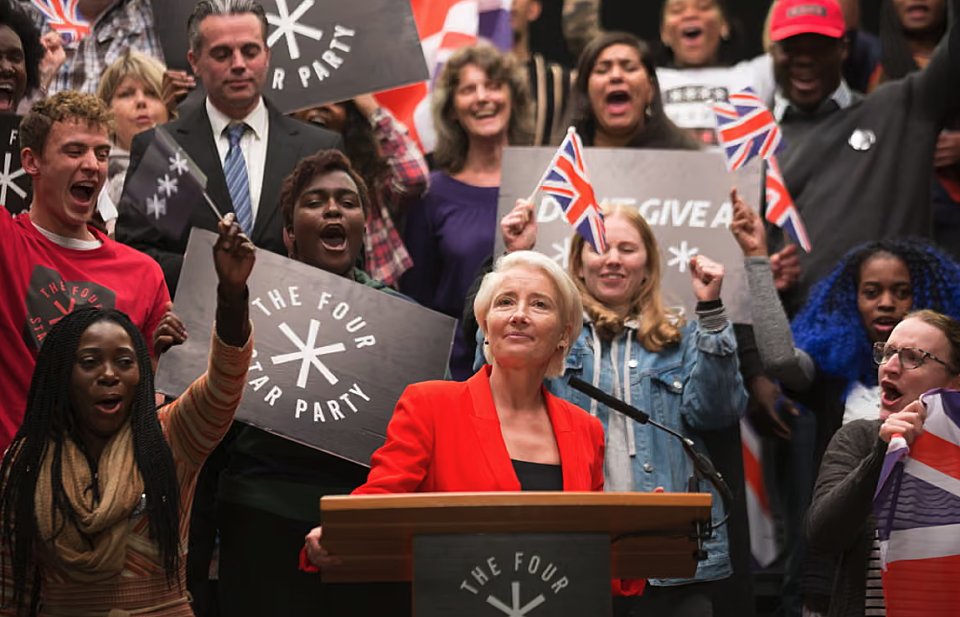
Pauline Hanson and the frightening lesson of ‘Years and Years’
Posted on 07 Oct 2026
Our Community's founder and leader, Denis Moriarty, writes that when he watched an over-the-top…
Posted on 02 Sep 2026
By David Crosbie, CEO, Community Council for Australia
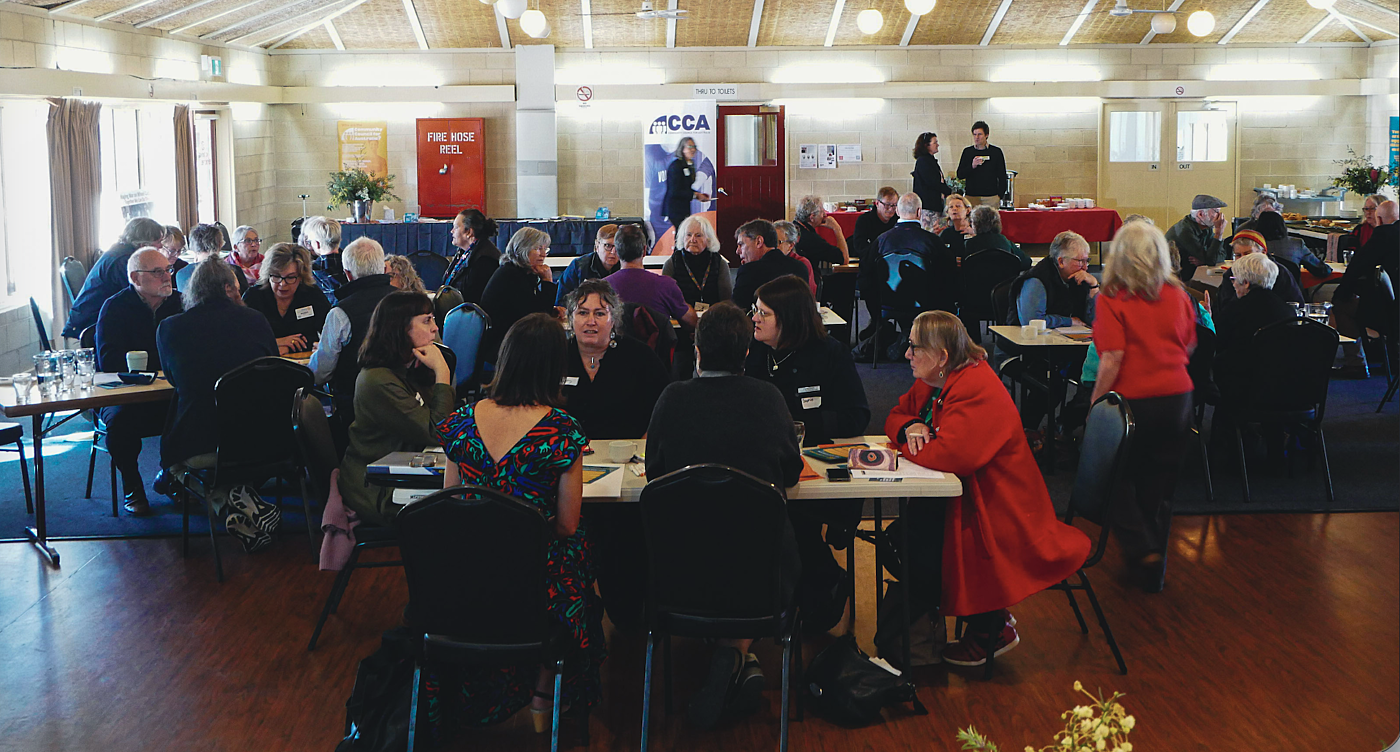
Yesterday, at a meeting just outside Castlemaine in Victoria, 70 people came together to hear Community Council for Australia (CCA) chair Tim Costello make an important presentation about the value and power of communities.
These people came from many local groups and symbolised the vibrant heartland of community connection in the Castlemaine region. Those groups included a young writers group, Landcare groups, spinners and weavers, sporting groups, people who run libraries full of books and libraries full of seeds, festival groups, historical societies and history preservation groups, musical groups, art groups, Rotary, the CFA, church groups, local councils, Indigenous groups, environment protection groups, op shops, carers, community houses, and so many more.
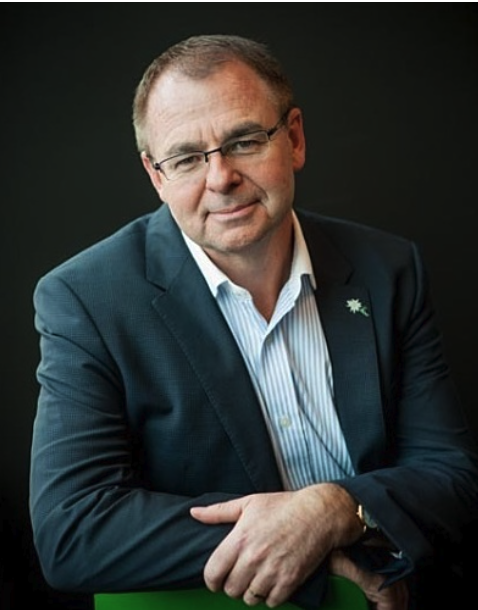
Tim’s presentation was – as always – compelling, but the real purpose of this meeting involved sharing stories of how the many community groups – charities and NFPs – make a difference in their communities.
In sharing these stories, people made connections, identified common themes, and discussed the successes and frustrations of driving change in local communities – and collaborations began to emerge.
The significance of local networking events like this cannot be overstated.
However we measure public benefit or real wealth, it is these groups that enable value to be created and sustained within every community across Australia.
At an economic level we can look to the tangible benefit for communities of all the voluntary work these groups undertake. If we had to put a price on the thousands of volunteer hours local groups put into their communities across Australia, the direct benefit in hours worked would be in the hundreds of billions of dollars, according to A Snapshot of Volunteering in Australia, published in 2023.
Beyond the direct costs of volunteer hours, activities like festivals, artistic performances and shows, tourism, environmental protection and sporting events all contribute to making regional life economically sustainable for many businesses.
Perhaps even more important is the role these groups play in dealing with disasters. While governments and councils invest heavily in building resilient physical infrastructure, the groups gathered in Castlemaine yesterday do something that is just as important with very limited investment. They build social infrastructure, networks of care and connection.
“Every analysis of disasters across Australia, from the worst bushfires to the most destructive floods, has highlighted the critical role of volunteers, charities and NFPs.”
When fires or floods overtake a community, it is the social infrastructure created by local groups that enables people to respond, to share safety information and evacuation plans, to find and support those in need, to help shelter and care for those affected, and to bring people together with purpose during recovery.
This is not just theory. Every analysis of disasters across Australia, from the worst bushfires to the most destructive floods, has highlighted the critical role of volunteers, charities and NFPs. Local social infrastructure is at the heart of disaster planning, preparation, response and recovery. Communities with strong local social infrastructure and vibrant charities and NFPs fare better in disasters than those where the social infrastructure has been neglected or worn down (see sources, below).
And it’s not just in the economy or in responses to disasters that local connections demonstrate their value. Our health and wellbeing is grounded in social connection.
The enemy of good (mental) health is isolation. Australia is currently coming to terms with an epidemic of loneliness – one in six Australians experience severe loneliness, according to the Ending Loneliness Together taskforce.
A growing body of research is finding that one of the key predictors of positive health outcomes is personal connection, a reason to care, a reason to be valued, a reason to belong. Belonging is what local groups are all about.
Whether we take an economic perspective, a health and wellbeing perspective, or a climate adaptation and disaster management perspective, the social infrastructure that is fostered by local charities and NFPs is invaluable for Australia.
Unfortunately, the real value of local charities and NFPs is not reflected in the way governments treat this sector.
In fact, some recent measures from governments have made it more difficult to be a small volunteer-run charity or NFP. A good example of this is the self-assessed income tax exemption measure from the ATO, which requires every NFP, regardless of turnover, to step through a complicated process to provide an annual return. (See the Senate Economics References Committee report Not-for-profit Entities: Tax assessments.)
The CCA has long advocated the value of charities and NFPs and sought to achieve a better deal from governments. We have had some limited success. We are now taking a more grounded and engaged approach in this effort, drawing on the strength of local groups.
The CCA intends to run events and build networks to create the kind of Australia where the value of local charities and NFPs is better acknowledged and reflected in government policies and investment. By the time the 2028 election is upon us, we hope to have an active group of local community networks pushing for sustained investment in our sector.
This week in Castlemaine was just the beginning.
The Community Advocate’s Nick Place was at the event. His report is here.
Sources
Royal Commission into National Natural Disaster Arrangements: Report (2020), chapter 22
Community Organisations, Volunteers, and the Road to Disaster Recovery, by Nikita Sharma and others (2025)
Community Recovery: Handbook 2, by the Australian Institute for Disaster Resilience (2018)
David Crosbie has been CEO of the Community Council for Australia for the past decade and has spent more than a quarter of a century leading significant not-for-profit organisations, including the Mental Health Council of Australia, the Alcohol and Other Drugs Council of Australia, and Odyssey House Victoria.
Posted on 07 Oct 2026
Our Community's founder and leader, Denis Moriarty, writes that when he watched an over-the-top…
Posted on 30 Sep 2026
There's been a lot of talk about AI this week, and some of it has been frightening. So, is AI good…

Posted on 30 Sep 2026
After the biggest AFL game of the year, one player proudly wore the flag of his birth country and…

Posted on 23 Sep 2026
In his new book Our Place, policy expert Matt Lloyd-Cope argues that housing must be at the heart…

Posted on 23 Sep 2026
There are solutions to counter the rise of One Nation but they might not be residing in the mess…
Posted on 03 Sep 2026
Denis Moriarty has an issue with insurance companies varying premiums because of what they perceive…
Posted on 26 Aug 2026
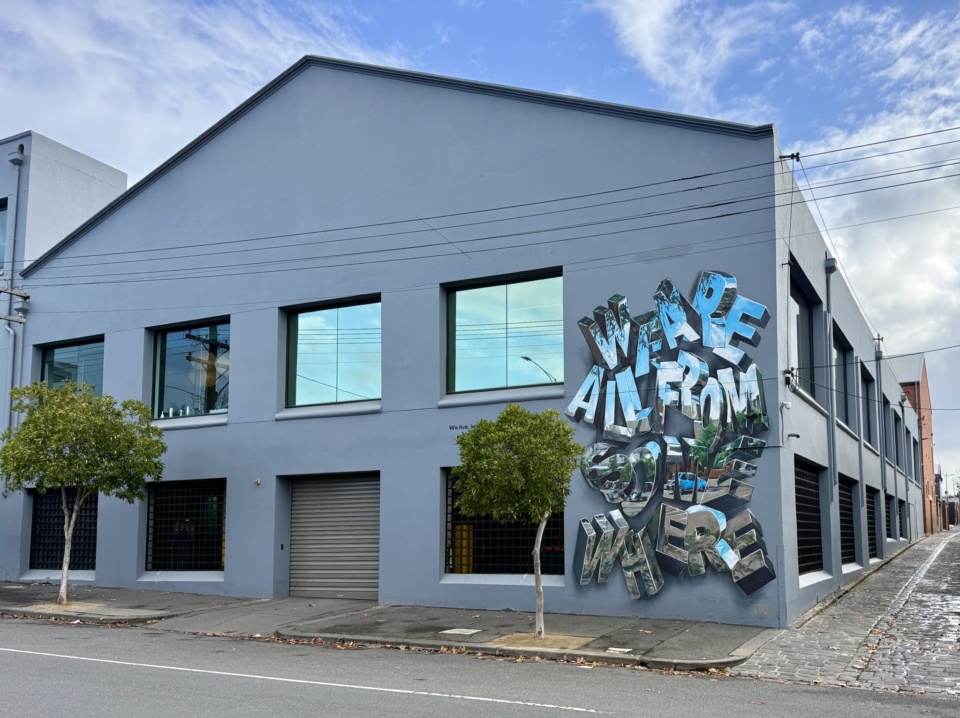
Our Community's founder and leader, Denis Moriarty, says he commissioned a new piece of street art…

Posted on 19 Aug 2026
Government funding is at the centre of Australia's charity and not-for-profit sector – our number…

Posted on 12 Aug 2026
Our Community's founder and leader, Denis Moriarty, says fostering a child was his worst nightmare,…

Posted on 05 Aug 2026
The charity and not-for-profit sector is vital to our economy and the wellbeing of communities…
Posted on 05 Aug 2026
As the Global Impact Summit kicks off in Sydney today, Equitable Philanthropy’s Catherine Brooks…

Posted on 15 Jul 2026
The government is now consulting on changes to the way trusts are taxed. Charities and NFPs need to…