
‘The mind boggles’: federal envoy blasts NT housing decision
Posted on 14 Oct 2026
The federal government’s special envoy for social housing and homelessness, Josh Burns MP, has…
Posted on 02 Sep 2026
By Nick Place, journalist, Community Directors
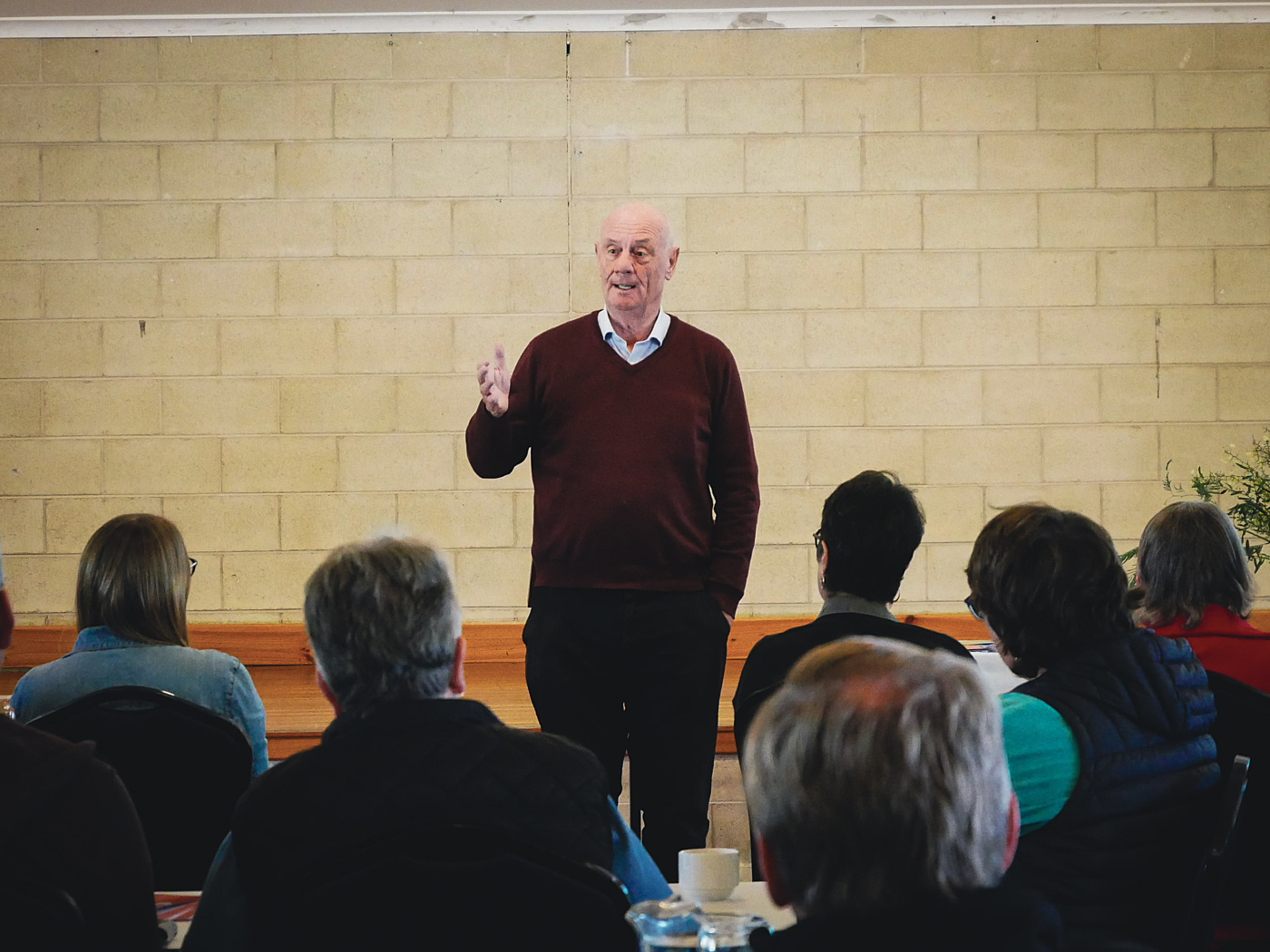
In a low-slung community hall at Campbell’s Creek, near the Victorian Goldfields town of Castlemaine, Rev Tim Costello yesterday told a group of local community leaders that resistance against the world’s troubles started in that hall, with them.
The chair of the Community Council for Australia (CCA), Costello did not pull punches as he summarised Donald Trump’s threat to democracy, the danger of the tech bros’ social media algorithms, the Far Right’s campaign to paint migrants as Australia’s biggest threat, ahead of climate change, and society’s increasing tribalism.
For the people in the room, who ranged from the Maldon Brass Band committee to the Newstead Spinners and Weavers, this global scene-setting may have been unexpected in a discussion about how community organisations can have a bigger impact locally.
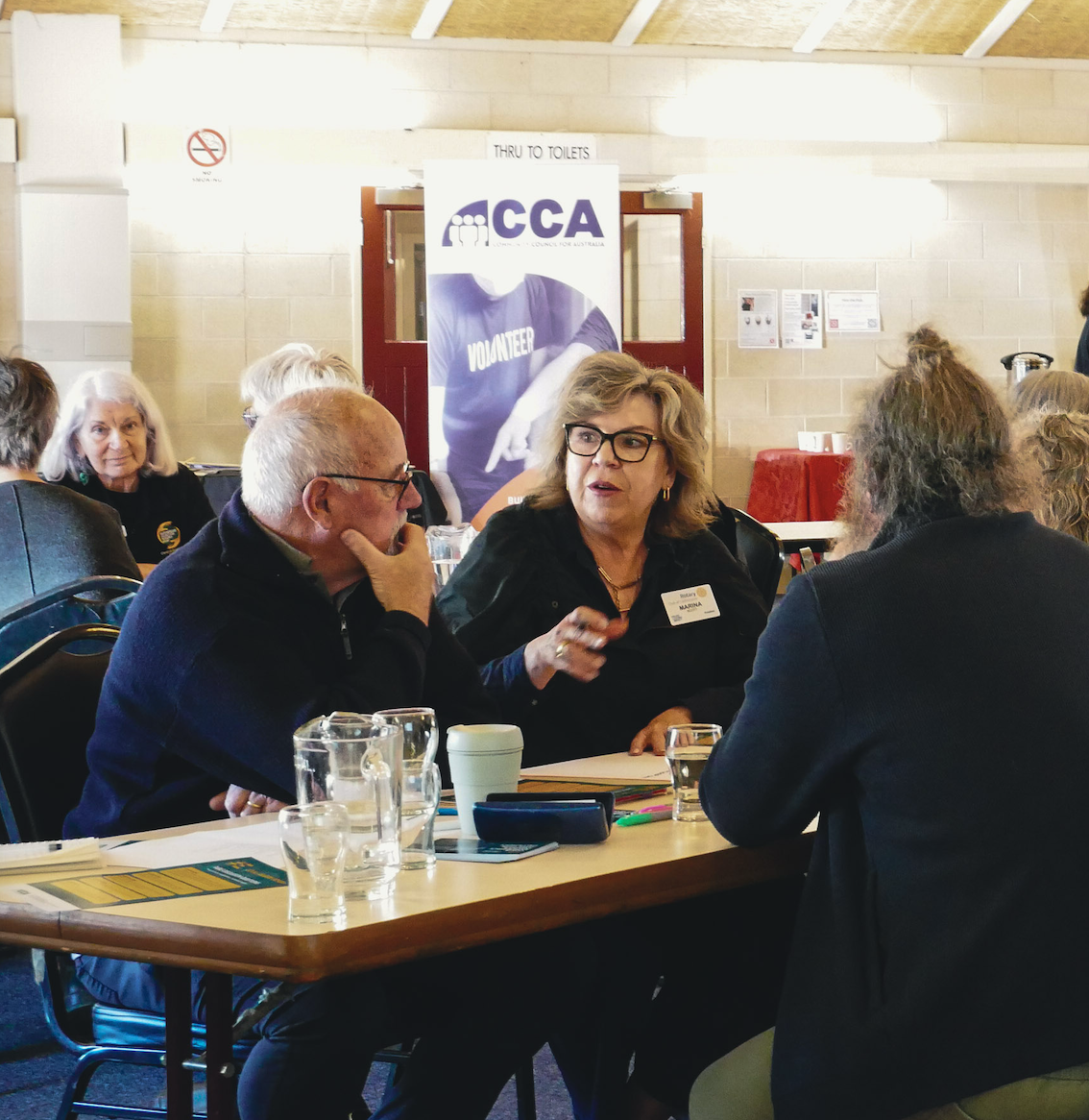
The gathering was an experiment, organised by the CCA, in bringing diverse community organisations together to see if they could find common ground, form collaborations and raise their awareness of the struggles they shared. While the CCA is the sector’s national peak body, based in Canberra, the gathering in Campbell’s Creek was all about the rank and file that gives the sector its strength.
CCA’s director of sector leadership and community engagement, Dimity Fifer, said the day was aimed at breaking down silos, by building awareness of how many other people in the community were also working to have a positive impact, while asking what could be done to help these community organisations thrive.
“I live in Newstead, and in Newstead, when you go to the Australian Charities and Not-for-profits Commission site, that registers all the charities, there are only five organisations in Newstead who are registered and incorporated,” Fifer told the room. “But if Don and Sue, on a Friday night, invite all the community groups, because we all get together, he sends the email out to 45 groups, because that’s how many there actually are. A ratio of one-to-nine, incorporated. It’s why I said, by gum, the spinners and weavers have to be here today. It’s not just the big guys. Those spinners and weavers are going to celebrate 50 years next year. Governments come and go and the spinners and weavers hang in there.”
“We need to strengthen our networks and each other, so we know what each other is doing, and become advocates for one another, to help each other in a much more connected way.”
Crews from the various local op shops, the Red Cross, libraries, volunteer organisations, the Resonance String Orchestra and more listened as Costello drew direct lines between their work and the Battle of Britain’s desperate defence of democracy in 1940, and evoked the effects of recent US cuts to foreign aid.
“Have you noticed the people who turn inwards are always feeling resentful, let down, hurt?” Costello told the room. “This is where this grievance identity politics comes from, but the door to happiness turns outwards. The people who say I can give, I can serve, I can volunteer, I can help; this, actually, is the antidote, the alternative story to the stories that have been shaping our politics to create the democratic space.
“It’s why what’s happening today and you getting together is so important. It’s where the resistance and the counter story actually starts,” he said.
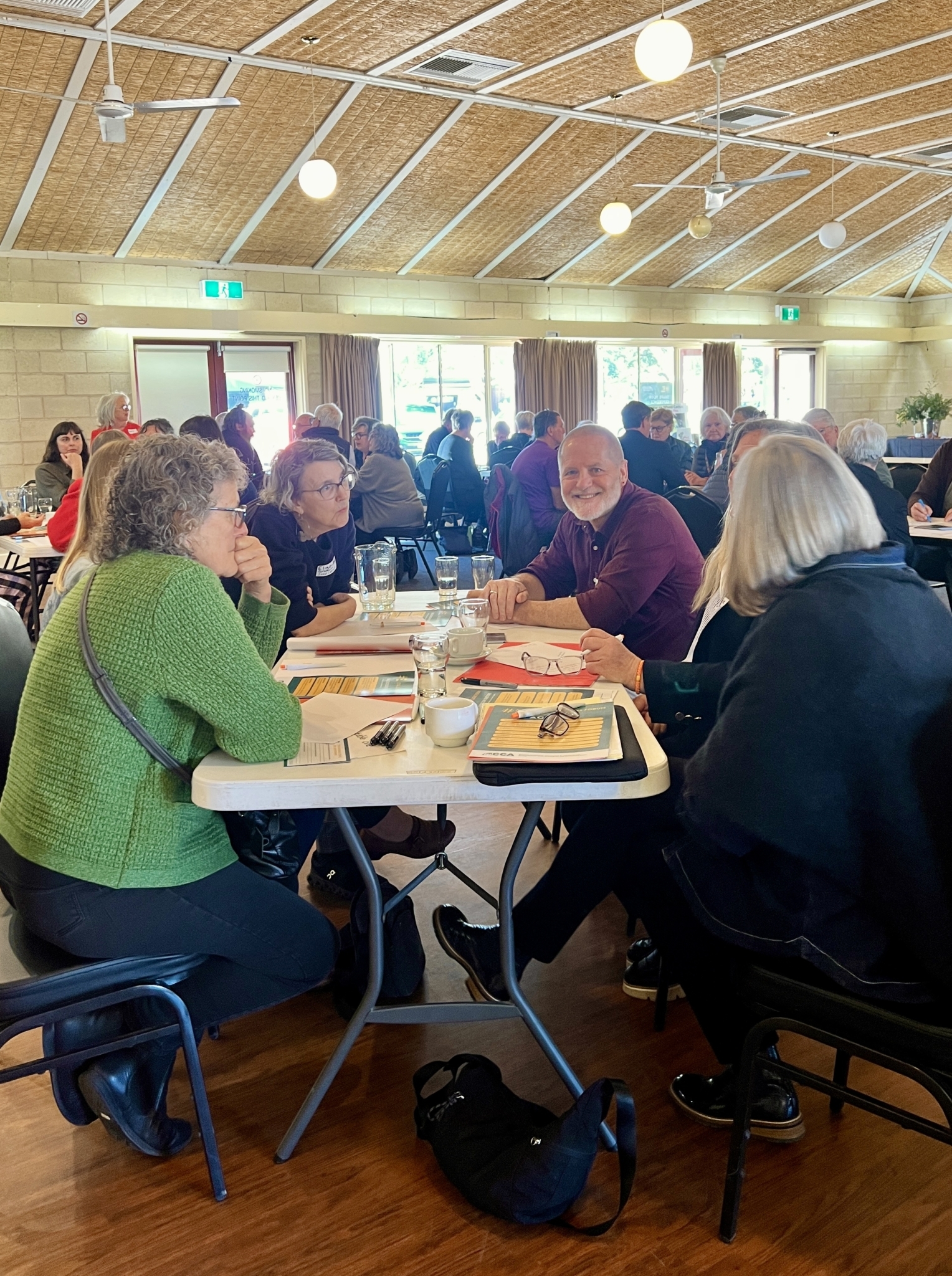
Participants divided into groups to consider such questions as what would help them thrive? What keeps them awake at night? Who values their work? How could they work more effectively as a sector?
They were almost universally aligned in the need to find a way to cut red tape and cut administrative demands. Bill Sampson, from the Guildford Upper-Loddon Landcare Committee, said NFPs needed “a one-stop shop” that provided templates for the reports required from treasurers and secretaries, and for annual reports.
“I spend so many more hours on administration than planting trees, it’s out of all proportion,” he said, to applause.
Stephen Oxley, from Connecting Country, said that to thrive, small NFPs needed a facilitating organisation that assisted with administration, grant writing and other time-consuming demands, to lift the community organisations’ capacity to work on their missions and to draw new funding.
“We need to strengthen our networks and each other, so we know what each other is doing, and become advocates for one another, to help each other in a much more connected way,” he said.
Kath Goff, from the Nalderun Education Aboriginal Corporation, said the Aboriginal and Torres Strait Islander population in the Goldfields region needed support from their community organisation peers in the face of increasing and “horrific” racist attacks across social media and in other forums.
“We’ve just moved out of the impacts of the referendum and we’re back there again,” she told the room, struggling with her emotions. “When you’re talking about where we are as a society, we’re living in Castlemaine and we have increasingly horrific racism against Aboriginal and Torres Strait Islander people. All I want is people to be aware and to help us. If people don’t understand, if people have queries, come to us, because we’re happy to help, if you are unsure. But we are a very minority community that’s about to go through another horrific time, and we just got over the last one. We just want to get on trying to heal and go about our own business.”
The group agreed to meet again, and soon.
CCA chief executive David Crosbie on why the event matters for all Australians, here.
Posted on 14 Oct 2026
The federal government’s special envoy for social housing and homelessness, Josh Burns MP, has…

Posted on 14 Oct 2026
The Reserve Bank’s move to ban card payment surcharges has led to complications for charities and…

Posted on 14 Oct 2026
A special guest with her finger on the pulse of one of the biggest issues facing Australia –…

Posted on 07 Oct 2026
A major public campaign launched this morning is calling on the federal government to restore…

Posted on 07 Oct 2026
The Australian Literacy & Numeracy Foundation (ALNF) has announced a partnership with mining…

Posted on 07 Oct 2026
A conference in Darwin will this morning hear detailed, strategic plans for how Australia could…

Posted on 30 Sep 2026
Not-for-profit leaders have been warned to be wary of approaches from potential “funding partners”…
Posted on 30 Sep 2026
More than 200 fully funded Centre for Social Impact (CSI) scholarships will help equip for-purpose…

Posted on 30 Sep 2026
Personal stories are among the most powerful tools a charity can have to raise funds and awareness,…
Posted on 23 Sep 2026
A just-released major global survey of charities has found that demand for charity assistance has…
Posted on 23 Sep 2026
Fresh from welcoming delegates to last week’s Philanthropy Australia conference in Brisbane,…

Posted on 23 Sep 2026
A national strategy to develop Australia's regional cities is needed to break the housing…