
Reforms only on paper are courting failure
Posted on 11 Nov 2026
On everything from gambling to climate, charities to disability reform, Australian federal and…
Posted on 18 Nov 2026
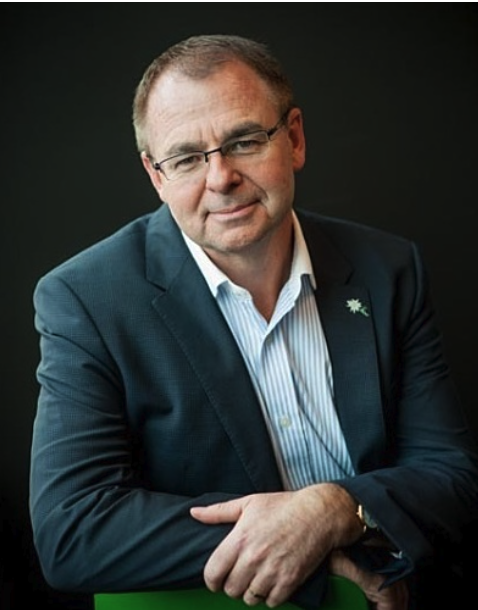
By David Crosbie, CEO, Community Council for Australia

“Memory produces hope in the same way that amnesia produces despair.”
(Walter Brueggemann, theologian)
Twenty years ago, there was no Assistant Minister for Charities and no Australian Charities and Not-for-profits Commission (ACNC). A codified Charities Act 2013 was not considered possible. During election campaigns, political parties did not participate in debates about charities and not-for-profits (NFPs), and almost no party produced any sector policies. The organisations that feed, house, heal, teach and stand beside millions of Australians and their communities were an afterthought in our national conversation.
Between 2014 and 2024, total charity revenue grew from $103 billion to $239 billion. Donations and bequests more than doubled, from $7 billion to $14.8 billion. The workforce grew from around one million people to more than 1.6 million.
Almost any other industry would celebrate 130 per cent growth in income and a massive increase in employment. Charities and NFPs rarely do. Our sector is focused on the next task, the next client, the next undertaking. Humility is part of sector identity. But in meeting the challenges of the day to day, the changes we make in the lives of individuals and families, we can lose sight of what we collectively have achieved, and what we are capable of.
The long-term trends across our sector are more than statistics. They are evidence for our hope, and they show that we are changing this country, slowly but surely, in ways that matter.
Progress is never a straight line. Even when the long-term direction is good, the short term can be rough.
Everything we know about the next 12 months in Australia says it will be a hard year for Australian charities and not-for-profits. Consumer confidence is at a 30-year low. Governments are under pressure to reduce expenditure, and recent days have shown that cutting services to the people who need them most can seem politically easier than raising taxes or cutting tax concessions for the wealthy.
Meanwhile, the cost of living is squeezing charities and NFPs from both sides. Costs are rising, and the volunteers who are the backbone of so many charities and communities have less time and fewer resources to give.
In times like these, any one organisation standing alone is vulnerable. Together we are far harder to ignore. Increasingly under pressure, our ability to keep moving forward as a sector depends on collective advocacy.
I was reminded of this by my colleagues in the United States. As part of a peak body, I sometimes talk with people leading similar organisations around the world. Listening to sector leaders in the US over the past two years has been confronting. They’ve described battling a hostile administration as they fought to protect their work, their existence and their survival. They did not give up. Some went to court. Some went to the streets. Many leaned on their supporters and their communities as never before..
“The world we live in is not the world of 50 years ago, and much of what has changed has changed for the better.”
I’m no expert on American politics, but watching the midterm elections from afar, the Democrats’ extraordinary victory seemed to me to be about much more than policies. It was an indication of communities coming together to reject the politics of greed and division. The scale of the result is remarkable, especially given how much money was spent to defeat Democratic candidates. This kind of resounding political victory does not happen by accident.
The “expert commentators” talked about gas prices and an unpopular president. What seems to have happened is minority groups banded together until they became the majority. You could see it in the vox pops, the handmade protest signs, the memes, the long lines of people waiting to vote, and the speeches of newly elected progressive senators and members of Congress. The midterm elections outcome reflected a new level of connection and engagement: people coming together behind a shared commitment to strengthening their communities and refusing to be divided.
The world we live in is not the world of 50 years ago, and much of what has changed has changed for the better. This week an Indigenous man was appointed governor of Western Australia. There are more women than men on the government benches in both houses of federal Parliament. A gay Australian can marry the person they love. Equal pay for equal work is written into law. Wind and solar now generate 40 per cent of our electricity, and more at peak times in some grids. None of this was inevitable. Each change was won by organisations, communities of people who kept pushing forward despite the challenges.
It’s not surprising that those who profited from the old ways of doing things push back against their loss. Drawing on the Marxist philosopher Antonio Gramsci’s notion of change and monsters, we could argue that “in the shadows of change monsters can arise, but new light will reveal their impotence”.
In many ways, charities and not-for-profits are a force of new light. We highlight what is possible, and collectively we drive change.
Belonging to something bigger than ourselves, joining our voices and backing sector-wide advocacy is how we protect what we have won and keep moving forward. Putting time and resources into working together is one of the best investments we can make in the Australia we want to live in.
It is also how we keep our memory alive, and with it, our hope.
David Crosbie has been CEO of the Community Council for Australia for the past decade and has spent more than a quarter of a century leading significant not-for-profit organisations, including the Mental Health Council of Australia, the Alcohol and Other Drugs Council of Australia, and Odyssey House Victoria.
Posted on 11 Nov 2026
On everything from gambling to climate, charities to disability reform, Australian federal and…

Posted on 04 Nov 2026
I watched an angry man on the TV news. “Australia is stuffed, going backwards,” he said. “No one is…

Posted on 04 Nov 2026
Working for a cause you believe in can be deeply rewarding, but it can also lead to burnout. Jackie…
Posted on 28 Oct 2026
Altering Australia’s path from anger and potential violence needs more than asking one another to…

Posted on 28 Oct 2026
Are compliance processes crowding out the boardroom conversations that really matter? The…

Posted on 21 Oct 2026
The wider not-for-profit sector doesn't pay much attention to owners corporations, but maybe it…
Posted on 14 Oct 2026
In the ongoing political debates about migration levels, Asylum Seeker Resource Centre founder Kon…
Posted on 14 Oct 2026
Over the weekend, federal Liberal leader Angus Taylor told the Conservative Political Action…
Posted on 07 Oct 2026
Our Community's founder and leader, Denis Moriarty, writes that when he watched an over-the-top…
Posted on 30 Sep 2026
There's been a lot of talk about AI this week, and some of it has been frightening. So, is AI good…

Posted on 30 Sep 2026
After the biggest AFL game of the year, one player proudly wore the flag of his birth country and…

Posted on 23 Sep 2026
In his new book Our Place, policy expert Matt Lloyd-Cope argues that housing must be at the heart…