
The answer to tough economic times is collective action
Posted on 04 Nov 2026
I watched an angry man on the TV news. “Australia is stuffed, going backwards,” he said. “No one is…
Posted on 04 Nov 2026
By Jackie Bailey, author, pastoral care practitioner and funeral celebrant

Working for a cause you believe in can be deeply rewarding, but it can also lead to burnout. Jackie Bailey explores how not-for-profit leaders can find a sustainable balance between work that matters and the demands of caring for others.
The not-for-profit sector seems like the perfect arena for meaningful work, a place where you can dedicate your labour to a cause you believe in and spend your hours among like-minded people who share your values. The sector appears to offer many of the ingredients that researchers have identified as central to meaningful work: a sense of autonomy, good relationships, a feeling that the work benefits others, moral correctness, development opportunities, and recognition.
So why, according to the Centre for Effective Philanthropy, has the proportion of not-for-profit CEOs concerned about their own burnout jumped by 16 percentage points in a year, from 30 per cent in 2025 to 46 per cent in 2026?
The Maslach Burnout Inventory describes the symptoms of burnout as a mix of emotional exhaustion, depersonalisation, cynicism and inefficacy. Together, these lead sufferers to the belief that their work is meaningless, even if they are working for a cause they believe in. In fact, burnout especially seems to affect workers in under-valued and caring professions, like education, health and social work. It also tends to be more prevalent among people with a predisposition towards depression, anxiety and idealism.

People prone to burnout might try to “fix” themselves by embarking on its opposite: extreme busyness. Nobel Prize–winning novelist Hermann Hesse called busyness “aggressive haste”, while Christian mystic Thomas Merton called it a “persuasive form of contemporary violence to which the idealist most easily succumbs: activism and overwork”.
Buddhist scholar Joan Halifax reminds us that busyness can be both good and bad, a “manifestation of healthy engagement, a way to serve deeply, and a result of inspiration and faith. Or it can turn into an addiction […] It can even be both at once.”
Halifax urges us to find a healthy middle ground between busyness and burnout, bringing ourselves wholeheartedly to our work yet stopping short of work becoming an addictive loop of dopamine-reward for task completion. “Work is about energy,” she writes. “Even the word work has the same root as the word energy. Through our work, we give energy to the world, to others, and to ourselves.”
I recently wrote a book about spirituality for the non-religious, a growing segment of the Australian population. I look at ways in which people can find meaning, even if we do not belong to an institutional religion. In my research, I noticed an alarming trend, especially among younger professionals: in the neoliberal economies of the West, we tend to conflate how much we matter with how busy we are. Perhaps the move towards secular spirituality has entailed a loss of intrinsic worth; if we were not created by a loving god, then are we only worthy of as much love as we can earn?
“To increase meaningfulness while avoiding burnout, researchers recommend ‘job crafting’. It has three elements: task crafting, relational crafting, and cognitive crafting.”
Religions offer followers the possibility of surrender to a higher power, acknowledging our human limitations. With a divine source to trust in, we can put down our burdens and rest. How do NFP leaders find relief from the constant responsibility for the wellbeing of others?
To increase meaningfulness while avoiding burnout, researchers recommend “job crafting”. It has three elements: task crafting, relational crafting, and cognitive crafting. Task crafting might include slowing down to focus on quality, rather than speeding up when under time pressure. The Buddhists would call this working mindfully. It also allows for perspective, understanding that your task is all you can control. This is an experience of humility, paired with an openness of grace.
Poet and mystic Khalil Gibran wrote, “And all work is empty save when there is love; / And when you work with love you bind yourself to yourself, and to one another, and to God.”
Relational crafting is about the frequency and quality of interactions with others. You might informally help peers, consciously appreciate each other’s work, and take a genuine interest in colleagues’ lives. It also helps to connect workers with the people who benefit from their labours, in meaningful interactions, rather than showcases which feel more corporate than authentic.
Cognitive crafting is about looking at one’s work in different ways, to understand its purpose. Not-for-profit leaders are very good at articulating the impact of their organisations’ work, but this is an opportunity to be more granular: to understand how the specific work of today might have meaning. Research shows that people who help others many times in a single day report a greater increase in work meaningfulness. This involves switching between the big picture of helping the organisation’s clients, and the smaller mise en scene of today, what people are doing to help each other inside the team.
Auschwitz survivor and psychiatrist Viktor Frankl wrote, “Being human always points, and is directed, to something, to someone, other than oneself […] The more one forgets himself – by giving himself to a cause to serve or another person to love – the more human he is.’
Not-for-profit leaders are becoming ever more human, offering yourself and your team daily moments of grace.
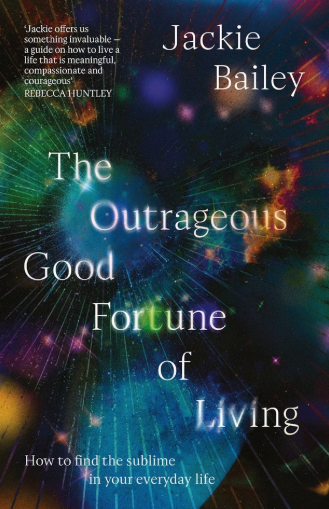
Jackie Bailey is the author of The Outrageous Good Fortune of Living, published by HarperCollins/ABC Books. She works as a pastoral care practitioner and funeral celebrant, writes for a number of media outlets and is a regular contributor to the Guardian on matters spiritual.
Posted on 04 Nov 2026
I watched an angry man on the TV news. “Australia is stuffed, going backwards,” he said. “No one is…
Posted on 28 Oct 2026
Altering Australia’s path from anger and potential violence needs more than asking one another to…

Posted on 28 Oct 2026
Are compliance processes crowding out the boardroom conversations that really matter? The…

Posted on 21 Oct 2026
The wider not-for-profit sector doesn't pay much attention to owners corporations, but maybe it…
Posted on 14 Oct 2026
In the ongoing political debates about migration levels, Asylum Seeker Resource Centre founder Kon…

Posted on 14 Oct 2026
Over the weekend, federal Liberal leader Angus Taylor told the Conservative Political Action…

Posted on 07 Oct 2026
Our Community's founder and leader, Denis Moriarty, writes that when he watched an over-the-top…
Posted on 30 Sep 2026
There's been a lot of talk about AI this week, and some of it has been frightening. So, is AI good…

Posted on 30 Sep 2026
After the biggest AFL game of the year, one player proudly wore the flag of his birth country and…

Posted on 23 Sep 2026
In his new book Our Place, policy expert Matt Lloyd-Cope argues that housing must be at the heart…

Posted on 23 Sep 2026
There are solutions to counter the rise of One Nation but they might not be residing in the mess…

Posted on 03 Sep 2026
Denis Moriarty has an issue with insurance companies varying premiums because of what they perceive…