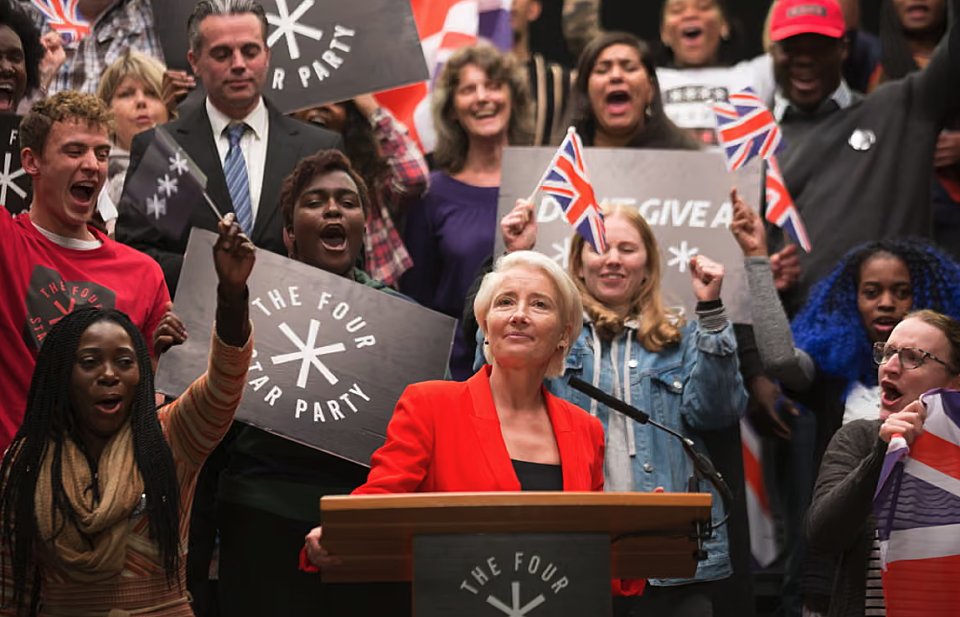
Pauline Hanson and the frightening lesson of ‘Years and Years’
Posted on 07 Oct 2026
Our Community's founder and leader, Denis Moriarty, writes that when he watched an over-the-top…
Posted on 15 Jul 2026
By David Crosbie, CEO, Community Council for Australia

The government is now consulting on changes to the way trusts are taxed. Charities and NFPs need to advocate now because left unchanged, this proposal will reduce the amount of philanthropic money that reaches the charities and not-for-profit sector.
Three rules underpin the proposed changes:
1. Existing charitable trusts are exempt. Philanthropic foundations, private ancillary funds (PAFs) and public ancillary funds (PuAFs) keep distributing to charities tax-free. There is no new tax applied.
2. Give to a DGR charity, get the tax back. Distributions from a discretionary trust to a charity with deductible gift recipient (DGR) status can be claimed as tax exempt, and any tax paid upfront by the trust can be refunded.
3. Give to anyone else, pay 30 per cent upfront. Distributions to individuals, non-DGR charities and NFPs face a 30 per cent tax upfront with no refund.
Australia has more than 800,000 discretionary trusts, many established to manage farm, business or investment income and assets. They're flow-through entities, which means the trust itself rarely pays tax; beneficiaries do, at their individual rates.
Structuring income and assets in a trust enables the trust to split income to minimise tax. If a trust earns $200,000 and distributes it all to one person, that person would owe close to $60,000 in tax. Split across a principal beneficiary, an unemployed partner and two unemployed children, the same $200,000 means a tax bill of roughly $31,000.
Under the new rules, that same $200,000 distribution triggers $60,000 in tax upfront, regardless – unless it goes to a DGR charity, where the trust can claim back some of the tax paid at tax time, just as individuals do.
"The CCA believes that implementing the proposed trust taxation reforms without widening eligibility for DGR is a recipe for a reduction in funding to our sector."
Upfront tax will shrink donations, even to DGR charities. A family trust wanting to give $100,000 to a DGR charity now needs to gross up to roughly $143,000: $43,000 goes to the ATO first and is only recovered later, following administrative costs and delays.
The Community Council for Australia (CCA) will submit that no upfront tax should apply where the distribution is a donation to a registered DGR charity.
Giving to non-DGR charities and NFPs gets taxed for the first time – and the tax is not refundable. A distribution to a local NFP sports club or non-DGR charity, previously tax-free, now loses 30 per cent to the ATO permanently. Associate Professor Mark Fowler, who established Fowler Charity Law Pty Ltd, told the Financial Review he estimates this will cost the charity and NFP sector over $500 million a year. The real figure is uncertain – we simply don't have good data on trust giving to non-DGR groups – but money that used to reach charities will now go to the ATO instead.
This raises the stakes on fixing DGR eligibility. The Productivity Commission has already flagged how arbitrary and inequitable DGR status can be: two charities doing identical work can sit on opposite sides of the tax-deductible line, and non-DGR groups are often locked out of trust and foundation funding altogether. If all trust distributions are taxed according to DGR status, the unfairness compounds. Widening and streamlining DGR access will become even more critical.
The CCA believes that implementing the proposed trust taxation reforms without widening eligibility for DGR is a recipe for a reduction in funding to our sector.
These rules aren't law yet. Consultation runs until the end of July. Left unchanged, the proposal will cut into donations to charities and NFPs. This is the sector's opportunity to be heard.
The Treasury has offered a short consultation window – submissions close on July 31. Individuals and organisations can make their own submission; if your organisation is a CC member, please send input through to me or CCA’s director of policy, Davidh@communitycouncil.com.au.
David Crosbie has been CEO of the Community Council for Australia for the past decade and has spent more than a quarter of a century leading significant not-for-profit organisations, including the Mental Health Council of Australia, the Alcohol and Other Drugs Council of Australia, and Odyssey House Victoria.
Posted on 07 Oct 2026
Our Community's founder and leader, Denis Moriarty, writes that when he watched an over-the-top…

Posted on 30 Sep 2026
There's been a lot of talk about AI this week, and some of it has been frightening. So, is AI good…

Posted on 30 Sep 2026
After the biggest AFL game of the year, one player proudly wore the flag of his birth country and…

Posted on 23 Sep 2026
In his new book Our Place, policy expert Matt Lloyd-Cope argues that housing must be at the heart…

Posted on 23 Sep 2026
There are solutions to counter the rise of One Nation but they might not be residing in the mess…

Posted on 03 Sep 2026
Denis Moriarty has an issue with insurance companies varying premiums because of what they perceive…
Posted on 02 Sep 2026
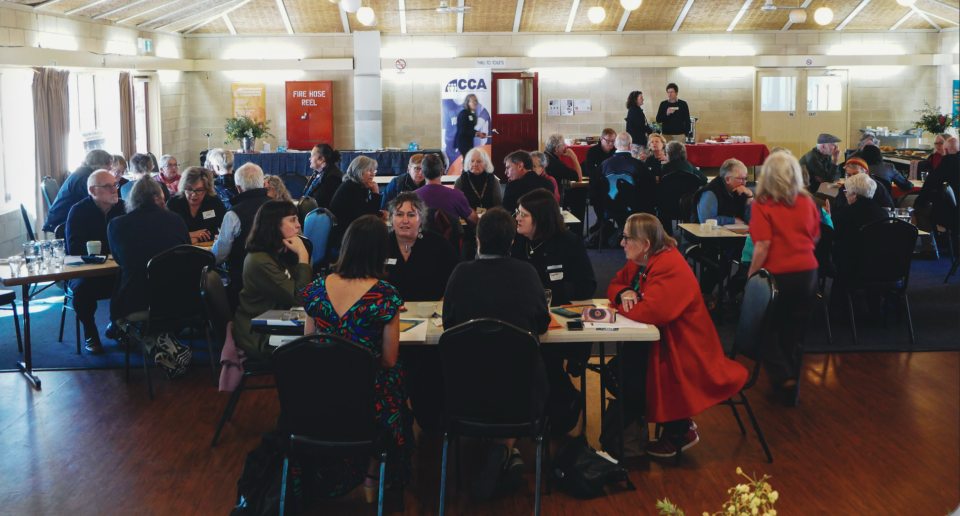
Yesterday, at a meeting just outside Castlemaine in Victoria, 70 people came together to hear…

Posted on 26 Aug 2026
Our Community's founder and leader, Denis Moriarty, says he commissioned a new piece of street art…

Posted on 19 Aug 2026
Government funding is at the centre of Australia's charity and not-for-profit sector – our number…

Posted on 12 Aug 2026
Our Community's founder and leader, Denis Moriarty, says fostering a child was his worst nightmare,…

Posted on 05 Aug 2026
The charity and not-for-profit sector is vital to our economy and the wellbeing of communities…
Posted on 05 Aug 2026
As the Global Impact Summit kicks off in Sydney today, Equitable Philanthropy’s Catherine Brooks…