
25 years after Tampa, the politics of fear are still setting the terms
Posted on 14 Oct 2026
In the ongoing political debates about migration levels, Asylum Seeker Resource Centre founder Kon…
Posted on 10 Jun 2026
By Sophie Souchon, Digital Transformation Manager, Infoxchange
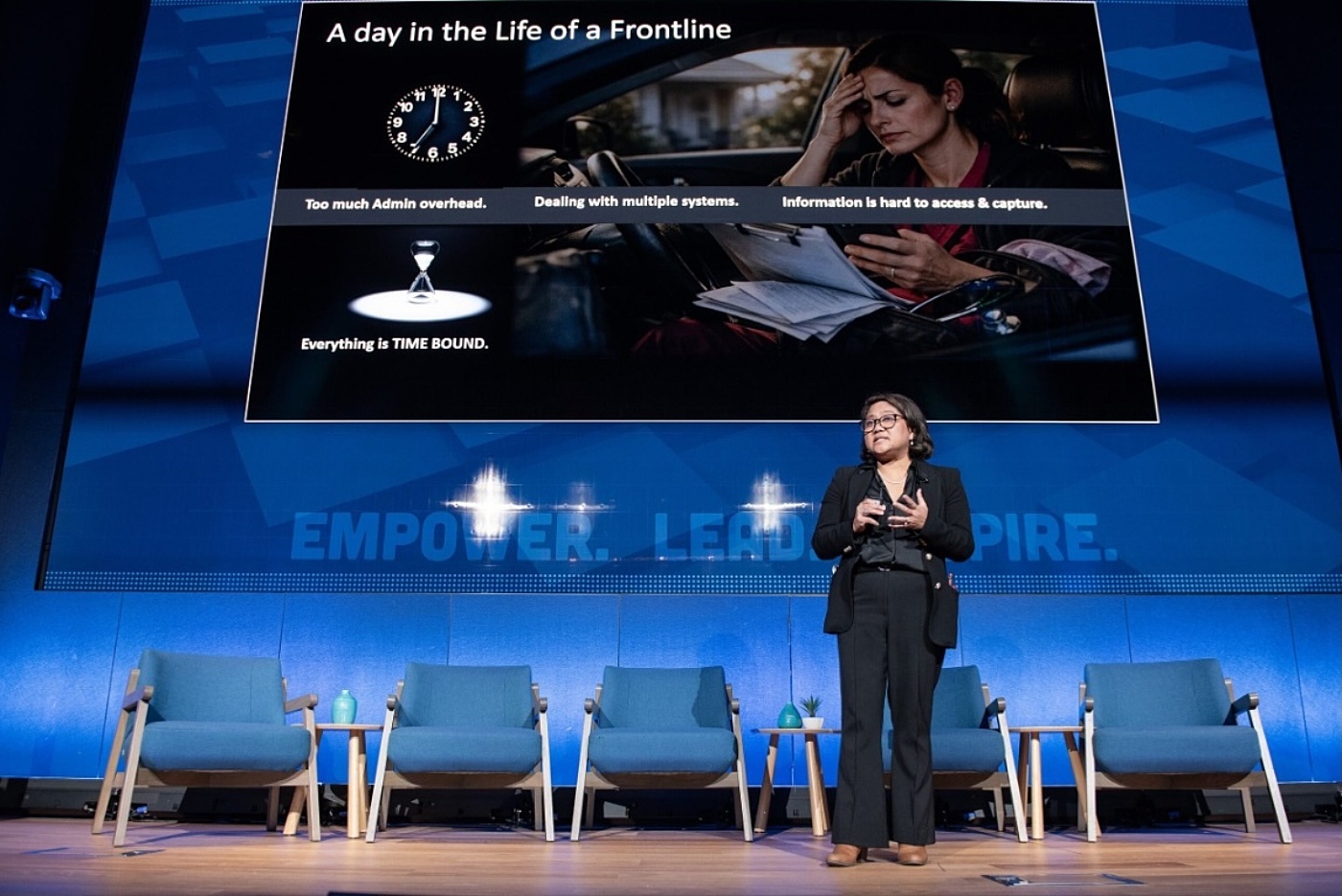
Artificial intelligence is rapidly moving from experimentation into day-to-day operations across the not-for-profit sector.
Staff are already using tools like ChatGPT, Copilot and Gemini to create written material, summarise meetings, conduct research, automate repetitive tasks and improve workflows. At this year’s Technology for Social Justice Conference, it became clear that the conversation has shifted significantly. Many organisations are no longer asking whether they should explore AI. They are asking how to implement it safely, responsibly and in a way that genuinely supports their mission.
But many not-for-profits are now encountering a new challenge: AI is moving faster than many organisations can keep pace with.

Infoxchange’s 2025 Digital Technology in the Not-for-Profit Sector Report, based on responses from 824 organisations across Australia and New Zealand, found that only around 14 per cent of organisations currently have an AI policy or governance framework in place. At the same time, adoption of generative AI tools continues to rise rapidly across the sector.
This gap highlights an important issue. Successful AI adoption cannot sit solely with executives, IT teams or enthusiastic staff experimenting in isolation. It requires shared responsibility across leaders, implementers and frontline teams, who all play different but connected roles in governance, culture, implementation and stewardship.
Many organisations are currently struggling to move from informal experimentation to structured adoption.
Often, AI adoption begins organically. A staff member uses AI to draft communications. A fundraiser experiments with proposal writing. A program team tests note-taking tools. A manager uses AI to summarise reports. While this experimentation can result in valuable learning, organisations can quickly find themselves with fragmented adoption, inconsistent practices and unclear governance.
One of the most practical first steps organisations can take is to pause and map where AI is already being used internally. Before developing advanced strategies, organisations need to be able to see what’s going on. What tools are staff already using? What data is being entered into those systems? What risks and opportunities already exist? Without this shared understanding, governance quickly becomes reactive rather than proactive.
At the same time, many organisations are experiencing a growing disconnect between the ambitions of leaders and the capacity of teams to implement those ambitions.
Boards and executives are increasingly aware of AI’s strategic implications. They are asking questions about productivity, efficiency and innovation. But operational teams are often left trying to implement change without sufficient time, guidance or support. In some cases, leadership enthusiasm is outpacing organisational readiness. In others, frontline staff are experimenting rapidly while leadership and governance frameworks lag behind.
This disconnect is why successful AI adoption requires both strategic leadership and practical implementers working together.
“Organisations need practical guardrails that empower staff to innovate safely, rather than relying solely on restrictive controls or informal experimentation.”
Leadership teams play an important role in setting direction, establishing governance and creating a culture where responsible experimentation is encouraged. But operational and implementation teams are equally critical. They understand workflows, systems, operational realities, and where AI can genuinely reduce friction or improve outcomes.
For example, at this year’s Australian Not-for-Profit Technology Awards, Uniting NSW.ACT was recognised for its AI-enabled Buddy app, which provides frontline staff with multilingual voice-to-text progress notes, translation support and access to policy guidance. The project was not framed as AI replacing workers. Instead, it focused on reducing administrative burden and enabling staff to spend more time supporting people directly. It demonstrated how leaders, software developers and frontline staff must work together for AI adoption to be safe and meaningful.
Another example is Dharmalife, an India-based not-for-profit that set out to solve the challenge of how to reach and support rural communities. Roshni, meaning “light”, is a chatbot that was developed to help women and young learners with answers to questions on subjects ranging from menstrual hygiene to business insights. It provides a private, culturally relevant learning environment that is available any time and can communicate in more than 20 Indian languages.
“We weren’t AI experts,” Shweta Sinha, the chief technology officer at Dharmalife, admitted, saying her team had been mentored on technical aspects of the project, the user interface and ethical implementation. Rural India has limited access to qualified trainers, mentors and digital tools, so training staff – from the chief technology officer level to the frontline – has helped Dharmalife increase the use of Roshni to reach thousands of rural women and youth and help them to develop essential skills, bridging what was once a digital divide.
These projects demonstrate that successful AI adoption requires leaders, implementers and frontline teams to work together to identify practical, mission-aligned use cases that genuinely support staff and communities.
They highlight that the technology itself is only one part of implementation. The most successful organisations are beginning to treat AI adoption as an organisational capability challenge, not simply a technology project.
That means developing skills, knowledge and processes across the organisation, including:
Importantly, this also requires building a safe AI culture, from governance through to frontline teams.
Culture matters because AI is no longer confined to IT departments. People across organisations – in communications, fundraising, services, administration and operations – are making decisions every day about how to use it. Organisations therefore need policies and guidelines that help staff to use AI safely and creatively, rather than relying solely on restrictive controls or informal experimentation.
For many not-for-profits, the most valuable next steps don’t need to be complex or technical. They might include:
These foundations are important because the sector operates in environments built on trust. Not-for-profits work with sensitive information, vulnerable communities and essential services where accountability and human judgement remain critical.
The organisations that succeed in adopting AI are unlikely to be those that move the fastest. They will be the organisations that build shared skills and knowledge, align leaders and implementers, and develop cultures of responsible adoption.
The challenge facing the sector is no longer whether AI will become part of everyday operations. It already is. The real challenge is whether organisations can move from fragmented experimentation into coordinated, safe and sustainable adoption.
Infoxchange is offering a practical AI Accelerator series of in-person training sessions designed to help not-for-profit leaders and implementers build AI governance, skills and responsible practices together. These events will be taking place in Melbourne (early June), Sydney (early July) and Brisbane (early August). Organisations can save a seat here.
The Community Directors Intelligence technology issue is also out tomorrow.
Posted on 14 Oct 2026
In the ongoing political debates about migration levels, Asylum Seeker Resource Centre founder Kon…

Posted on 14 Oct 2026
Over the weekend, federal Liberal leader Angus Taylor told the Conservative Political Action…

Posted on 07 Oct 2026
Our Community's founder and leader, Denis Moriarty, writes that when he watched an over-the-top…
Posted on 30 Sep 2026
There's been a lot of talk about AI this week, and some of it has been frightening. So, is AI good…

Posted on 30 Sep 2026
After the biggest AFL game of the year, one player proudly wore the flag of his birth country and…

Posted on 23 Sep 2026
In his new book Our Place, policy expert Matt Lloyd-Cope argues that housing must be at the heart…

Posted on 23 Sep 2026
There are solutions to counter the rise of One Nation but they might not be residing in the mess…

Posted on 03 Sep 2026
Denis Moriarty has an issue with insurance companies varying premiums because of what they perceive…

Posted on 02 Sep 2026
Yesterday, at a meeting just outside Castlemaine in Victoria, 70 people came together to hear…

Posted on 26 Aug 2026
Our Community's founder and leader, Denis Moriarty, says he commissioned a new piece of street art…

Posted on 19 Aug 2026
Government funding is at the centre of Australia's charity and not-for-profit sector – our number…

Posted on 12 Aug 2026
Our Community's founder and leader, Denis Moriarty, says fostering a child was his worst nightmare,…