25 years after Tampa, the politics of fear are still setting the terms
Posted on 14 Oct 2026
In the ongoing political debates about migration levels, Asylum Seeker Resource Centre founder Kon…
Posted on 14 May 2026
By David Crosbie, CEO, Community Council for Australia
There are few surprises in the federal Budget. The flagged reforms are welcome, although tentatively made, and there are some good investments in new and existing programs, but it’s disappointing that the savings measures are dominated by disability.
While governments and ministers may profess support for an issue or a cause, the real test is whether they prioritise that issue or cause enough to allocate taxpayer funds to addressing it. And when governments have to find savings, as all governments do, where do they take the money from?
We knew the government was going to make cuts to the NDIS. The media has been awash with examples of fraudulent exploitations of the disability insurance scheme by a very small minority of providers, along with dire projections of cost blowouts. This has lent support to the government’s wish to introduce restrictions and caps to the scheme.
Unless the states and territories are suddenly willing to reinstate some of the disability expenditure they removed when the NDIS came into being, many people with a disability are facing a reduction in services as a result of this Budget.
Half the Budget’s $63.8 billion in savings is coming from projected NDIS expenditure reductions ($36.2 billion). Of course the NDIS could be more efficient and effective, but $36 billion is a lot of money.
Defence alone eats up a lot of these savings – $53 billion for drones, underwater and other programs, and an additional 380 departmental roles and 320 for the Australian Submarine Agency.
It’s hard to argue against the reforming measures in this Budget, including the capping of capital gains discounts and negative gearing on investment properties. The savings from these measures will take many years to flow through to the Budget, and those currently enjoying these tax perks will continue to do so, but at least this budget has made a start in addressing the inequity in the housing market between investors and those seeking somewhere to live.
Another overdue equity measure is a minimum tax on the distributions of trusts. Trusts should not be established as vehicles to avoid tax.
There are many good measures in the Budget, some of which benefit charities and NFPs and the communities they serve. There are too many individual program boosts to cover all of them but well done to those who gained additional resources to apply to their mission.
The Community Council for Australia has been involved in the push for better migrant skills recognition, which has gained some funding in this budget. This measure sits alongside moves to streamline red tape and approval processes for business to boost productivity. There is no mention of streamlining charity compliance requirements to boost our productivity.
There are also improvements in access to social housing for young people, and there is some additional strengthening of the child support payment system. Medical research gets a boost.
International development is facing another round of reprioritisation with cuts to some programs – the United Nations Development Programme, the Global Partnership for Education, UNAIDS and the Pandemic Fund – but a boost to more regional programs.
“There are many good measures in the budget, some of which benefit charities and NFPs and the communities they serve.”
Treasurer Jim Chalmers said on Tuesday night, “We’re investing an extra $1.2 billion to close the gap, doubling the number of jobs created as part of the Remote Jobs and Economic Development program, improving housing quality, and expanding our support for grocery stores in remote First Nations communities.”
For me, the investment governments make to support Indigenous Australians is always a focus at budget time. We need to both increase our efforts to address disadvantage and be more strategically targeted. I welcome the measures that meet these criteria, although much more is needed to address the shocking rates of Indigenous incarceration and the removal of Indigenous children in Australia.
One reform that has again been overlooked is the need to raise the rate of our social service safety net. We know from experience during COVID that raising the rate is a very effective way to reduce cost-of-living pressures while also providing increased opportunities for those requiring basic income support.
In the Treasurer’s address to Parliament, he talked about “backing the aspiration and innovation of small business”, a theme we often hear at Budget time.
I wonder if we’ll ever hear a federal treasurer delivering the Budget say instead, “The government is investing more in the sector that not only supports Australia’s economic growth and productivity, but also builds real resilience, strength and well-being in communities across Australia: the charities and NFP sector.”
We live in challenging times. Our environment is under pressure, the world order is shifting, technology is changing our lives. At Budget time we face the reality that governments don’t have all the answers, and they operate within a set of relatively narrow political and economic constraints.
This Budget again reminds me that if we want to achieve the kind of Australia we want to live in, we may need to become better advocates and do things differently.
David Crosbie has been CEO of the Community Council for Australia for the past decade and has spent more than a quarter of a century leading significant not-for-profit organisations, including the Mental Health Council of Australia, the Alcohol and Other Drugs Council of Australia, and Odyssey House Victoria.
Posted on 14 Oct 2026
In the ongoing political debates about migration levels, Asylum Seeker Resource Centre founder Kon…
Posted on 14 Oct 2026
Over the weekend, federal Liberal leader Angus Taylor told the Conservative Political Action…
Posted on 07 Oct 2026
Our Community's founder and leader, Denis Moriarty, writes that when he watched an over-the-top…

Posted on 30 Sep 2026
There's been a lot of talk about AI this week, and some of it has been frightening. So, is AI good…

Posted on 30 Sep 2026
After the biggest AFL game of the year, one player proudly wore the flag of his birth country and…

Posted on 23 Sep 2026
In his new book Our Place, policy expert Matt Lloyd-Cope argues that housing must be at the heart…

Posted on 23 Sep 2026
There are solutions to counter the rise of One Nation but they might not be residing in the mess…

Posted on 03 Sep 2026
Denis Moriarty has an issue with insurance companies varying premiums because of what they perceive…
Posted on 02 Sep 2026
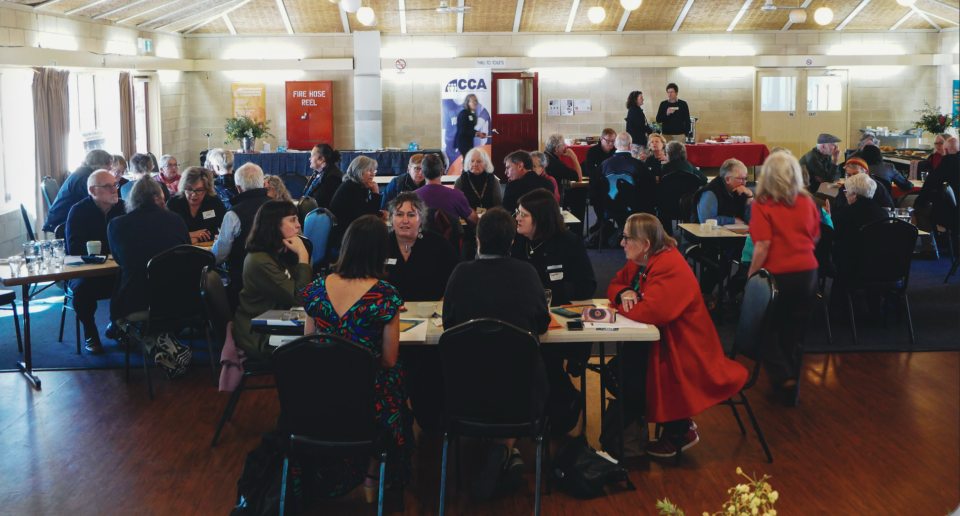
Yesterday, at a meeting just outside Castlemaine in Victoria, 70 people came together to hear…
Posted on 26 Aug 2026
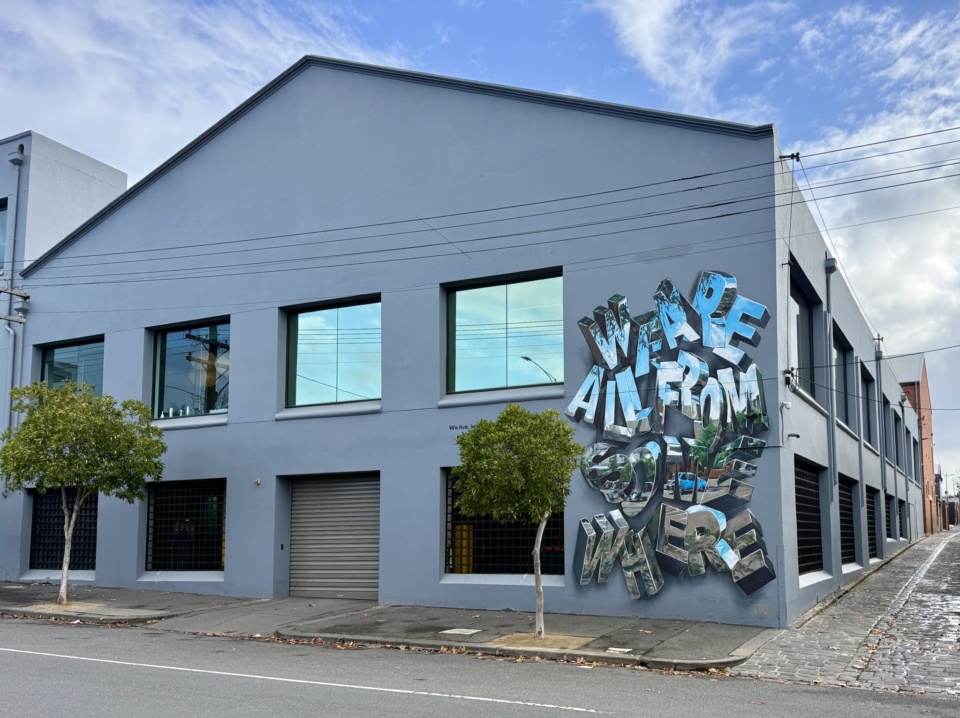
Our Community's founder and leader, Denis Moriarty, says he commissioned a new piece of street art…

Posted on 19 Aug 2026
Government funding is at the centre of Australia's charity and not-for-profit sector – our number…

Posted on 12 Aug 2026
Our Community's founder and leader, Denis Moriarty, says fostering a child was his worst nightmare,…