Pauline Hanson and the frightening lesson of ‘Years and Years’
Posted on 07 Oct 2026
Our Community's founder and leader, Denis Moriarty, writes that when he watched an over-the-top…
Posted on 21 Apr 2026
By Andrew Leigh, Charities Minister

Earlier today, federal charities minister Andrew Leigh delivered a keynote speech, 'Bequests, belonging and the long future', to open the CPA Australia Profit for Purpose conference in Melbourne, focusing on how much of Australia’s forecast $5.4 trillion intergenerational wealth transfer is likely to find its way to the for-purpose sector, exploring the evolving concept of the purpose economy and how we can redefine success by integrating financial strength with social value creation.
This is a transcript of the speech (lightly edited for context).
Let me begin with three stories.
Bruce and Jenny Pryor lived simply, splitting their time between Canberra and Sydney. After their deaths, it emerged that they had left $10 million to the Australian National University, the largest bequest in the university’s history, to support research into dermatomyositis, the rare autoimmune disease that Jenny Pryor had suffered in her later years. Their nephew James Graham said they were “extremely humble and generous people”, and that they had “worked hard their whole lives, living modestly, to generate an amazing legacy”. For Jo Morris, who was diagnosed with juvenile dermatomyositis as a child and now lives with chronic pain and severe physical limitations, the bequest opened the possibility of better treatments for others. ANU professor Carola Vinuesa said the funding would help researchers produce tangible outcomes, adding that scientists feel “a duty and an obligation to do our best to make a difference to our patients”. A couple who lived without fuss left behind a gift that could turn grief into discovery, and discovery into relief.
Alan Shaw was one of Australia’s most distinguished historians, a contemporary of Manning Clark’s. Upon his death, he left a bequest of almost $18 million to the National Gallery of Victoria – a gift that, as one news report put it, “raised the bar for philanthropic giving to the arts”. Shaw and his wife Peggy had been dedicated supporters of the NGV for more than 30 years. Peggy Shaw, an artist, had drawn him into a circle that included Fred Williams, John Olsen and John Brack. NGV director Tony Ellwood said the Shaw bequest would have a substantial effect on the gallery, “including supporting the growth, preservation, presentation and awareness” of the collection.
And then there is the story of Jennie Mackenzie, the former Play School director and early childhood educator. Having been through her own cancer journey, Ms Mackenzie was attracted to the work of the Charles Perkins Centre at the University of Sydney, which works on a range of health challenges, including cardiovascular disease and diabetes. As the then academic director of the Charles Perkins Centre put it, “In her typically dynamic and generous way, Jennie went on to be involved as a volunteer, mentor, donor and, ultimately, dear friend”. The bequest supports early-career researchers at the Charles Perkins Centre. One researcher, Melkam Kebede, said Mackenzie’s bequest helped make her return to Australia possible after postdoctoral fellowships in Canada and the United States.
Three gifts. Three institutions. Three donors with different passions and different lives. Yet the underlying act is the same. A bequest says: I have lived in this community, I have benefited from this society, and I want some part of what I leave behind to keep doing useful work.
That matters enormously for the for-purpose economy.
Leaving a legacy
The Albanese government has set a goal of doubling philanthropic giving by 2030. That goal reflects the principle that a strong society needs strong public institutions, strong private enterprise, and a strong civic sphere. It needs government, markets and community organisations all pulling in the same direction.
Charities, social enterprises and other purpose-driven organisations do work that sits at the heart of Australian life. They support people in crisis. They build social connection. They enrich our cultural life. They expand opportunity. They carry knowledge, memory and trust. In many communities, they are the first to spot hardship and the first to respond.
For that reason, a stronger culture of giving matters. It matters for resilience. It matters for fairness. It matters for the long future.
Bequests belong squarely in that picture.
The JBWere Bequest Report estimates that in 2024 alone around $150 billion was transferred through inheritances in Australia, and that the next 20 years will see $5.4 trillion change hands. That is an immense transfer of private wealth.
Yet only 1 per cent of those inheritances currently goes to for-purpose organisations. In the United States, the figure is 4.4 per cent. In the United Kingdom, it is 3.7 per cent. Australia also lags on participation. JBWere estimates that 6.5 per cent of Australian wills include a charity, compared with 10 per cent in the United States and 13.7 per cent in the United Kingdom.
So this is the picture. A very large river of wealth is flowing across generations. Only a thin stream reaches the social sector.
That thin stream still matters. JBWere estimates annual charitable bequests in Australia at around $1.3 billion. It also makes a couple of points that should catch the attention of every finance leader.
One is that bequests usually arrive unrestricted. They give an organisation discretion. They strengthen judgement. They let boards and executives back the things that matter most.
The other is that bequests produce exceptionally strong returns on fundraising investment, around 25 times, compared with roughly 3 to 4 times for fundraising overall. In plain English, bequests give organisations room to breathe, room to plan, room to invest in the parts of social impact that rarely make the brochure cover but keep the whole enterprise standing: capability, systems, reserves and talent.
“Bequests give organisations room to breathe, room to plan, room to invest in the parts of social impact that rarely make the brochure cover but keep the whole enterprise standing.”
JBWere also notes that bequests regularly account for 20 of the largest 50 philanthropic gifts in Australia each year. And the opportunity is set to grow. JBWere says that demographics and asset values alone could lift annual charitable bequests from $1.3 billion to $2.6 billion over a decade. Raise the share of estates going to charity to 3 per cent, still below some international peers, and the annual figure approaches $8 billion by the end of that decade.
When people speak about the great intergenerational wealth transfer, they often frame it as a family story. It is that. It is also a national story. The question is not only who inherits. The question is what kind of country those inheritances will shape.
For finance leaders, there are a few lessons.
Annual fundraising helps an organisation survive. A bequest can help an organisation mature.
A grant often comes with a purpose and a clock. A bequest often comes with confidence and discretion.
Fee-for-service income pays for delivery. A bequest can strengthen the balance sheet, support the people behind the service, and give a board a longer planning horizon.
That difference matters. Financial leadership in the for-purpose sector often involves solving tomorrow’s cash pressure while still keeping an eye on five years’ time. Bequests stretch that time horizon. They let organisations think in decades, about capital works, research streams, endowments, data systems, digital capability, and workforce development.
Bequests sit at the intersection of financial leadership, governance, and sustainability.
So how do we grow them?
The first part of the answer is cultural. We need more Australians to talk about death with a little more ease and a little less discomfort.
One of the most interesting examples is Dying to Know Day, founded by Kerrie Noonan and Nicole Endacott and sustained by aged care provider Proveda. Its slogan is splendid: “We’re here to yell about life.” That line captures something important. End-of-life planning lands better when framed as care, clarity, love and legacy.
The campaign’s theme, “Nobody Knows”, is cheeky in the best way. It points to the absurdity of leaving your final wishes locked in your own head. Proveda says only 53 per cent of Australians feel comfortable talking to a family member about end-of-life wishes. That leaves almost half the country steering around one of life’s few guaranteed events as though it were an awkward neighbour at a barbecue.
Dying to Know Day has been running since 2013, with hundreds of gatherings around Australia designed to normalise conversations about death, dying, and grief. There is wisdom in that approach. Death literacy and grief literacy sound like specialised terms, yet the underlying idea is simple. Families do better when the hard conversation happens early. Communities do better when planning replaces confusion. Charities do better when a donor’s wishes are clear, shared, and written down.
A will sits inside a wider human conversation. Families talk about guardianship, executors, the old family photo albums, and the house at the coast. Somewhere in that same conversation sits a larger question: after I have looked after those closest to me, what values do I want to keep alive?
Bequests turn that question into structure.
The second part of the answer is practical. We need to make wills easier to write.
For years, estate planning occupied a curious corner of modern life. You could refinance a mortgage on your laptop, file tax online, and organise groceries from your phone, yet a will still felt wrapped in mahogany and legal pads. Gathered Here points to a real shift. Gathered Here is an “end of life services” website, bringing together information about funerals, celebrants, headstones, probate and a free will writing function.
It says it has worked with more than 400 nonprofits to help them raise over $500 million in gifts in wills. In one period covered by its report, it recorded a 132 per cent year-on-year increase in wills written, a 217 per cent increase in the number of gifts pledged, and a 187 per cent increase in the estimated value of those gifts.
Those are provider figures rather than national totals, so they deserve some caution. Even so, they tell a clear story: when will-writing becomes easier, cheaper and more accessible, more people do it.
That matters because the first barrier to a bequest is brutally basic. No will, no bequest.
Gathered Here identifies a few barriers to future bequests: writing, pledging, and contesting. That is a very useful framework.
Some people never write a will.
Some write one and never include a gift.
Some include a gift that later ends up vulnerable to challenge.
Good strategy meets each of these barriers. Make the writing easy. Make the philanthropic option visible. Make the legal wording clear and durable.
The report also suggests a future where online wills and better tracking tools help charities understand donor motivation more clearly. Its platform allows charities to track age, family status, location, gift type, and estimated value. That kind of information, handled properly, can sharpen campaigns and stewardship. In fundraising, insight beats guesswork every day of the week.
There is also a democratic point here. As Gathered Here’s Lucy McMorron puts it: “Estate planning is now within reach of any Australian with an internet connection”. That is a significant shift. A will should feel less like a ceremony and more like an ordinary piece of life administration. When that shift happens, legacy giving moves from a niche practice into a mainstream one.
The third part of the answer lives close to home. We need to connect bequests to place.
One reason community foundations matter so much is that they make generosity tangible. “The for-purpose sector” can feel abstract. A neighbourhood house, a local arts program, a youth mentoring service, a community garden, a crisis centre – these feel immediate.
The Inner North Community Foundation captures that beautifully with the phrase “Leave a legacy, not a mess.” I admire that line because it manages to be practical, warm, and faintly bossy, which is exactly the right tone for estate planning.
Its materials encourage people to speak with loved ones, then with a lawyer, accountant or financial adviser. They offer sample wording. They offer pathways for giving: to a general action fund, to an existing community fund, or to a new fund established in the donor’s own name. They also share templates and open-source learnings with other community foundations.
This is philanthropy as civic plumbing, and I mean that as a compliment.
That lesson extends well beyond one foundation in Melbourne’s inner north. A bequest strategy flourishes when the path is smooth. Give people a checklist. Give them sample wording. Give them a local story. Give them the name of a trusted adviser. Give them a sense that this act belongs to ordinary life, rather than some rarefied world of grand donors and polished foyers.
The fourth part of the answer is professional. Advisers matter.
JBWere argues that we need greater education of lawyers, wealth advisers, financial planners, media, and peer champions. I think that is exactly right. Estate planning conversations already involve tax, family provision, the family home, superannuation, executors, and enduring powers. Adding one further question is hardly revolutionary: would you like some part of your estate to support a cause, institution, or community you care about?
That question does a few useful things.
It widens the social base of philanthropy.
It treats legacy as something larger than asset division.
It shifts bequests from afterthought to option.
It invites a richer conversation about values.
And let me stress the role the accounting profession has here.
Accountants sit close to the financial lives of households, families, and small businesses. They see the build-up of wealth, the shape of an estate, and the values embedded in how people earn, save, and spend. They carry trust. A gentle prompt from a trusted adviser can open a door that glossy marketing alone never will.
That role is especially important in a country like Australia, where wealth is substantial and often quietly held. JBWere ranks Australia near the top of the world on both average and median wealth. It also points out that wealth sits heavily with older cohorts. Many people die with very substantial assets still intact, including the family home, superannuation, and other investments.
This is a once-in-a-generation transfer of assets, shaped by longevity, housing wealth, share market returns and superannuation. The central question is what kind of country that transfer will build.
There is also a family dimension.
JBWere points out that modest charitable gifts alter inheritances far less dramatically than people often imagine. In a family with three children and $5 million in net wealth, leaving 10 per cent to charity means each child receives $1.5 million instead of $1.67 million.
That family still passes on abundance.
It also passes on values, example, and a wider sense of obligation.
JBWere’s John McLeod writes of “the full family balance sheet”, made up of human, intellectual, social, spiritual, and financial capital. I like that framing. It recognises that legacy is about houses and companies, and also about memory, ethic, belonging, and purpose.
The family balance sheet has room for generosity.
Five years ago, in their Blueprint to Grow Structured Giving, Philanthropy Australia told us that the stronger culture of giving that so many want to see in Australia could start with professional advisers having better support “to engage their clients about philanthropy”. With proper rules of engagement, lawyers and financial advisers would be ready, rather than reticent, to “discuss the option of contributing to charity with clients planning their financial futures or preparing their wills”.
The Productivity Commission concurred two years ago that this was still a promising campaign, and one that philanthropists could lead.
And that is happening.
Minderoo Foundation and Edward Alexander Foundation engaged Brad Ruting Economic Consulting to examine the potential uplift in charitable donations that could be realised by better supporting financial advisers, accountants, lawyers and fundraisers as enablers of charitable giving.
Their report, Unlocking Generosity, was released earlier this year. It frames a range of ways in which professional bodies and philanthropy could work together to support financial advisers, accountants, lawyers and fundraising professionals to develop skills and knowledge and referral networks, and to clarify professional regulatory and ethical obligations. The goal is to ensure that these advisers have a firm professional basis from which to confidently advocate for structured giving and bequests. On their reckoning, that could lead to additional donations of $7 to $12 billion by 2030.
Unlocking Generosity also sets out some work for the government to consider, and I can promise we will do that.
The fifth part of the answer is policy.
Government’s role is to help build an ecosystem in which generosity is easier. That means rules that are comprehensible, institutions that earn confidence, and settings that support giving across the life cycle.
I have had the privilege of holding the charities portfolio for my party since 2013, allowing me to get to know the non-profit sector in all its breadth and diversity. In that time, I’ve had the pleasure of running many charity forums, speaking with a wide range of charitable leaders, and working on reforms to strengthen the charity and non-profit sector. I’ve coauthored a book about building community, and fundraised for some terrific charities. I love the charity sector, and I’ve loved serving as Assistant Minister for Charities for the past four years – working to strengthen the sector and build a more connected community. Part of that is recognising that giving back is fundamental to a good life, and that generosity benefits the recipient and the donor alike.
Culture and policy work best when they travel together.
The Productivity Commission made a related point in its Future Foundations for Giving report: the health of philanthropy depends partly on regulation and the tax system, and partly on what philanthropic organisations themselves do to support giving. There is room here for governments, sector bodies, community foundations, and professional advisers to pull in the same direction.
That is the spirit in which the government has approached this agenda. We want more giving, more confidence, more participation, and a stronger platform for the organisations that serve Australian communities.
Yet there is also a task for the sector itself.
Charities need to treat bequests with the seriousness they deserve. That means building trust over years. It means talking about legacy in language that is human and specific. It means telling stories about what a bequest does.
A bequest can widen a nation’s cultural inheritance.
A bequest can enlarge a reading room and a public square for ideas.
A bequest can hold talent in the research system long enough for discovery to happen.
Those stories matter because people give to institutions they trust. Trust grows from sound governance, clean accounts, clear purpose, and visible impact. In that sense, every audit committee and every finance team in this room sits closer to philanthropy than it may sometimes feel.
Good governance invites generosity.
Sound institutions attract legacy.
For-purpose leaders often think about revenue by stream: grants, contracts, fundraising, sponsorships. That is necessary. Yet the bequest conversation invites a second frame. Think in streams, yes. Also think in clocks.
Some money arrives quickly and leaves quickly.
Some money arrives with tight conditions and short deadlines.
Some money arrives with freedom and endurance.
Bequests belong in that final category. They are among the few forms of income that can strengthen an organisation’s future shape rather than simply support its present activity. For a finance leader, that is gold. Or perhaps, given current inflation, gold plated with an indexation clause.
So when we talk about the “for” purpose economy, we are talking about more than a noble mission. We are talking about stewardship, confidence, discipline, and imagination.
A purpose-driven organisation needs heart. It also needs a spreadsheet.
It needs values. It also needs systems.
It needs mission. It also needs a balance sheet that gives the mission time to work.
Bequests help provide that time.
Let me finish with Joy Christensen.
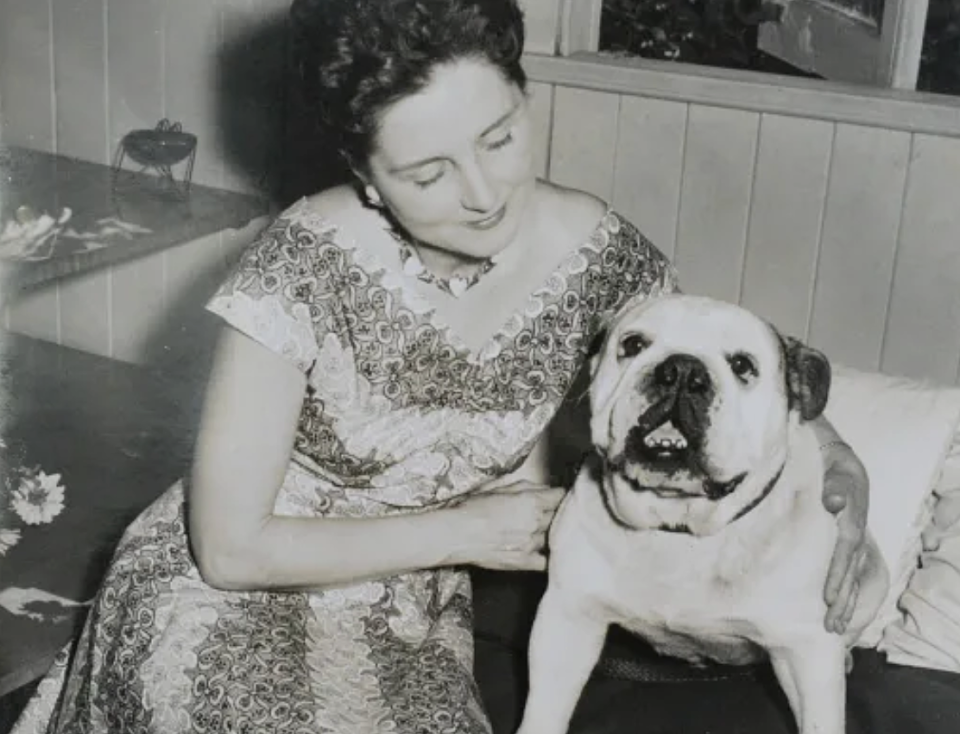
Ms Christensen loved animals with the sort of devotion that leaves traces everywhere: in old newsletters, in rescue stories, in the names of pets. She adopted dogs and cats from the Lost Dogs’ Home, a charity in North Melbourne. She cared for birds, rabbits, and native animals. In a letter to the Home, she wrote: “I want the Home to be able to continue the wonderful and dedicated work they are doing to help all lost innocent animals.”
After her death, she gave the Lost Dogs’ Home a bequest of $3.6 million, a record gift for the charity, founded in 1910. The money is going into a new veterinary clinic and animal adoption centre, improving accommodation and helping save thousands more animals each year.
Ross Anderson from the Home said of Ms Christensen’s animals, “Her pets brought so much love and joy to her” and she wanted that to continue for others in the future.
There is a whole moral philosophy in that sentence. Love received, then passed on.
That, to me, is the brilliance of a bequest.
It turns gratitude into structure.
It turns affection into capacity.
It turns a private life into a public good.
The future of the for-purpose economy will be shaped by policy and productivity, by stewardship and skill. It will also be shaped by a line in a will. A line that sends a painting to a gallery, a chair to a reading room, a fellowship to a young scientist, or a second chance to a lost dog.
That is the power of a bequest.
It turns an ending into a beginning.
Posted on 07 Oct 2026
Our Community's founder and leader, Denis Moriarty, writes that when he watched an over-the-top…
Posted on 30 Sep 2026
There's been a lot of talk about AI this week, and some of it has been frightening. So, is AI good…

Posted on 30 Sep 2026
After the biggest AFL game of the year, one player proudly wore the flag of his birth country and…

Posted on 23 Sep 2026
In his new book Our Place, policy expert Matt Lloyd-Cope argues that housing must be at the heart…

Posted on 23 Sep 2026
There are solutions to counter the rise of One Nation but they might not be residing in the mess…

Posted on 03 Sep 2026
Denis Moriarty has an issue with insurance companies varying premiums because of what they perceive…
Posted on 02 Sep 2026
Yesterday, at a meeting just outside Castlemaine in Victoria, 70 people came together to hear…

Posted on 26 Aug 2026
Our Community's founder and leader, Denis Moriarty, says he commissioned a new piece of street art…

Posted on 19 Aug 2026
Government funding is at the centre of Australia's charity and not-for-profit sector – our number…

Posted on 12 Aug 2026
Our Community's founder and leader, Denis Moriarty, says fostering a child was his worst nightmare,…

Posted on 05 Aug 2026
The charity and not-for-profit sector is vital to our economy and the wellbeing of communities…
Posted on 05 Aug 2026
As the Global Impact Summit kicks off in Sydney today, Equitable Philanthropy’s Catherine Brooks…