Pauline Hanson and the frightening lesson of ‘Years and Years’
Posted on 07 Oct 2026
Our Community's founder and leader, Denis Moriarty, writes that when he watched an over-the-top…
Posted on 15 Apr 2026
By Ryan Ginard
Not-for-profit leader Ryan Ginard says that if luck made Australia wealthy, generosity will keep it so – and reforming philantropy is essential to achieving that vision. His essay ‘The Generous Country’ was published last month by Inflection Points, a website that features long-form writing and research about what is required to build a bigger, better Australia. Here’s an extract.
The Australian Government has committed to doubling philanthropic giving by 2030. The Productivity Commission estimates that total giving to registered charities will reach approximately $26.5 billion by 2029–30 if existing growth rates hold, roughly a 48 per cent real increase from 2021 levels.
To meet this quantitative goal, there are four targeted changes we must undertake.
The most consequential structural reform available to Australia in 2026 is a comprehensive overhaul of the DGR system. The DGR system determines which charities are eligible for tax deductible contributions; ostensibly, it exists to ensure that generosity is targeted where appropriate.
But the current system is not fit for purpose: there is no coherent policy rationale for why some charitable activities qualify and others do not, and the system’s complexity disproportionately burdens smaller charities. The upshot is this: more than half of Australia’s registered charities cannot receive tax-deductible donations. And only about one-third of charities wholly dependent on volunteers currently have DGR status.
The Productivity Commission proposed replacing the patchwork of endorsement categories with a principles-based framework, applying three criteria:
Under this framework, DGR eligibility would expand from roughly 25,000 charities to between 30,000 and 40,000, at an estimated net fiscal cost of only around $70 million per year.
Critically, the reforms would bring in charities currently locked out by structural quirks rather than any lack of merit. Today, for example, charities focused on prevention rather than crisis relief face barriers to eligibility under the current system. Community foundations, which strengthen local accountability, are currently only able to access DGR through specific legislative listing. And multi-purpose organisations that serve women, young people, or Aboriginal and Torres Strait Islander communities often cannot fit neatly into a single endorsement category. A principles-based DGR framework, replacing the incoherent and arbitrary streams of the current system, would enable charities working across broad cause areas to receive tax deductible donations, and get on with their important work.
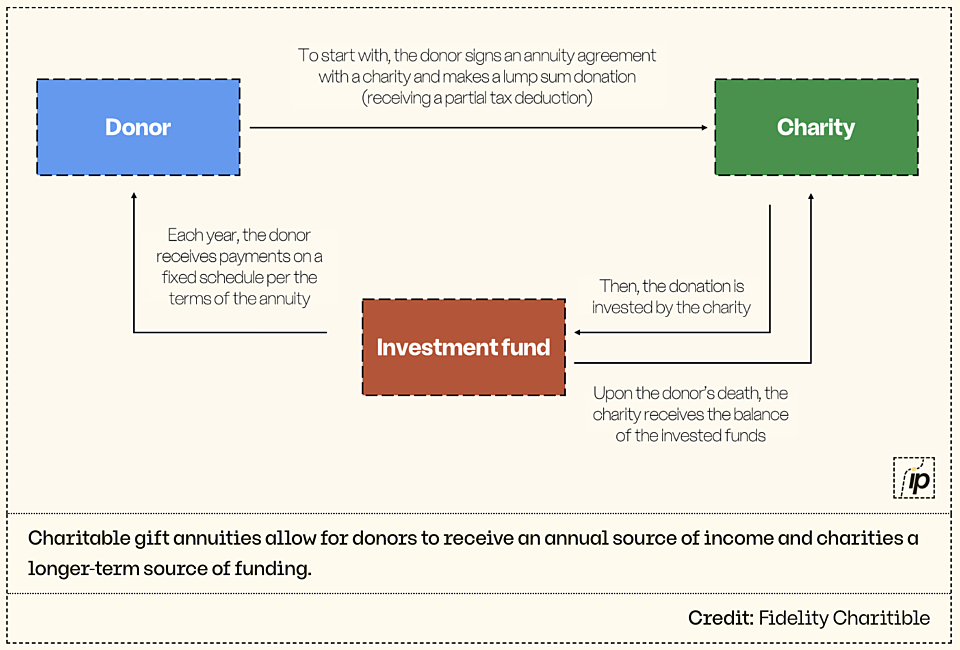
Beyond charity registration, Australia’s philanthropic infrastructure is relatively narrow, which constrains how people can give and when. While many peer countries like the US make use of giving vehicles well suited to an ageing population, these mechanisms remain rare in Australia. Charitable gift annuities, for example, allow donors to receive a guaranteed income for life while securing a future gift to charity.
In the United States, charitable gift annuities are a mature and widely used vehicle; in Australia, regulatory and policy settings have simply not evolved to accommodate them. Unlocking these vehicles could significantly increase both the quantum and diversity of giving, particularly among retirees who are increasingly asset-rich but income-conscious.
On the other hand, accessible charitable bank account models could widen participation well beyond the current 28 per cent of taxpayers who claim deductions today. These vehicles allow everyday givers to build a giving habit with modest, regular contributions that they can direct to causes they support over the course of their lives.
Innovation in giving vehicles does not require inventing new tools; instead, we should adopt proven overseas models and enable them in the Australian context.
The $5.4 trillion intergenerational wealth transfer is as much a financial planning exercise as it is a relational and cultural one. For every bank transaction made from a parent to a child, there are even more discussions within families about how and when they should allocate their wealth. Encouraging families to discuss values, legacy, and community impact ensures that wealth transfers become opportunities for generosity.
Financial advisors play a central role in this dynamic, as an underleveraged channel for normalising planned giving. But many Australians – and many of their professional advisors – remain unaware of the tools available to align financial security with social impact. As older Australians transition out of the workforce and the tax system, philanthropy becomes one of the most powerful ways to contribute to the public good.
This will require a culture shift among financial advisors, but also the country at large. Australia must create and tell the stories that normalise generosity and remind us that giving is a deeply human – and deeply Australian – act that connects people, reinforces values, and strengthens communities across generations.
One story that has captured the imagination of Australia was that of the late James Harrison, known as “the man with the golden arm”. Harrison’s blood carried Anti-D, a rare antibody required to deliver life-saving treatments for women at risk of Rhesus disease. Over six decades, he gave blood and plasma almost every fortnight.
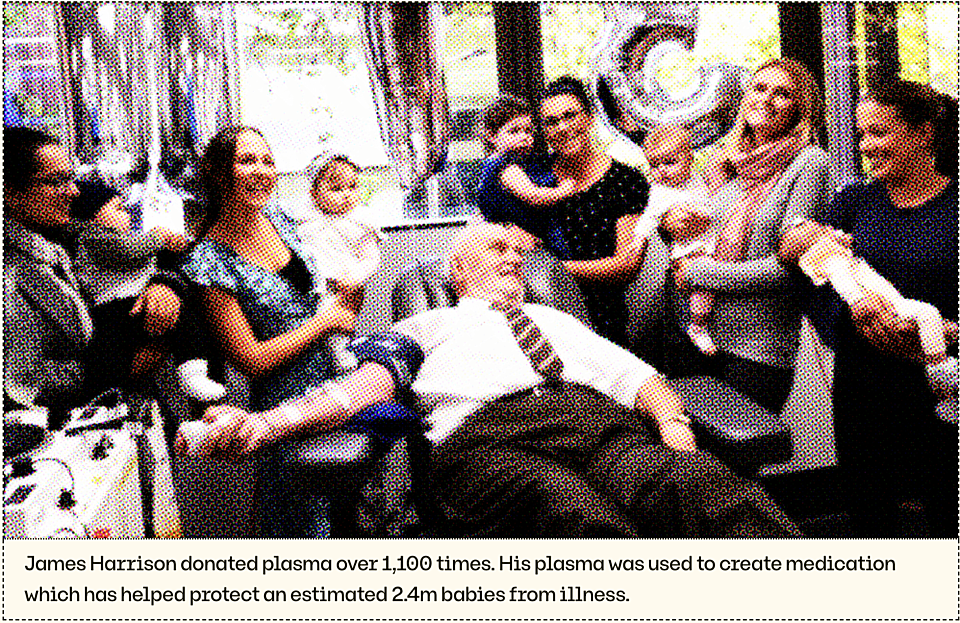
Of course, most older Australians don’t have golden arms – but they do have golden superannuation balances. Making them aware of their unique opportunity to do good with a lifetime of wealth is the challenge we now face. And our political and social leaders should rise to the task.
There is a quiet, counter-intuitive truth in the not-for-profit sector rarely seen by people outside it: of the approximately 11,000 ‘extra small’ charities in Australia – those with less than $50,000 in annual revenue – many could not responsibly absorb a million-dollar donation. Gifts of that scale can overwhelm a small charity if it is not set up to manage funds at that level. Large gifts often come with reporting requirements and timelines that exceed the organisation’s capacity, exposing volunteer boards to risk and pushing charities into complex compliance obligations.
Without the ability to stage funding, build capacity gradually, or access shared infrastructure, a large gift can destabilise the very organisation it is meant to help. This is why effective generosity requires not only willing donors and reformed tax settings, but shared intermediaries – such as shared back-office services and staged funding mechanisms – that would allow smaller organisations to receive and deploy larger grants without being overwhelmed. The intergenerational wealth transfer will only be transformative if the organisations meant to benefit from it are ready to absorb it. The Government should work to establish or enable this intermediary infrastructure that will be required to translate wealth into a national program of generosity that doubles Australia’s giving.
Read the full essay ‘The Generous Country’ in Inflection Points, here.
Ryan Ginard is an international award-winning author, the founder of Fundraise for Australia, and a leader in the philanthropic sector.
Posted on 07 Oct 2026
Our Community's founder and leader, Denis Moriarty, writes that when he watched an over-the-top…

Posted on 30 Sep 2026
There's been a lot of talk about AI this week, and some of it has been frightening. So, is AI good…

Posted on 30 Sep 2026
After the biggest AFL game of the year, one player proudly wore the flag of his birth country and…

Posted on 23 Sep 2026
In his new book Our Place, policy expert Matt Lloyd-Cope argues that housing must be at the heart…

Posted on 23 Sep 2026
There are solutions to counter the rise of One Nation but they might not be residing in the mess…

Posted on 03 Sep 2026
Denis Moriarty has an issue with insurance companies varying premiums because of what they perceive…
Posted on 02 Sep 2026
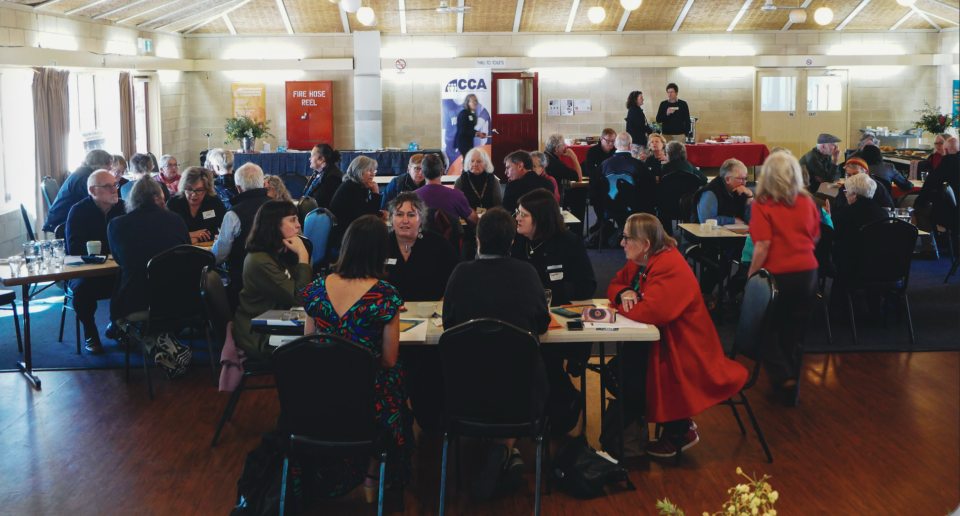
Yesterday, at a meeting just outside Castlemaine in Victoria, 70 people came together to hear…

Posted on 26 Aug 2026
Our Community's founder and leader, Denis Moriarty, says he commissioned a new piece of street art…

Posted on 19 Aug 2026
Government funding is at the centre of Australia's charity and not-for-profit sector – our number…

Posted on 12 Aug 2026
Our Community's founder and leader, Denis Moriarty, says fostering a child was his worst nightmare,…

Posted on 05 Aug 2026
The charity and not-for-profit sector is vital to our economy and the wellbeing of communities…
Posted on 05 Aug 2026
As the Global Impact Summit kicks off in Sydney today, Equitable Philanthropy’s Catherine Brooks…