
Pauline Hanson and the frightening lesson of ‘Years and Years’
Posted on 07 Oct 2026
Our Community's founder and leader, Denis Moriarty, writes that when he watched an over-the-top…
Posted on 15 Apr 2026
By David Crosbie, CEO, Community Council for Australia

One of the most important lessons from the covid 19 pandemic was to ask for what is needed. This may seem obvious, but in the asymmetrical world of charities and not-for-profits, the reluctance to ask can be a major barrier.
As we begin to grapple with the ongoing impact of fuel shortages and higher prices, many charities and not-for-profits (NFPs) are facing tough decisions.
The fuel shortage will affect charities and NFPs in various ways, and each organisation will need to develop its own responses. We know that for most, budgets are going to be affected.
The Community Council for Australia (CCA) is aware that some of our members are already making cuts to services. Some charities are considering travel restrictions, adjusting their travel payments to staff, and reducing face to face engagement.
In many organisations, the response may require revisiting existing funding agreements and contracts.
Charities and NFPs tend to be reluctant to approach their funders with a problem. While most are used to asking on behalf of their communities, asking for themselves can seem self-serving or awkward.
The Productivity Commission last produced a detailed analysis of the sector in 2010, its Contribution of the Not-for-Profit Sector: Research Report. In a conversation with the lead commissioner on this report, Robert Fitzgerald, I once asked him what was a finding that he thought was worth noting but had largely been overlooked or downplayed. He suggested I look at Appendix E, where there was a survey about perceptions of the relationship between government officials and leaders from NFPs. The key finding of the survey was that only around one third of NFP leaders felt they had a very good relationship with their relevant government officials, yet over two thirds of government officials felt they had a very good relationship with NFPs.
The obvious explanation of this significant perception disparity is that charities and NFPs avoid expressing their honest views to government officials in case it negatively affects their opportunity to receive funding. And this makes sense. Why jeopardise potential funding by expressing a negative view of government processes or activities?
During the covid 19 pandemic, many charities and NFPs had to pivot face-to-face activities to online and restructure the way they delivered their services to their communities.
One of the things that stood out for CCA during this period was the willingness of funders to allow real flexibility in budget expenditure. This flexibility enabled funding provided for specific programs or services to be re-purposed and used to better meet the needs of both the organisation and the community during the pandemic.
Interestingly, this higher level of flexibility was provided by all levels of government as well as most philanthropists.
The one requirement that needed to be met for this flexibility to be applied was that the charity or NFP had to ask, and many did. Charities and NFPs felt comfortable raising issues with their funders because there was a sense that we were all dealing with a major crisis together.
“Asking may test a relationship, it may be uncomfortable, it may create the risk of being denied. But if the need is real, not asking is unlikely to be a better course of action.”
Now Australia and the world are facing another challenging set of circumstances that’s likely to have a significant and sustained impact across our sector. It may not be at pandemic levels of disruption, but the capacity of many charities and NFPs will be tested.
Now is the time to consider asking funders for what is needed. There are different ways to ask, including becoming part of a collective request, as has happened with emergency relief organisations that have received a 15 per cent boost in funding during the current months.
Peak bodies such as CCA have been asking for additional flexibility and support for charities’ travel costs. We have adopted a more collective approach based on adapting to meet the changing context, managing the impact of increasing fuel expenses, and ensuring the principle of pay what it takes.
CCA is aware that individual charities have sought both additional funding and flexibility to divert and re-purpose funding from government departments with various levels of success.
What each organisation needs and the nature of its funding and its relationship with funders will determine how best to seek additional flexibility and support.
There is an impressive line-up of vested business interests seeking various forms of compensation and special dispensation in response to the fuel shortage.
Asking may test a relationship, it may be uncomfortable, it may create the risk of being denied. But if the need is real, not asking is unlikely to be a better course of action.
So ask.
David Crosbie has been CEO of the Community Council for Australia for the past decade and has spent more than a quarter of a century leading significant not-for-profit organisations, including the Mental Health Council of Australia, the Alcohol and Other Drugs Council of Australia, and Odyssey House Victoria.
Posted on 07 Oct 2026
Our Community's founder and leader, Denis Moriarty, writes that when he watched an over-the-top…

Posted on 30 Sep 2026
There's been a lot of talk about AI this week, and some of it has been frightening. So, is AI good…

Posted on 30 Sep 2026
After the biggest AFL game of the year, one player proudly wore the flag of his birth country and…

Posted on 23 Sep 2026
In his new book Our Place, policy expert Matt Lloyd-Cope argues that housing must be at the heart…

Posted on 23 Sep 2026
There are solutions to counter the rise of One Nation but they might not be residing in the mess…

Posted on 03 Sep 2026
Denis Moriarty has an issue with insurance companies varying premiums because of what they perceive…
Posted on 02 Sep 2026
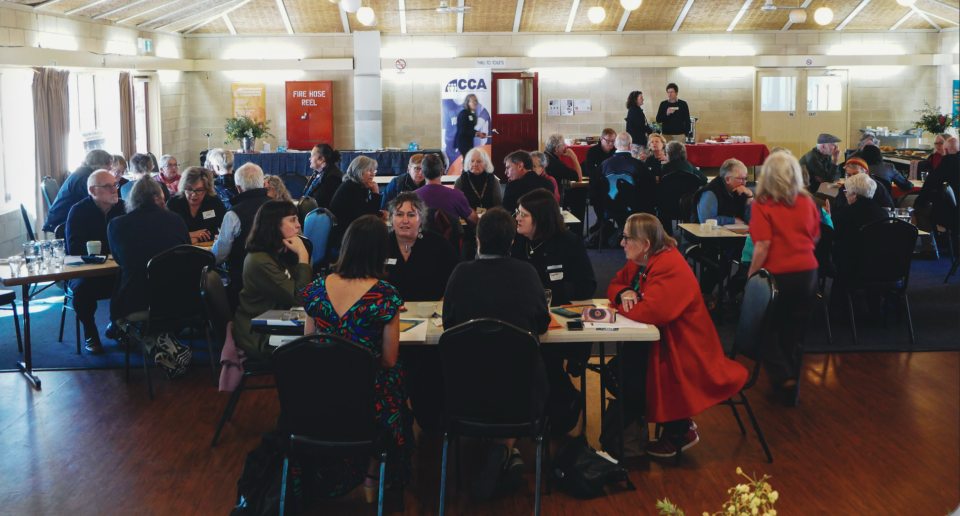
Yesterday, at a meeting just outside Castlemaine in Victoria, 70 people came together to hear…
Posted on 26 Aug 2026
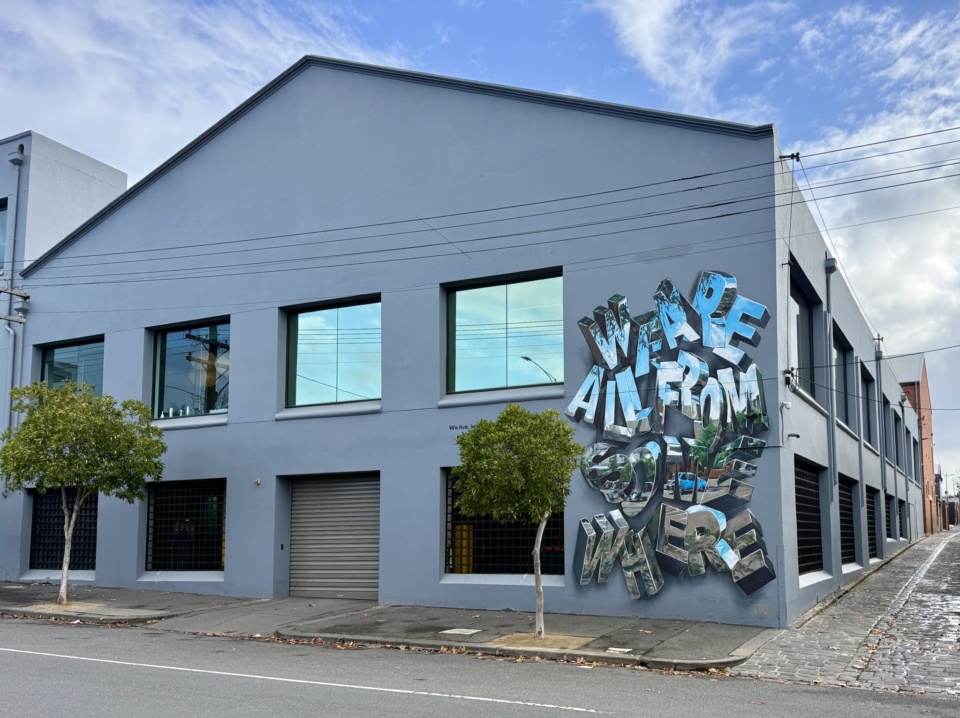
Our Community's founder and leader, Denis Moriarty, says he commissioned a new piece of street art…

Posted on 19 Aug 2026
Government funding is at the centre of Australia's charity and not-for-profit sector – our number…

Posted on 12 Aug 2026
Our Community's founder and leader, Denis Moriarty, says fostering a child was his worst nightmare,…

Posted on 05 Aug 2026
The charity and not-for-profit sector is vital to our economy and the wellbeing of communities…
Posted on 05 Aug 2026
As the Global Impact Summit kicks off in Sydney today, Equitable Philanthropy’s Catherine Brooks…