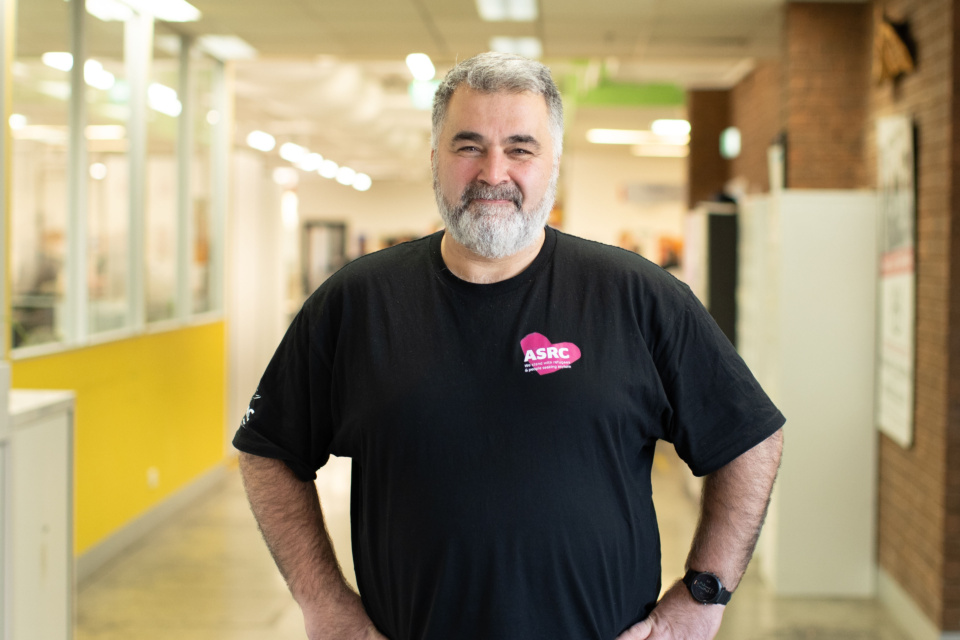
25 years after Tampa, the politics of fear are still setting the terms
Posted on 14 Oct 2026
In the ongoing political debates about migration levels, Asylum Seeker Resource Centre founder Kon…
Posted on 04 Feb 2026
By David Crosbie, CEO, Community Council for Australia

As we move into 2026, I can’t help but think the world is wobbling a little.
The Canadian prime minister received world-wide acclaim for his speech at Davos two weeks ago. As the leader of a middle power on the global stage, he pointed out that the previously established rules and conventions of the world economic order were no longer in operation. Perhaps even more importantly, PM Mark Carney said there was no going back.
In the UK, as in the US, populist politicians playing grievance politics and tabling the race card have gained significant support from key powerbrokers and the electorate.
In our country, political parties on the right are in disarray with the Trump-lite One Nation now leading the polls. Given the lack of support for One Nation in our major cities, it’s clear many people living in regional and rural Australia are feeling left behind. They are hurting (economically) and no longer believe their Australia is headed in the right direction.
The theme that resonates across these global and local shifts is one of division: them and us, our country over theirs, our state or region over theirs, our families over theirs, my interests over theirs. They are others, outsiders, interlopers, queue jumpers, criminals, activists, paid agitators. They are less than us. They are against us.
The politics of them and us is often fed and amplified by a small cabal of powerful vested interests who control media and messaging; people who profit from divisions, people who see government and collective interests as an impost, a restriction on their capacity to make what are often obscene levels of individual wealth.
Responding to a move by the Californian government last year to extend health care to migrants, Elon Musk said, “The fundamental weakness of Western civilization is empathy, the empathy exploit. … They’re exploiting a bug in Western civilization, which is the empathy response. Empathy has been ‘weaponized’.” The same man describes social security payments as a “Ponzi scheme”.
Watching and reading these views can be overwhelming. It’s easy to get lost in the arrogant cruelty of some of these ideas, the level of ignorance about the lives of others, the lack of insight into what makes communities and countries strong and productive.
“The work of our sector is clearly an antidote to the dog whistling grievance politics that serves the interests of a small minority already emboldened by individual power and money.”
If there is no longer an agreed world order, if there are no conventions that can’t be trashed for greed and self-interest, if the politics of envy and grievance dominate, what place is there for compassion, for caring, and for fanciful notions like equal opportunity?
As we look at the year ahead, it would be easy to become a little despondent. It’s important we do the opposite. The eroding of the values and principles that underpin our shared human experience can become an informing source of motivation.
I was brought up believing that we should do unto others as we would like them to do unto us, that doing good was its own reward, that profiting from someone else losing was in fact not winning at all, that we were all in it together. As a boy scout I was taught the Rudyard Kipling creed, “The strength of the Pack is the Wolf, and the strength of the Wolf is the Pack.”
Mahatma Gandhi argued, "Unity to be real must stand the severest strain without breaking."
Right now, it feels as though our unity is being tested, globally and in Australia.
The danger is that as our values are challenged, we sink into our own form of grievance politics, bemoaning those who don’t share our views, dismissing those who when faced with their own form of disadvantage embrace what they perceive to be opportunity.

The leaders I talk to in our sector understand the challenges. Most are informed by a set of shared humanistic values. They are driven by a quiet determination, have an understated sense of purpose, and operate with a clear focus on delivering for their organisations and their communities.
The work of our sector is clearly an antidote to the dog whistling grievance politics that serves the interests of a small minority already emboldened by individual power and money. Our work is about unity, about shared experience, about promoting opportunity and hope.
Collectively, we have a lot of work to do in 2026. We need to build engagement and strengthen the bonds that enable us to belong, to establish shared goals, to emphasise the “we” rather than them and us, and to act collectively.
As we turn away in disgust at the latest outrageous trampling of fundamental values, it’s important to remember that it is in our power to act differently, and by doing so, to make a difference.
David Crosbie has been CEO of the Community Council for Australia for the past decade and has spent more than a quarter of a century leading significant not-for-profit organisations, including the Mental Health Council of Australia, the Alcohol and Other Drugs Council of Australia, and Odyssey House Victoria.
Posted on 14 Oct 2026
In the ongoing political debates about migration levels, Asylum Seeker Resource Centre founder Kon…
Posted on 14 Oct 2026
Over the weekend, federal Liberal leader Angus Taylor told the Conservative Political Action…
Posted on 07 Oct 2026
Our Community's founder and leader, Denis Moriarty, writes that when he watched an over-the-top…
Posted on 30 Sep 2026
There's been a lot of talk about AI this week, and some of it has been frightening. So, is AI good…

Posted on 30 Sep 2026
After the biggest AFL game of the year, one player proudly wore the flag of his birth country and…
Posted on 23 Sep 2026
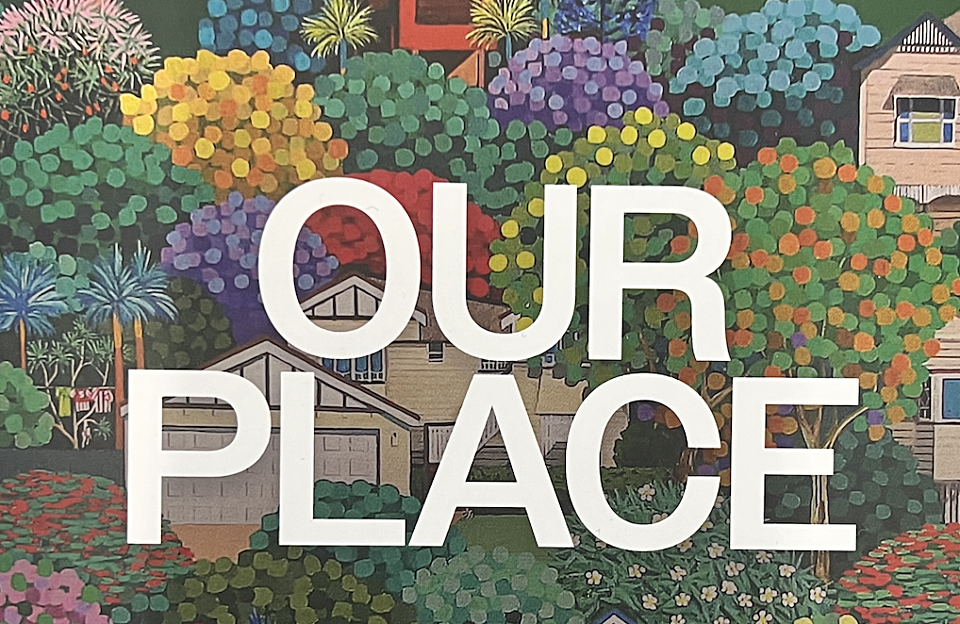
In his new book Our Place, policy expert Matt Lloyd-Cope argues that housing must be at the heart…

Posted on 23 Sep 2026
There are solutions to counter the rise of One Nation but they might not be residing in the mess…
Posted on 03 Sep 2026
Denis Moriarty has an issue with insurance companies varying premiums because of what they perceive…
Posted on 02 Sep 2026
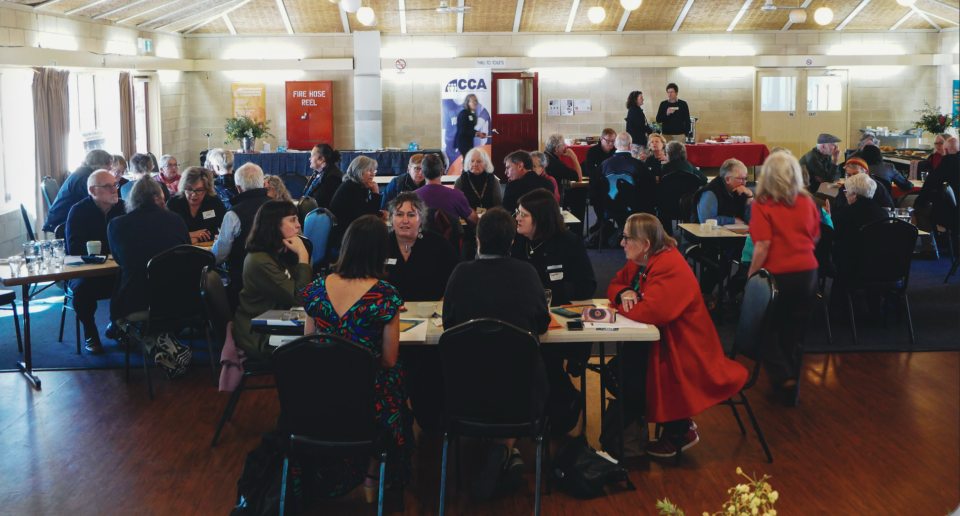
Yesterday, at a meeting just outside Castlemaine in Victoria, 70 people came together to hear…
Posted on 26 Aug 2026
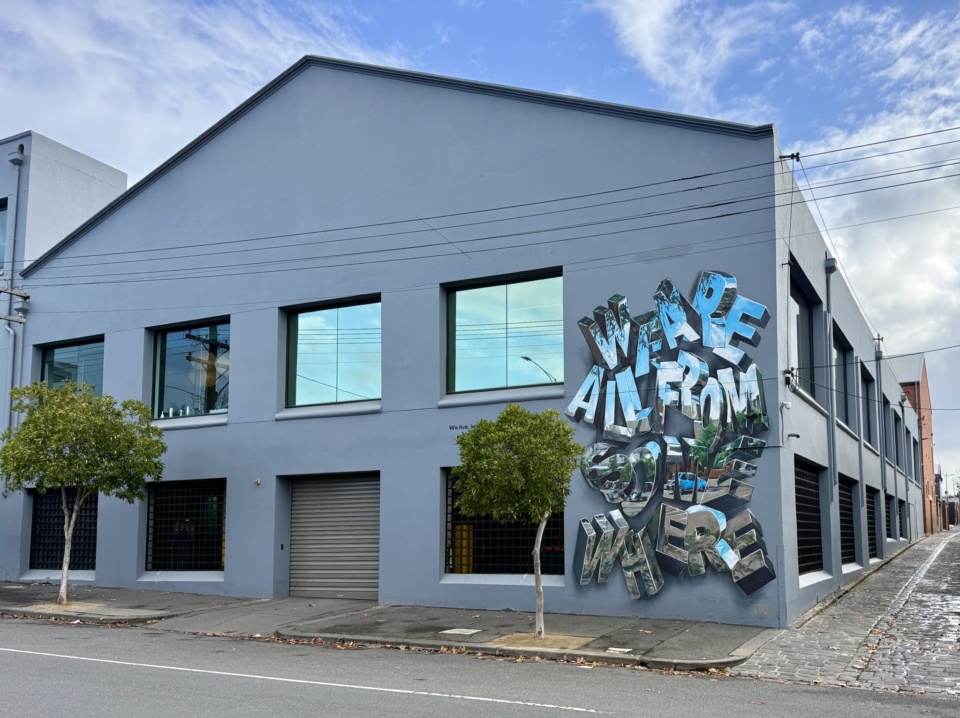
Our Community's founder and leader, Denis Moriarty, says he commissioned a new piece of street art…

Posted on 19 Aug 2026
Government funding is at the centre of Australia's charity and not-for-profit sector – our number…

Posted on 12 Aug 2026
Our Community's founder and leader, Denis Moriarty, says fostering a child was his worst nightmare,…