
Pauline Hanson and the frightening lesson of ‘Years and Years’
Posted on 07 Oct 2026
Our Community's founder and leader, Denis Moriarty, writes that when he watched an over-the-top…
Posted on 10 Mar 2026
By Violet Roumeliotis, CEO, Settlement Services International (SSI)
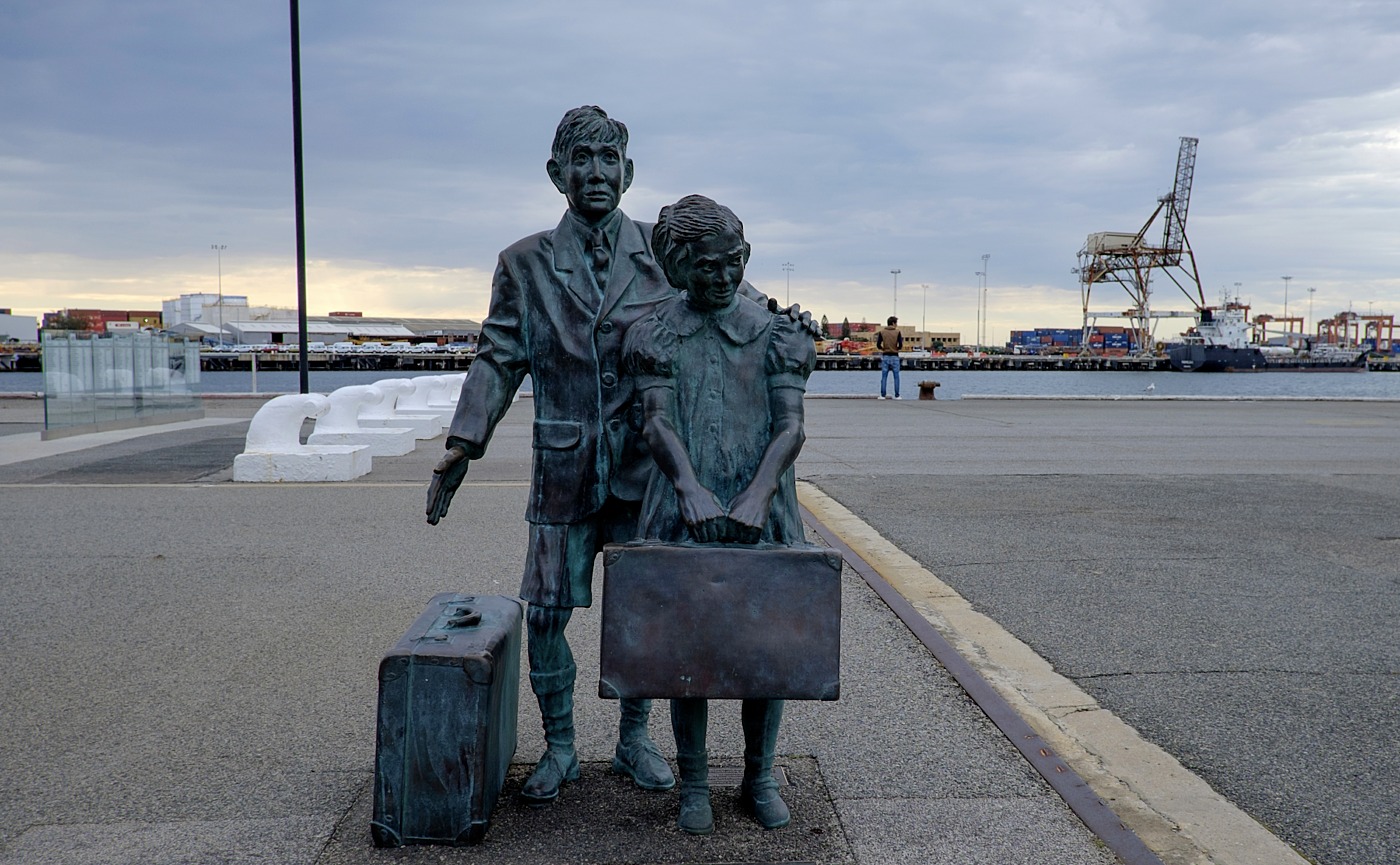
Australia’s future is being shaped right now in our migration and settlement systems. But too often, the settlement sector is treated as a niche, peripheral area.
In reality, settlement defines the kind of nation we are becoming. It affects social cohesion, workforce participation, economic growth and community wellbeing. The settlement sector, in turn, plays a pivotal educational role in reconciliation and anti-racism approaches, helping build a bridge between newcomers and host communities by fostering a two-way learning environment. It’s not an isolated service system. It’s nation-building infrastructure.
And if we want that infrastructure to hold – and to future-proof it – the not-for-profit sector must be empowered to lead alongside government.
The sector has built important foundations in recent years. The Settlement Outcomes Integration Framework and collective strategies like the Settlement Council of Australia’s (SCOA’s) Road to Belonging are significant achievements. We are also seeing overdue recognition at the federal level through the creation of a dedicated Minister for Multiculturalism and an Office for Multicultural Affairs – an important signal that multiculturalism sits at the centre of Australia’s identity and future prosperity.
We can celebrate milestones like the issuance of Australia’s one millionth refugee visa, which serves as a visible reminder of our enduring commitment to welcoming those seeking safety.
But there’s one truth we rarely say out loud: despite the reform, Australia’s settlement system is still highly fragmented.
Short-term contracts, siloed programs and disconnected funding models make it difficult for providers to innovate or plan. Too often, the vision laid out in government tenders bears little resemblance to what’s possible on the ground.
Settlement organisations – most of which are not-for-profits – are expected to respond to rapidly evolving needs with temporary funding, rigid procurement requirements, and little space for collaboration. That mismatch is not tenable in a world where migration pressures are increasing, global crises are compounding, and demand for services is becoming more complex.
Funding models must reflect that settlement is an ecosystem
Australia’s settlement sector is a living ecosystem made up of specialist service providers, diaspora-led organisations, refugee-led groups, community hubs, government agencies, and mainstream institutions. Each plays a distinct and irreplaceable role.
But our funding models still pit organisations against each other rather than enabling collaboration. They reward compliance over innovation, and competition over partnership.
If we’re serious about community-led practice, diversity of perspective, and place-based solutions, we need a system that funds partnerships rather than undermining them.
The Not-for-Profit Sector Blueprint, developed collaboratively by the Australian Council of Social Service (ACOSS), the Federation of Ethnic Communities' Councils of Australia (FECCA) and other sector leaders responds directly to this need. It calls for sustainable, multi-year funding; procurement reform; and an enabling environment for collaboration, not just accountability. These reforms are not abstract; they are the conditions required for a settlement system that works.
“The challenges I’ve outlined point to a simple truth: there is significant opportunity to strengthen our system, but the real risk is if we fail to act.”
A system built for another era
Australia’s settlement system was designed decades ago, for a very different migration landscape. Today we live in a volatile, uncertain, complex and ambiguous world where climate displacement, regional instability and labour mobility are reshaping global movement.
There’s a number of concrete steps we can take now to ensure our settlement system is ready for the future.
First, the government must commit to sustainable, multi-year funding so organisations can plan, innovate and build capacity with confidence. I know we are not alone in the not-for-profit sector in finding this a pressing challenge for our organisations.
Second, the government must design procurement and reporting processes with the sector to better align tenders with real-world service delivery. Funding contracts should also be designed so organisations are rewarded for collaborating and for supporting migrant community groups to build their capability.
Third, funding models must recognise that settlement isn’t a single service, it’s a web of connected supports, and planning should extend beyond refugees and humanitarian entrants to include all newcomers. Access to support should not be defined by the number of your visa. A national settlement framework that defines the roles and responsibilities of the government, not-for-profit and private sectors can help to ensure that migration contributes fully to nation building and social cohesion.
And lastly, recent crises – in Afghanistan, Ukraine, Sudan, Gaza – have exposed the inequities in how people are supported depending on the visa they hold. Some receive immediate access to services; others arrive with nothing. It is inclusion by lottery.
We need to make sure the whole system can adjust and respond quickly when problems arise, so that help during crises is fast, well organised and compassionate. If we want people to truly feel that they belong, support should be based on what people actually need, not on what type of visa they hold.
The challenges I’ve outlined point to a simple truth: there is significant opportunity to strengthen our system, but the real risk is if we fail to act.
To maintain a strong settlement system, government planning must link migration with both social and physical infrastructure.
When infrastructure falls behind, it fuels resentment and undermines cohesion. Investment in education, housing, health and community infrastructure isn’t just good policy, it’s essential risk management for Australia’s future.
If we don’t adapt, we’ll see the consequences in growing division, unmet needs, and missed opportunities for nation-building.
The real risk isn’t in change – it’s in standing still.
Settlement is not written in the margins of our national story. It is the story. And if we get it right, it will be one of Australia’s greatest nation-building achievements this century.
Violet Roumeliotis AM is the chief executive officer of SSI, a community organisation and social business that supports newcomers and other vulnerable individuals in achieving their full potential. Violet has spent nearly 40 years leading for-purpose organisations, providing human services that promote equal opportunity and change the lives of individuals and families experiencing inequality.
Posted on 07 Oct 2026
Our Community's founder and leader, Denis Moriarty, writes that when he watched an over-the-top…
Posted on 30 Sep 2026
There's been a lot of talk about AI this week, and some of it has been frightening. So, is AI good…

Posted on 30 Sep 2026
After the biggest AFL game of the year, one player proudly wore the flag of his birth country and…

Posted on 23 Sep 2026
In his new book Our Place, policy expert Matt Lloyd-Cope argues that housing must be at the heart…

Posted on 23 Sep 2026
There are solutions to counter the rise of One Nation but they might not be residing in the mess…

Posted on 03 Sep 2026
Denis Moriarty has an issue with insurance companies varying premiums because of what they perceive…
Posted on 02 Sep 2026
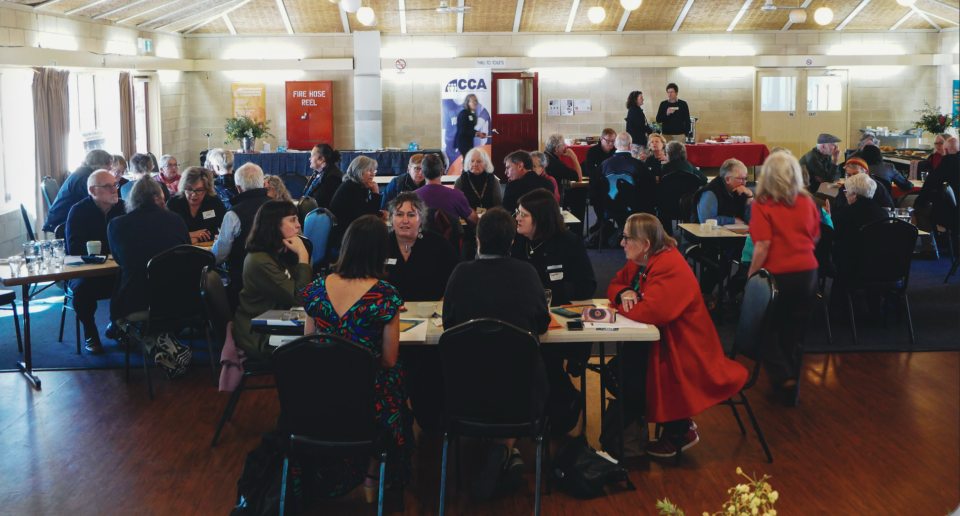
Yesterday, at a meeting just outside Castlemaine in Victoria, 70 people came together to hear…
Posted on 26 Aug 2026
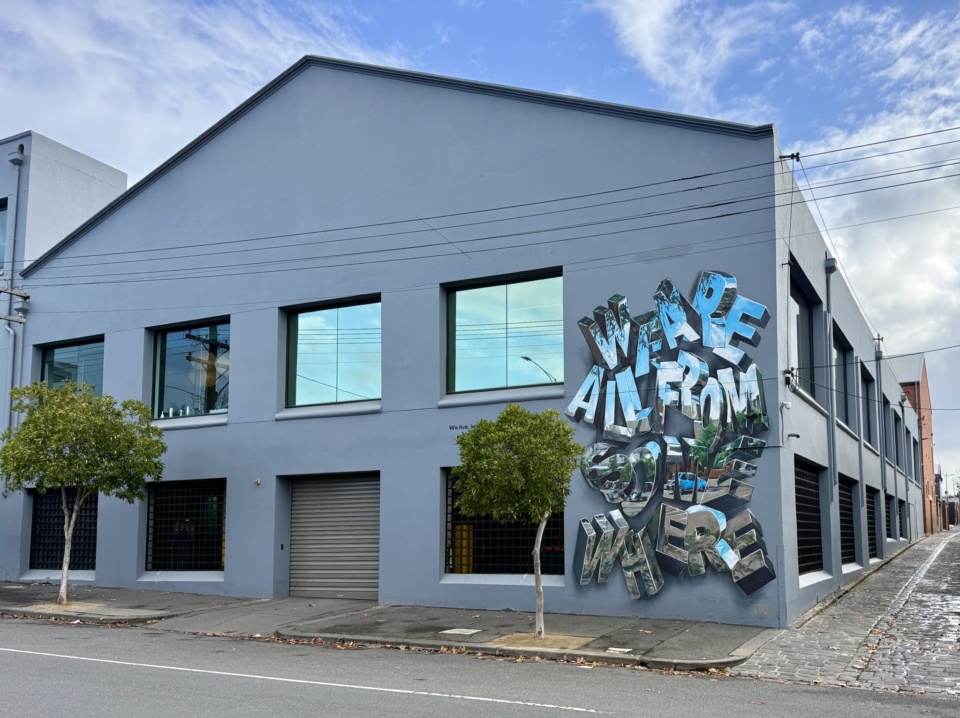
Our Community's founder and leader, Denis Moriarty, says he commissioned a new piece of street art…

Posted on 19 Aug 2026
Government funding is at the centre of Australia's charity and not-for-profit sector – our number…

Posted on 12 Aug 2026
Our Community's founder and leader, Denis Moriarty, says fostering a child was his worst nightmare,…

Posted on 05 Aug 2026
The charity and not-for-profit sector is vital to our economy and the wellbeing of communities…
Posted on 05 Aug 2026
As the Global Impact Summit kicks off in Sydney today, Equitable Philanthropy’s Catherine Brooks…