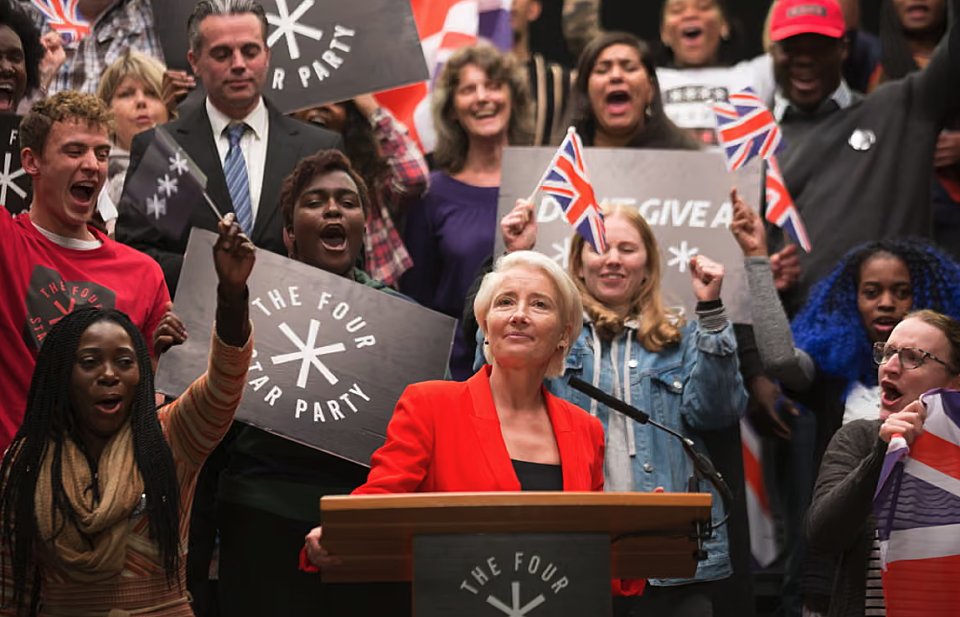
Pauline Hanson and the frightening lesson of ‘Years and Years’
Posted on 07 Oct 2026
Our Community's founder and leader, Denis Moriarty, writes that when he watched an over-the-top…
Posted on 28 Jan 2026
By Carol Schwartz AO, chair, Our Community
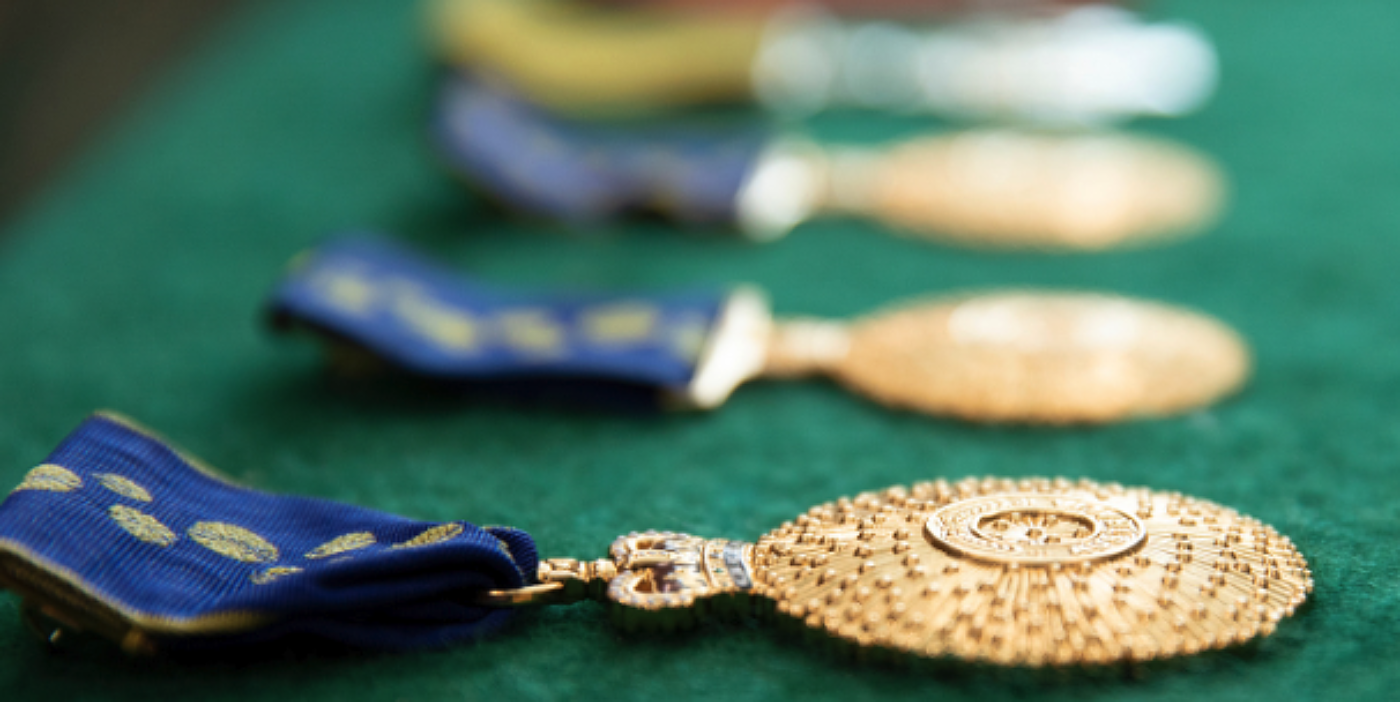
The 2026 Australia Day Honours list delivered a sobering reality check. After reaching gender parity in 2024, women’s representation this year plummeted to just 27 per cent of the 680 recipients. The question isn’t why the Council for the Order of Australia failed us. It’s why we failed ourselves.
The arithmetic is brutally simple: over the past year, approximately two-thirds of nominations submitted were for men, one-third for women. The Council can only assess what lands on their desk. When we nominate men at twice the rate we nominate women, we cannot credibly express shock when the honours reflect that imbalance.
What makes this particularly revealing is that women nominate men as frequently as they nominate women. This isn’t a story about old boys’ clubs perpetuating themselves, though that doubtless plays a role. This is about something more insidious: a collective blindness to women’s contributions that transcends gender lines. We have internalised whose work counts as honours-worthy so thoroughly that even those who benefit from questioning this assumption often fail to do so.
The recent appearance of progress makes this reversal more instructive, not less. When the previous governor-general and Council prioritised gender balance, they created what turned out to be a mirage. By fast-tracking women’s nominations while a backlog of approximately 6,000 unassessed nominations accumulated, they achieved statistical equality without addressing the underlying problem. The 2026 list isn’t an aberration. It’s the system revealing its true character.
Consider what this tells us about how we value contribution. The honours system is meant to recognise service, achievement, and dedication to community. These qualities are not gendered. Yet somehow, when Australians scan their communities for people worthy of recognition, they identify men at twice the rate they identify women.
This pattern suggests we’re operating with a narrow and outdated template of what distinguished service looks like. Perhaps we notice the president of the business association but overlook the coordinator of community services. We remember the former headmaster but forget the teacher who revolutionised literacy outcomes. We recognise the medical researcher but miss the nurse who transformed aged care practices.
The tragedy is that Australia is full of women doing extraordinary work. They’re running social enterprises, mentoring disadvantaged youth, advancing scientific knowledge, enriching our cultural life, and building stronger communities. They’re simply not being seen.
“The honours system is meant to recognize service, achievement, and dedication to community. These qualities are not gendered.”
Some will argue the honours system itself is archaic, a vestige of colonial hierarchy that should be abolished entirely. There’s merit to that position. But as long as we maintain a system of national recognition, it matters enormously who we choose to recognise. These decisions signal what we value as a society and provide role models for future generations. A system that honours men at nearly three times the rate of women sends a clear message about whose contributions matter.
The Council for the Order of Australia has acknowledged this issue and called for community action. That’s appropriate, because this is fundamentally a community problem. The solution cannot come from bureaucratic adjustment or quota systems imposed from above. It must come from a shift in how we see and value women’s work.
This requires active intervention in our own thinking. When considering who deserves recognition, we must deliberately expand our scope. Look beyond traditional leadership structures. Question whether our first instinct reflects genuine merit or unconscious bias. Ask women in our networks to suggest worthy candidates. Most importantly, take the time to submit nominations.
The honours system has inadvertently performed a valuable diagnostic function. It has held up a mirror to Australian society and shown us something uncomfortable: we systematically undervalue women’s contributions, even when we think we’re being fair-minded. The question is whether we’ll look away from that mirror or let it change how we see.
The 2027 honours list is already being shaped by the nominations being submitted today. Each of us has the power to influence that outcome. The Council has made clear it wants to recognise more women. It needs us to notice them first.
If we continue nominating men at twice the rate of women, we forfeit the right to be disappointed by the results. Recognition begins with seeing. It’s time we opened our eyes.
Carol Schwartz AO is one of Australia’s most influential business and community leaders, and a prominent philanthropist. She is chair of Our Community. This opinion piece was also published by the Australian Financial Review.
Posted on 07 Oct 2026
Our Community's founder and leader, Denis Moriarty, writes that when he watched an over-the-top…
Posted on 30 Sep 2026
There's been a lot of talk about AI this week, and some of it has been frightening. So, is AI good…

Posted on 30 Sep 2026
After the biggest AFL game of the year, one player proudly wore the flag of his birth country and…

Posted on 23 Sep 2026
In his new book Our Place, policy expert Matt Lloyd-Cope argues that housing must be at the heart…

Posted on 23 Sep 2026
There are solutions to counter the rise of One Nation but they might not be residing in the mess…

Posted on 03 Sep 2026
Denis Moriarty has an issue with insurance companies varying premiums because of what they perceive…
Posted on 02 Sep 2026
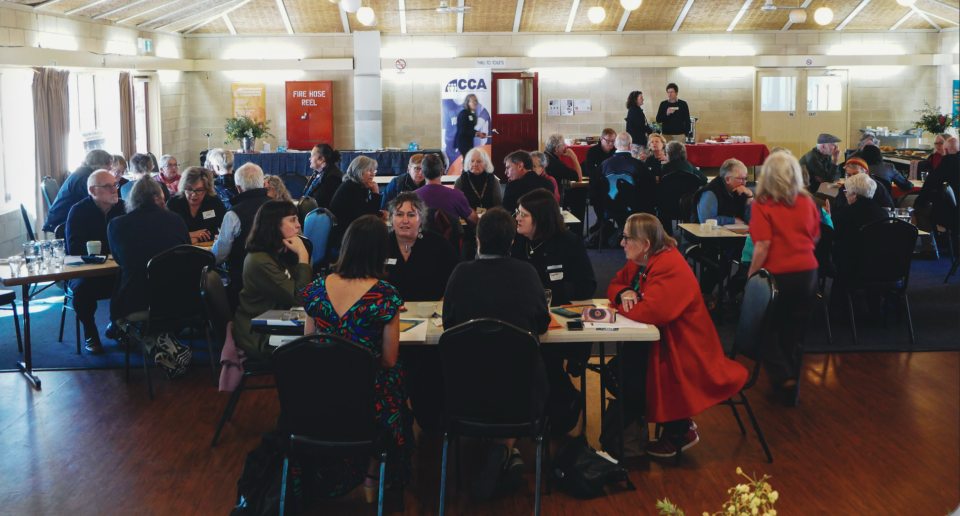
Yesterday, at a meeting just outside Castlemaine in Victoria, 70 people came together to hear…

Posted on 26 Aug 2026
Our Community's founder and leader, Denis Moriarty, says he commissioned a new piece of street art…

Posted on 19 Aug 2026
Government funding is at the centre of Australia's charity and not-for-profit sector – our number…

Posted on 12 Aug 2026
Our Community's founder and leader, Denis Moriarty, says fostering a child was his worst nightmare,…

Posted on 05 Aug 2026
The charity and not-for-profit sector is vital to our economy and the wellbeing of communities…
Posted on 05 Aug 2026
As the Global Impact Summit kicks off in Sydney today, Equitable Philanthropy’s Catherine Brooks…