
‘The mind boggles’: federal envoy blasts NT housing decision
Posted on 14 Oct 2026
The federal government’s special envoy for social housing and homelessness, Josh Burns MP, has…
Posted on 28 Jan 2026
By Nick Place, journalist, Community Directors

Charities Minister Andrew Leigh says he expects to see more demand than ever for the work of charities in 2026, in an environment where a tight labour market and cost-of-living pressures make it even harder for them to find staff and funding.
He’s hoping to introduce legislation and work with the sector to bring in extra dollars, better models and more collaboration.
“As an economist, I think about this in terms of supply and demand,” the minister told the Community Advocate in an exclusive interview to begin the new year. “In terms of demand, it’s the challenges that will see moments that are calling on charities to do more. We see that through natural disasters; we see it through the challenge of need; cost of living pressures affect that; and of course, environmental pressures as well,” he said.
“In terms of supply, it's about making sure that charities continue to attract the philanthropy and the talented people that they need. A tight labour market makes it harder to hire staff and hang on to staff, and charities have been affected by that.”
Leigh said he was keen to see what the government and sector could do in 2026 to develop what he calls “the connective tissue around the charity sector”, such as collaboration between charities, as well as investment in “leadership and staff development, more work around cyber risks and the use of artificial intelligence in an ethical and productive way to boost the capacity of Australia's charities.”
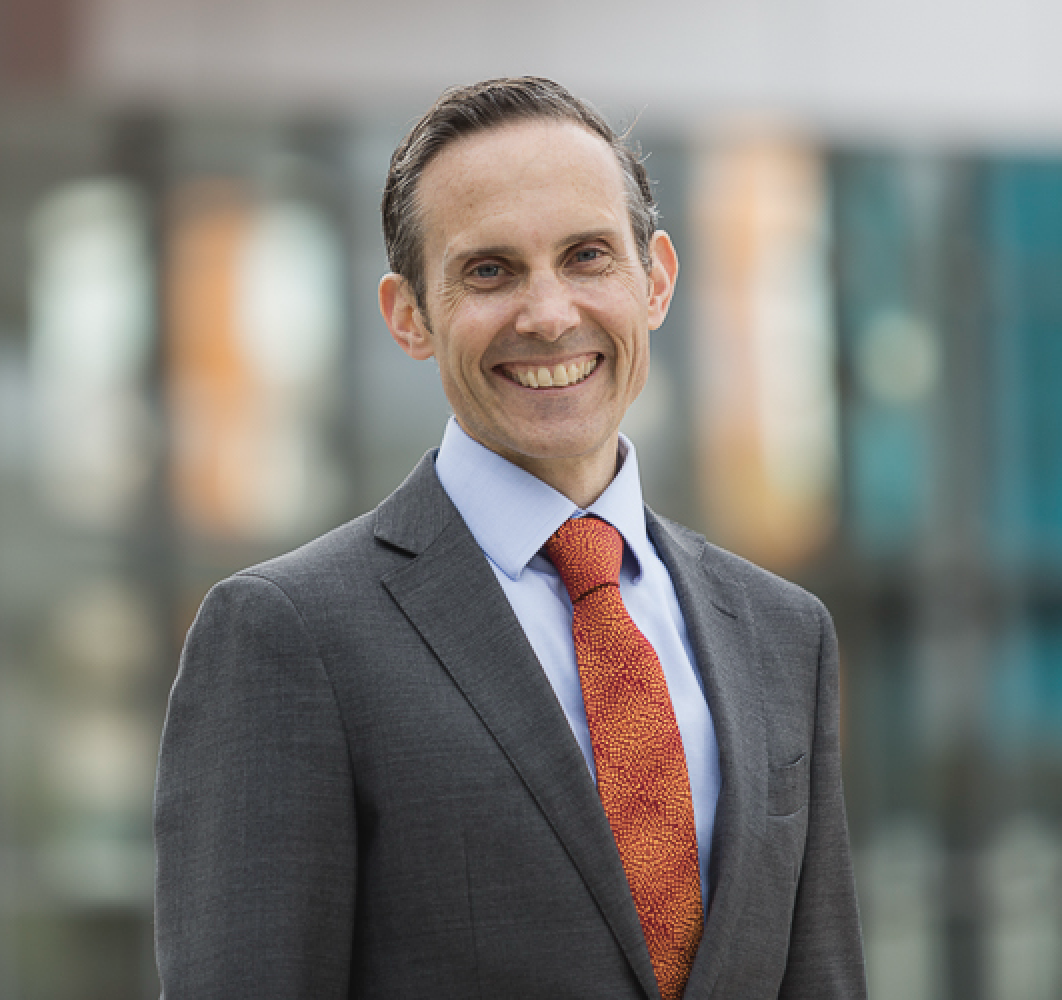
The minister said he intended to work to bring more philanthropic dollars to the sector in 2026, as well as introduce long-awaited policy initiatives.
“The Productivity Commission report is clearly the biggest piece of work that’s in front of us and sits alongside the blueprint in terms of work that we've commissioned,” he said. “We made progress last year on some of those recommendations, including around getting a greater ability of the Charities Commission to speak out when it’s doing an investigation and that it’s in the public interest.
“The blueprint is a very strong piece of work, and we continue to draw on it. We’ve implemented parts of the blueprint already, and we'll continue to look for opportunities where we can do more.”
There was a lot of talk in the second half of 2025 about the proposed requirement for “giving funds”, formerly known as private ancillary funds (PAFs), to distribute a higher percentage of their accumulated funds each year, with the government consulting on whether the legal requirement should rise from five per cent.
“We've done the consultation on giving funds and we'll announce in the next little while what we intend to do about the minimum distribution amount,” Leigh said.
DGR reform was also a priority for the government, he said. “In terms of that, we’re getting rid of the two-dollar donation deduction threshold to make rounding up for charity easier and also putting in place those community foundations, many of whom are now getting DGR listing, including a range of community foundations that work in the area around bushfire recovery.”
Asked what his hopes were for the sector in 2026, Leigh said he wanted to see more philanthropic dollars and greater impact.
“I’d like to see a sector which receives more philanthropy from Australians and which is having more impact out in the community,” he said. “Partly, that’s about measuring impact and doing a better job of ensuring resources are targeted in the right way, but our goal of doubling philanthropy is also about ensuring that there are more resources that the sector can work with. That means people can enjoy careers with more investment in them, that they’re not constantly feeling as though they need to churn staff or pinch pennies. I also am keen to work with the sector around the issue of collaboration, which I think is absolutely vital.”
The stated goal of doubling philanthropy in Australia by 2030 is an ambitious one. Does Leigh feel we’re on track to achieve it?
“Look, we're certainly doing all we can to get there in terms of creating strong incentives and boosting the profile of giving,” he said. “We think that a stepped-up approach from government and from the philanthropic sector will make a big difference to issues around environmental sustainability, homelessness and the like. We’re looking at all of those reforms, including around the distribution amounts for giving funds, around getting more community foundations in place, so there are more opportunities for people to give where they live, and also the broader recommendations of the Productivity Commission, which are on our table right now.”
“I’d like to see a sector which receives more philanthropy from Australians and which is having more impact out in the community.”
Using an alternative to the consumer price index (CPI) to measure rising costs for charities could provide another way to provide financial assistance for the sector, and Leigh said he had heard the arguments for it.
“I think the case that the sector has made for getting fair indexation is a strong one,” the minister said. “That’s certainly one that we agreed with prior to coming to government in 2022, and which we’ve sought to implement. Both longer dated contracts and fair indexation are important to the sector, and they make sure that organisations aren’t wasting money applying for a grant the moment after they’ve received the last one, because the time period for the grant is just too short. Those issues were raised with [Social Services Minister] Tanya Plibersek at the productivity round table that we did with charities, and I think she very much took those issues on, as she looks to craft good outcomes for the sector.
“We’re interested in how more innovative models can work, as well. The payment-by-results trials that are being done in places like New South Wales are interesting. I’m fascinated by the work that givewell.org does in looking at charity impact in the overseas aid space and that Charity Navigator does in the United States in looking at charity impact across charities operating in the US domestic context.”
Heading into 2026, Minister Leigh said he was comfortable with the relationship between and separation of roles of the Australian Charities and Not-for-profits Commission (ACNC) and the Australian Taxation Office (ATO).
“I think the balance across the ATO and the ACNC is about right, but I do think that it’s important that the Charities Commission always has the resources that it needs to tackle these challenges,” he said. “Under [Commissioner] Sue Woodward’s leadership, I think they [the ACNC] have found the right balance in terms of cracking down on bad behaviour, but being there to support charities as well, being a friendly voice on the helpline when a charity is being established or when it’s looking to change responsible persons, being thoughtful and engaged with the sector in terms of how enforcement is done and also ensuring, again, as a result of these reforms, that they’re able to speak out when there is wrongdoing happening in the sector.”
Posted on 14 Oct 2026
The federal government’s special envoy for social housing and homelessness, Josh Burns MP, has…

Posted on 14 Oct 2026
The Reserve Bank’s move to ban card payment surcharges has led to complications for charities and…

Posted on 14 Oct 2026
A special guest with her finger on the pulse of one of the biggest issues facing Australia –…

Posted on 07 Oct 2026
A major public campaign launched this morning is calling on the federal government to restore…

Posted on 07 Oct 2026
The Australian Literacy & Numeracy Foundation (ALNF) has announced a partnership with mining…

Posted on 07 Oct 2026
A conference in Darwin will this morning hear detailed, strategic plans for how Australia could…

Posted on 30 Sep 2026
Not-for-profit leaders have been warned to be wary of approaches from potential “funding partners”…
Posted on 30 Sep 2026
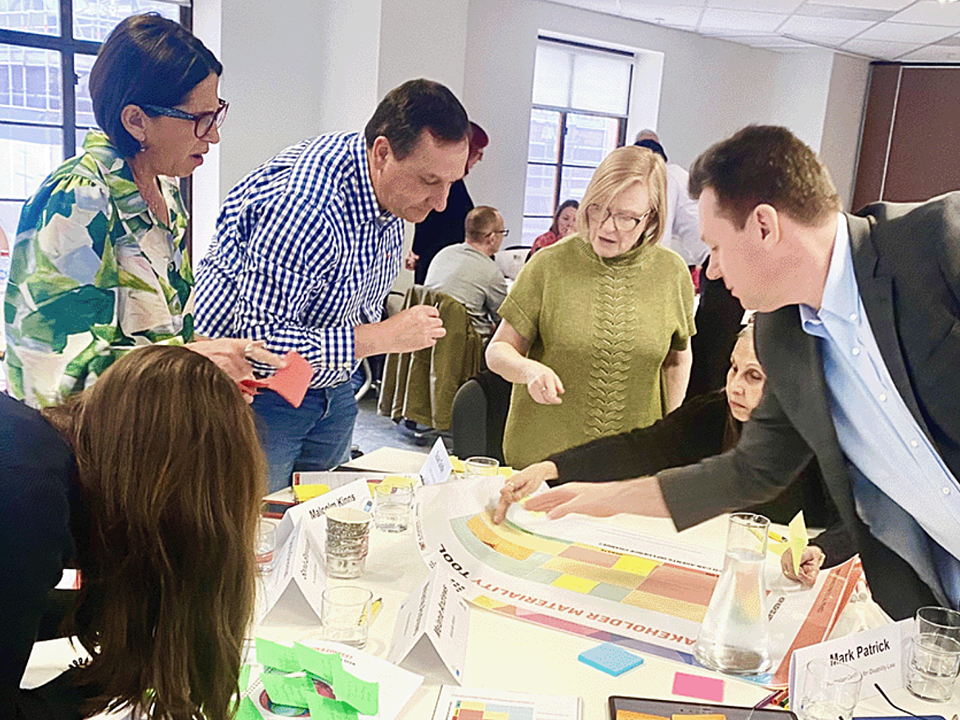
More than 200 fully funded Centre for Social Impact (CSI) scholarships will help equip for-purpose…

Posted on 30 Sep 2026
Personal stories are among the most powerful tools a charity can have to raise funds and awareness,…

Posted on 23 Sep 2026
A just-released major global survey of charities has found that demand for charity assistance has…
Posted on 23 Sep 2026
Fresh from welcoming delegates to last week’s Philanthropy Australia conference in Brisbane,…

Posted on 23 Sep 2026
A national strategy to develop Australia's regional cities is needed to break the housing…