Save Izzy: campaign calls on government to restore funding for vital services directory
Posted on 07 Oct 2026
A major public campaign launched this morning is calling on the federal government to restore…
Posted on 19 Nov 2025
By Nick Place, journalist, Community Directors
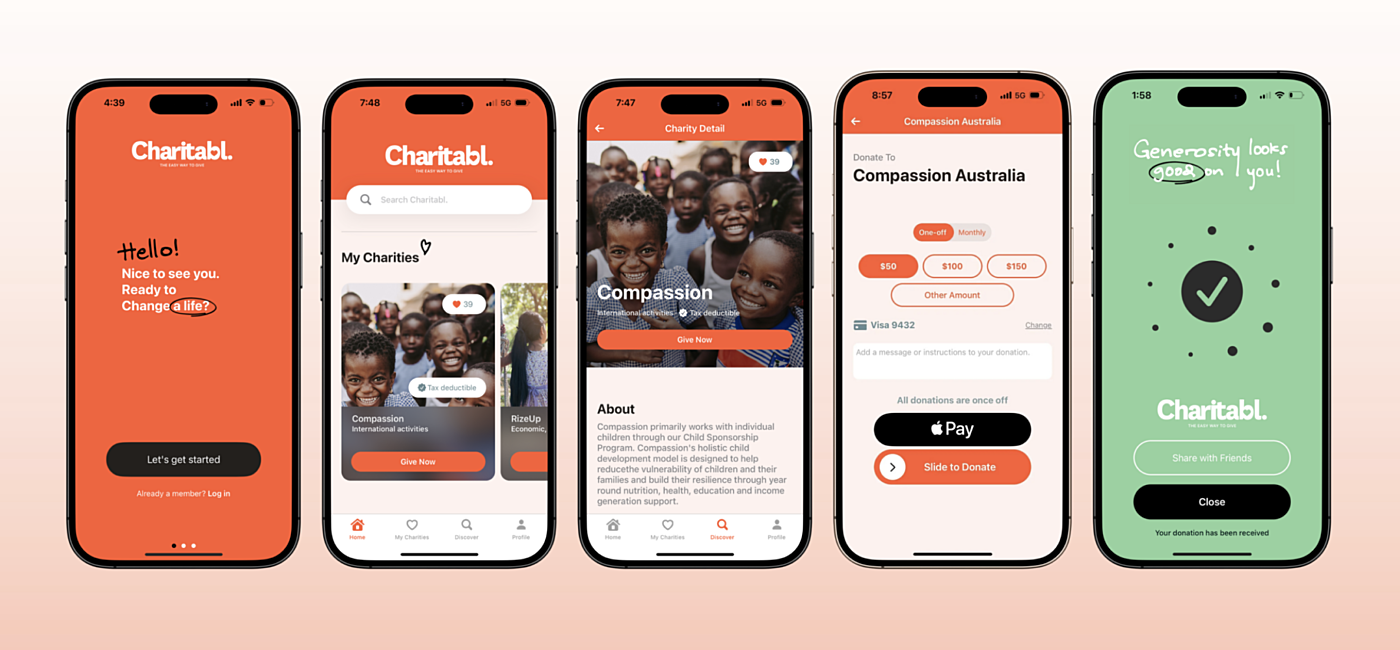
Recent questioning of the model behind Charitabl is a mix of misunderstanding and potentially wilful disinformation, according to the Australian giving platform’s co-founder and CEO, Mike Gore.
An app-based donations platform with zero fees for its base product, Charitabl has come under fire from several commentators, including the CEO of GoodCompany, Ash Rosshandler, who says the platform does not have a clear connection to the 39,000 charities it lists.
Charities registered with the Australian Charities and Not-for-Profits Commission (ACNC) are listed on Charitabl without prior consultation or consent; however, they can opt out by emailing Charitabl and asking to be removed.
“The idea that a platform can automatically list over 39,000 Australian charities, requiring them to opt out instead of opting in, is, we believe, completely unacceptable and must be stamped out,” Rosshandler told the Community Advocate.
Referring to criticism of PayPal’s Giving Fund platform, which operates under a similar model, as well as to Charitabl, Rosshandler said, “These platforms are operating without consent, without agreements, and without verified banking details of thousands of charities. That’s not just poor practice – it’s a risk to donor trust and to the integrity of the entire sector. And if allowed to continue there is nothing stopping Australia’s 3,700 PAFs from all starting platforms and all listing 39,000 charities without their knowledge or consent.”
In a recent LinkedIn post, Rosshandler said, “On the surface, it looks like innovation. A shiny new way to ‘make giving easier.’ But when you take charity data, create donation pages, and collect money ‘on behalf’ of nonprofits without their consent – you cross a line.”
Gore said the platform did not fundraise for other charities and did not create donation pages, which would affect a charity’s SEO. Information about charities was all contained within the platform’s app, and was led by donors, he said.
He said Charitabl did not make any income from donations unless charities opted to sign up for a paid Pro version of the app.
“From the very beginning of Charitabl, it was our choice to cover the fees and charges,” he said. “Our focus is to help charities and allow users to give safer, easier and cheaper than ever before. We do not sell or share donor data and we make it available to charities free of charge. We do not benefit from the transaction. It was a conscious choice.”
Gore said an anonymous philanthropic backer was providing finance for fees and other costs.
Gore told the Community Advocate he was disappointed that critics refused to engage in genuine dialogue with his company, saying Charitabl was open to improving its model through consultation. “Other than Ash [Rosshandler], we have had a few people enquire and require clarification on our process; however, we generally have had very positive feedback,” he said.
Melbourne-based fundraising platform Raisely has published a statement on LinkedIn differentiating its practices from those of Charitabl and GoFundMe Pro, while Rosshandler said “consent and verified banking details and this best practice which builds trust is also embraced by GiveNow, Shout, Good2Give and others.”
Gore has been bemused by the campaign against Charitabl.
In a recent blog post addressing the criticism, he wrote: “We’re all trying to make the world a little better. Disagreement is healthy, but hostility helps no one … We welcome constructive dialogue, in private or public and commit to answering questions with honesty and respect. To those who have voiced concerns: we see you, we value the work you’ve built, and we ask that you seek first to open up with dialogue and understand. There are real people behind every name and logo.”
Expanding on this for the Community Advocate, Gore said, “We’ve worked hard over the years at communicating how we work, the services offered and the heart behind the charity. I think that innovation is often met with dark and light, fear and hope. I think we will always have questions asked but we’re a learning organisation. We have changed, adjusted and made all sorts of things better along the way because of that feedback.
“I think the for-purpose sector needs to have the same posture horizontally to each other as we have to the people we serve. I think there will often be questions and where needed we will listen, learn and adapt.”
Addressing the recent criticism, Gore said, “GoodCompany has achieved an incredible impact over more than 25 years in business and Ash should be incredibly proud of that. I think at the heart of this is a perception that we’re a competing product and his actions are one of competition, not motive.”
Rosshandler wrote on LinkedIn that his questioning of Charitabl stemmed from his concerns about the erosion of potential donors’ faith in the sector.
“Trust is the foundation of giving,” he wrote. “When donors give through a platform believing funds will reach their chosen charity – but there’s no pre-verified pathway for that to happen – it’s not just a glitch. It’s a breach of faith.”
Gore said the notion that Charitabl actively fundraised for charities without having a relationship with them was incorrect. “Charitabl does not fundraise for other charities,” he said. “Users are donating to Charitable Giving Ltd or the PAF (public ancillary fund) and nominating the end point of the grant from Charitable Giving Ltd or the PAF. We allow the user to nominate where they would like the grant from Charitable Giving Ltd or the PAF to go.”
The way Charitabl handles donations depends on whether the donations are tax deductible. Charitable Fund, a registered public ancillary fund, manages tax deductible donations and distributes them directly to the nominated charity.
Charitable Giving Ltd, a registered not-for-profit company, manages non-tax-deductible donations.
“Charities are listed on the platform so donors can choose them,” Gore said.
“Charitabl does not have the verified bank details for all charities, but follows a process. If a donation is received by Charitabl with a nominated charity that we do not have the bank details for, it triggers a verification alert and starts our verification process before making the grant. This process begins immediately and is completed monthly in line with our granting process.”
Before any charity received funds, Charitabl verified its bank account details through a secure validation process, he said.
“This ensures that all grants are deposited into legitimate, authorised accounts held by the charity. Our verification process helps protect donors, maintain compliance and ensure every dollar reaches its intended destination safely.
“If a charity cannot be reached, the grant is made online through their website. If the website is unavailable, the user is offered to re-direct their grant or receive a refund in full.
“Charitabl only works with [ACNC] registered charities in Australia and does not grant to overseas bank accounts nor any account in an individual or non-business name. We bank with CBA and all grants are made with an internal two-step verification process of team members,” he said.
“We’re all trying to make the world a little better. Disagreement is healthy, but hostility helps no one.”
Rosshandler told the Community Advocate that he had trouble understanding how any platform, or PAF, could use a charity’s name, brand, trademarks and reputation without their consent.
“Australian charities are led by highly capable, passionate and principled professionals. They run complex organisations, manage teams, balance budgets, and deliver vital services every day. They deserve the same respect and agency as any business partner – including the right to decide which platforms they engage with, based on transparency, governance, and alignment with their values,” he said.
The question of donation platforms listing charities without their consent has been an issue in the sector more widely, with GoFundMe widely criticised in the US last month for creating a new product that solicited donations to not-for-profit organisations without those organisations being aware they had been listed online.
US accountant Christina Lawson from the Baltimore advisory company Ellin and Tucker wrote on her company’s website: “GoFundMe, long viewed as a trusted name in crowdfunding, built pages for 501(c)(3) organizations using publicly available information. Those pages were live, searchable, and ready to accept donations – from which GoFundMe took their standard cut. Some groups found that these auto-generated pages even outranked their official donation pages in Google searches, diverting potential supporters away from the organisation’s verified site and into a system the not-for-profit didn’t control.”
This sits in the shadow of a case five years ago when PayPal’s US Giving Fund faced litigation from charities that claimed to have not received donations given to the platform in the form of a cut of eBay sale proceeds. More than 29,000 nonprofits participated in the case. PayPal denied the allegations but settled a multi-state agreement.
Gore said Charitabl’s donations model was completely unrelated to these cases. He said Charitabl was a not-for-profit, charged no fees to donors or charities, and covered all fees itself.
“Charitabl does not solicit a tip and we do not take a percentage of the donation,” he said. “The GoFundMe argument has come up often, [but] it is our understanding they are a for-profit company, held donations behind a paywall, and created approximately 1.4 million web donation pages – that materially affect charities’ SEO.
“In contrast, Charitabl is a not-for-profit, the app is free to use and commission-free, we are a native app, not web, and have no material impact on a charity’s SEO. It was designed to serve as an additional and secure payment channel for users and charities that streamlined their operations, not detracted from them.”
Gore said Charitabl had always been transparent about its model. “The recent imputation of ‘consent’ is a very laden one and when paralleled to companies like GoFundMe, which are entirely different to us, can leave significant misinformation and fear within the sector,” he said.
The Australian Charities and Not-for-profits Commission (ACNC) confirmed that the Charitabl donations platform is owned and run by a registered charity, Charitable Fund. The register shows it is connected to a public ancillary fund. “Charitabl worked with accountants and lawyers and the ACNC in establishing our not-for-profits,” Gore said.
Gore said Charitabl aimed to be the Uber Eats of giving, allowing potential donors to easily decide who they wanted to support and offering the most streamlined, easy way to do so. “At a high level we want to ensure generosity remains at the core of the human experience, by helping charities and users take donations faster, safer and cheaper than ever before in a rapidly changing digital landscape,” he said.
More information
Blog: How Charitabl. works
DISCLOSURE: The Community Advocate’s parent company, Our Community, has its own donations platform, GiveNow. This article was written independently of GiveNow.
Posted on 07 Oct 2026
A major public campaign launched this morning is calling on the federal government to restore…

Posted on 07 Oct 2026
The Australian Literacy & Numeracy Foundation (ALNF) has announced a partnership with mining…

Posted on 07 Oct 2026
A conference in Darwin will this morning hear detailed, strategic plans for how Australia could…
Posted on 30 Sep 2026
Not-for-profit leaders have been warned to be wary of approaches from potential “funding partners”…
Posted on 30 Sep 2026
More than 200 fully funded Centre for Social Impact (CSI) scholarships will help equip for-purpose…

Posted on 30 Sep 2026
Personal stories are among the most powerful tools a charity can have to raise funds and awareness,…
Posted on 23 Sep 2026
A just-released major global survey of charities has found that demand for charity assistance has…
Posted on 23 Sep 2026
Fresh from welcoming delegates to last week’s Philanthropy Australia conference in Brisbane,…

Posted on 23 Sep 2026
A national strategy to develop Australia's regional cities is needed to break the housing…

Posted on 23 Sep 2026
Eight years after a report to Treasury first suggested the charities regulator should be more…
Posted on 17 Sep 2026
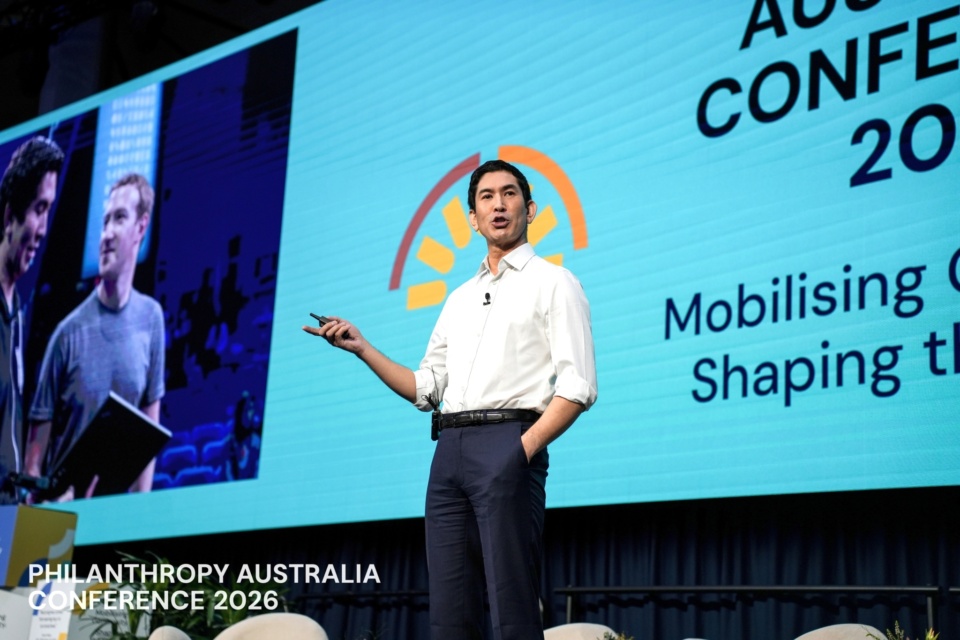
Australia’s biggest gathering of philanthropists, which drew more than 1200 delegates to Brisbane…

Posted on 16 Sep 2026
A new partnership between Paul Ramsay Foundation (PRF) and Atlassian Foundation aims to attract…
Become a member of Community Directors – it's free!
If you want to subscribe on an Android device, you will need to either:
https://communitiesincontrol.com.au/uploads/general/CIC/Conference/Podcast/cic-itunes.xml
Need an Android podcasting app? We recommend either Pocketcasts ($3.99) or Stitcher (free).
Make sure you get the right information by visiting the website for your region.