
Save Izzy: campaign calls on government to restore funding for vital services directory
Posted on 07 Oct 2026
A major public campaign launched this morning is calling on the federal government to restore…
Posted on 17 Dec 2025
By Nick Place, journalist, Community Directors

As we head into the holiday period, the number of Australians battling homelessness has hit crisis levels, according to several organisations across the country. In the past month, they have called repeatedly for urgent government action and policy change.
Barnardos Australia has released data showing specialist homelessness services across Australia are turning away 350 requests for help each day, with children making up 27 per cent of those unable to access support, many of them fleeing family violence and with nowhere else to turn.
Of nearly 289,000 Australians who sought help from specialist homelessness services in 2024–25, 19,000 went unassisted because of a lack of available beds and resources, Barnardos reported.
The Council to Homeless Persons has called on the Victorian government to fund evidence-based programs and solutions, using its 2026–27 budget submission to warn that the state was facing the highest rates of homelessness in living memory, not helped by Victoria boasting the lowest share of social housing in the country.
Council to Homeless Persons CEO Deborah Di Natale said, “The Victorian government has a strong track record of bold reform. Our leaders have given us action on Treaty, voluntary assisted dying laws and supervised injecting rooms. This government is in a position to end homelessness. I hope for the sake of so many lives at risk that they make solving the housing crisis their biggest and boldest reform yet.”
Di Natale said her organisation was pushing for reforms including the expansion of prevention and early-intervention programs, along with the establishment of a Victorian homelessness prevention task force. It would like to see the state government invest in crisis responses, including Housing First programs that have been discontinued despite a history of success.
The Council to Homeless Persons would also like to see the Victorian government commit to Infrastructure Victoria’s recommendation of building at least 60,000 social homes in the next 15 years.
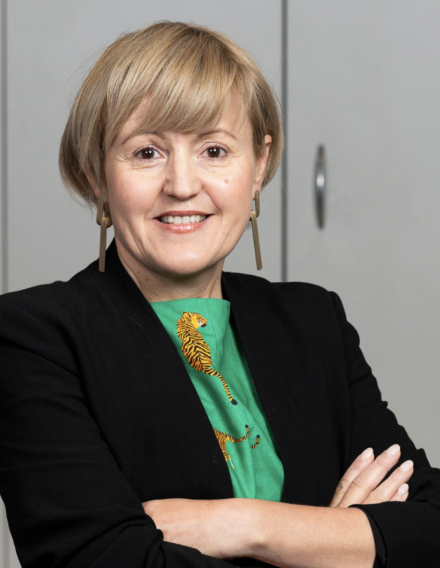
“Keeping people on waiting lists for help and trapped in a cycle of homelessness is incredibly costly,” Di Natale said. “Investing in solving this crisis is not only about helping those of us who are in frightening situations, but it also makes so much economic sense.
“More than 100,000 Victorians sought support from the specialist homelessness sector in 2023–24, but many of them did not get the help they needed due to insufficient funding and the social housing shortage causing flow-on blockages in crisis and transitional accommodation. There are now more than 66,000 people on the waiting list for social housing.”
In Western Australia, a coalition of homelessness and housing organisations says the crisis of people sleeping rough is so bad that dozens of young people are competing for every available crisis bed each night in Perth.
On average, 69 unaccompanied children and young people under 25 compete for each available bed every night across the Perth metro region, according to a joint budget submission by eight organisations including Mission Australia WA, Shelter WA, the Youth Affairs Council of WA (YACWA) and the Youth Homelessness Advisory Council (YHAC).
"As the wealthiest state in Australia, the WA community would expect that if a young person experiences homelessness, funded services are there to provide a safe bed and the support they need,” said YACWA’s CEO, Kylie Wallace. “In reality, many are turned away every day because there are no beds for them. Access to accommodation should be guaranteed; it’s not a ‘nice to have’.”
The budget submission said that nationally, one in three clients who are working yet homeless are young people aged 18–24.
“Access to accommodation should be guaranteed; it’s not a ‘nice to have’.”
Young people’s anxiety about homelessness was reflected in a Mission Australia survey of 17,000 young Australians aged 14 to 19, which found that concern about housing and homelessness had doubled since 2022 among that cohort.
The cost-of-living crisis was young Australians’ number one concern in the Mission Australia Youth Survey for the second year in a row, and homelessness played into that, with many young people experiencing difficulties in paying rent or watching peers suffer homelessness, according to Mission Australia CEO Sharon Callister.
“One in four young people are worried about housing and homelessness: they are witnessing and experiencing it at higher levels than ever before,” Callister said.
“Young people are watching their friends and family struggle to pay bills or afford stable housing, and it’s impacting them.
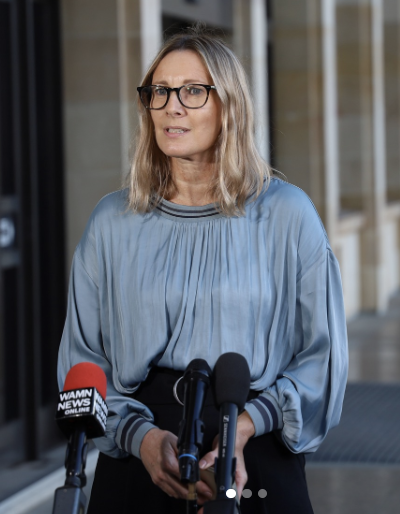
“This points to an urgent need for more investment in social and affordable housing, youth-specific housing like Youth Foyers, and practical supports that can make a real difference.”
Australian charities are not alone in calling out government inaction when it comes to assisting the homeless. One UK charity, Crisis, has taken the matter into its own hands by becoming a landlord.
Crisis chief executive Matt Downie said the organisation planned to buy its own housing stock, given the lack of social housing options and the cost of private rent for the nearly 300,000 families and individuals across England experiencing homelessness.
Crisis is starting with plans to buy 100 homes in London and Newcastle over the next three years, with an eye to expanding its purchases to at least 1000 homes over the next decade if the scheme is successful.
That would be an even bolder plan in Australia, given the ever-soaring price of buying a house in this country, which is why Barnardos Australia has joined the chorus of organisations calling for immediate government investment in crisis accommodation, long-term affordable housing and dedicated support services for children and young people affected by homelessness and family violence.
“Every day that our governments fail to act is another day children are sleeping rough or returning to unsafe homes because there’s nowhere else to go,” said Barnardos spokesperson Grace Hong.
“Our staff see the human impact of this every day. No child in Australia should be forced into homelessness. Children are missing school because they’re moving between temporary accommodation and experiencing trauma which will have long lasting impacts, all because their families can’t afford a stable home.”
Posted on 07 Oct 2026
A major public campaign launched this morning is calling on the federal government to restore…
Posted on 07 Oct 2026
The Australian Literacy & Numeracy Foundation (ALNF) has announced a partnership with mining…
Posted on 07 Oct 2026
A conference in Darwin will this morning hear detailed, strategic plans for how Australia could…

Posted on 30 Sep 2026
Not-for-profit leaders have been warned to be wary of approaches from potential “funding partners”…
Posted on 30 Sep 2026
More than 200 fully funded Centre for Social Impact (CSI) scholarships will help equip for-purpose…
Posted on 30 Sep 2026
Personal stories are among the most powerful tools a charity can have to raise funds and awareness,…

Posted on 23 Sep 2026
A just-released major global survey of charities has found that demand for charity assistance has…
Posted on 23 Sep 2026
Fresh from welcoming delegates to last week’s Philanthropy Australia conference in Brisbane,…

Posted on 23 Sep 2026
A national strategy to develop Australia's regional cities is needed to break the housing…

Posted on 23 Sep 2026
Eight years after a report to Treasury first suggested the charities regulator should be more…

Posted on 17 Sep 2026
Australia’s biggest gathering of philanthropists, which drew more than 1200 delegates to Brisbane…
Posted on 16 Sep 2026
A new partnership between Paul Ramsay Foundation (PRF) and Atlassian Foundation aims to attract…