
‘The mind boggles’: federal envoy blasts NT housing decision
Posted on 14 Oct 2026
The federal government’s special envoy for social housing and homelessness, Josh Burns MP, has…
Posted on 11 Feb 2026
By Nick Place, journalist, Community Directors
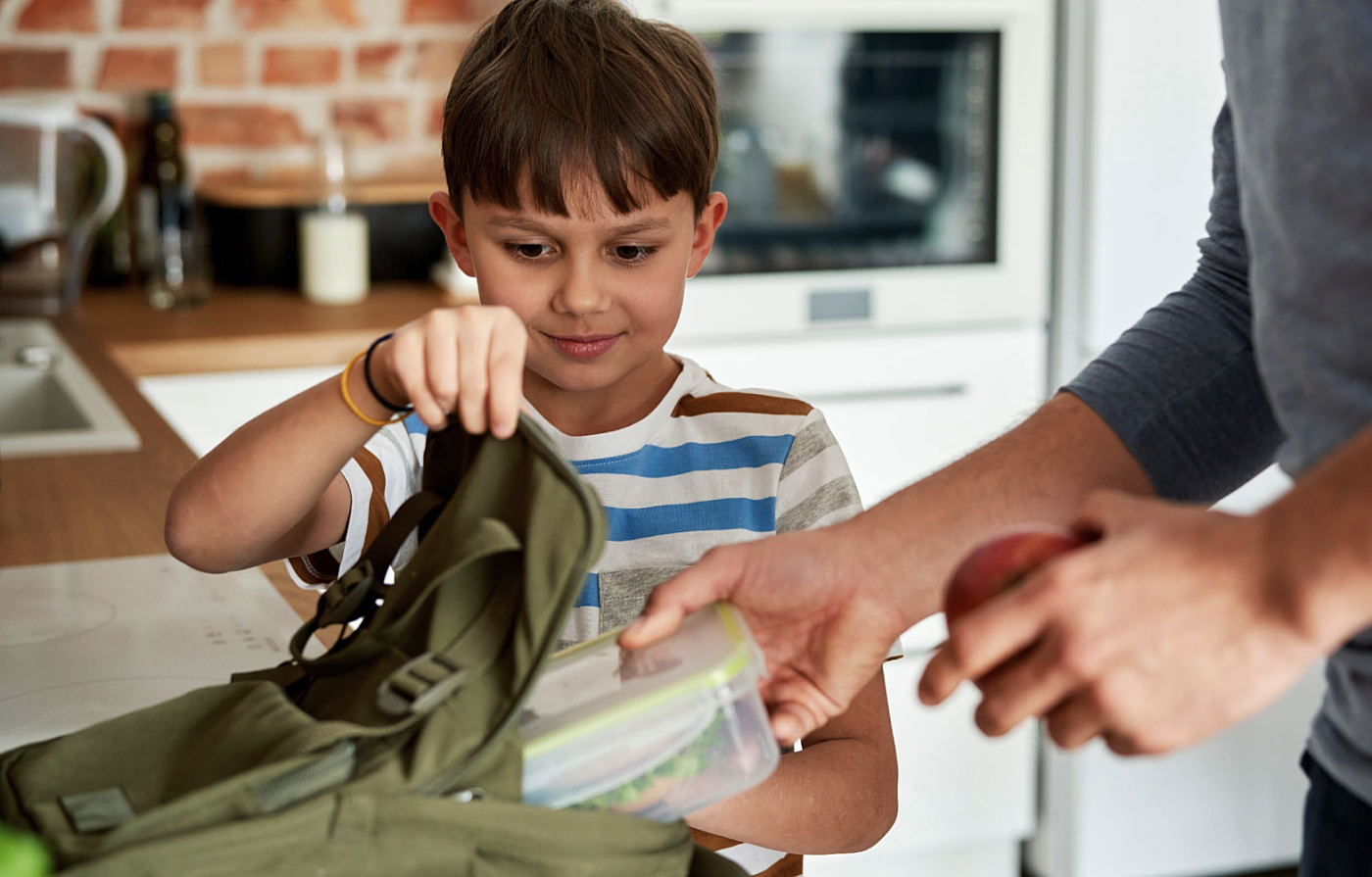
The ballooning cost-of-living crisis is affecting Australian families to the extent that many parents are having to choose between essential items and educational expenses, unable to pay for both, according to Good360 Australia.
The charity, which redirects unsold goods to almost 5000 local schools and charities across the nation, admits it cannot currently meet the needs of all the struggling families unable to cover everything from digital learning tools and internet costs, to more baseline school needs, such as uniforms, drink bottles, lunchboxes, pencils and pens.
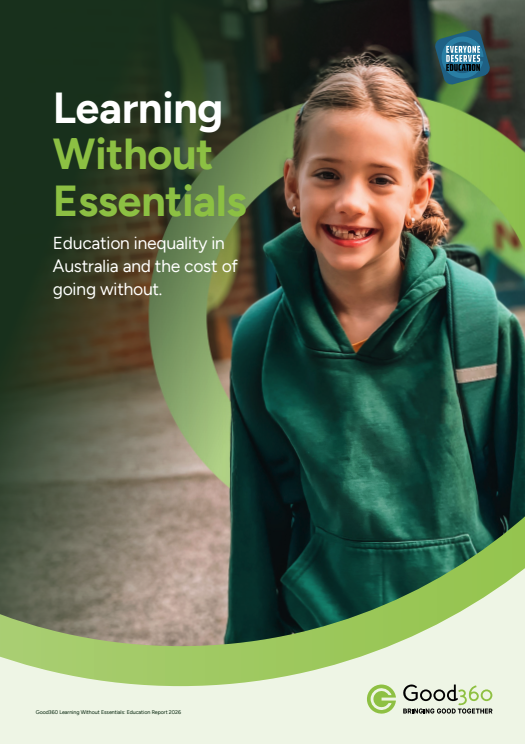
A new report from Good360 Australia titled Learning without Essentials: Education inequality in Australia and the cost of going without brings together some alarming statistics that combine to show how the educational opportunities of many children are threatened.
Almost 40 per cent of Australian parents reported that they were worried about being able to afford essential educational items heading into the 2026 school year. The expense of digital tools like laptops, tablets and internet access was the major concern (24 per cent of parents), followed by stress about how to afford uniforms, shoes and clothing (22 per cent), books, stationery and other supplies (14 per cent) and even lunch boxes and drink bottles (9 per cent).
A Smith Family survey burrowed further into the demographics of families needing help, with 56 per cent of families supported by the Smith Family saying they were worried they couldn’t provide the required digital devices, while 40 per cent wondered how to pay for shoes, uniforms and other basics.
In the Good360 report, 48 per cent of parents said the “hidden costs” of education were adding to their overall cost-of-living stress, 24 per cent said the cost of extra-curricular activities made it difficult for their child to participate, and 34 per cent felt education-related costs were “out of control” and impacting their child’s self-esteem and wellbeing.
“Knowing the actual level of need enables us to reach out to our network of donors and potentially state governments, to help us solve this problem.”
“Nearly one-third of parents surveyed were more concerned about educational costs than last year,” Good360 Australia’s head of government and philanthropy, Susan Wallis, said as she called on retailers, wholesalers, producers and corporates sitting on excess or unsold stock to consider donating it to families in need.
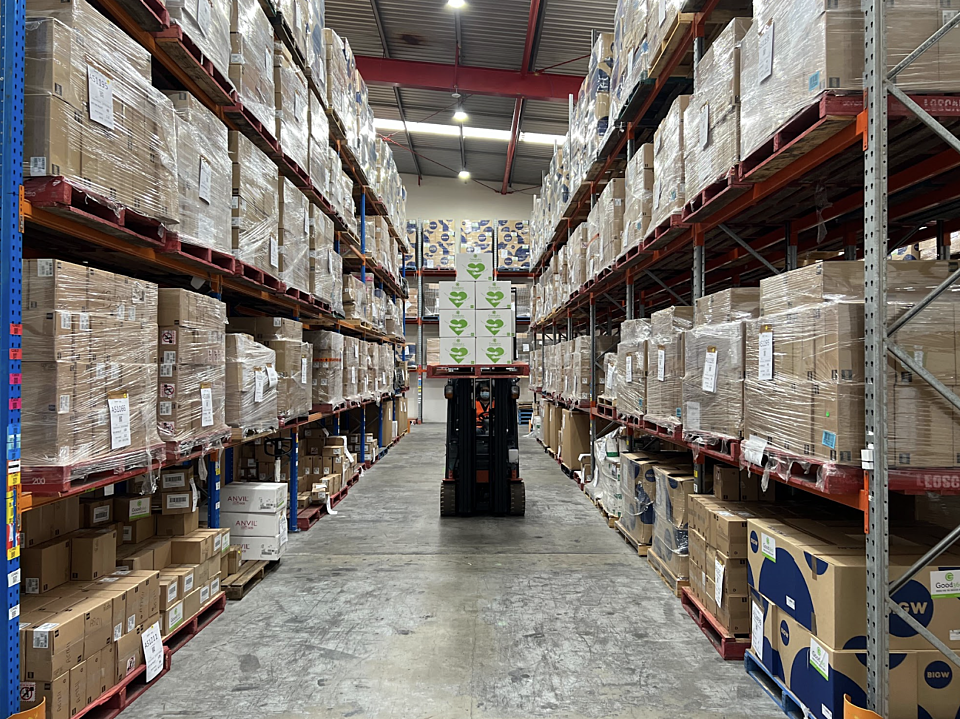
“We know from our other research around the volume of surplus that is produced in Australia every year that there will be retailers, producers, corporates sitting on brand new stock in their warehouses that is sitting idle,” she told the Community Advocate. “It could be pens and pencils, it could be backpacks, lunch boxes, all those basic things. We know they’re sitting on it and sometimes for years. We’ve had donations where materials have been in warehouses for an extended period of time.
“Right now, they’ve got an opportunity to close that gap for families and for students. Instead of spending money on warehousing, they could be feeling good about making education more accessible and reducing their cost-of-living pressure on families,” she said.
There’s an incredible opportunity for us to partner with them to help close that gap around access to education essentials, because we know, and from what we're hearing, it impacts engagement in school,” she said. “It impacts participation. It can impact self-esteem and well-being and confidence, and these can all have long-term effects. It feels like a simple fix to give kids in schools the tools they need to help them thrive. I hate to to sound like a cliche, but children are our future and education’s a right, not a privilege. Access to essentials or basics should not be the difference between a good education or not.”
Wallis said the difficulty paying for ongoing costs of educational materials and resources was getting worse for Australian families. “It’s an ongoing symptom of the cost-of-living crisis, which is not going away,” she said. Australian Bureau of Statistics figures back that up, with higher consumer prices leading to annual inflation growth from 3.4 per cent to 3.8 per cent in the year to December 2025, while rises in annual living costs ranged from 2.3 per cent to 4.2 per cent in the December 2025 quarter, depending on the expenditure patterns of different household types.
“The underlying message is that some families, and a significant proportion of families, are having to make decisions about education essentials or other basic items, and there's a trade-off in those families. It’s not just a January problem either. Items get broken or lost, uniforms and shoes get worn out.
“If you can’t afford one drink bottle in January, you certainly can’t afford to replace two or three during the year,” she said. “There are so many basic things that a lot of us take for granted, whereas there’s a portion of our community who are doing it really tough and the people least able to miss out are missing out – which is our children who we need to support to have successful futures.”
Being constantly in touch with the thousands of schools and charities Good360 seeks to provide with unsold goods means the charity hears anecdotally of the struggle in suburbia, but Wallis said the new report’s data quantified the volume of need.
“Knowing the actual level of need enables us to reach out to our network of donors and potentially state governments, to help us solve this problem. We can speak for our network of members and then asking for help,” she said.
“If donors are sitting on idle stock, or if they want to make purposeful donations because this problem resonates with them, then please reach out,” she said. “Good360 could not possibly get enough donations to meet the demand, because the demand is so high, certainly more than we could manage at this point. Any additional product donations will help us bridge that gap, while if any government departments or MPs think, ‘This sits with me’, then we’d love them to reach out as well.”
More information
Posted on 14 Oct 2026
The federal government’s special envoy for social housing and homelessness, Josh Burns MP, has…

Posted on 14 Oct 2026
The Reserve Bank’s move to ban card payment surcharges has led to complications for charities and…
Posted on 14 Oct 2026
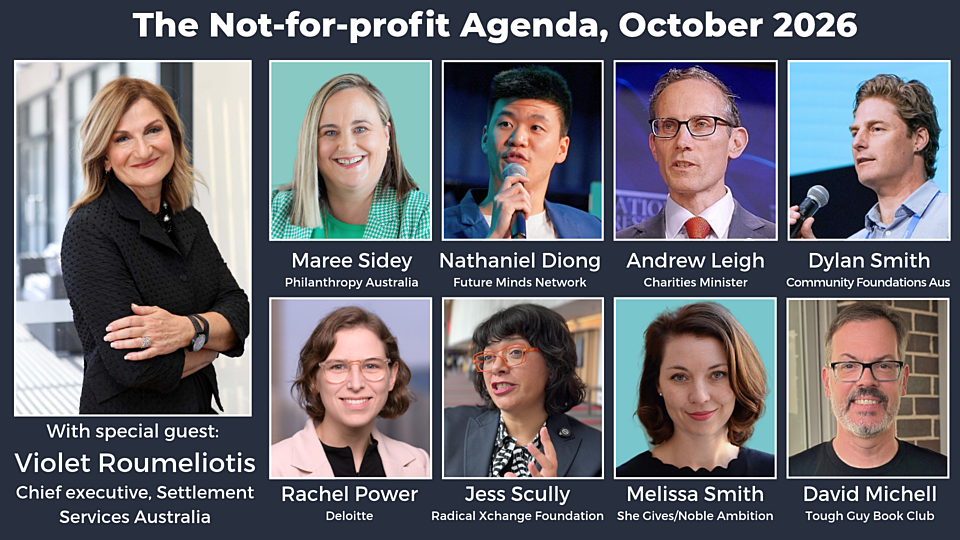
A special guest with her finger on the pulse of one of the biggest issues facing Australia –…
Posted on 07 Oct 2026
A major public campaign launched this morning is calling on the federal government to restore…
Posted on 07 Oct 2026
The Australian Literacy & Numeracy Foundation (ALNF) has announced a partnership with mining…
Posted on 07 Oct 2026
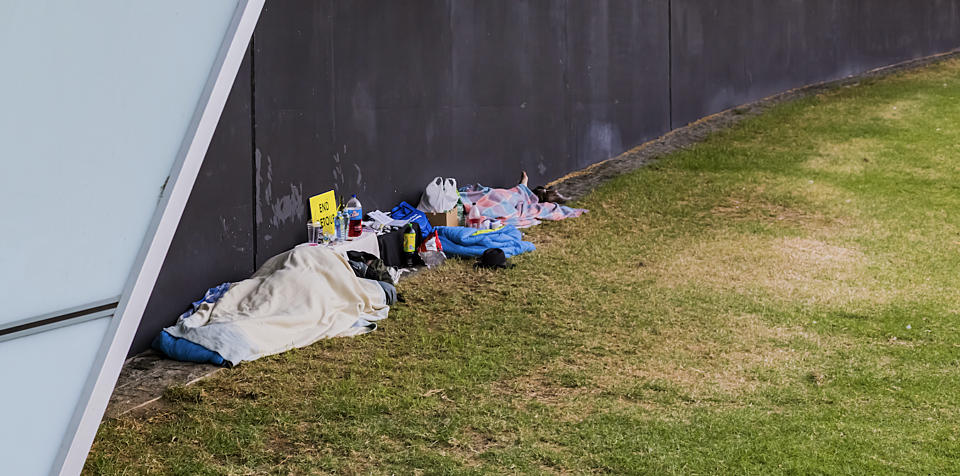
A conference in Darwin will this morning hear detailed, strategic plans for how Australia could…

Posted on 30 Sep 2026
Not-for-profit leaders have been warned to be wary of approaches from potential “funding partners”…
Posted on 30 Sep 2026
More than 200 fully funded Centre for Social Impact (CSI) scholarships will help equip for-purpose…
Posted on 30 Sep 2026
Personal stories are among the most powerful tools a charity can have to raise funds and awareness,…
Posted on 23 Sep 2026
A just-released major global survey of charities has found that demand for charity assistance has…
Posted on 23 Sep 2026
Fresh from welcoming delegates to last week’s Philanthropy Australia conference in Brisbane,…
Posted on 23 Sep 2026
A national strategy to develop Australia's regional cities is needed to break the housing…