Pauline Hanson and the frightening lesson of ‘Years and Years’
Posted on 07 Oct 2026
Our Community's founder and leader, Denis Moriarty, writes that when he watched an over-the-top…
Posted on 13 Mar 2025
By Matthew Schulz, journalist, Institute of Community Directors Australia


Australian not-for-profits want any future federal government to shake up funding, slash red tape and invest in emerging sector initiatives.
The idea for the Not-for-profit Sector Development Blueprint emerged on the cusp of the last federal election as a promise by the then Labor opposition to activate the sector.
That’s according to a snap poll of more than 100 sector leaders.
Asked “What do you most want a federal Labor or Coalition government to deliver for the not-for-profit sector?”, viewers of the latest Not-for-profit Agenda webinar, hosted by ICDA, nominated the following demands:
Three years on, the March 31 deadline for a formal government response to the 84-page report has been and gone.
Before being appointed as the charities minister for the Albanese government, Andrew Leigh said as part of a 2022 election promise that the Blueprint would “boost the sector’s capacity to support and reconnect our communities”.
Dr Leigh hailed the sector as accounting for eight per cent of the economy and 10 per cent of the workforce, and boasting three million volunteers. He suggested a one per cent bump in productivity in the sector would add $1.4 billion in resources for the sector, while creating jobs and increasing services.
As promised, the government established a Blueprint Expert Reference Group – now known as “the BERG” – to guide the development of the project.
The 10-member BERG consisted of leaders of major NFPs such as ACOSS, the St Vincent de Paul Society, Anglicare Australia, Volunteering Australia and the Federation of Ethnic Communities Councils of Australia.
The BERG was supported by the Department of Social Services.
Melbourne University’s Professor Jo Barraket – who acted as the lead author – was appointed as an expert advisor to the group, as was the University of Western Australia’s Professor David Gilchrist, recognised as Australia’s leading expert on human services costings.
In the end, nearly 163 submissions were received from the sector, government departments and regulatory bodies as part of widespread consultation, with views distilled into a “synthesis” report, before a final document was released in November. A related inquiry by the Productivity Commission into philanthropy and other government studies and past recommendations were also incorporated into the final report.
The government was invited to respond by March 31 with more detailed timelines and funding to enable the Blueprint recommendations to be implemented.
"As I travel around Australia, in cities and regional communities, red tape is always flagged as a major concern."
“Knowing what to do – and perhaps more importantly what not to do – is very different from implementing change.”
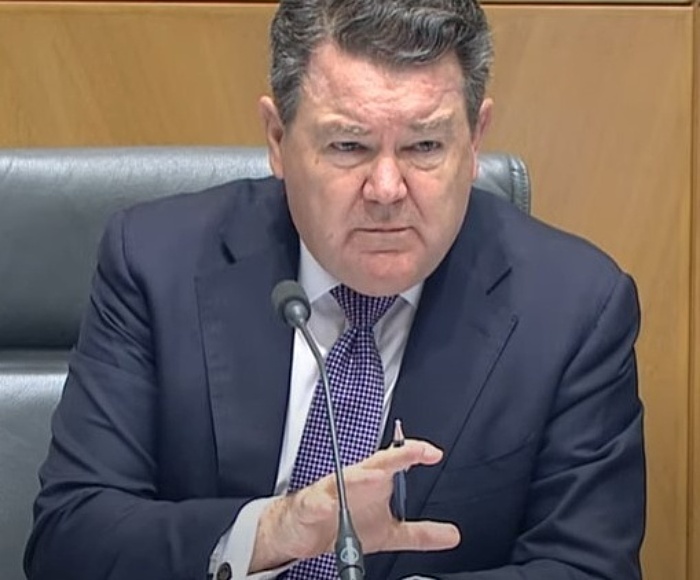
The Shadow Charities Minister, Senator Dean Smith, who was at the event, said the results reinforced the sector’s ongoing concerns about red tape.
“The sector requires the greatest possible support to continue its work, not increased red tape, insufficient consultation, or other factors that make what you do harder rather than easier,” he wrote in a comment piece.
“As I travel around Australia, in cities and regional communities, red tape is always flagged as a major concern, and it was raised as a top issue on the episode of the Not-for-profit Agenda that I joined late last year.
“Despite this, the Albanese government has repeatedly ignored or deliberately disadvantaged the interests of the sector since it came to power.”
Speaking on the Not-for-profit Agenda late last year, Senator Smith attacked Labor’s performance on the handling of new “self-review” tax returns for NFPs, and its slow response to a major review into philanthropy.
He promised that a future Coalition government would be more responsive to the needs of the sector than the current Labor government.
The Blueprint – which lays out a 10-year plan– contains 18 recommendations organised into three main “pillars”, which seek to address the external operating and regulatory environment, the employed and volunteer workforce, and the challenge of technological and climate change.
Significant recommendations include:
While the report’s authors earlier this year said the Blueprint would rely on bipartisan support to be effective, the Coalition this week attacked the Albanese government for having failed to so far respond to the report.
Shadow Charities spokesman Senator Dean Smith said the lack of action showed the sector was not a government priority.
“Labor’s failure to respond to the Blueprint confirms the total lack of urgency and disinterest that characterises Assistant Minister Andrew Leigh and Labor’s approach to this important area,” said Senator Smith.
Leigh did not directly address why the government had missed the deadline.
“The government is considering the best next steps and will continue to partner with the sector on meaningful reform as we have done since coming to government.”
In the meantime, the sector is also awaiting a detailed response to recommendations made by the Productivity Commission’s inquiry into philanthropy.
Community Council for Australia CEO David Crosbie said he was not surprised by the delay.
“The lessons from the Blueprint experience reflect the history of reform across the charities and community sector over a period of more than 10 years,” he said.
“Knowing what to do – and perhaps more importantly what not to do – is very different from implementing change.”

The Blueprint’s lead author, Jo Barraket, said earlier this year that the document provided “a unique moment to embrace the reforms” and stressed it was “an independent, non-partisan and sector-led roadmap”.
“I hope that all major parties and crossbenchers in the federal Parliament support its implementation.”
But she also suggested all not-for-profits should read the Blueprint and start adopting many of the initiatives, “where they see the opportunity to take action without waiting for government”.
“The Blueprint initiatives are not confined to government-led reforms and include a range of priorities that can be taken up by sector organisations and through partnerships, including with philanthropy.”
“The Blueprint is not a wish list, it's a reform roadmap. It is also not a government inquiry, but a sector-led process that was enabled by the federal government. It integrates priorities for sector reform with broader national priorities related to our collective wellbeing, our economic productivity, and the strength of our democracy.”
She said the Blueprint had “stepped out the proposed initiatives along a 10-year timeframe, identifying which items are for immediate action, and who is responsible, recognising accountabilities for both governments and the sector itself.”
Governance Guru: Why should my not-for-profit care about the Blueprint?
We’ve matched the Blueprint to our existing resources
Community Directors Intelligence: the Blueprint edition
Workplace reforms urgently needed
Blueprint expert counts the human cost of funding failures
Webinar replay: Exploring what the Blueprint means for your organisation
“When the Albanese government took office in 2022, the charities sector was facing serious challenges after the Coalition’s nine-year war on charities."
But Charities Minister Andrew Leigh, in a separate comment piece, argued it was the past Coalition government that had held the sector back.
“When the Albanese government took office in 2022, the charities sector was facing serious challenges after the Coalition’s nine-year war on charities.
“Charities were being tied in knots by outdated, inconsistent fundraising laws – spending time on compliance that could be spent helping people. They needed a government that saw them as partners, not just service providers. Across society, we saw that charitable donations were up, but fewer people were giving – a worrying trend and a long-term risk to our culture of generosity and equality of opportunity.
“We’ve tackled this by cutting excessive paperwork, aiming to double philanthropy by 2030, and strengthening social capital through community engagement.”
Readers can register free to join the next edition of the Not-for-profit Agenda (Thursday, April 3), which will feature special guests predicting the results and impact of the federal election on not-for-profits.
Posted on 07 Oct 2026
Our Community's founder and leader, Denis Moriarty, writes that when he watched an over-the-top…

Posted on 07 Oct 2026
A major public campaign launched this morning is calling on the federal government to restore…

Posted on 07 Oct 2026
The Australian Literacy & Numeracy Foundation (ALNF) has announced a partnership with mining…
Posted on 07 Oct 2026
A conference in Darwin will this morning hear detailed, strategic plans for how Australia could…

Posted on 07 Oct 2026
Joseph Friedman is co-founder and publisher of About Time, Australia’s only newspaper for…

Posted on 30 Sep 2026
There's been a lot of talk about AI this week, and some of it has been frightening. So, is AI good…

Posted on 30 Sep 2026
After the biggest AFL game of the year, one player proudly wore the flag of his birth country and…

Posted on 30 Sep 2026
At 21 years old, Tate Donohoe is the founder of Ecodia, an AI-assisted software development company…

Posted on 30 Sep 2026
Not-for-profit leaders have been warned to be wary of approaches from potential “funding partners”…
Posted on 30 Sep 2026
More than 200 fully funded Centre for Social Impact (CSI) scholarships will help equip for-purpose…

Posted on 30 Sep 2026
Personal stories are among the most powerful tools a charity can have to raise funds and awareness,…

Posted on 23 Sep 2026
In his new book Our Place, policy expert Matt Lloyd-Cope argues that housing must be at the heart…

Posted on 17 Sep 2026
Australia’s biggest gathering of philanthropists, which drew more than 1200 delegates to Brisbane…
Posted on 17 Sep 2026
Experts in Australian philanthropy say there are stark differences between philanthropic money and…

Posted on 17 Sep 2026
One of Australia’s foremost fundraising observers says Australian not-for-profits must get the…
Posted on 17 Sep 2026
As direct giving dries up, charities face growing dependence on big donors and negotiating the…

Posted on 17 Sep 2026
Charities reported $14.8 billion in donations and bequests last financial year, the second-highest…

Posted on 17 Sep 2026
My father often googles my name, and as a result, years ago, I received a surprising gift in the…

Posted on 17 Sep 2026
Where Evelyn Mugisha grew up in rural Uganda, the subjects and careers considered suitable for…
Posted on 09 Sep 2026
A global gathering of philanthropists in Brisbane this week is aiming to tackle society’s biggest…
Posted on 09 Sep 2026
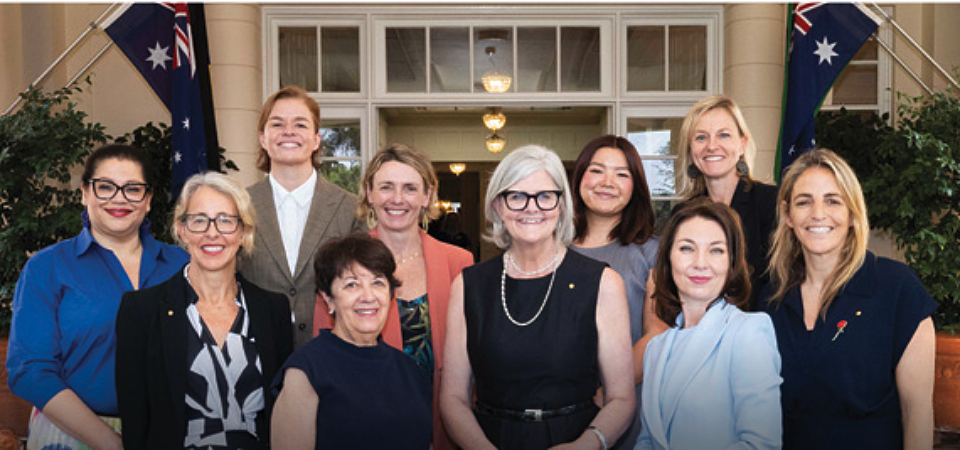
Media attention about women's philanthropy has more than doubled in three years, according to new…
Posted on 26 Aug 2026
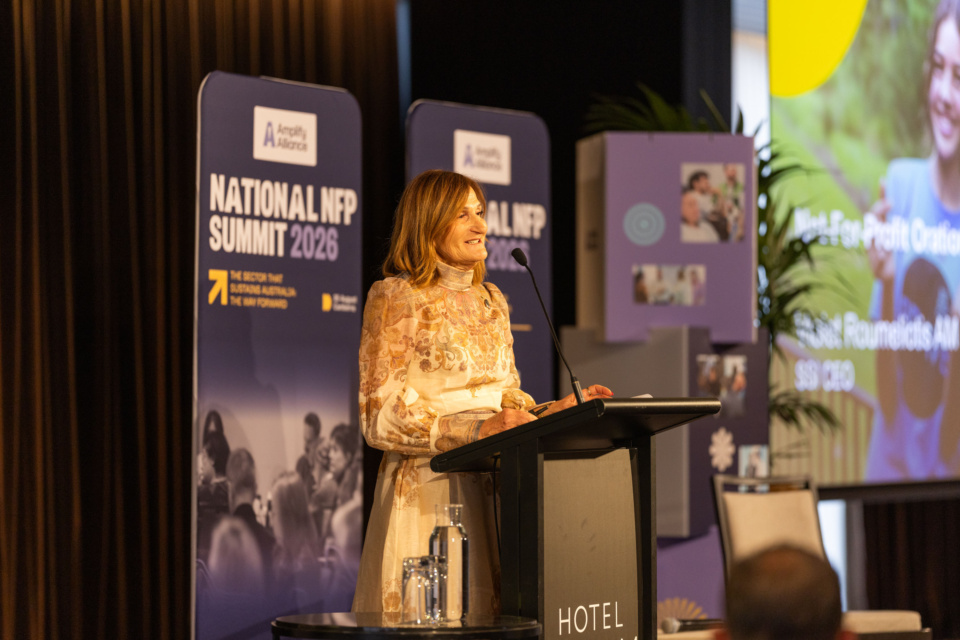
Sector leader Violet Roumeliotis has called on funders to stop treating not-for-profit…

Posted on 13 Aug 2026
As a teenager, I attended summer camp for seven years, first spending two weeks at a time camping…

Posted on 13 Aug 2026
Not-for-profits are full of people with great ideas, but that doesn’t mean they are set up for…