
Save Izzy: campaign calls on government to restore funding for vital services directory
Posted on 07 Oct 2026
A major public campaign launched this morning is calling on the federal government to restore…
Posted on 26 Nov 2025
By Nick Place, journalist, Community Directors
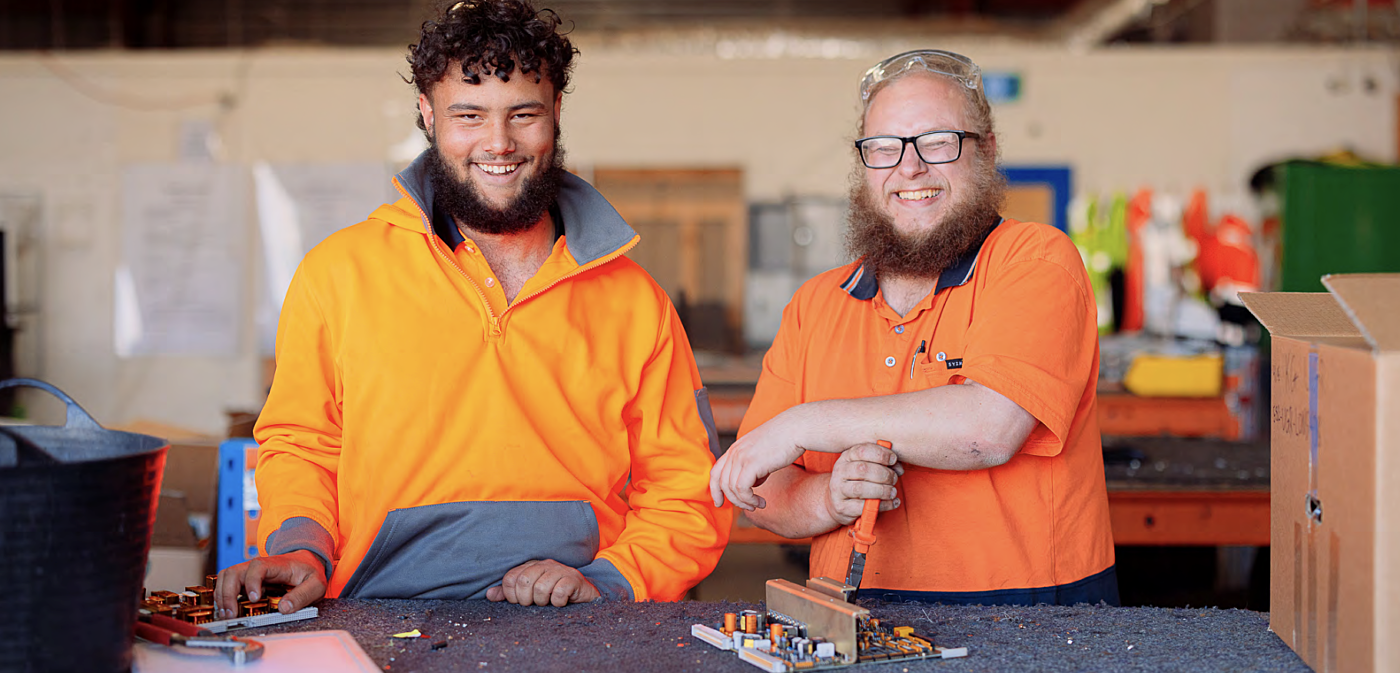
Trade revenue among social enterprises grew by 10 per cent between 2019 and 2023, leading to greater impact – including the creation of 84,500 jobs for people facing barriers to work.
This is a key message of a major new Social Traders report, Social Enterprise: Powered by trade and driven by purpose, released last week in partnership with the Paul Ramsay Foundation.
The report analysed more than 200 data points across more than 750 certified social enterprises and found that the sector was thriving despite challenging wider market conditions.
It looked at 100 social enterprises that Social Traders had tracked from 2019 to 2023 and found that total revenue had grown by 22 per cent, from $571 million to $697 million, while trade revenue had grown by nearly 10 per cent, from $463 million to $507 million.

Three-quarters of enterprises in the sample had increased their total revenue over the period, and 71 per cent had increased their trade revenue, the report said.
Social Traders CEO Tara Anderson said the report showed a need to recognise and respect social enterprise for their unique mix of business nous and social impact.
“When social enterprises grow trade revenue, they invest in impact. The key is balance – using the market to sustain the business while keeping purpose at the core,” she said. “If we want to build a fairer and more inclusive Australian economy, growing social enterprises must be at the heart of policy and practice.
“Social enterprises must be recognised as a distinct model in the economy: not charity with business on the side, nor business with a social add-on, but an integrated blend of business and impact.”
The report found that 71 per cent of social enterprises that increased their trade over the five-year period also increased their impact, with 51 per cent increasing both revenue and impact in parallel. A statistical analysis showed that for every 1 per cent increase in trade revenue, impact costs rose by 0.2 per cent, suggesting that as social enterprises sold more goods and services, they could invest more in their purpose.
“When social enterprises grow trade revenue, they invest in impact. The key is balance – using the market to sustain the business while keeping purpose at the core.”

Impact funding models varied, the report said, with 36 per cent gaining revenue fully through trade, 41 per cent from a blend of trading and non-trading, and 23 per cent through non-trade revenue.
The data showed it was best for social enterprises to offer diverse products and services and serve a range of customers, in order to gain stability, to cushion against ups and downs in the market, and to open new opportunities for impact.
It also suggested there is not one single model for success, but several.
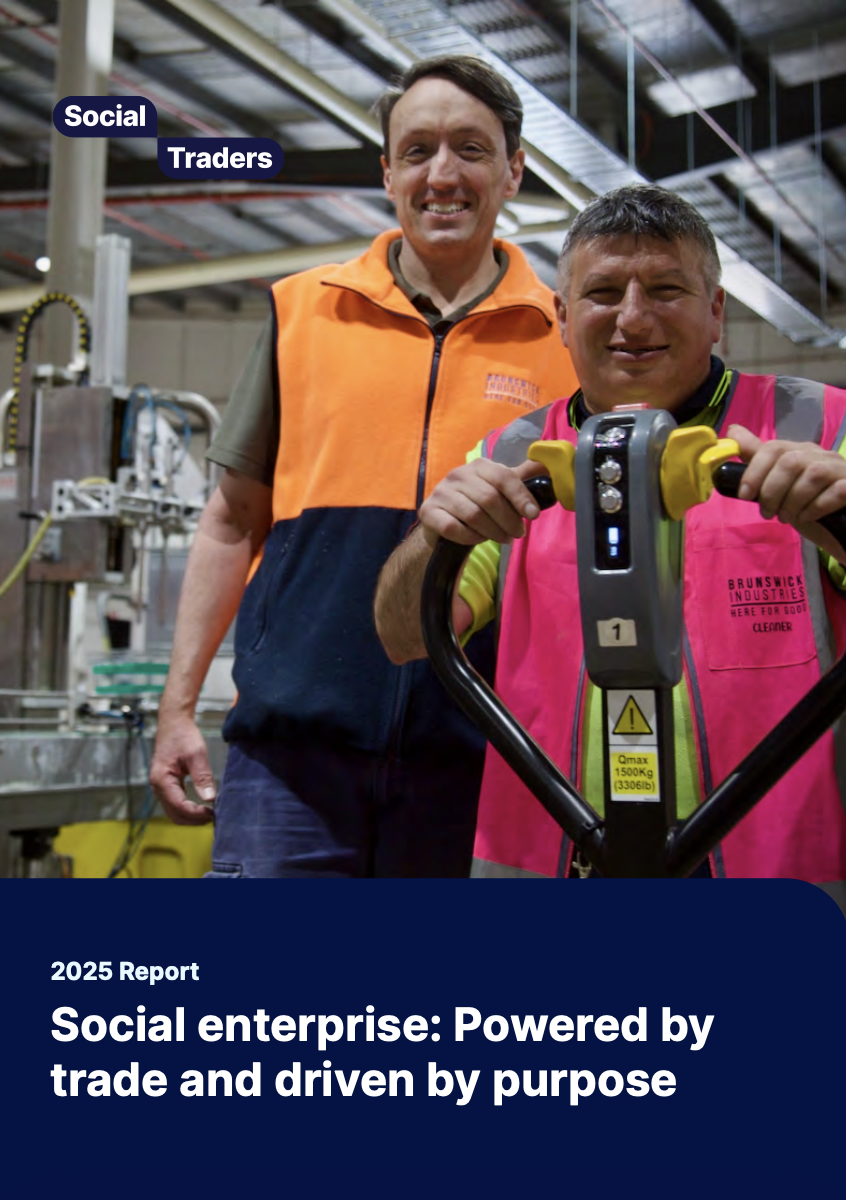
Social Traders claims the largest database of active social enterprises in Australia, with the number of identified social enterprises rising from 5,795 to 6,376 over the previous year. The report estimates there are approximately 12,000 social enterprises across the nation, spending $5.1 billion every year to achieve their goals for social good, as well as creating 84,500 jobs for people facing barriers to work.
Trade is the dominant income source for social enterprises, making up 84 per cent of total revenue, and 22 per cent of enterprises rely entirely on trade to fund their operations, Social Traders said. Encouragingly, 60 per cent of the social enterprises were found to be operating at a profit.
Charities Minister Andrew Leigh is enthusiastic about the sector, telling a recent Social Traders event in Canberra, “Productivity turns potential into prosperity. Social enterprises do that every day. They take human potential that the market overlooks and turn it into prosperity for everyone.
“Let’s help social enterprise flourish across Australia. Because the productive power of purpose isn’t just good ethics. It’s good economics,” he said.
Anderson said social enterprise should be embraced as the dominant business model to make Australia fairer and more sustainable. “Together, we can build a future where every dollar spent helps create jobs, strengthens communities and cares for the planet,” she said.
Posted on 07 Oct 2026
A major public campaign launched this morning is calling on the federal government to restore…

Posted on 07 Oct 2026
The Australian Literacy & Numeracy Foundation (ALNF) has announced a partnership with mining…

Posted on 07 Oct 2026
A conference in Darwin will this morning hear detailed, strategic plans for how Australia could…

Posted on 30 Sep 2026
Not-for-profit leaders have been warned to be wary of approaches from potential “funding partners”…

Posted on 30 Sep 2026
More than 200 fully funded Centre for Social Impact (CSI) scholarships will help equip for-purpose…

Posted on 30 Sep 2026
Personal stories are among the most powerful tools a charity can have to raise funds and awareness,…

Posted on 23 Sep 2026
A just-released major global survey of charities has found that demand for charity assistance has…

Posted on 23 Sep 2026
Fresh from welcoming delegates to last week’s Philanthropy Australia conference in Brisbane,…

Posted on 23 Sep 2026
A national strategy to develop Australia's regional cities is needed to break the housing…

Posted on 23 Sep 2026
Eight years after a report to Treasury first suggested the charities regulator should be more…

Posted on 17 Sep 2026
Australia’s biggest gathering of philanthropists, which drew more than 1200 delegates to Brisbane…

Posted on 16 Sep 2026
A new partnership between Paul Ramsay Foundation (PRF) and Atlassian Foundation aims to attract…