
Save Izzy: campaign calls on government to restore funding for vital services directory
Posted on 07 Oct 2026
A major public campaign launched this morning is calling on the federal government to restore…
Posted on 17 Dec 2025
By Nick Place, journalist, Community Directors
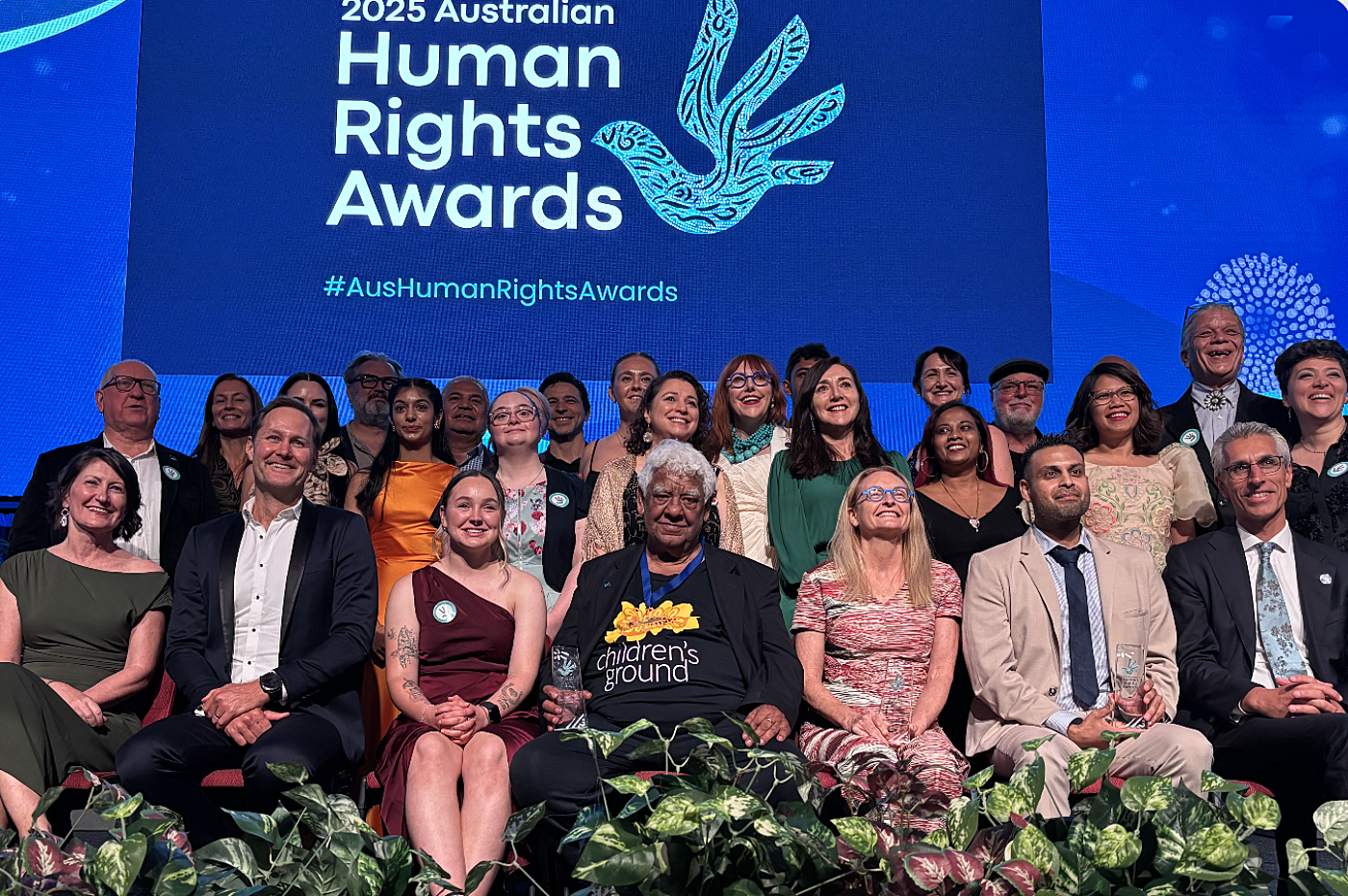
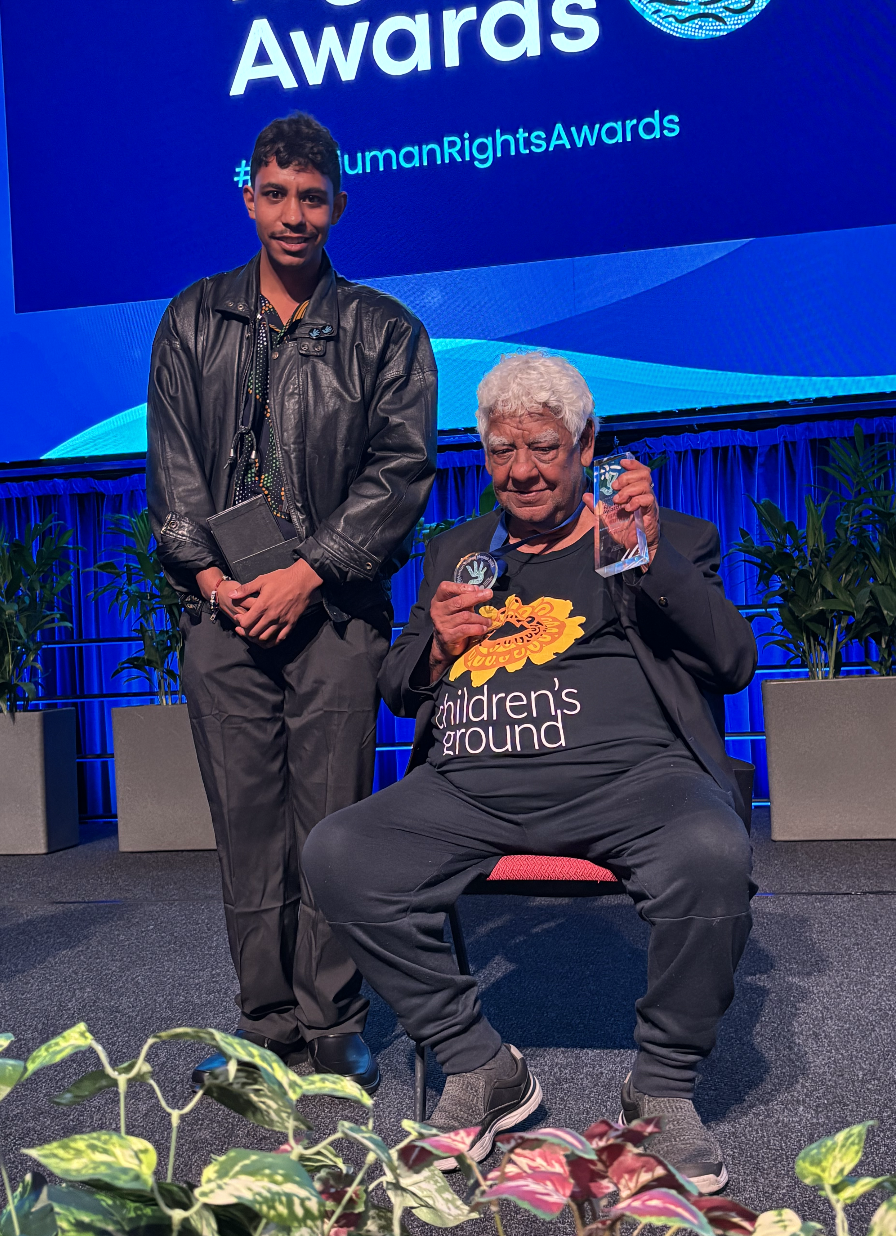
The founding chair of the ambitious systems-change not-for-profit organisation Children’s Ground, William Tilmouth, has been awarded the 2025 Australian Human Rights Medal, the nation’s highest honour for human rights work. He used the occasion to call for an end to “relentless and cruel” policies that still affect Indigenous communities.
An Arrernte man from Alice Springs/Mparntwe, and a member of the Stolen Generations, Tilmouth has dedicated his life to securing fundamental rights for Indigenous and Torres Strait Islander people, working to dismantle intergenerational inequality through evidence-based, long-term structural change.
In receiving the medal at a ceremony in Sydney on Friday night, Tilmouth called out government complicity in ongoing breaches of human rights against First Nations peoples.
“I am proud to hold the responsibility and care for the oldest living cultures in the world, the oldest systems of governance, education, health, law and human rights,” he told the ceremony. “But we face a daily battle against a system designed by assimilation, genocide and injustice.
“At Children’s Ground we are not allowed to uphold our basic human rights to teach children in our communities through our culture. We are told we will be breaching the law.
“Recently the Northern Territory government refused entry to United Nations human rights investigators where prison rates are skyrocketing with overcrowding – where children as young as 10 are being locked up, and where we use spit hoods against children.
“In Australia, we have had more deaths in custody this year than in the previous 40 years – my condolences are with those families.
“More and more children are being removed from their families at an alarming rate. The Stolen Generation assimilation policy has not ended. All of this is preventable. The attack on our children, families and culture is relentless and cruel. The lack of response from governments is an act of complicity to these violations of our rights.”
Tilmouth said he did not believe in individual accolades but was proud to receive the medal as the founding chair of Children’s Ground, on behalf of the organisation, “a First Nations solution that is working, evidenced by the federal government’s own independent evaluation as leading practice.”
“But still, we wait for support,” he said. “I wonder what more will it take before the voices and solutions of our people are heard? Together, we must rise up against this system that was designed to destroy the very essence of who we are as Aboriginal people.
“This is not just about First Peoples. Here in Australia, we are in danger of destroying the very essence of humanity as we fail to rein in extremism and racism and violence against women.”
Tilmouth’s comments, along with a moving Human Rights Day Oration by Juliana Nkrumah, titled Anti-racism Takes Courage, were delivered two days before the horrific mass shooting at Bondi Beach, only a few kilometres from where the ceremony was held.
“Here in Australia, we are in danger of destroying the very essence of humanity as we fail to rein in extremism and racism and violence against women.”
The 2025 Human Rights Awards were presented by the Australian Human Rights Commission (AHRC), which received 300 nominations and selected 20 finalists.
NT Coroner Elisabeth Armitage won the law award, while NSW’s Ben Doherty was recognised for his work in the media and creative industries. Ramnik Singh Walia, from the Northern Territory, won the community award, and Tasmania’s Shakira Robertson took out the “young people” award.
“The people and organisations we celebrate tonight are united by a commitment to human rights. They are transforming lives from healthcare and education to law, the arts and the environment,” said Australian Human Rights Commission president Hugh de Kretser. “They inspire us and highlight the positive difference that human rights action is making in communities across our nation.”
Tilmouth has been a giant in advocating for Indigenous human rights over many years. Children’s Ground, which he founded, is centred on a 25-year plan based on early intervention, building empowerment among Indigenous communities, and implementing long-term systems that recognise and prioritise First Nations governance, solutions and systems of knowledge, complemented by Western and global practice.
Backed by some of Australia’s largest philanthropists, Children’s Ground takes a truly revolutionary approach to future Indigenous prosperity, addressing economic, social and cultural determinants to effect lasting change and seeking to prevent complex disadvantage and trauma in future generations.
Receiving the medal, Tilmouth said, “Human rights are about people having agency in their lives. The guidance and strength of Elders and the community leading change continues to inspire my work. People are standing up, realising that they have choices in life, that their voices can be heard, that they have agency in their lives – this is the agency that their children will follow.
“The children will learn from Elders that the foundation that they were born into is still strong, their language is still strong, culturally their identity is intact.”
Children’s Ground released a statement in response to Tilmouth’s win, saying, “This recognition speaks to decades of leadership rooted in lived experience, cultural authority and a deep commitment to children and community.
“William’s leadership carries deep responsibility to people and place. Across Central Australia and the Northern Territory, he has guided communities, organisations and systems with a resolute commitment to dignity, opportunity and self-determination for children and families. His work reflects a lifetime of leadership built through relationships, cultural care and a deep sense of responsibility to the people he serves. He carries forward the knowledge and strength of those who came before him, while creating space for the next generation to grow with confidence and purpose.”
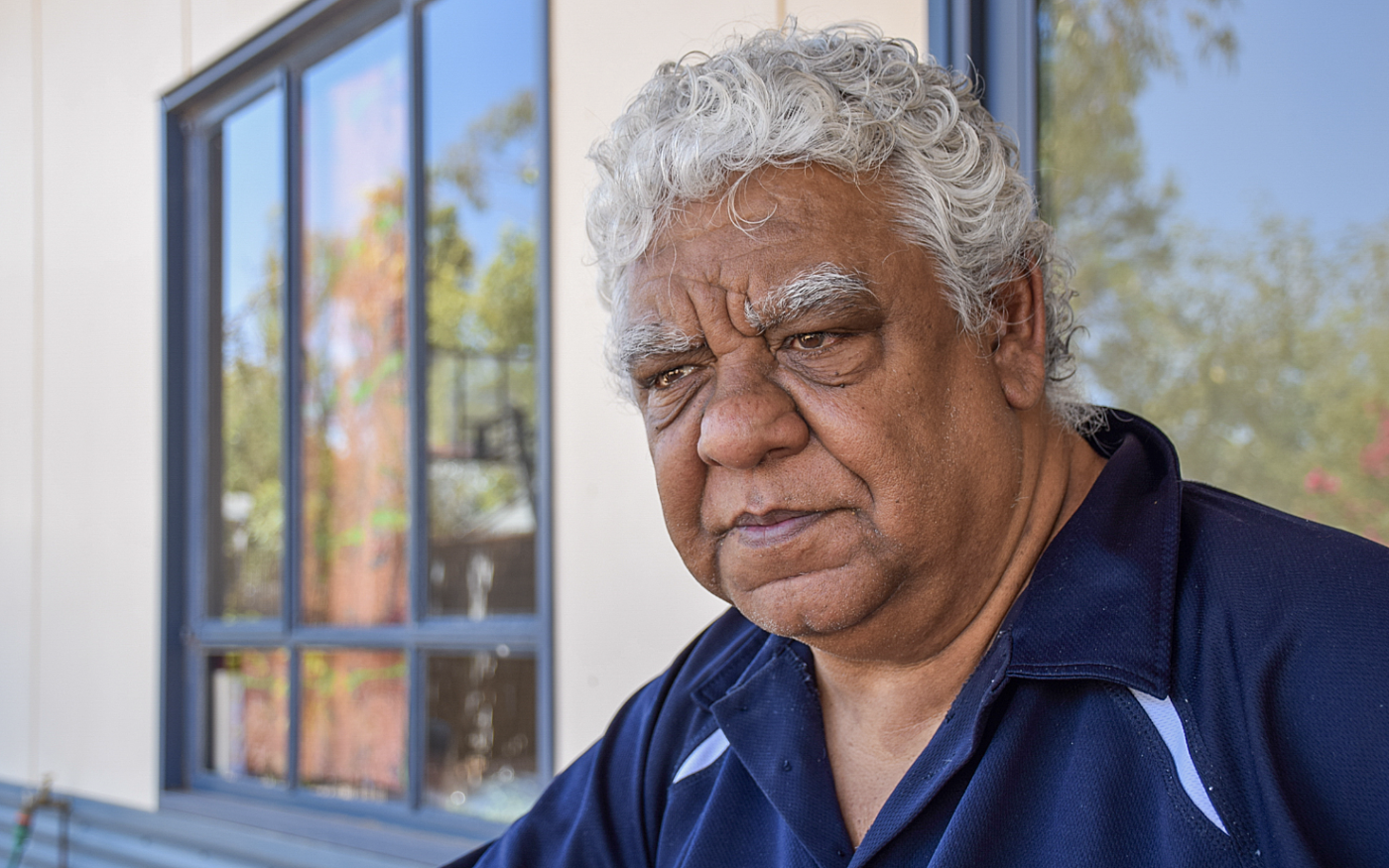
In his speech after receiving the medal, Tilmouth reflected on his personal journey and said there was much work still to be done.
“This moment carries personal meaning for me,” he told the ceremony. “I was forcibly removed from my family as a child and spent my early years far from the people and the Country I belong to. I was denied my language, identity, culture and the love of family. It was a long journey home.
“I experienced the full force of systems abuse and racism, but I was one of the lucky ones. I found my family who embraced me. But I cannot repair what was lost and I still question who I am.
“My experience has shaped my belief that every child should grow up with family, culture, opportunity, safety, dignity, respect, care and identity as their foundation. Human rights is a lived experience.
“What drives me is the strength and determination of our people. I see solutions in every community. I see the culture, vision and leadership of our people. I have hope for future generations. I see the brilliance in our young people. I have hope that our children can grow up free from oppression, violence, fear, poverty and discrimination. I have hope that we will together achieve a society where our people, and all people, can enjoy equality, dignity and opportunity – free from injustice.
“My hope is in our First Nations systems of knowledge, our culture and way of being.”
Human Rights Medal – William Tilmouth (NT): For dedicating his life to reform, justice, opportunity and self-determination for First Peoples. Tilmouth has led numerous community organisations and is the founding chair of Children’s Ground, a First Peoples–led reform movement. William is a member of the Stolen Generation and was NAIDOC Male Elder of the Year in 2023.
Law Award – Elisabeth Armitage (NT): For her work as coroner and judge in making institutions accountable for upholding human rights and removing barriers so all citizens can enjoy full, safe and equal lives.
Media and Creative Industries Award – Ben Doherty (NSW): For reporting on human rights and humanitarian issues, from domestic servitude to experiences of forced migration and asylum.
Community Award – Ramnik Singh Walia (NT): For advocating for inclusion and accessible services for older people, people with disability and First Peoples, especially in remote areas.
Young People’s Award – Shakira Robertson (Tas): For her trauma-informed work to prevent domestic and family violence and transform Tasmania’s systemic response.
Since 1987, the AHRC’s Australian Human Rights Awards have celebrated the important work of people, businesses and organisations who have advanced human rights in Australia. Read more about the awards.
Posted on 07 Oct 2026
A major public campaign launched this morning is calling on the federal government to restore…
Posted on 07 Oct 2026
The Australian Literacy & Numeracy Foundation (ALNF) has announced a partnership with mining…
Posted on 07 Oct 2026
A conference in Darwin will this morning hear detailed, strategic plans for how Australia could…
Posted on 30 Sep 2026
Not-for-profit leaders have been warned to be wary of approaches from potential “funding partners”…
Posted on 30 Sep 2026
More than 200 fully funded Centre for Social Impact (CSI) scholarships will help equip for-purpose…
Posted on 30 Sep 2026
Personal stories are among the most powerful tools a charity can have to raise funds and awareness,…
Posted on 23 Sep 2026
A just-released major global survey of charities has found that demand for charity assistance has…
Posted on 23 Sep 2026
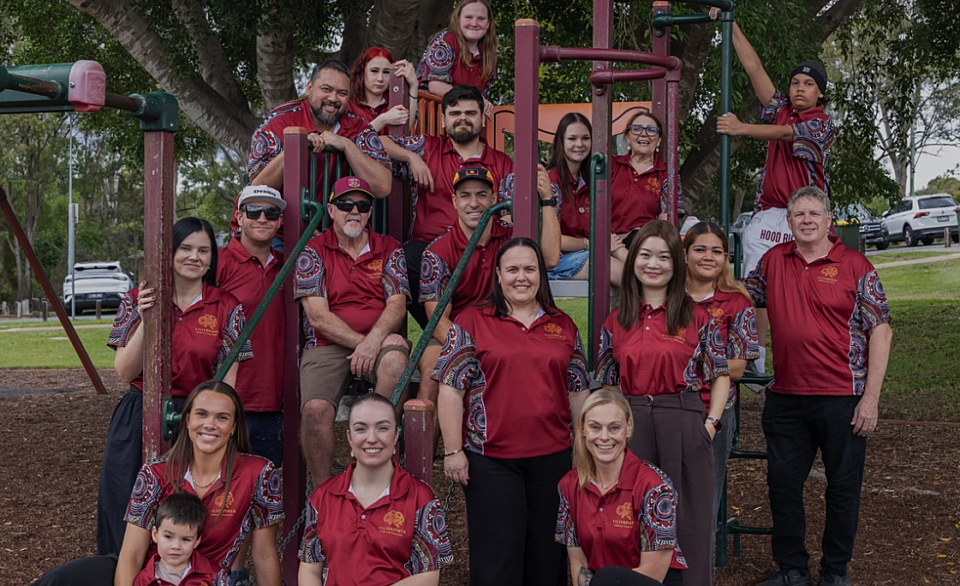
Fresh from welcoming delegates to last week’s Philanthropy Australia conference in Brisbane,…
Posted on 23 Sep 2026
A national strategy to develop Australia's regional cities is needed to break the housing…
Posted on 23 Sep 2026
Eight years after a report to Treasury first suggested the charities regulator should be more…
Posted on 17 Sep 2026
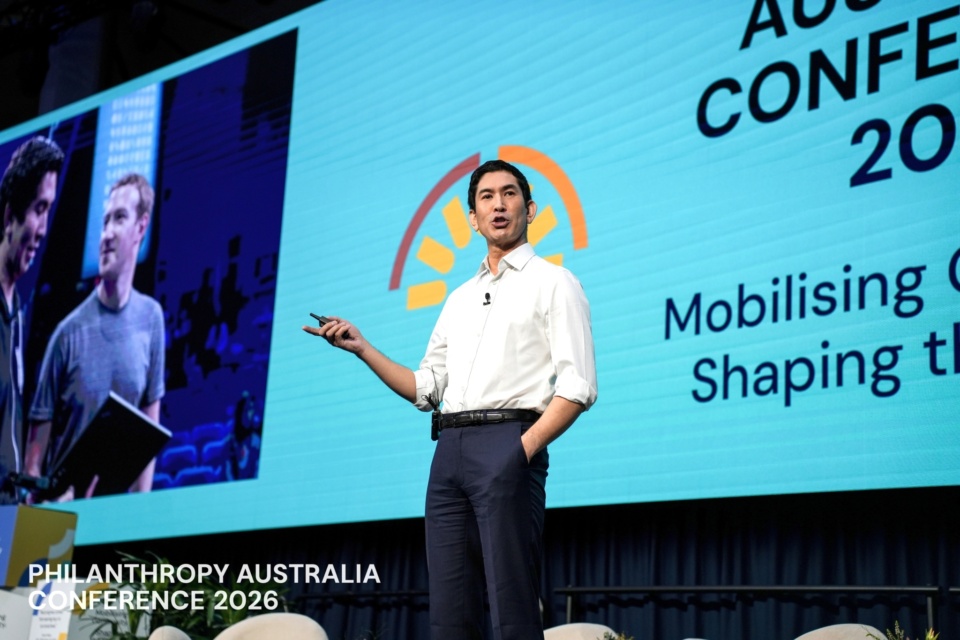
Australia’s biggest gathering of philanthropists, which drew more than 1200 delegates to Brisbane…
Posted on 16 Sep 2026
A new partnership between Paul Ramsay Foundation (PRF) and Atlassian Foundation aims to attract…