
Save Izzy: campaign calls on government to restore funding for vital services directory
Posted on 07 Oct 2026
A major public campaign launched this morning is calling on the federal government to restore…
Posted on 26 Nov 2025
By Nick Place, journalist, Community Directors

A landmark conference starting tomorrow in Sydney will bring together the dual sensory impairment and deafblind community along with practitioners, organisations, services, and international experts. Conference co-convener Dr Annmaree Watharow says the aim is to discuss missed opportunities for support, explore potential gaps in data and services, and share lived experience.
Part of the conference’s work will be to recognise people who might not even realise they are dual sensory impaired. “This conference is deliberate and intentional about embracing all who have combined sensory losses, not just those identifying as ‘deafblind’,” Watharow told the Community Advocate. “This means there are many communities and far too many outliers who don’t know what they have has a name outside of ‘I’m just getting old’. The older acquired group is by far the largest.”
Seven out of 1000 Australians live with dual sensory impairment (DSI), yet by the age of 65, this number increases to 33 out of 1000. Watharow said the data was not robust beyond that, but it suggested that by the age of 80, 300 or more out of 1000 Australians may be living with DSI.
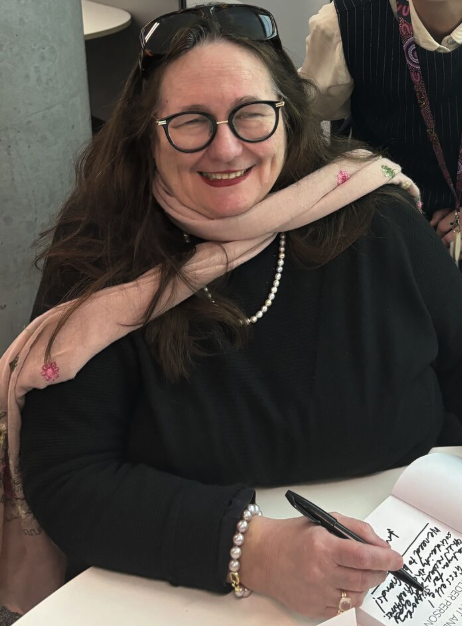
The conference was sparked by a need for greater awareness of complexities and challenges in the DSI-deafblind worlds, Watharow said, along with a desire to bring together people with lived experience of DSI or deafblindness, people working with those people, and researchers and academics, to learn from one another and share knowledge.
Watharow said she had undertaken a significant survey of people living with DSI or deaf-blindness to find out what they needed and wanted, and used those replies to craft the agenda for the conference, which runs across Thursday and Friday this week at the Susan Wakil Building at the University of Sydney’s Camperdown campus.
“The evidence was that the communities wanted to hear from others on the same or similar journey: how do we live a good life with this condition when the goal posts keep moving on us?” she said.
“Unless we come together, we won’t have a central rallying point, and we need this to show the resilience, richness and resourcefulness of this community. But we need recognition, better policies, and data that is accurate. We need specialised services. We need better communication, and one thing which isn’t obviously covered in this conference, we need health and social care professionals and practitioners to do a better job in communication, sharing information and supporting.”
She said the conference hoped to achieve recognition at a federal level for deafblindness and dual sensory impairment as a unique and distinct disability.
“We don’t have that, unlike the UK and Europe, so we don’t, for example, have deafblindness listed on surveys and data collection; we don’t have dedicated funded specialist services in all states, cities, regions and rural areas. We are missing opportunities to support people, especially older people, with awareness, resources, and support that is skilled.
Watharow brings a compelling mix of academia and lived experience to her work. Born deaf, she said that as a child, she self-consciously removed her clunky, huge hearing aids on the bus to school. Faced with teasing, she lost herself in books, especially because she began to struggle to see the ball while playing sport. At night, at parties, she was accused of being drunk for tripping over things and falling. Despite these struggles to see and hear, she was accepted into medicine at university. In her final year of study, she received a formal diagnosis of Usher syndrome, which is hearing loss at birth combined with a degenerative eye condition. She could still see while she raised her children, and around this time she switched from paediatric training to general practice and completed a Masters of Psychological Medicine, becoming a GP-therapist.
“I started seeing a lot of people with sensory losses who were having appalling episodes of abuse, neglect, violence, forcible restraint and sedation in hospitals, [so] I decided to do a PhD and investigate this,” she said. Eventually, she landed at the Centre for Disability Research and Policy at the University of Sydney.
“We don’t have dedicated funded specialist services in all states, cities, regions and rural areas. We are missing opportunities to support people, especially older people, with awareness, resources, and support that is skilled.”
One of the issues the conference hopes to address is the fact that there are many communities within the DSI-deafblind world, with many rejecting labels.
“Not everyone wants to ‘be’ deafblind,” Watharow said. “Many of the older people I have researched with say, ‘But I’m nothing like Helen Keller… no, no, no,’ so they prefer a different term: dual sensory impairment, or dual sensory loss. And then someone who has been blind a long time and gets hearing loss later might say, ‘Oh, I’m blind and I don’t hear too good.’ Many more don’t have any diagnosis or recognition: they believe they are simply getting old and that hearing loss and low vison are kind of natural parts of that. This is another reason for wanting to increase visibility of the condition, so that there is greater awareness in the wider community of the negative impacts of not being recognised and supported.”
The upshot is that there isn’t a unified “deafblind community”.
“There are many communities, some with different names and some in the background with no name and no recognition,” she said. “This conference is not for the deafblind but with them. This is bringing the people living with combined hearing and vision loss together with the people who work, support and provide services. It’s also about having a little fun, too.”
There will be popcorn, ice cream and even creative entertainment, with deafblindness-led comedy, a play excerpt and film, she promised.
Away from the entertainment, some serious work will be done. A leader among deafblind academics, Associate Professor Peter Simcock, has travelled from Birmingham City University to deliver a two-part keynote address, talking about the challenges and complexities of deafblindness, as well as potential collaborative solutions.
There will be a discussion of a newly agreed core set of characteristics that constitute aspects of living with combined sensory loss – important for informing research, rehabilitation and professional support – and Tara Brown-Ogilvie from the Helen Keller National Centre in the USA will be in attendance to run through some of the latest technological features and apps from Apple, such as new forms of real-time touch messaging for social and critical information. (Samsung was also invited to attend.)
“This touch messaging has an important role in health care,” Watharow said. “For example, where [a professional] can communicate that [they] are going to do a blood pressure check or give a needle. For people with communication disability, these are critical pieces of information needed to avoid [having someone inflict] distress by suddenly and unexpectedly jabbing someone who is deafblind with an injection.”
Filling in the Gaps & Joining the Dots conference tickets (free)
Related story: More than meets the eye: rethinking deafblindness with Jex Truran-Lakaev
Posted on 07 Oct 2026
A major public campaign launched this morning is calling on the federal government to restore…
Posted on 07 Oct 2026
The Australian Literacy & Numeracy Foundation (ALNF) has announced a partnership with mining…

Posted on 07 Oct 2026
A conference in Darwin will this morning hear detailed, strategic plans for how Australia could…

Posted on 30 Sep 2026
Not-for-profit leaders have been warned to be wary of approaches from potential “funding partners”…
Posted on 30 Sep 2026
More than 200 fully funded Centre for Social Impact (CSI) scholarships will help equip for-purpose…

Posted on 30 Sep 2026
Personal stories are among the most powerful tools a charity can have to raise funds and awareness,…

Posted on 23 Sep 2026
A just-released major global survey of charities has found that demand for charity assistance has…
Posted on 23 Sep 2026
Fresh from welcoming delegates to last week’s Philanthropy Australia conference in Brisbane,…

Posted on 23 Sep 2026
A national strategy to develop Australia's regional cities is needed to break the housing…

Posted on 23 Sep 2026
Eight years after a report to Treasury first suggested the charities regulator should be more…

Posted on 17 Sep 2026
Australia’s biggest gathering of philanthropists, which drew more than 1200 delegates to Brisbane…
Posted on 16 Sep 2026
A new partnership between Paul Ramsay Foundation (PRF) and Atlassian Foundation aims to attract…