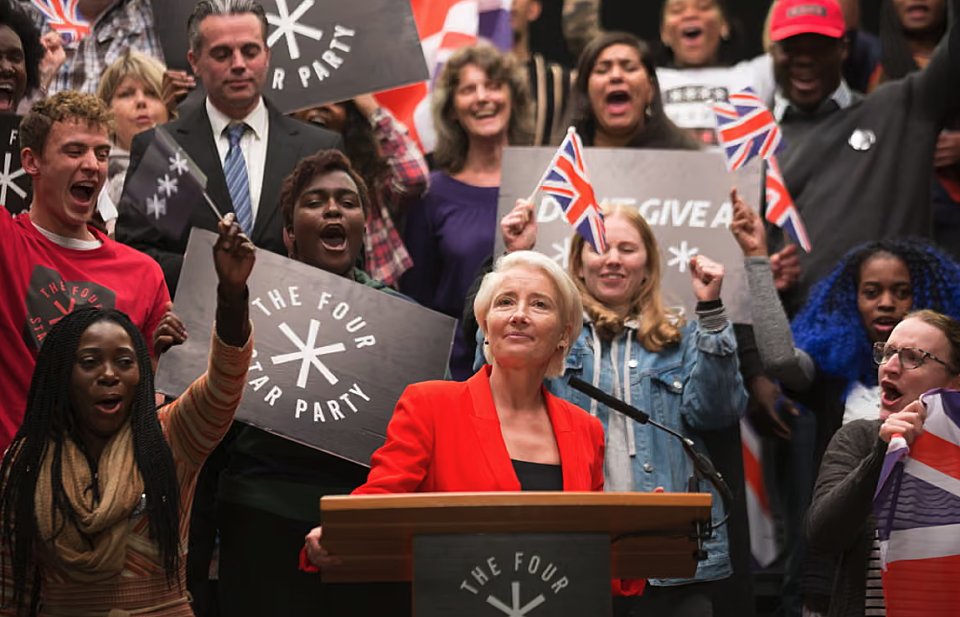
Pauline Hanson and the frightening lesson of ‘Years and Years’
Posted on 07 Oct 2026
Our Community's founder and leader, Denis Moriarty, writes that when he watched an over-the-top…
Posted on 26 Aug 2025
By Nick Place, journalist, Institute of Community Directors Australia

Australia’s social contract is breaking down and a new one must be written, economist and Think Forward CEO Tom Walker has told a webinar, as post-mortems of last week’s three-day economic roundtable in Canberra continue.
A long-time intergenerational wealth advocate, Walker was speaking at Productivity with Purpose: Building Forward, Not Backwards, an online forum convened by the Australian Research Alliance for Children and Youth (ARACY), which also featured Australian Council for Social Service (ACOSS) CEO Cassandra Goldie, who had attended the roundtable, and Toby Phillips, from the Centre for Policy Development.
Walker remains concerned that the roundtable, and the government, did not have the right people in the room and may not have even asked the right fundamental question: how do we want to live?
“The social contract we’ve had for the last 20 or 30 years is breaking down now,” he said. “Getting a job, getting educated, isn’t enough to buy a home, start a family, have essential services anymore, and people are getting really fed up with that. Instead of letting the powers that be patch up a system that’s not working for us, [we should ask] what do we want our lives to look like in the future? How do we want our work rewarded? How do we want to care for our loved ones? What’s going to happen with AI? How do we want to relate to one another? What’s our relationship to government look like? It’s about not letting it erode any further, but instead asking how can we rebuild it, and what is the political and cultural project that goes along with that?”
Walker said Think Forward remained unhappy that there were very few young people invited to the treasurer’s roundtable, let alone representatives of young Australians facing a variety of pressures. “There’s a lot of talk about skills and education but there were no students trying to obtain their skills present,” he said. “There’s lots of talk about housing, but there were no renters. The people who might be losing their entry level jobs to automation weren’t included in that conversation, and so on.”

Goldie told the ARACY forum that she had made that point strongly at the roundtable, about who was not in the room. “It was a privilege to be in the room, but I was very, very mindful of who was not in the room, and I was not alone,” she said. “We highlighted that, of course, how important it was for us to have very inclusive discussions. I mean, let’s face it, if we’re going to talk about intergenerational equity, it’s really important to have the perspectives of people in the room who actually are living that reality. If you speak to a young person today, would they want a small tax cut or maybe they want free education? These are the sorts of debates that the country does need to have.
“I mean, how did we get here that we’ve got universities routinely providing food relief because younger people can’t afford to feed themselves and continue in tertiary education, and yet we are giving lip service to ‘skills’ as if everybody gets it, how important that is,” Goldie said. “As a student, you work so hard and you cannot see how you can even stay to complete a qualification, and you’ve got the debt already. In this political environment, I think we understand that we have a responsibility as participants in civil society to be out front sometimes as much as waiting for the decision makers in politics to move.”
Toby Phillips said it was not enough to endlessly discuss productivity improvements without considering the true goal of crafting productivity with purpose.
“If you’re thinking about productivity across the economy, a lot of that is about what is being invested in and are those things setting us up for a good and a sustainable future?” he said. “We need to achieve a better alignment between social value and economic value. We have these quite complex systems and measures and regulatory frameworks that try to optimise economic value, but if that isn’t optimising for social value, if there’s a drift between the two, then we’re not necessarily getting the outcomes we want.”
Phillips said reforms needed to create productivity with purpose to improve life for all Australians, and he felt the roundtable had fallen short. “I think if you view what’s come out of the roundtable as the end of the process and as a list of results, it feels a little bit ho-hum,” he said. “We’ve got things like road user charging, and getting rid of nuisance tariffs. I mean, I think these are mostly worthwhile things, but it’s not going to lead to the sort of step change in productivity that we were advocating for and the step change in social outcomes that we were hoping for.”
Walker said young Australians needed dramatic change. “It’s crazy that you start out in life and we load you up with hundreds of thousands of dollars of uni debt and then you spend your entire working life trying to climb your way out of it,” he said. “It feels very backwards to me.”
Walker said politicians spruiked the benefits of all the money being poured into extra aged care and childcare so people could be more productive, working five days a week without distraction. But he said nobody seemed to have asked whether that’s how people want to care for their parents and kids. “Have we even had a chance to have that conversation about what a good life looks like?” he asked. “It isn’t super productive where you spend all your time at work and then outsource the things that matter. I don’t think people want that. I think how we measure the things that aren’t productive or measurable is really important.”
“Have we even had a chance to have that conversation about what a good life looks like? It isn’t super productive where you spend all your time at work and then outsource the things that matter.”
Phillips said he remained hopeful of genuine improvements if the roundtable was the start of the conversation. “Taxes on the table, that’s fantastic,” he said. “Much potential there. There were also signals about reform to government investment vehicles so we can get better bang for buck out of government capital deployment, and signals around investing a lot in human capital to build a skilled and adaptable workforce; that’s so important. Even the sort of sub-breakdown there of what’s important is encouraging. When the treasurer talked about it, the very first point he spoke about was equity for workers and young people, which is great.”

Phillips said he believed the overall tax take needed to rise, through reforms. “We’ve grown the amount of public services and the amount of what happens in the economy that’s publicly funded and I’m all for that, but the reality is if we want better public services, if we want more quality public services, we have to pay for it,” he said.
Walker said he believed there were fundamental questions that needed to be asked about how we see our future, before considering how much it would cost to achieve those goals. He said Think Forward was created during the previous government to put the issue of intergenerational wealth inequality into the public discussion and he was buoyed that, albeit seven years later, it was finally being taken seriously.
“We have so much wealth in this country, and the problem isn’t too much spending or public investments, it’s that our tax system is giving away tens of billions of dollars to the wealthy and that’s causing our budget problems,” he said. “And we’re also looking at things like wealth inequality, access to opportunity for housing and so on as intergenerational issues. I’m guessing that’s where the fault line was on the roundtable, finding consensus in these two camps about spending restraint and budget sustainability versus things like wealth inequality and access to opportunity and addressing tax breaks for wealth holders. We’re really looking for Albanese and Chalmers to lead. Who gives a stuff about a balanced budget in 2040 if we’ve got nowhere to live and the planet’s on fire, right? We’ve got to make sure that we keep pushing this conversation about the bigger picture, not just about budget.”
Posted on 07 Oct 2026
Our Community's founder and leader, Denis Moriarty, writes that when he watched an over-the-top…

Posted on 07 Oct 2026
A major public campaign launched this morning is calling on the federal government to restore…
Posted on 07 Oct 2026
The Australian Literacy & Numeracy Foundation (ALNF) has announced a partnership with mining…

Posted on 07 Oct 2026
A conference in Darwin will this morning hear detailed, strategic plans for how Australia could…
Posted on 07 Oct 2026
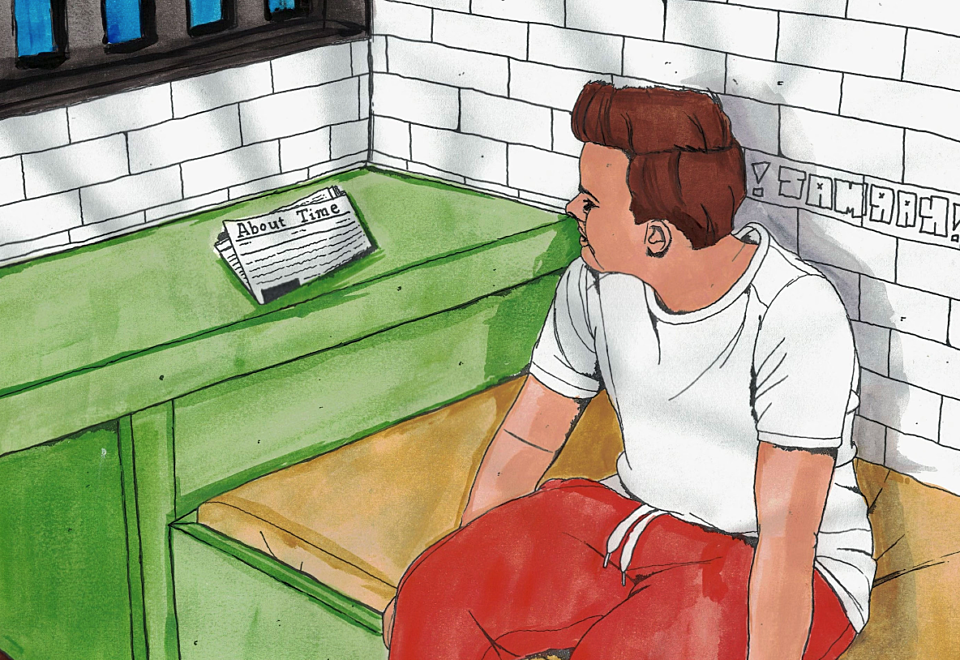
Joseph Friedman is co-founder and publisher of About Time, Australia’s only newspaper for…
Posted on 30 Sep 2026
There's been a lot of talk about AI this week, and some of it has been frightening. So, is AI good…

Posted on 30 Sep 2026
After the biggest AFL game of the year, one player proudly wore the flag of his birth country and…

Posted on 30 Sep 2026
At 21 years old, Tate Donohoe is the founder of Ecodia, an AI-assisted software development company…

Posted on 30 Sep 2026
Not-for-profit leaders have been warned to be wary of approaches from potential “funding partners”…
Posted on 30 Sep 2026
More than 200 fully funded Centre for Social Impact (CSI) scholarships will help equip for-purpose…

Posted on 30 Sep 2026
Personal stories are among the most powerful tools a charity can have to raise funds and awareness,…

Posted on 23 Sep 2026
In his new book Our Place, policy expert Matt Lloyd-Cope argues that housing must be at the heart…