
Save Izzy: campaign calls on government to restore funding for vital services directory
Posted on 07 Oct 2026
A major public campaign launched this morning is calling on the federal government to restore…
Posted on 19 Aug 2026
By Nick Place, journalist, Community Directors
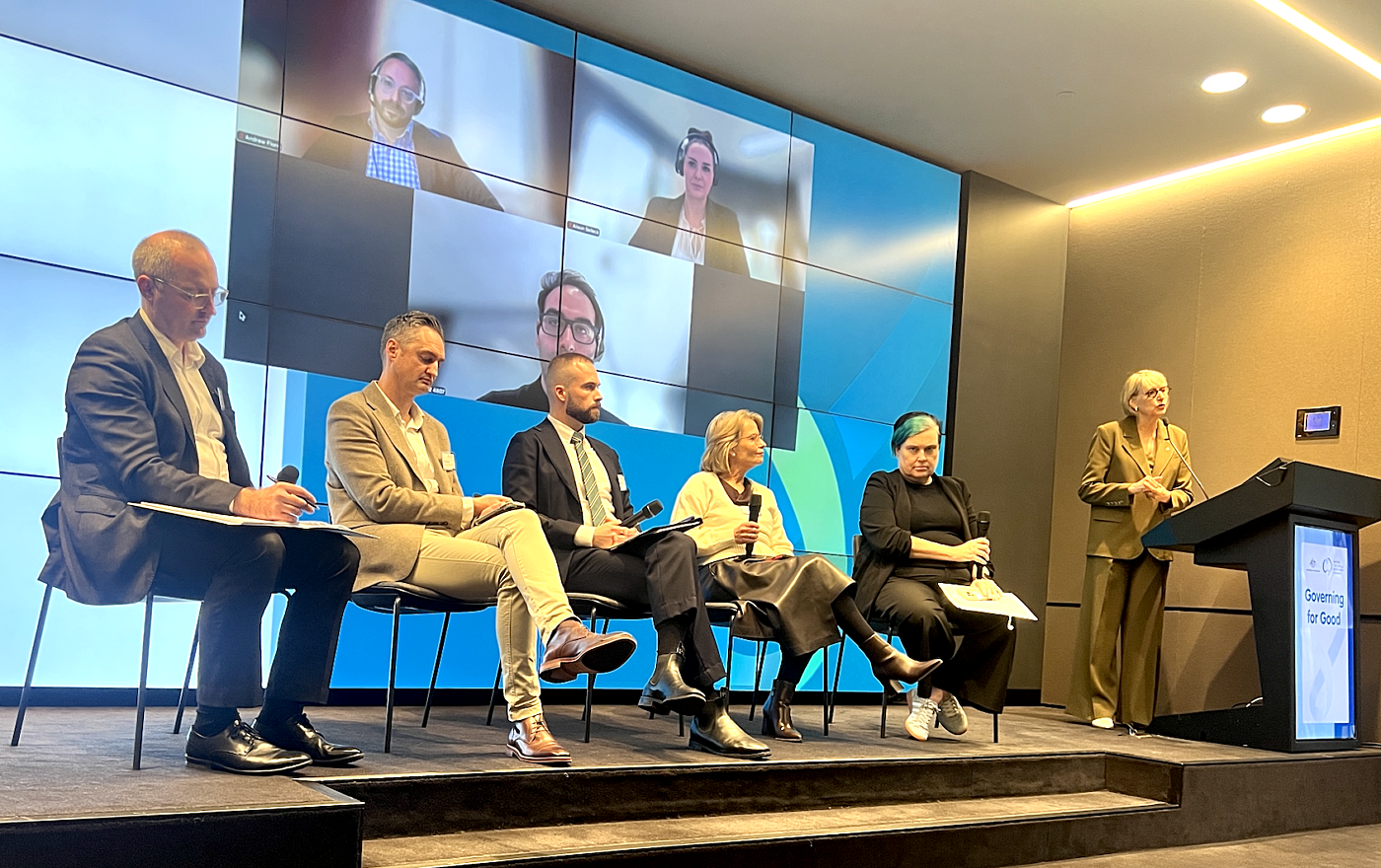
Attendees at last Friday’s Australian Charities and Not-for-profits Commission (ACNC) Governing for Good forum heard that it was essential that charities treated their constitution as a “live” document, to be reviewed, read and considered regularly.
Some charities view their constitution as an annoying legal obligation, but that could not be further from the truth, the panellists agreed, saying it was a vital document that mustn’t be allowed to drift out of date.
“A well-drafted constitution is one of the best forms of dispute prevention,” said the acting executive director of Consumer, Building and Occupational Services Tasmania, Brad Wagg. “Treat your constitution like a living document, not something that you just leave in a drawer. And pull it out when a dispute arises.”

Regulators from every state and territory joined ACNC commissioner Sue Woodward in discussing charity regulations across borders and were unanimous in their opinion that a strong and regularly consulted constitution can head off a lot of problems for charities.
“Many of the disputes that we see as regulators arise not from bad behaviour, but from ambiguity in some of the rules and some of the drafting,” said the executive branch manager of authorisations and approvals at Access Canberra, Giuseppe Mangeruca. “Having clear contemporary provisions, providing certainty to committees and members can reduce the likelihood of costly disagreements. The best time to fix a constitution is before you need to rely on it. We just see it so often.”
Queensland’s commissioner for fair trading, Ben Griffin, said constitutional failings had been a constant issue in his engagement with some of the state’s 6000 charities and 35,000 incorporated associations.
“One of the things that I’ve heard consistently is the impact of having militant directors or people who come onto boards and attempt a hostile takeover or try and unpick governance issues, perhaps to achieve some kind of end,” he said. “What we see consistently in those cases are instances of governing documents which were perhaps out of date and not fit for purpose in the first place. We encourage management committees to take the time to review your governing document and perhaps seek advice to ensure that it is fit for purpose for your organisation.”
Western Australia’s commissioner for consumer protection, Trish Blake, said a constitution needed to be matched with a management committee or board that possessed a cross-section of skills, interests or knowledge.
“Disputes will happen and it (the constitution) is your framework for handling those disputes.”
She told the cautionary tale of a charity that managed a large aged-care residence where none of the necessary governance safeguards were in place, and that eventually required Blake to place a supervisor on the board.
“It was an association that dealt with retirement villages and also aged care, and all of the members on the board were residents of the facility, so seniors,” she explained. “There was nobody that came with a background in accounting, nobody that came with a background in legal. The CEO and the CFO were the same person, and there were some really serious conflicts of interest allegedly happening, with the CFO/CEO and their partner who was allegedly being awarded contracts to build new facilities and loan facilities being given out from the association.”
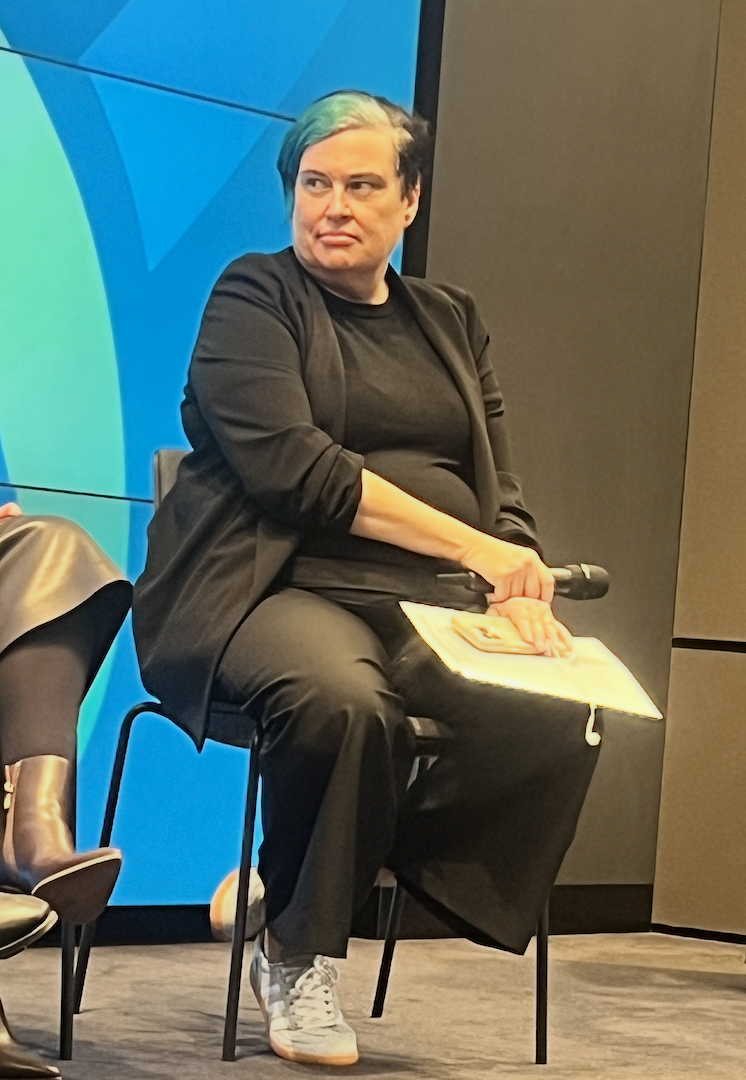
Blake said this all stemmed from a lack of understanding of governance duties and responsibilities by the members of the governing committee. “They didn’t understand that they could be held personally liable as well if they didn’t fulfil their duties,” she said. “They were being taken advantage of, at the end of the day.”
Blake said her department stepped in to appoint a supervisor and to insist on a complete overhaul of the structure of the management committee. “Make sure you’ve got those checks and balances in there, because, as they say, power corrupts, but absolute power corrupts absolutely,” she said. “Make sure the CEO and CFO are completely different people and there’s no relationship between them, make sure you’ve got all your approvals in there, and make sure your chairperson and someone else perhaps has oversight of what the CFO might be doing.
“I think 99 per cent of people in the charitable space are there for a good reason, but it’s the one-per-centers that throw everything out, in general.”
The assistant director of licensing, gambling and associations at Consumer and Business Services in South Australia, Alison Selleck, suggested charities and not-for-profits always have two signatories to bank accounts. This is compulsory in South Australia, and it supports good governance and transparency, she said, helping to prevent disputes.
To create a constitution, charities can adopt the model provided by their regulator (the “model rules”), modify that model, or write their own. The key is to make sure a constitution has “detailed provisions which are more relevant to your space,” said New South Wales’ executive director of consumer affairs, Andrew Floro. “It's a very generic document. Charities should make sure they’re focusing on an area where we see a lot of complaints, which is around conflicts of interests. Obviously, conflict management is a key in government’s expectation, and it helps the public be confident in the work of the charity, so making sure you get that right is important.”
The director of licensing and transactions at Consumer Affairs Victoria, Rhys Benny, summed up the panel’s message: “A constitution really should be a living document. Put it under your pillow, but also get it out from under your pillow and make sure you read it and go over it and refresh it really often, because disputes will happen, and it is your framework for handling those disputes.
“Of course, there are supports as well in some jurisdictions, like our own, where if you do get into a dispute, you can go to a conciliation service to get that support. But I think, ultimately, an incorporated association really needs to own its disputes and use the processes that are in place for a reason to try and address those disputes in the first instance.”
Posted on 07 Oct 2026
A major public campaign launched this morning is calling on the federal government to restore…

Posted on 07 Oct 2026
The Australian Literacy & Numeracy Foundation (ALNF) has announced a partnership with mining…

Posted on 07 Oct 2026
A conference in Darwin will this morning hear detailed, strategic plans for how Australia could…

Posted on 30 Sep 2026
Not-for-profit leaders have been warned to be wary of approaches from potential “funding partners”…
Posted on 30 Sep 2026
More than 200 fully funded Centre for Social Impact (CSI) scholarships will help equip for-purpose…

Posted on 30 Sep 2026
Personal stories are among the most powerful tools a charity can have to raise funds and awareness,…

Posted on 23 Sep 2026
A just-released major global survey of charities has found that demand for charity assistance has…
Posted on 23 Sep 2026
Fresh from welcoming delegates to last week’s Philanthropy Australia conference in Brisbane,…

Posted on 23 Sep 2026
A national strategy to develop Australia's regional cities is needed to break the housing…

Posted on 23 Sep 2026
Eight years after a report to Treasury first suggested the charities regulator should be more…

Posted on 17 Sep 2026
Australia’s biggest gathering of philanthropists, which drew more than 1200 delegates to Brisbane…
Posted on 16 Sep 2026
A new partnership between Paul Ramsay Foundation (PRF) and Atlassian Foundation aims to attract…