Billion-dollar community funding pool is making a difference
Posted on 21 Oct 2026
Backed by tangible successes and government support, community foundations are gaining momentum as…
Posted on 07 Oct 2026
By Nick Place, journalist, Community Directors
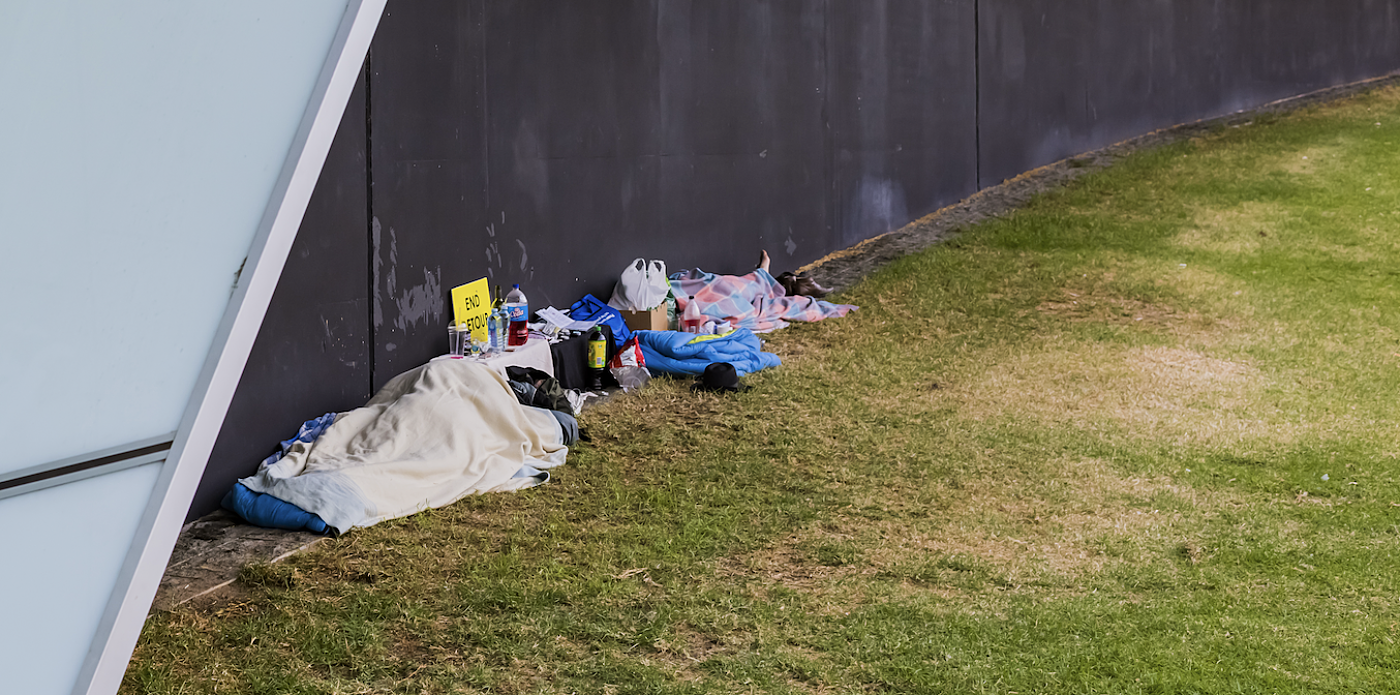
A conference in Darwin will this morning hear detailed, strategic plans for how Australia could “end” homelessness.
Australian Alliance to End Homelessness (AAEH) chief executive David Pearson told the Community Advocate in the lead-up to this morning’s session that such an ambitious goal was realistic, and communities have proven it’s possible.
The Australian Homelessness Conference, running today and tomorrow, is a large gathering of workers, politicians and organisations looking to make an impact on the nation’s endemic homelessness. In his session “Zero excuses: how Australian communities are ending rough sleeping”, Pearson will argue that we know what is required to solve the social blight, and that some local government areas are making headway.
Definitions are important, Pearson told the Community Advocate. “What do we mean by ‘end’?” he said. “It’s not that nobody will ever sleep rough again, but it’s that we can create a system that is able to make sure someone’s experience of homelessness in that place is rare. So, there’s not much of it, a handful of people at most, and it’s brief, so that people who do fall into homelessness are rapidly rehoused. Also, it’s once off – people aren’t cycling in and out of homelessness. So, it’s rare, brief and once off: that’s what we define as an ‘end’ to homelessness.”
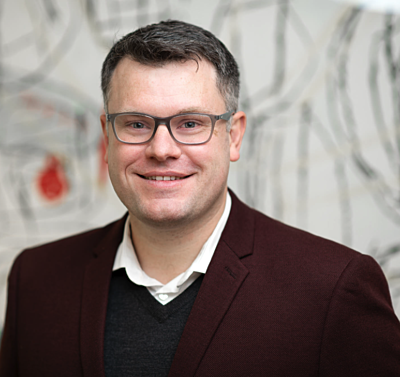
Pearson said there were local government areas (LGAs) using place-based approaches that had ended rough sleeping or homelessness in their community, either overall or for specific population groups. In the USA, for example, some LGAs had ended rough sleeping among military veterans, he said.
Pearson’s session was also set to feature AAEH’s NSW transition adviser, Jon Swain; IFYS’s Sunshine Coast Zero and Wide Bay Zero project lead, Emma Christie; and Northern Rivers Zero’s project co-ordinator, Sacha Zunic.
The quartet planned to explore what would be required for homelessness numbers to fall, including breaking down of silos, sharing of data, embedding health care in homelessness responses, and including people with personal experience of homeless at the decision-making table.
“What we’re trying to do through the broader mission of our organisation [the AAEH] is to try and dispel this notion that homelessness is somehow the inevitable consequence of the way our economy works, or that it’s somehow an individual choice or the fault of individuals,” Pearson said. “It’s a policy choice of governments not to solve this, because we know what it takes to solve this is housing and support. What we’ve been able to demonstrate by breaking the problem into smaller and smaller chunks is to demonstrate that you can make progress, but what the progress requires is really good real time data, really good collaboration at the local level, and the housing and support that’s needed to solve the homelessness of the people that are there.”
Pearson rejected the notion that the housing shortage is intractable because materials and tradespeople to create new residences are in short supply.
“It’s true we have a shortage of housing, but it’s not true that we don’t have enough houses to house people who are literally living and dying on the streets of our cities,” he said. “It’s just about choices. Where do the resources go? We have many vacant properties around Australia that are there for investment purposes or holiday homes and all the rest of it. So, the broader challenge of housing as distinct from the specific problem of homelessness – they are interconnected, absolutely, but it often becomes an excuse from, like, there's not enough houses, so it’s okay to have people sleeping and dying on the street. No, it’s not, and we can actually do better than that.
“You walk down a street and see it (homelessness), yet it’s invisible to policymakers because we don't have good data on it.”
“While we’re waiting for more houses to be built, we can better triage the scarce housing that we have for the people that are most vulnerable, and we don’t often do that. That’s not the way housing allocation happens.”
Australia could also improve dramatically when it comes to collecting data on homelessness, Pearson said, pointing out that the Census, held every five years, was one of the few ways the government even attempted to measure who did not have a roof over their head. “Imagine if we managed inflation by counting it every five years,” he said.
Australia was among the worst countries in the Organisation for Economic Co-operation and Development (OECD) when it comes to collecting data on homelessness numbers and locations, he said, which hampered attempts at progress. “Setting an ambitious goal of ending rough sleeping by next Tuesday is meaningless unless it’s backed up by real-time data so that you can understand if what you’re doing is having an impact, and are you getting close to or further away from that goal,” he said.
The “Zero excuses” session was set to discuss the elevation of Andy Burnham as UK prime minister, given Burnham’s commitment to having rough sleepers off the streets for Christmas, and the tangible progress he made in combatting homelessness while mayor of Manchester. Closer to home, the Victorian government has recently announced a six-point plan designed to fight homelessness.
“We’re really hoping [at the conference] to profile how this work is being done and to give people reasons to be hopeful and to understand how to engage in doing this work,” Pearson said. “There are now 30 communities across Australia that are using a place-based approach [in] seeking to demonstrate that homelessness is solvable. It’s an opportunity to profile the great work that’s happening in a number of communities and to continue to build the knowledge of what it takes to do this work.”
Ultimately, part of the challenge of ending homelessness is convincing people it is possible.
“I think that there is a pervasive notion that homelessness is a housing problem and we can’t do anything about homelessness without the housing,” Pearson reflected. “That’s an incredibly disempowering notion. It might be true that we lack our housing, but what we’re trying to convince the workforce [of], at the conference, is that we can do things that can make change happen, such as collecting data and collaborating on service coordination for the most vulnerable.
“That can then help hold government to account in a way that they often aren’t because there is such poor data. There is so much unknown about this challenge of homelessness. It’s one of the most visible forms of inequality in Australia. You walk down a street and see it, yet it’s invisible to policymakers because we don't have good data on it.”
Posted on 21 Oct 2026
Backed by tangible successes and government support, community foundations are gaining momentum as…
Posted on 21 Oct 2026
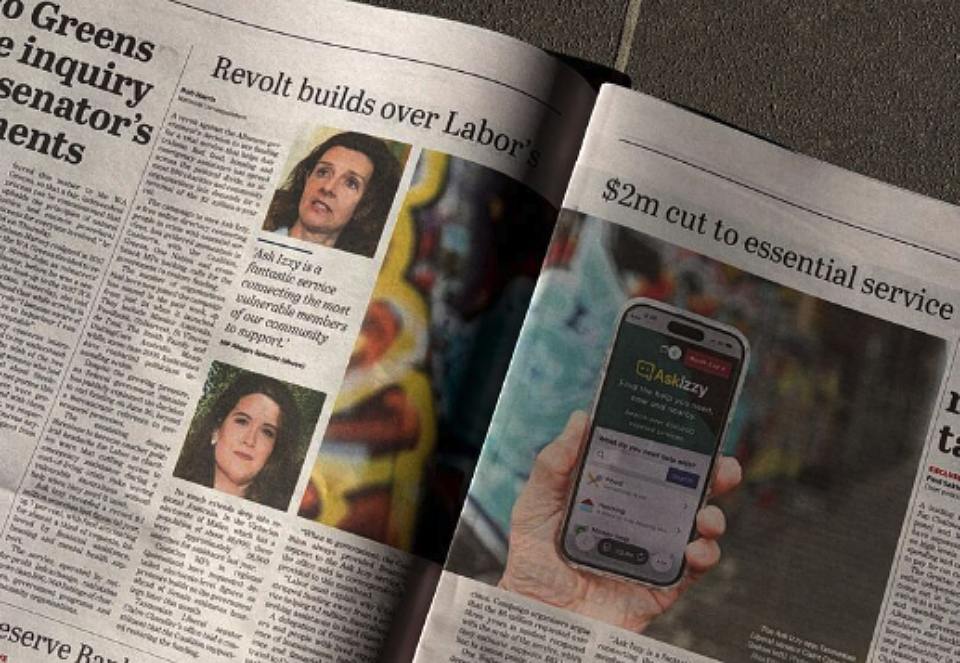
A national campaign to restore federal funding for Ask Izzy has attracted such strong grassroots…
Posted on 21 Oct 2026
In the wake of an act of violence against federal independent MP Helen Haines, Charities Minister…

Posted on 21 Oct 2026
If your charity takes a stance that happens to align with a political party’s stance in a public…

Posted on 14 Oct 2026
The federal government’s special envoy for social housing and homelessness, Josh Burns MP, has…

Posted on 14 Oct 2026
The Reserve Bank’s move to ban card payment surcharges has led to complications for charities and…

Posted on 14 Oct 2026
Violet Roumeliotis, the chief executive of Australia’s biggest migrant support organisation, will…

Posted on 07 Oct 2026
A major public campaign launched this morning is calling on the federal government to restore…
Posted on 07 Oct 2026
The Australian Literacy & Numeracy Foundation (ALNF) has announced a partnership with mining…

Posted on 30 Sep 2026
Not-for-profit leaders have been warned to be wary of approaches from potential “funding partners”…
Posted on 30 Sep 2026
More than 200 fully funded Centre for Social Impact (CSI) scholarships will help equip for-purpose…

Posted on 30 Sep 2026
Personal stories are among the most powerful tools a charity can have to raise funds and awareness,…