
Save Izzy: campaign calls on government to restore funding for vital services directory
Posted on 07 Oct 2026
A major public campaign launched this morning is calling on the federal government to restore…
Posted on 08 Apr 2026
By Nick Place, journalist, Community Directors

A current major global survey of charities is a vital conduit between Australian not-for-profits and the rest of the world, according to Philanthropy Australia CEO Maree Sidey, who has urged local charities to take part.
The World Charities Insights Survey is part of the World Giving Report series created by a group of international partners and driven by the Charities Aid Foundation (CAF). It’s one of the largest ever studies of global not-for-profit activity, designed to increase understanding of how charitable organisations in different countries operate, and to explore all kinds of generosity and giving, across borders and continents.
Sidey said the survey would provide invaluable insights into the nature of generosity and the role charities play in society, but added that Australia would not be represented unless a minimum of 100 local charities took the short survey.
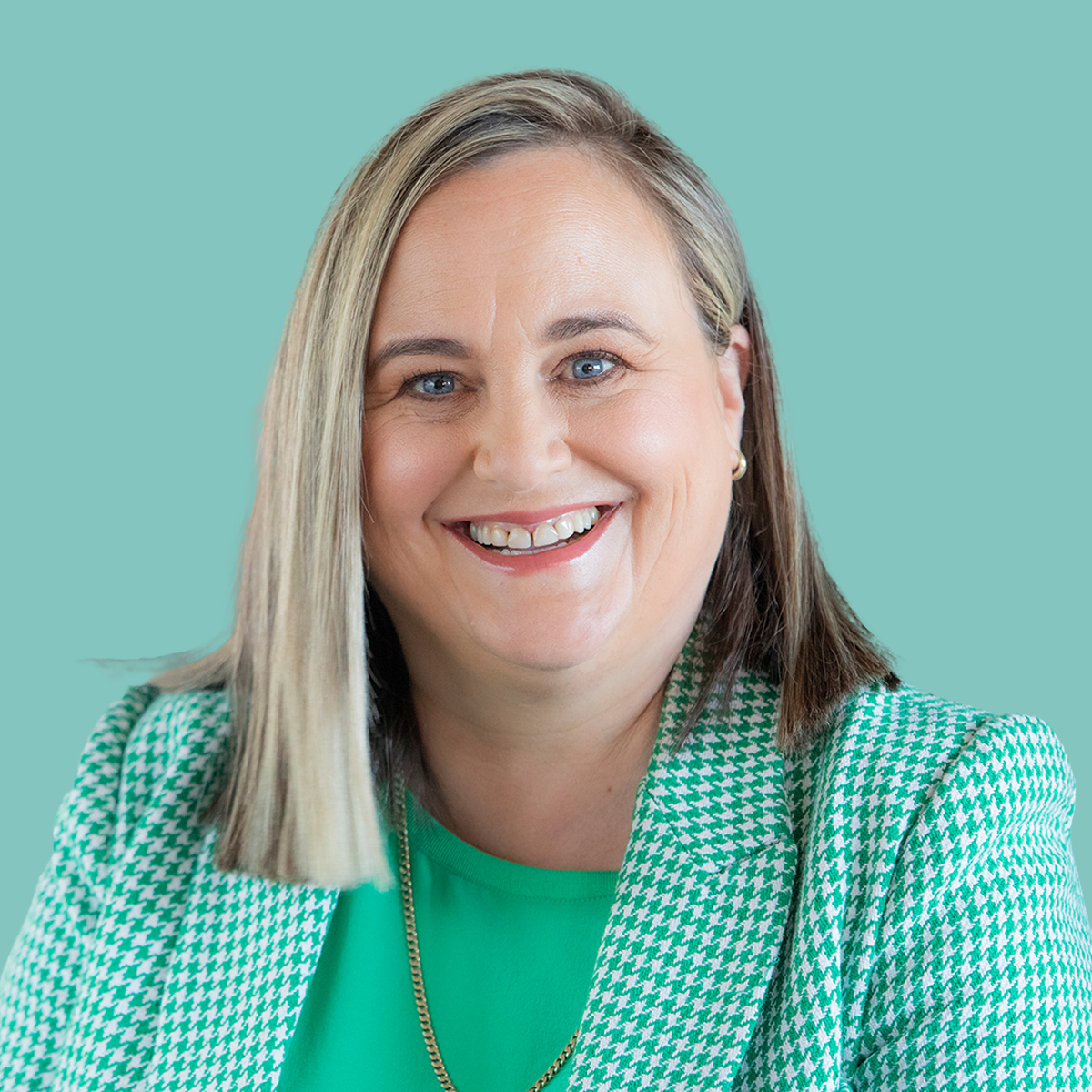
“In order for us to get good data on Australia, we need at least 100 charities to fill this survey out, which doesn’t sound like many, but the survey has struggled to get those numbers over the past few years,” Sidey told the Community Advocate. “And look, we know it’s just one more burden to put on charities, but if we don't have this intel, we can’t use it to extrapolate … to say this is what charities need and this is how they thrive, particularly in these really difficult times.
“So, there’s a very pragmatic reason to say: charities, we know you’ve got heaps on your plate and you’re always being asked to report, but Australia needs to show up in this global giving index so we can keep understanding what we need to work on.”
Sidey said the survey’s findings had the potential to underscore Philanthropy Australia’s new core strategy of seeking to broaden understanding of giving and generosity beyond straight donations. The survey looks at giving from both a donor and a charity’s point of view, and country by country, which means it creates rich intelligence on how people are giving, in many ways.
“Philanthropy Australia sees generosity and giving as something that all Australians can participate in – and not something just for the super wealthy, which is often how Australians construct philanthropy. We love the term ‘generosity’, and what I really like about the CAF charity insight report is that it measures the different aspects for generosity in each country. It looks at volunteering, it looks at things like cultural context, the influence of religion, at social norms.
“The reason Philanthropy Australia is involved is that the survey is very much trying to build a deeper understanding around the role philanthropy and particularly donors play in strengthening charities. What I love is that it takes a really interesting broad perspective on what generosity looks like in each country and broadens it out beyond the dollars. So often in philanthropy, we just reduce generosity and giving down to the dollars. Our new strategy is about mobilising generosity, and thinking about generosity in its broader sense, by asking what is the culture we’re in, and how does generosity show up?”
“Charities, we know you’ve got heaps on your plate and you’re always being asked to report, but Australia needs to show up in this global giving index so we can keep understanding what we need to work on.”
Last year’s survey found that Australia ranked 68th on the list of countries in terms of financial generosity, with Australians donating 0.73 per cent of their income, behind New Zealand, Canada and the United States. In comparison, countries such as Nigeria, Egypt, Ghana and China achieved the highest generosity scores based on the average percentage of income donated, at 2.83 per cent, 2.45 per cent, 2.19 per cent and 2.19 per cent respectively.
Sidey said these were the kind of findings that made the survey essential.
“Africa is the continent that Australians often see as the recipient of philanthropy, but actually it is the most generous country in the world,” she said. “I just love that it completely flips the idea of where money flows from and to, turning that on its head. The survey says actually, the Western countries didn’t invent philanthropy and generosity, and, in fact, there are very many cultural contexts in which generosity is vibrant and strong when you look at it in its broadest sense.
“In Australia, while so much of our work is about who’s giving, how much are they giving, what levels are they giving, this allows us to have a much more nuanced and needed conversation in these times about, well, what are the cultural norms in Australia?”
Australians had been shown to give generously in the wake of disasters such as floods and fires, yet volunteering numbers were currently failing to meet demand, possibly because the “sandwich generation” is pre-occupied with looking after younger and older family members, she said.
Generosity measures often didn’t take into account the “backbone of how Australians show up”, such as coaching the local football or netball team, running the sports canteen, and taking on other such community roles, she said. Australian First Nations cultures also involve significant giving, embedded over millennia, which was important to recognise, she said.
Survey organisers say the survey itself takes only about 10 minutes to complete, but it requires a senior person from within the charity to take it on, as it covers several aspects of the organisation, including finances and operations.
“This project will help us understand how charitable organisations in different countries operate, the challenges they face, and the roles they play in society,” the introduction to the survey explains. “By adding your response to those of thousands of other similar organisations, you’ll be taking part in a truly global, highly ambitious project that ultimately aims to strengthen civil society around the world.”
The CAF is keen to have input from “any charitable organisation that works to try and improve issues that are affecting individuals, communities, society as a whole, animals or the natural environment. You might work locally, across the whole country and/or internationally. You might refer to yourself as a non-profit, an NGO (non-governmental organisation), a civil society organisation (CSO), a community organisation, a social purpose organisation, a foundation, an association or one of a number of other ways ‘a charity’ can be translated around the world.”
Posted on 07 Oct 2026
A major public campaign launched this morning is calling on the federal government to restore…
Posted on 07 Oct 2026
The Australian Literacy & Numeracy Foundation (ALNF) has announced a partnership with mining…
Posted on 07 Oct 2026
A conference in Darwin will this morning hear detailed, strategic plans for how Australia could…

Posted on 30 Sep 2026
Not-for-profit leaders have been warned to be wary of approaches from potential “funding partners”…
Posted on 30 Sep 2026
More than 200 fully funded Centre for Social Impact (CSI) scholarships will help equip for-purpose…

Posted on 30 Sep 2026
Personal stories are among the most powerful tools a charity can have to raise funds and awareness,…
Posted on 23 Sep 2026
A just-released major global survey of charities has found that demand for charity assistance has…
Posted on 23 Sep 2026
Fresh from welcoming delegates to last week’s Philanthropy Australia conference in Brisbane,…

Posted on 23 Sep 2026
A national strategy to develop Australia's regional cities is needed to break the housing…

Posted on 23 Sep 2026
Eight years after a report to Treasury first suggested the charities regulator should be more…
Posted on 17 Sep 2026
Australia’s biggest gathering of philanthropists, which drew more than 1200 delegates to Brisbane…
Posted on 16 Sep 2026
A new partnership between Paul Ramsay Foundation (PRF) and Atlassian Foundation aims to attract…