Billion-dollar community funding pool is making a difference
Posted on 21 Oct 2026
Backed by tangible successes and government support, community foundations are gaining momentum as…
Posted on 15 Apr 2026
By Nick Place, journalist, Community Directors
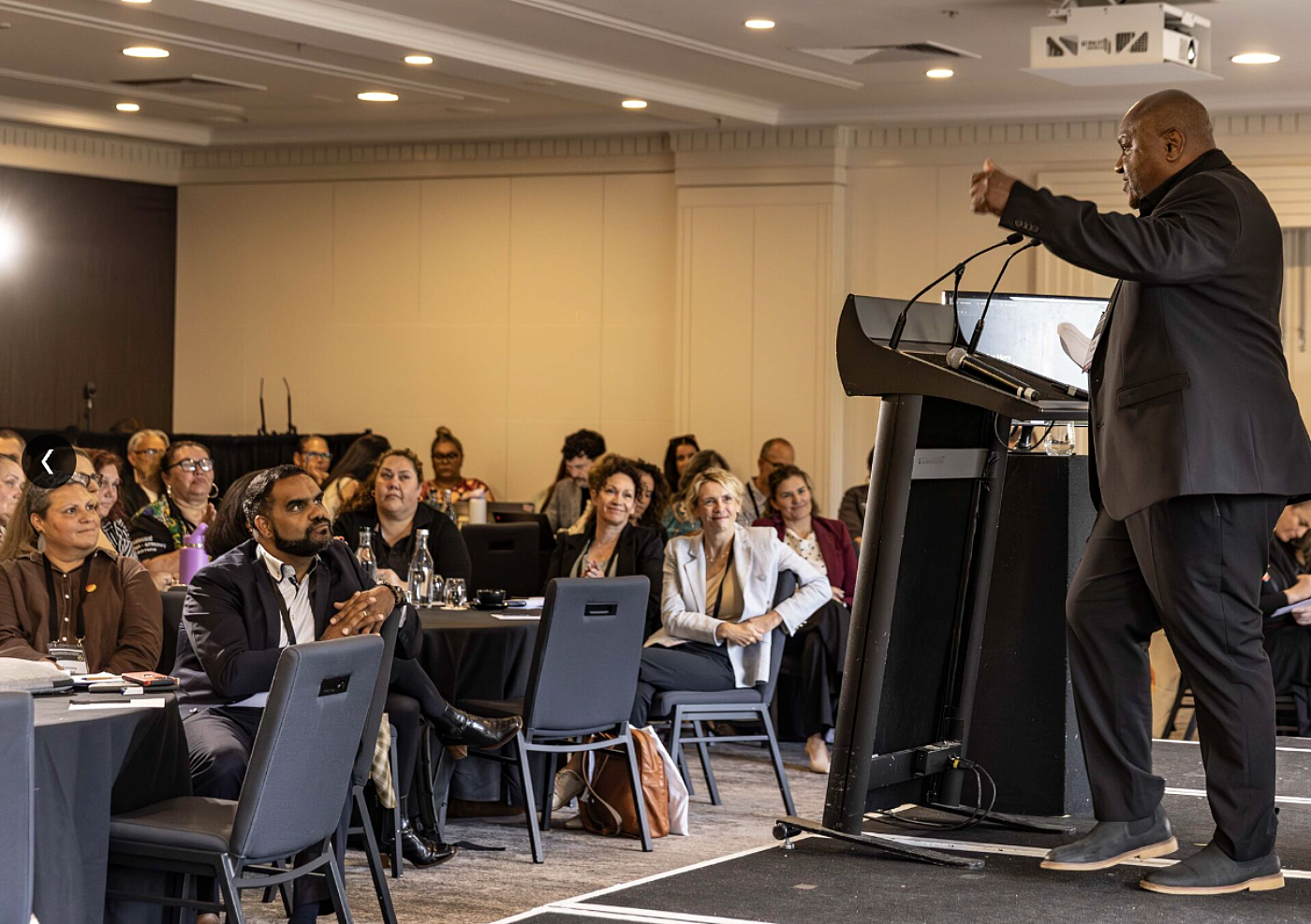
Organisers of Blak Loungeroom, a historic Indigenous-led philanthropy conference held in Melbourne last week, have hailed the gathering as a huge success and a landmark moment for the future of First Nations philanthropy.
“The conference was wildly successful,” said convener John Harding, CEO of charity Barmal Bijiril. “People I don’t even know are writing A4 pages on LinkedIn about what they learned and how incredibly historic it was, and these are non-Aboriginal people.
“All these important people are saying how they felt so honoured to be a guest in the Blak loungeroom and that was the whole point, because it’s the first time in 125 years of philanthropy in Australia that First Nations people have controlled a conference, curated it, and then invited those non-Aboriginal people into the room. It wasn’t about trying to get money out of them, it was about educating them about our priorities,” he told the Community Advocate.
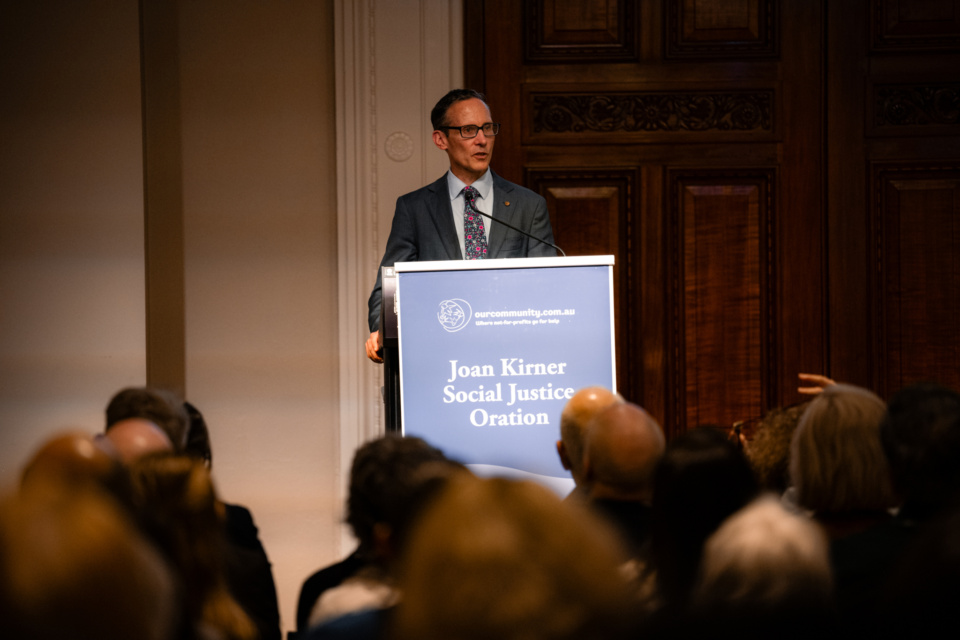
The conference got off to a fast start with Charities Minister Andrew Leigh speaking of the need to develop a genuine First Nations philanthropic collaboration, as outlined by the Productivity Commission, with the goal of grounding philanthropy in First Nations self-determination.
“First, we need to encourage philanthropic organisations to partner with First Nations peoples in order to be more culturally safe and responsive when they work with Aboriginal and Torres Strait Islander people and organisations,” Minister Leigh told the conference.
“Second, we need to help Aboriginal and Torres Strait Islander people, organisations and communities build stronger relationships with philanthropic and volunteering networks, while also supporting the growth of new and existing philanthropic organisations led by First Nations communities.”
The Blak Loungeroom conference was a first step towards creating a national body to allow First Nations philanthropic leaders to decide where funding should go to have the greatest impact in Aboriginal communities and welfare organisations. An initiative of the Productivity Commission, the body is intended to be gender diverse and to include philanthropists, young Indigenous leaders, and representatives from every state.
“This is the whole country of black people now saying we need systematic change, we need to control it, and we need to control it at a federal level,” Harding said. “When the minister acts, philanthropy listens. I think the most important thing that happened [at the conference] was the minister’s speech, because someone said that was the most encouraging speech we’ve heard from any minister in decades, and it was a wonderful speech, and his encouragement really set the scene for the next three days. It gave people hope that they weren’t just wasting our time, again. People said it really warmed their hearts.”
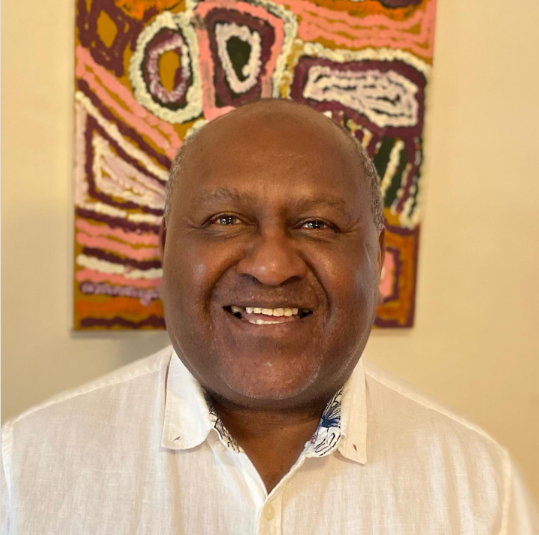
Harding is a Meriam and Gu-Gu Yulangi man, born and bred in Naarm/Melbourne. A playwright and storyteller, he established Barmal Bijiril to push for genuine, non-token Indigenous representation at the top levels of philanthropic decision-making. It’s a battle he has already fought in the television and theatre worlds over decades, after realising there was minimal First Nations involvement in most shows and plays, even those purporting to tell Indigenous stories.
The Blak Loungeroom was designed as a forum for conversations on funding, sovereignty, governance and long-term impact for First Nations philanthropy, where insights into ethical partnerships, community-driven models, shared accountability and a federal body to provide a national voice could all be shared and heard.
It’s a forum that is badly needed, Harding said.
“In 2023–24, Philanthropy Australia’s Aboriginal and Torres Strait Islander Funders Reporting Survey found that $12.1 billion – with a ‘b’ – was handed out to charity in this country, and we, Indigenous-led organisations, got $179 million of that,” he said. “But that included the Red Cross, the Salvos and the Brotherhood and others who get money from the same pot, to ‘benefit Aboriginal people’.
“Indigenous-led organisations get the leftover, less than $100 million. There are about 2300 Indigenous-led organisations around Australia, plus there are the land councils,” he said. “If you add them all up, there’s probably 3500, so then that money is sprinkled, like fairy dust, or sprinkles on a vanilla cake, over them all.”
“This is historic, you know? This is going to change our lives and our kids’ lives as well.”
Conference organisers issued more than 5000 invitations to philanthropists, banks, insurance companies with foundations, giving funds that had supported Indigenous causes, and athletes, footballers, musicians and others with foundations. “Those that turned up are those that care,” Harding said, adding that the organisers noted which big philanthropists and philanthropic bodies were absent.
Ross Trust executive officer Meghan Weekes was one who attended, and said she agreed it was “a significant moment for the sector”.
“The gathering of First Nations leaders, creators, academics and First Nations enterprises showed that philanthropy must be redesigned to genuinely centre self-determination and Indigenous-led leadership,” she said.
“First Nations organisations already hold the solutions. Our philanthropic sector must trust their authority, move capital into long-term investment, and be willing to step back and share power. The conference reinforced the essential role a national First Nations-led body will play in guiding philanthropy and ensuring that supporting First Nations leadership is fundamental to our collective work. Continuing to support First Nations-led convening and conversation across forums, summits and networks will be vital to maintaining momentum and driving this work forward.”
The final day of the conference examined possible membership structures, funding models and planning for the proposed national body. Harding is determined that any funding needs to be a mix of government and philanthropy money, so the body is safeguarded against reliance on one of those funding arms.
The plan now is to call for expressions of interest from communities that want information or would like to hold forums and workshops to explore how the body could look.
“First Nations organisations already hold the solutions. Our philanthropic sector must trust their authority, move capital into long-term investment, and be willing to step back and share power.”
“This is day one,” Harding said. “What we need to do now is mapping and more consultation. We don’t want to sit in a room and say we know what Aboriginal Australia wants. That’s what white people do. We need further consultation, and we need to write up a report for the minister and for Minderoo Foundation, who funded the conference. We are going to write a white paper, although it was quite funny, I got a bit of shit from people at the conference because I called it a ‘white paper’. Someone yelled, shouldn’t it be a ‘black paper’?
“Every attendee at the conference will get the minister’s draft report, the interim ‘black paper’, and the proposed budget, and they can all get out their red pens and contribute. Then we’ll send it to the minister.”
Despite the hard work to come, Harding is excited by what the Blak Loungeroom has already achieved. “This is historic, you know?” he said. “This is going to change our lives and our kids’ lives as well, because we are now tapping into that $12.1 billion in philanthropic funding per year that we haven’t had access to before. It’s money we didn’t even know existed, for black people. The non-Aboriginal people who were there have been saying they were honoured that they were allowed to listen, you know. It was like being invited into a real loungeroom, while you’re having a conversation about the future of your family, and they were allowed to sit there and listen.
“You come back to the distrust, history and racism, and we’re trying to break all that down, and say, if you want a united country, you need to sit uncomfortably among each other and genuinely listen.
“We’re not closing the gap, it’s getting wider, and it’s because Indigenous people are not included in the conversations; we’re always an afterthought or a rubber stamp,” he said. “We’re not involved in creating, changing or adapting the systems themselves, but we’ve been creating systems for a hundred thousand years, so give us a problem and we’ll give you a hundred thousand years of wisdom. That’s what happened at the Blak Loungeroom.”
Posted on 21 Oct 2026
Backed by tangible successes and government support, community foundations are gaining momentum as…
Posted on 21 Oct 2026
A national campaign to restore federal funding for Ask Izzy has attracted such strong grassroots…
Posted on 21 Oct 2026
In the wake of an act of violence against federal independent MP Helen Haines, Charities Minister…
Posted on 21 Oct 2026
If your charity takes a stance that happens to align with a political party’s stance in a public…

Posted on 14 Oct 2026
The federal government’s special envoy for social housing and homelessness, Josh Burns MP, has…

Posted on 14 Oct 2026
The Reserve Bank’s move to ban card payment surcharges has led to complications for charities and…
Posted on 14 Oct 2026
A special guest with her finger on the pulse of one of the biggest issues facing Australia –…
Posted on 07 Oct 2026
A major public campaign launched this morning is calling on the federal government to restore…
Posted on 07 Oct 2026
The Australian Literacy & Numeracy Foundation (ALNF) has announced a partnership with mining…
Posted on 07 Oct 2026
A conference in Darwin will this morning hear detailed, strategic plans for how Australia could…

Posted on 30 Sep 2026
Not-for-profit leaders have been warned to be wary of approaches from potential “funding partners”…
Posted on 30 Sep 2026
More than 200 fully funded Centre for Social Impact (CSI) scholarships will help equip for-purpose…