
Save Izzy: campaign calls on government to restore funding for vital services directory
Posted on 07 Oct 2026
A major public campaign launched this morning is calling on the federal government to restore…
Posted on 22 Apr 2026
By Nick Place, journalist, Community Directors

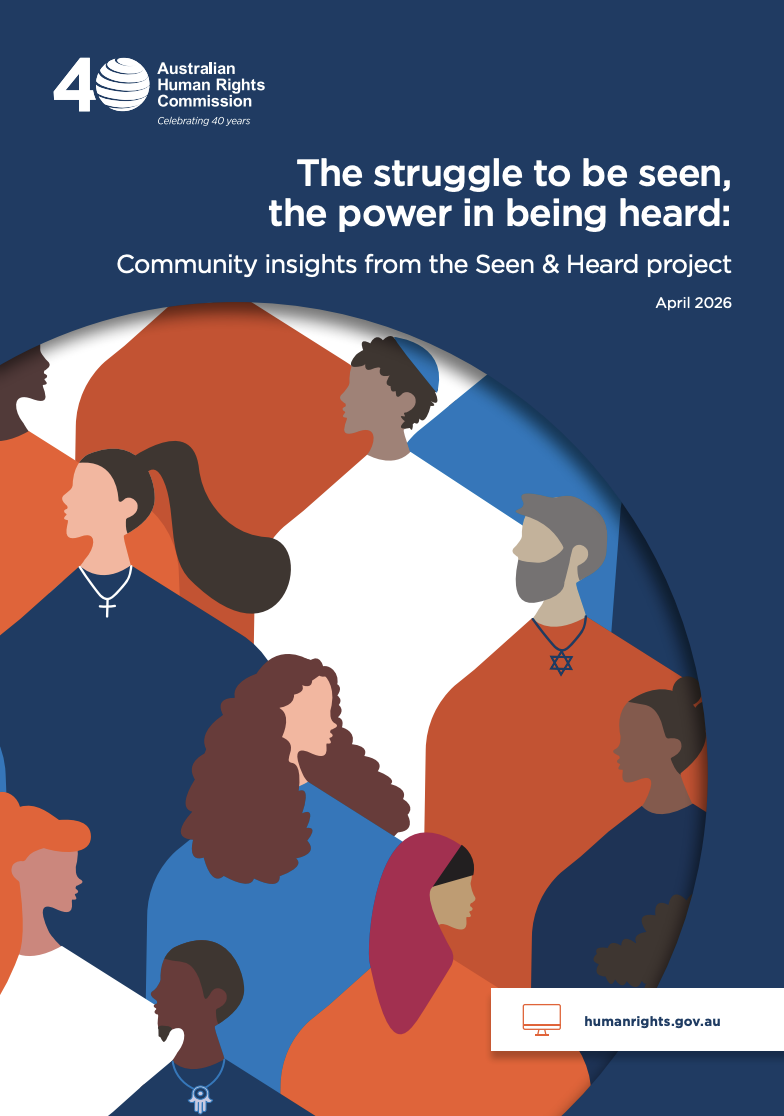
A new report from the Australian Human Rights Commission’s (AHRC’s) Seen & Heard project has found that Australia’s Jewish, Muslim, Palestinian, Arab and Israeli communities have all suffered, and continue to suffer, increased pain and distress caused by racism over the past three years.
The report, The Struggle to Be Seen, the Power in Being Heard, funded by the Australian government, aims to capture the voices and experiences of people in affected communities. The AHRC says it is the most comprehensive report of its kind since the October 7, 2023, attack on Israel by Hamas and the subsequent ongoing retaliation by Israel.
It’s not the only high-level study of the impact of racism and division on Australia’s communities. The Royal Commission on Antisemitism and Social Cohesion has announced it will hold public hearings from May 4.

The Seen & Heard report is based on extensive community consultations held between February and August last year, meaning it had wrapped up before the antisemitic attack at Bondi Beach in December that killed 15 people. But its findings were clear.
“The increased fear, anguish and anger that people in these affected communities have been experiencing in the last three years has very clearly had an enormous impact on their wellbeing, their personal and professional relationships, and their sense of safety and belonging,” said Race Discrimination Commissioner Giridharan Sivaraman.
“The people we’ve spoken to, the stories we’ve heard and the experiences and perspectives we’ve chronicled as part of this report paint a sombre, painful and frustrating picture of the impact here in Australia of the 7 October attack and the war in Gaza.
“Some of these stories have been truly shocking. A Jewish student’s classmates rearranged their desks into the shape of a swastika. A dead kangaroo was dumped on the steps of a mosque. A Palestinian woman was abused in the street and accused of being a Hamas sympathiser. And people reported high levels of antisemitism, Islamophobia, anti-Palestinian and anti-Arab sentiment in their workplaces.”
Sivaraman said while different people and communities had unique experiences of racism, there were consistent, common themes “in relation to how racism homogenises, diminishes and silences communities as well as how it dehumanises and isolates individuals”.
“Failing to recognise suffering, wherever it occurs, strips people of their humanity, and that dehumanisation is felt deeply by communities here,” he said.
“These personal accounts are compelling because they’re a collective appeal for urgent action to address racism in this country. Indeed, this report underscores how the current hostilities between the US, Israel and Iran – that are also severely impacting Lebanon and other countries – have the potential to unleash racist behaviour here in Australia,” he said.
The report quotes a Muslim community member saying, “I think what’s scarier is that discrimination is kind of being legitimised. And I think that’s the shift that I’ve noticed…you know, pre-7 October and post-7 October. Back then it was racism, and it was called that: racism. But after the attacks, it was OK (to be racist) and people can sympathise with it and get behind it and support it, which is a little bit of an ugly beast that’s growing.”
A Jewish community member observed, “I think what was different prior to October 7th versus post-October 7th is that, prior to October 7th…it wasn’t OK to be openly racist.”
“Our diverse nation needs a much more effective response to rising levels of racism.”
Community members were speaking in the context of post-October 7 reactions, but the report notes the context of Australia’s history of racial injustice, “one that First People have long named and challenged. Many who spoke… across all communities recognised the systematic nature of racism and its long history here.”
The Human Rights Commissioner is using the report’s release to press the federal government for action to protect vulnerable communities, by adopting the Commission’s national anti-racism framework.
“[The framework] has garnered widespread support from civil society and from the envoys to combat antisemitism and Islamophobia,” Sivaraman said. “While the framework was delivered 18 months ago, the Australian Government has yet to commit to implementing any of its 63 recommendations.
“Our diverse nation needs a much more effective response to rising levels of racism, so I urge the Government to see and hear the people and voices in this new report and take action to help Australia navigate the way to a better future for everyone,” he said.
Read the full The Struggle to Be Seen, the Power in Being Heard report here.
Make a submission to the Royal Commission on Antisemitism and Social Cohesion
For information on making a submission to the Royal Commission, go to shareyourstory.org.au. You can make a submission confidentially, keep your identity private, and choose whether to become more involved after making a submission. Written submissions are open now and close at the end of May.
Posted on 07 Oct 2026
A major public campaign launched this morning is calling on the federal government to restore…
Posted on 07 Oct 2026
The Australian Literacy & Numeracy Foundation (ALNF) has announced a partnership with mining…
Posted on 07 Oct 2026
A conference in Darwin will this morning hear detailed, strategic plans for how Australia could…
Posted on 30 Sep 2026
Not-for-profit leaders have been warned to be wary of approaches from potential “funding partners”…
Posted on 30 Sep 2026
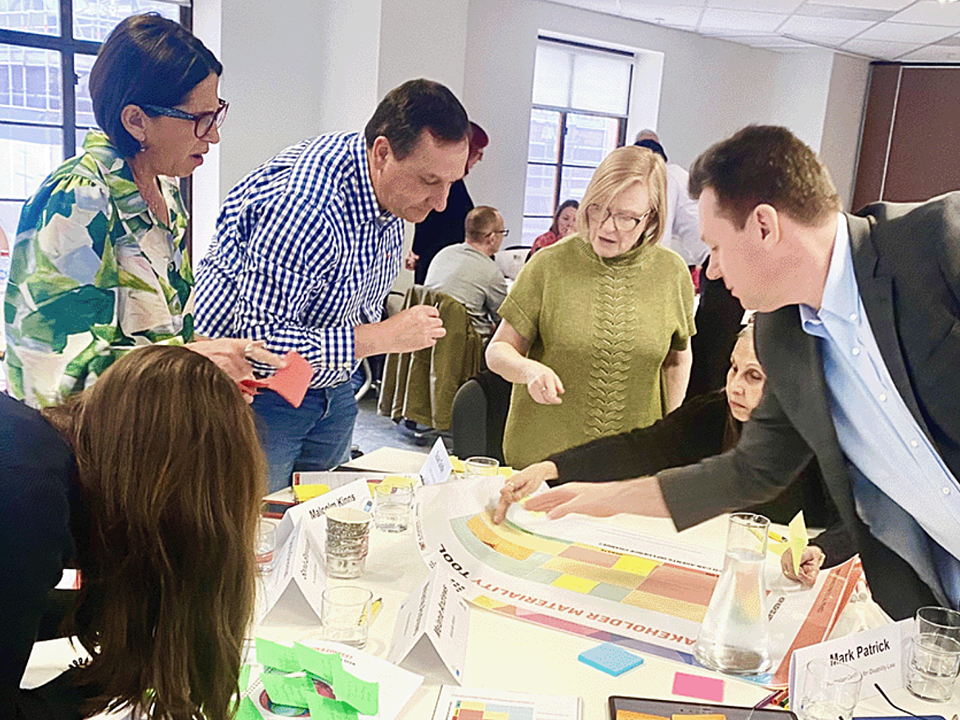
More than 200 fully funded Centre for Social Impact (CSI) scholarships will help equip for-purpose…

Posted on 30 Sep 2026
Personal stories are among the most powerful tools a charity can have to raise funds and awareness,…
Posted on 23 Sep 2026
A just-released major global survey of charities has found that demand for charity assistance has…
Posted on 23 Sep 2026
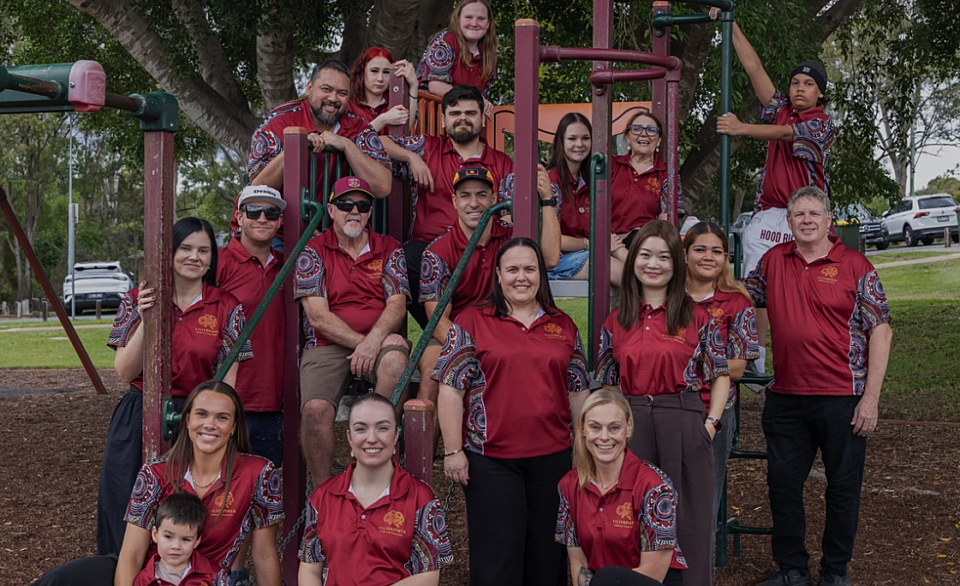
Fresh from welcoming delegates to last week’s Philanthropy Australia conference in Brisbane,…
Posted on 23 Sep 2026
A national strategy to develop Australia's regional cities is needed to break the housing…
Posted on 23 Sep 2026
Eight years after a report to Treasury first suggested the charities regulator should be more…
Posted on 17 Sep 2026
Australia’s biggest gathering of philanthropists, which drew more than 1200 delegates to Brisbane…
Posted on 16 Sep 2026
A new partnership between Paul Ramsay Foundation (PRF) and Atlassian Foundation aims to attract…