Pauline Hanson and the frightening lesson of ‘Years and Years’
Posted on 07 Oct 2026
Our Community's founder and leader, Denis Moriarty, writes that when he watched an over-the-top…
Posted on 25 Feb 2025
By Greg Thom, journalist, Institute of Community Directors Australia
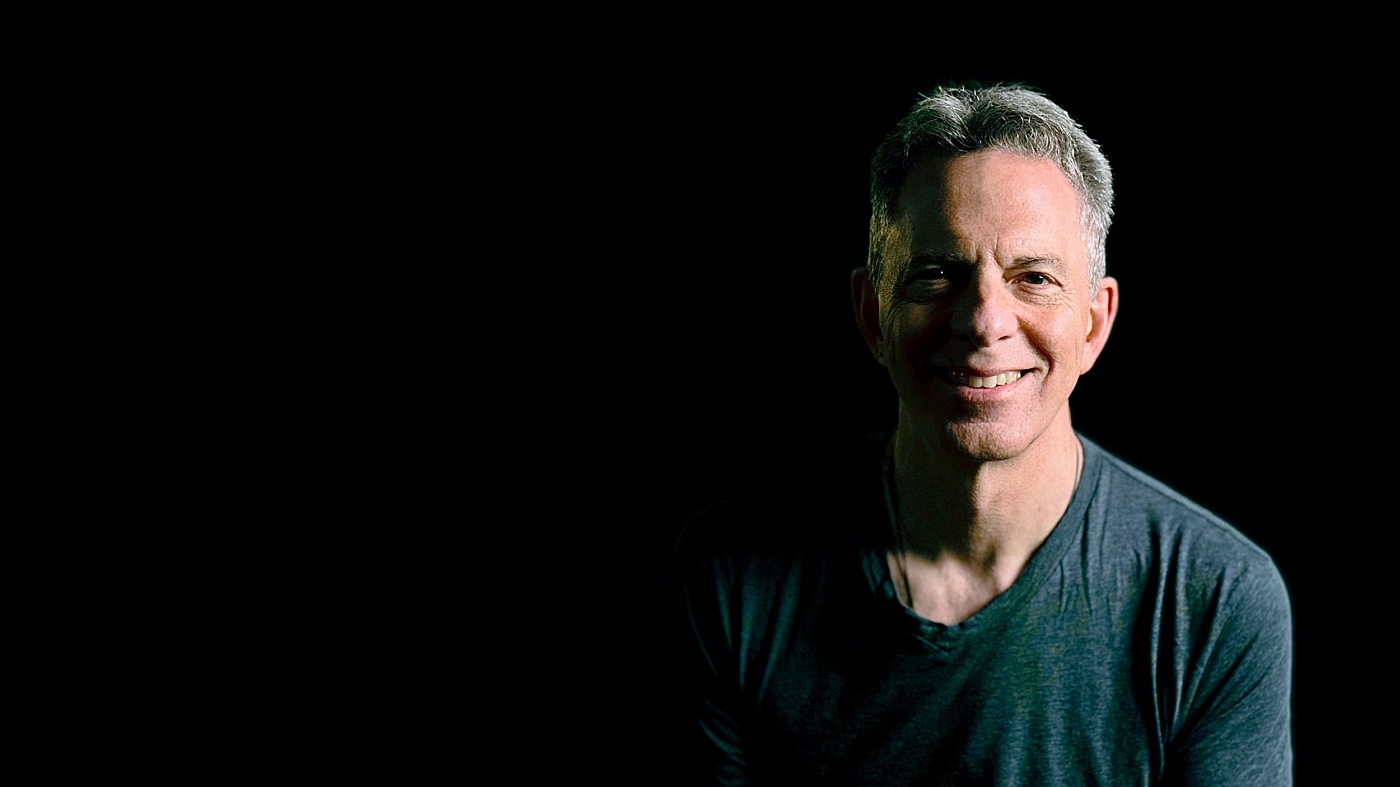
If American entrepreneur, author and fundraising legend Dan Pallotta was Australian, he would most likely describe his philanthropic world view as "go hard or go home."
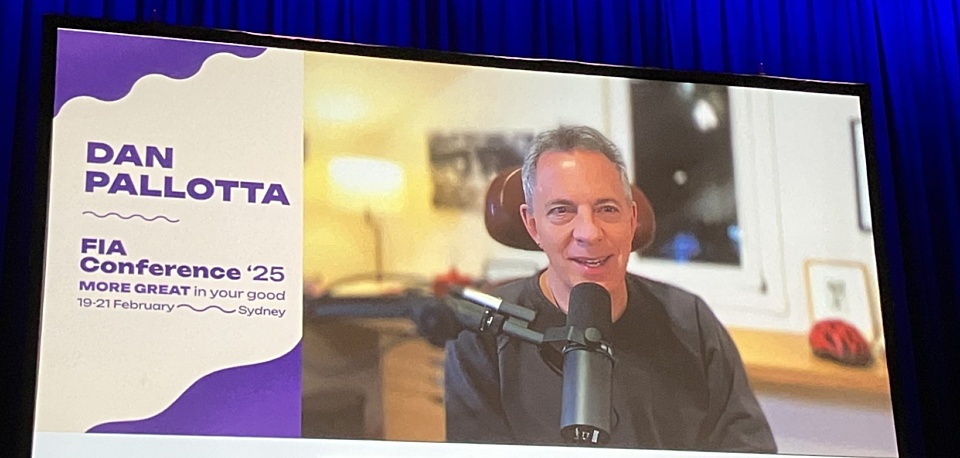
Appearing live via video from Boston before a packed 1000-seat auditorium at the recent Fundraising Institute Australia conference in Sydney, Pallotta said that many of the problems being tackled by the charity and not-for-profit sector remain unsolved because too many people believe they are unsolvable.
His advice: Don't be afraid of being criticised for reaching for the stars.
"If people aren't saying 'That's ridiculous, it will never happen,' you're simply not thinking big enough,” said Pallotta, the author of Uncharitable, his bestselling book on the economics of the charity sector.
"And that's OK if you don't want to think that big, but don't at the same time scratch your head and wonder why we aren't changing the world, because one can't happen without the other.
"It's like that famous ad from Apple: ‘The people who are crazy enough to think they can change the world are the ones who do.’"
When it comes to changing how the world thinks about philanthropy, Pallotta certainly has the runs on the board.
His groundbreaking 2013 TedTalk in which he called out the double standard that drives society’s broken relationship with charities has been watched more than 5.5 million times.
Such is the iconic status of that appearance that the video is still viewed more than 1,000 times a day.
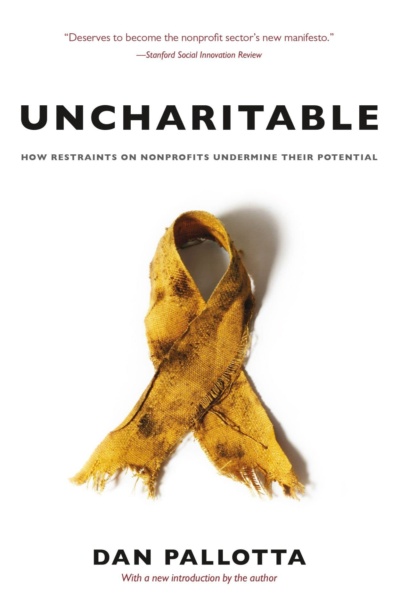
His bestselling follow-up book Uncharitable, which outlines why the world’s approach to charity needs to change, spurred an equally high impact movie of the same name that has become required viewing for many in the sector.
That success does not appear to have dimmed the fire in his belly to make the world a better place and call out the contradictions that prevent the charity sector from doing exactly that.
Pallotta is particularly vocal on what he believes is the hypocrisy surrounding the relationship between overhead and impact measurement in the charity sector.
“You want to know why nonprofit organisations have not changed the world in the way that we hoped they would?” he asked his audience of fundraisers from across the nation and overseas.
“The answer is, because that’s not what we ask them to do. You might think that’s what we ask them to do, but it isn’t.
“What we ask them to do - in fact, what we demanded they do - is keep their overheads and their salaries low.”
“We look at the percentage of overhead of a soup kitchen, but we don’t look at the quality of the soup or how many people they serve or how good they are at it or how well functioning their staff is."
Pallotta said it should come as no surprise that since charities' very survival depends on obtaining a favourable evaluation of their overhead to impact ratio and subsequent ability to secure donations, they fall into line.
“Whether or not you had an impact became entirely secondary because you weren’t going to go out of business on the basis of whether or not you were having an impact, tragically,” he said.
“You were going to go out of business on the basis of how much you were paying your CEO and whether or not you were adhering to traditional canons and standards about overheads.”
Pallotta speaks from bitter experience.
His own company Pallotta TeamWorks ran highly successful multi-day events such as bike rides to fundraise for charities, before going bust in 2002 after media reported the enterprise took too large a cut of the donations.
The devastation at watching a company he believed was making a positive difference in the world crash and burn and the criticism that followed was the fuel that lit Pallotta's fire to write UnCharitable.
“As we were being criticised for having high overhead and paying people too much, I began to catalogue all of these ideas, and when we went out of business, I had time to put them together,” he said.
“A friend said to me, ‘I’m sorry this had to happen to you, but it had to happen to someone in order for a book like that to get written.’”
Pallotta said some people accused him of writing UnCharitable because his own charity went out of business.
“My answer was, ‘That’s exactly why I wrote that book.’”
“We were doing these amazing things not only monetarily but spiritually, and you destroyed it because of these irrational, ridiculous ideas [about costs] that haven’t been thought through.”
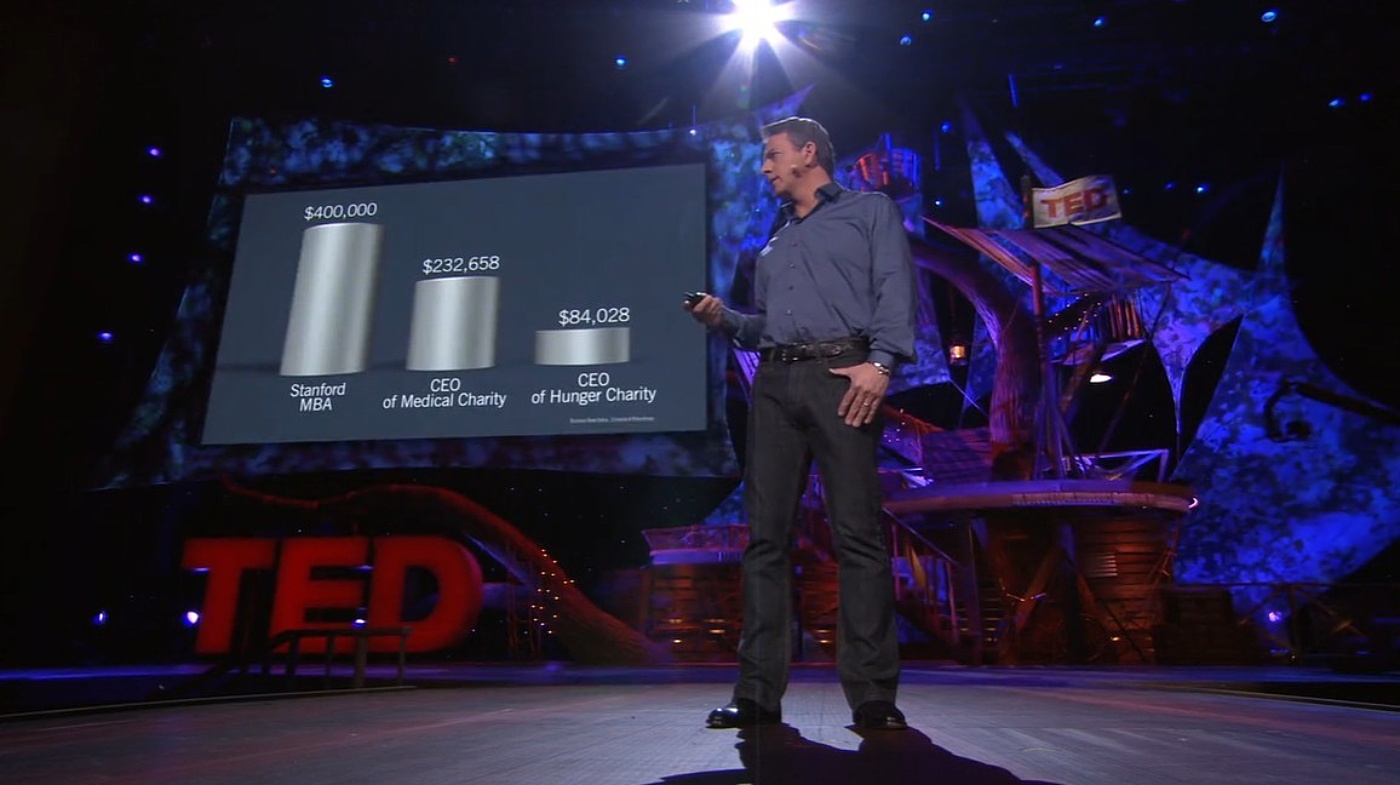
“What I was saying in the TedTalk was that we’ve put the nonprofit sector in an economic prison, and we let the for-profit sector roam free.”
Pallotta firmly believes the not-for-profit sector is trying to achieve positive change with one economic hand tied behind its back, a theme he explored with devastating effect in his much-viewed TedTalk.
“What I was saying in the TedTalk was that we’ve put the nonprofit sector in an economic prison, and we let the for-profit sector roam free.”
“And the security features of that prison are these five points that we made in the movie [Uncharitable]:
“You put those five things together and you put the nonprofit sector at an unbelievable disadvantage to the for-profit sector on every level,” said Pallotta.
“And we wonder why these organisations aren’t changing the world.”
Pallotta said at the heart of the charitable sector’s problems was the focus on financial metrics instead of whether the organisation was making a positive difference for people.
“We look at the percentage of overhead of a soup kitchen, but we don’t look at the quality of the soup or how many people they serve or how good they are at it or how well functioning their staff is,” he said.
Pallotta said the sector must shoulder some of the blame.
“We’re complicit in it, because when we remain quiet, when we don’t get militant about the fact that this is costing lives then at some point it begins to fall back on us.”
Despite these challenges, Pallotta said much had changed in the way the sector thinks about overhead in the years since he last spoke at an FIA conference on the Gold Coast in 2012.
"When we [his own charity] went out of business in 2002, it was just considered heretical to say that people shouldn't look at overhead ratios,” he said.
"Now the overhead ratio has been pretty much discredited, at least in the field.”
Pallotta said the emphasis should be on the impact an organisation is making; not how much money needs to be spent to make a positive difference.
In Australia, efforts to shift this emphasis have recently ramped up with the merger of the Pay What It Takes and Reframe Overhead movements, who have converged into a single campaign and website.
The online resource is packed with information, tools and data to help fundraisers and funders reframe the narrative on overhead costs and communicate the true cost of making a positive difference in the community.
“The conversation [about overhead] is alive; it just needs to accelerate dramatically," said Pallotta.
"That can only happen if those of us inside the sector make it happen.”
Pallotta accused the sector as a whole of becoming too abstract and academic in its approach to philanthropy and said it was time to get back to basics.
“I’m convinced that it just comes down to simple common sense. We need to begin asking ourselves and responding to the question – what problem do we want to solve and by when?”
Pallotta said there was no better example than the successful Apollo program, in which US president John F Kennedy set a deadline for putting a man on the Moon and delivered on that promise.
“We need to say, ‘We want to end hunger, in Sydney in the next ten years’ and here’s how much money we need to do it and here’s our plan.'"
“That’s the language that we need to be using when we communicate to donors.”
Pallotta said investing in fundraising was not just an investment in people who have degrees in fundraising - it was an investment in strengthening civil society.
“It is an investment in creating armies of people that go out and get people up and off their sofas and away from their devices and engage in the great challenges of our time,” he said.
“And guess what? If the nonprofit sector doesn't do it, there's nobody else chartered in society to do that.
“If we don’t create a stronger civil society through fundraising, it’s not going to happen.”
Posted on 07 Oct 2026
Our Community's founder and leader, Denis Moriarty, writes that when he watched an over-the-top…

Posted on 07 Oct 2026
A major public campaign launched this morning is calling on the federal government to restore…
Posted on 07 Oct 2026
The Australian Literacy & Numeracy Foundation (ALNF) has announced a partnership with mining…
Posted on 07 Oct 2026
A conference in Darwin will this morning hear detailed, strategic plans for how Australia could…
Posted on 07 Oct 2026
Joseph Friedman is co-founder and publisher of About Time, Australia’s only newspaper for…
Posted on 30 Sep 2026
There's been a lot of talk about AI this week, and some of it has been frightening. So, is AI good…

Posted on 30 Sep 2026
After the biggest AFL game of the year, one player proudly wore the flag of his birth country and…
Posted on 30 Sep 2026
At 21 years old, Tate Donohoe is the founder of Ecodia, an AI-assisted software development company…
Posted on 30 Sep 2026
Not-for-profit leaders have been warned to be wary of approaches from potential “funding partners”…
Posted on 30 Sep 2026
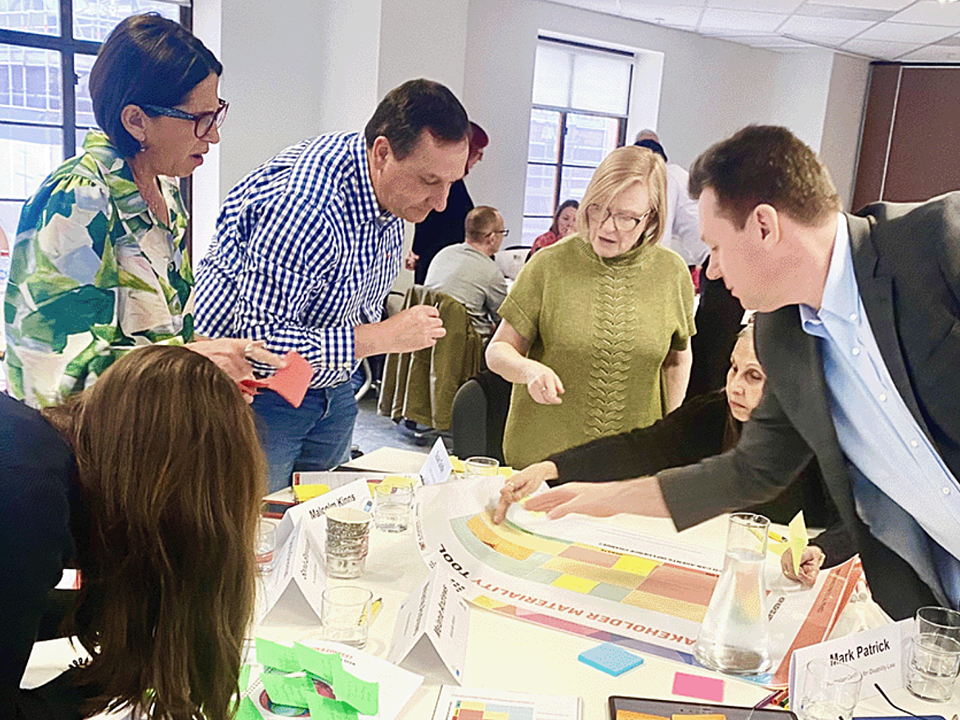
More than 200 fully funded Centre for Social Impact (CSI) scholarships will help equip for-purpose…

Posted on 30 Sep 2026
Personal stories are among the most powerful tools a charity can have to raise funds and awareness,…

Posted on 23 Sep 2026
In his new book Our Place, policy expert Matt Lloyd-Cope argues that housing must be at the heart…