Pauline Hanson and the frightening lesson of ‘Years and Years’
Posted on 07 Oct 2026
Our Community's founder and leader, Denis Moriarty, writes that when he watched an over-the-top…
Posted on 02 Sep 2025
By Nick Place, journalist, Institute of Community Directors Australia
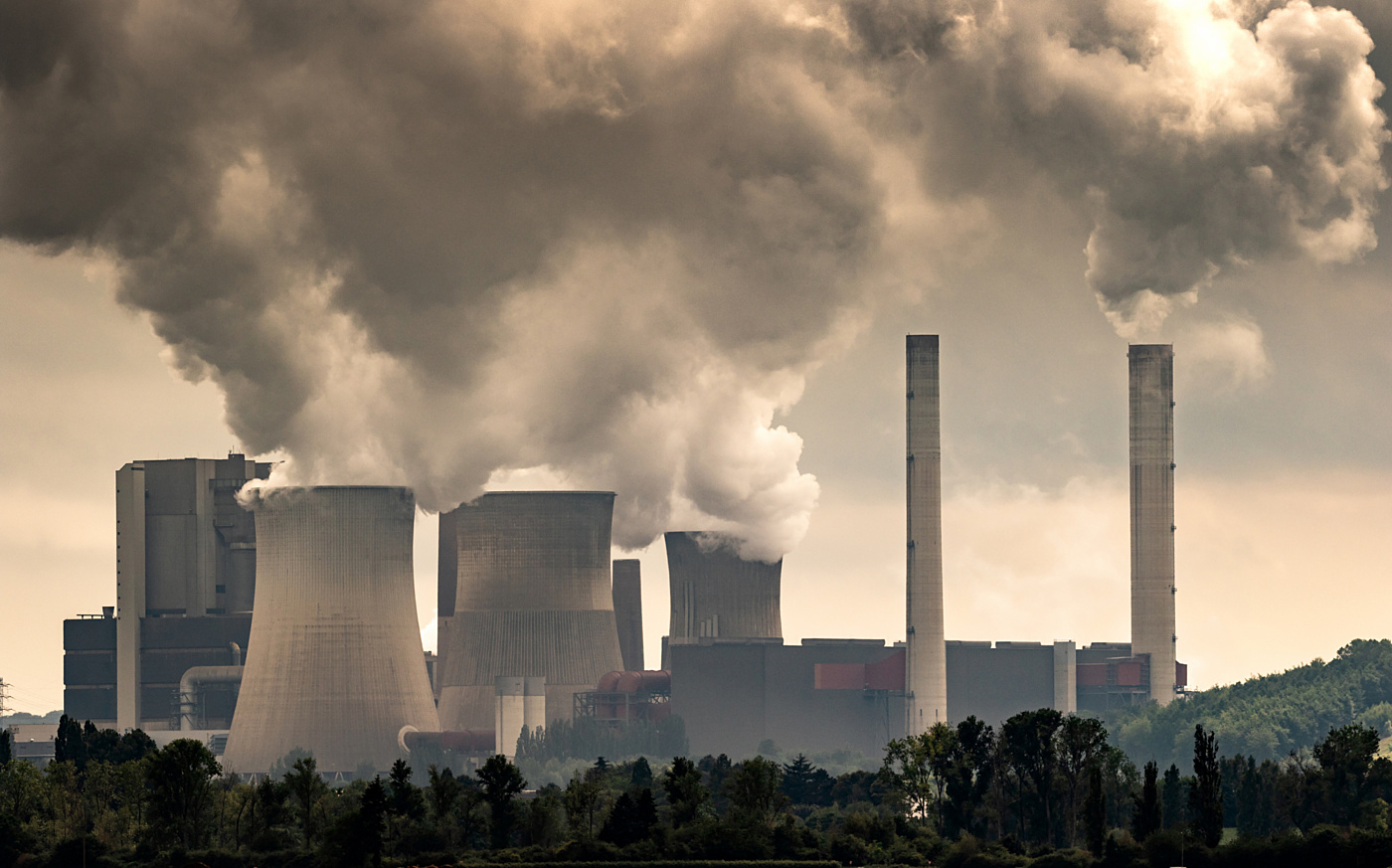
A major new coalition of climate-groups, including charities, for-purpose organisations and communities, plans to ramp up pressure on governments to force major gas, oil and coal companies to contribute to the costs of mitigating climate change damage.
Make Big Polluters Pay was a notable new arrival in Canberra for the recent economic roundtable, working behind the scenes to present its case, which is that the federal government should put in place a climate pollution levy on coal, gas and oil corporations. The alliance says the government should use that money to establish a climate compensation fund to help communities on the frontline of climate impacts, such as Pacific islands communities, and to support households facing rising costs from climate change and the transition to clean energy.
The coalition estimated that a levy could raise $46 billion per year, ensuring major polluters contributed meaningfully towards necessary climate action.
Representatives from Make Big Polluters Pay headed to Canberra armed with polling from Essential Media, conducted in June, that found 75 per cent of Australians believe climate change is increasing the cost of living, and 62 per cent of Australians agree that coal, oil and gas corporations should pay for the damage caused by their climate pollution, including climate disaster repairs and recovery.

The polling also found that 83 per cent of those polled believe everyone is paying the price of climate change through increasing insurance premiums and increasing food prices, and 82 per cent believe fossil fuel companies are exporting most of the coal, oil and gas they produce overseas, while the domestic cost of energy is very high.
Launched just before the roundtable, and hosted by Oxfam Australia, Make Big Polluters Pay describes itself as “a powerful coalition of climate-impacted communities, development, faith, climate, youth, First Nations and Pacific organisations, including Oxfam Australia, Greenpeace Australia, ActionAid Australia, Bushfire Survivors for Climate Action, Pacific Islands Council of Queensland, and others.”
The alliance currently consists of 40 organisations, with more expected to join as awareness grows, and its size gave its representatives in Canberra enough clout to be heard in the corridors of power, according to campaign strategic lead Julie-Anne Richards.
“We spoke to politicians and staffers from across the political spectrum and most of them welcomed the idea very warmly,” she told the Advocate. “A few, who you might expect, were perhaps a little more sceptical, but we didn’t get any kind of really negative take on it.
“We’re starting this alliance and this campaign thinking that we’ve got a long road ahead of us. We didn’t expect to go to Canberra and have politicians immediately say, ‘Oh, if only we’d thought of that, let’s introduce it!’ We’re expecting that we will have to make politicians act, but there was definitely an openness to hearing this idea.”
Richards said the fact that the treasurer had called the roundtable showed an awareness that Australia’s tax system faced critical problems.
“We’re starting this alliance and this campaign thinking that we’ve got a long road ahead of us. We didn’t expect to go to Canberra and have politicians immediately say, ‘Oh, if only we’d thought of that, let’s introduce it!’”
350 Australia
ActionAid Australia
Beyond Gas Network
Bushfire Survivors for Climate Action
Cairns and Far North Environment Centre
Centre for International Corporate Tax Accountability and Research
Citizens Climate Lobby Australia
Climate Action Network Australia
Climate Justice Coalition
Conservation Council of Western Australia
Environment Victoria
Environmental Advocacy in Central Queensland
Friends of the Earth Australia
GetUp!
Grata Fund
Greenpeace Australia Pacific
Human Rights Law Centre
Indigenous Peoples Organisation Australia
Jubilee Australia
Lighter Footprints
Loss & Damage Pacific Network
Nature Conservation Council of NSW
Nillumbik Climate Action Team
Oxfam Australia
Oxfam in the Pacific
Pacific Conference of Churches
Pacific Islands Council of Queensland
Pacific Youth Network
Peoples Climate Assembly
Plan International Australia
Publish What You Pay
Queensland Conservation Council
Rising Tide
Seed Mob
SJ Around the Bay
Tax Justice Network Australia
Think Forward
Uniting Church in Australia Victoria and Tasmania Synod
Women's Environmental Leadership Australia
Yarra Climate Action Now!
“At the moment we have a structural deficit,” she said. “The government loses money every year and has to borrow for that, and that’s with the current level of services. We already know that climate change is impacting people now, so the government spends $200 million a year preparing for climate disasters, but that doesn’t even really touch the sides of the current need. Already, it’s costing $38 billion a year across the economy, on average, and some years much more. So, there’s already huge costs. The federal government pays $200 million a year, state governments are having to pay out costs, local governments need to replace roads or need to replace bridges if they’re washed away. All of us are paying higher insurance, paying higher fruit and vegie costs when storms come through, and people are facing really big impacts, such as people losing their homes facing big costs.
“Yet, at the moment, the big coal, oil and gas corporations are not paying for the climate damage that they’re primarily responsible for.”
The coalition expanded on this point in its official launch statement, saying, “Coal, oil and gas corporations, who are responsible for three quarters of Australia’s climate pollution, take billions in government handouts, and they often pay less tax in Australia than most Australians such as nurses, despite $370 billion in revenue in 2024–25. They make mega profits, sending most overseas, and they don’t contribute to the costs of dealing with climate change and their climate pollution.”
Richards said the alliance was convinced it would achieve its aims, even if it takes a while to convince Canberra to act. She pointed to similar taxes, levies and other methods of bringing oil, gas and coal mining corporations to account that have been introduced or are in the process of being introduced across the world, from the UK and Europe to individual states in the USA. Even Queensland has a prototype that is working, and hugely popular.
“We will win, it’s only a matter of time,” she said. “It won't necessarily be quick and clean, but there’s definitely a pathway for us to get there.”
The alliance is eyeing a post-roundtable opportunity to lobby for the levy as Australia pushes to host next year’s COP 31, the United Nations’ annual climate conference.
“One of the things that could be agreed at COP 31, if Australia hosts in conjunction with the Pacific, could be the idea that the fossil fuel industry should pay for the damage that it’s causing, including in the Pacific,” Richards said. “Because, of course, the Pacific is super impacted by climate change and it’s an existential threat for many Pacific Island countries. They need funds to deal with it and at the moment they’re not getting them.”
Make Big Polluters Pay is also watching for the long-delayed release of a federal government climate risk assessment report, to increase understanding and transparency of the effects of climate change on the nation, down to community level. “I hope [the report provides] more tangible and more transparent detail about the fact that the community is currently paying for them [climate impact costs],” Richards said, “whereas the corporations that are most responsible for it, the big coal, gas and oil corporations, are not paying, or definitely not paying their fair share.”
Posted on 07 Oct 2026
Our Community's founder and leader, Denis Moriarty, writes that when he watched an over-the-top…

Posted on 07 Oct 2026
A major public campaign launched this morning is calling on the federal government to restore…
Posted on 07 Oct 2026
The Australian Literacy & Numeracy Foundation (ALNF) has announced a partnership with mining…
Posted on 07 Oct 2026
A conference in Darwin will this morning hear detailed, strategic plans for how Australia could…
Posted on 07 Oct 2026
Joseph Friedman is co-founder and publisher of About Time, Australia’s only newspaper for…

Posted on 30 Sep 2026
There's been a lot of talk about AI this week, and some of it has been frightening. So, is AI good…

Posted on 30 Sep 2026
After the biggest AFL game of the year, one player proudly wore the flag of his birth country and…

Posted on 30 Sep 2026
At 21 years old, Tate Donohoe is the founder of Ecodia, an AI-assisted software development company…
Posted on 30 Sep 2026
Not-for-profit leaders have been warned to be wary of approaches from potential “funding partners”…

Posted on 30 Sep 2026
More than 200 fully funded Centre for Social Impact (CSI) scholarships will help equip for-purpose…

Posted on 30 Sep 2026
Personal stories are among the most powerful tools a charity can have to raise funds and awareness,…

Posted on 23 Sep 2026
In his new book Our Place, policy expert Matt Lloyd-Cope argues that housing must be at the heart…