
Pauline Hanson and the frightening lesson of ‘Years and Years’
Posted on 07 Oct 2026
Our Community's founder and leader, Denis Moriarty, writes that when he watched an over-the-top…
Posted on 02 Sep 2025
By Nick Place, journalist, Institute of Community Directors Australia

A Victorian Government inquiry into community consultation has not been one for the faint-hearted, receiving searingly honest feedback from community groups, as well as some more positive submissions.
Friday will see the second round of hearings of the committee, which was established to examine “how the community is consulted and whether certain groups or regions are being well served by existing consultation practices”.
The committee is tasked with making recommendations by February 28, 2026, about how the Victorian Government can improve its consultation practices.
The inquiry began last month, after a motion that passed the Victorian Legislative Council in mid-2024, commissioning the Environment and Planning Committee to examine community consultation practices by, and on behalf of, state and local government and statutory authorities, and providers of essential services such as utilities, across the state.
It was also commissioned to explore the use of non-government providers to do consultations on behalf of government agencies, to explore standards of conduct, and to examine best practice in other states and countries.
The Engagement Institute, the NewDemocracy Foundation, the Centre for Deliberative Democracy and Global Governance, and Social Ventures Australia were among those invited to present to the committee of parliamentarians.
But in a case of “be careful what you wish for”, the inquiry also received highly critical submissions such as the one from Wimmera Southern Mallee Development (WSMD), the peak regional economic development body for that region.
The WSMD submission came out swinging.
“Community consultation in regional Victoria is no longer functioning as it should,” it said. “Communities are not disengaged. They are overwhelmed.
“The sheer volume, poor sequencing, opaque platforms and tokenistic practices have created fatigue, confusion and scepticism. Poorly structured consultation creates fertile ground for misinformation and political exploitation. It inflames community outrage and deepens division, even where consensus is possible.
“Too often, consultation feels like it is designed to inform rather than engage. And when silence is interpreted as support, trust is eroded even further.
“What was once meant to be a way for communities to shape decisions has become a system that overwhelms, confuses and erodes trust. Consultation now often feels like a compliance step a way to inform, not engage. For many in our region, the phrase ‘have your say’ has become a warning, not an invitation.”
Speaking to their local communities, WSMD executives said they had found that communities could not tell when government was genuinely asking for feedback and when something had already been decided, with consultation merely a box-ticking exercise. Local volunteer groups and organisations struggled to translate “fragmented government processes”, while “systems like Engage Victoria collapse all consultations into a single stream with no clarity on stage, scope or stakes,” they said.
In its submission, WSMD emphasised that it intended to be constructive, and that it genuinely hoped for better future systems as a result of the inquiry. But its submission also made clear a sense on the ground of government agencies not communicating well with one another or local groups; of difficulty understanding what were genuine and what were formulaic requests; and of overall consultation fatigue and lack of tangible impact on regional development.
Happily for the committee, Social Ventures Australia’s director of consulting Simon Faivel also presented to the committee on that first day of hearings and said he was impressed by the thoughtful and genuine questions he received from the parliamentarians.
“The MPs were excellent in seeking a more sophisticated understanding about what better consultation could look like and therefore changing timeframes, changing the budgets to allow for meaningful consultation,” he told the Advocate.
Faivel said he believed such an inquiry was important, as government is supposed to serve the people so should be intrinsically interested in authentically hearing from the people, and effectively.
“Consultation now often feels like a compliance step a way to inform, not engage. For many in our region, the phrase ‘have your say’ has become a warning, not an invitation.”
“There’s a lot of money that's spent on community consultation, either through different departments and through the need for understanding of what matters, what works,” he said. “‘Inquiry’ can be a big word, but taking the time to listen about what works and reflecting is good. I’m a big advocate for those sorts of processes that allow a chance for better, thoughtful reflection and the need to change. There's an integral logic for why this matters, as opposed to something’s completely broken, let’s do it anyway. And there are some parts of it (community consultation) which are broken. I mean, society’s broken in lots of ways, but there is a need for this kind of process and reflection.”
Two words needed to be eradicated for genuine progress, he said.
“’Box ticking’ is a wonderful phrase. If anyone wants to tick a box with me, I’m going to tell them where to go. It’s never going to have a positive reaction, and people can smell box ticking a mile away. That's failure waiting to happen. For government, there's a need to make sure who you’re getting to do the work comes at it from a perspective of wanting to manage change, wanting to grapple, dare I say, with the complexity of not having a direct simple answer. If you get five people, you’re going to have five opinions. There’s going to be all this nuance and difference, and the more you can grapple with that, the more you can understand what might actually stick and work, from a commercial perspective, from a government perspective, and also the community perspective.”

SVA has strong ties into community consultation and advocacy, such as recent work in Gippsland where it reviewed joint management of the land by the Gunaikurnai people and the Victorian government, taking five years to develop narratives and a one-page “storyline” to drive future management.
Asked how the inquiry committee took the news that it might require five years of careful engagement to reach a satisfactory consultation outcome, Faivel said, “The time factor is because it’s not ‘always on’. There is a need to be able to recognise when you can come in, when you can have permission to be involved. It’s about recognising that people continue to live, while governments might come in and out for three, four-year election cycles, and bureaucrats might come into positions of power for a certain period of time, but people are in their community for a long time. They’re there, it’s their lives. So, how do we think about that over time and be able to build that up so that there’s more continuity, there's more recognition of what was spoken about beforehand?”
For a list of organisations listed to appear at Friday’s second day of hearings, click here.
Posted on 07 Oct 2026
Our Community's founder and leader, Denis Moriarty, writes that when he watched an over-the-top…
Posted on 07 Oct 2026
A major public campaign launched this morning is calling on the federal government to restore…

Posted on 07 Oct 2026
The Australian Literacy & Numeracy Foundation (ALNF) has announced a partnership with mining…

Posted on 07 Oct 2026
A conference in Darwin will this morning hear detailed, strategic plans for how Australia could…

Posted on 07 Oct 2026
Joseph Friedman is co-founder and publisher of About Time, Australia’s only newspaper for…

Posted on 30 Sep 2026
There's been a lot of talk about AI this week, and some of it has been frightening. So, is AI good…

Posted on 30 Sep 2026
After the biggest AFL game of the year, one player proudly wore the flag of his birth country and…
Posted on 30 Sep 2026
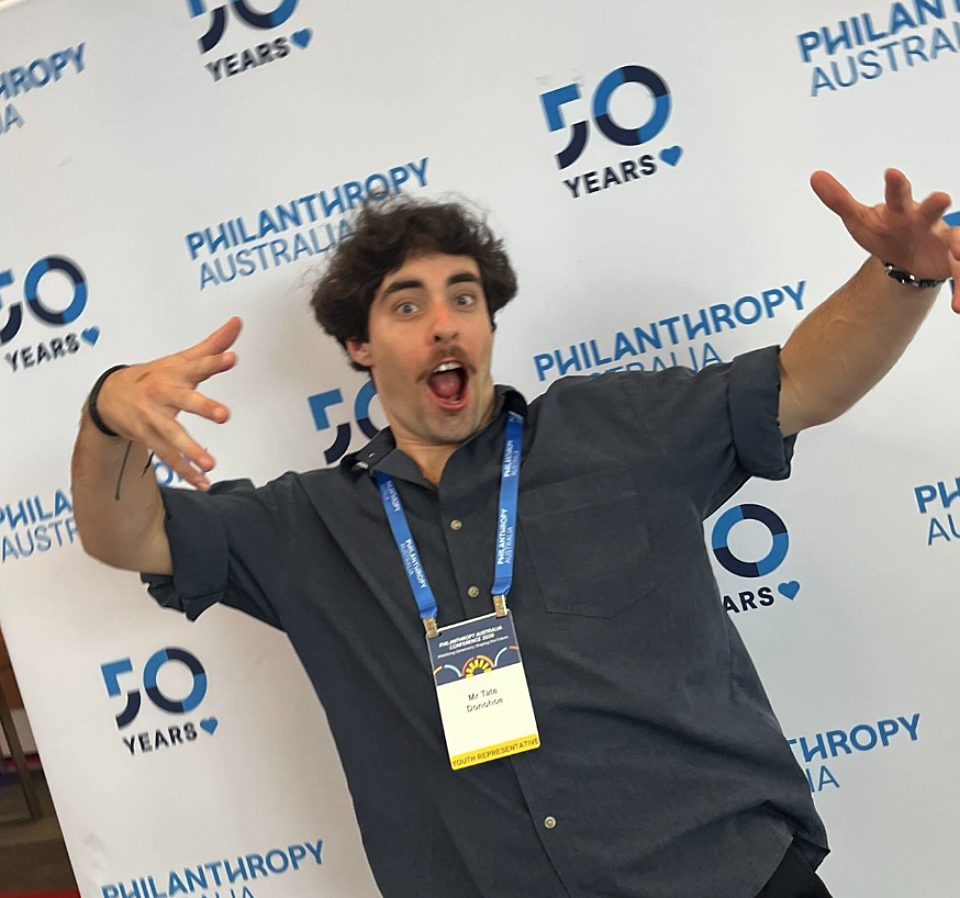
At 21 years old, Tate Donohoe is the founder of Ecodia, an AI-assisted software development company…

Posted on 30 Sep 2026
Not-for-profit leaders have been warned to be wary of approaches from potential “funding partners”…
Posted on 30 Sep 2026
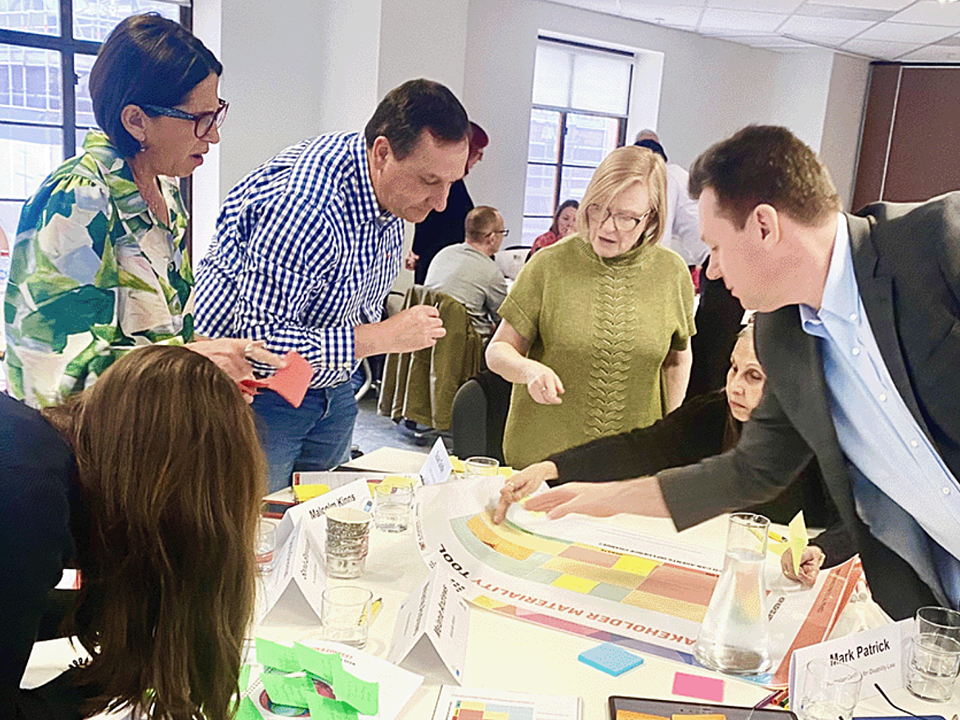
More than 200 fully funded Centre for Social Impact (CSI) scholarships will help equip for-purpose…

Posted on 30 Sep 2026
Personal stories are among the most powerful tools a charity can have to raise funds and awareness,…

Posted on 23 Sep 2026
In his new book Our Place, policy expert Matt Lloyd-Cope argues that housing must be at the heart…